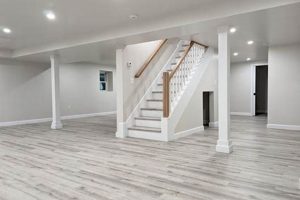
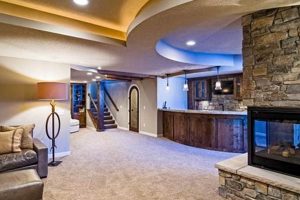
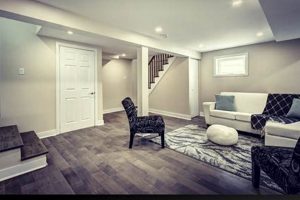
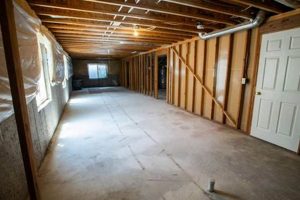
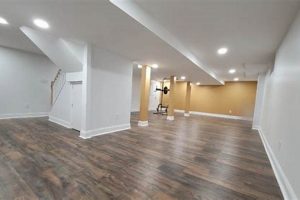
A lower-level space in a residence that has been transformed from its original, unfinished state into a habitable area is considered a completed cellar environment. This transformation typically involves the installation of flooring, walls, and a ceiling, often incorporating insulation, electrical wiring, and plumbing to create a functional and comfortable extension of the main living space. For example, a storage area with exposed concrete and unfinished framing is not deemed completed. However, if this space is updated with drywall, carpeting, and lighting, it meets the criteria.
This enhancement of a property’s infrastructure adds significant value and utility to a home. It provides opportunities for increased living space, which can be tailored to various needs such as recreation, entertainment, or additional bedrooms. Historically, such improvements have been viewed as a practical way to maximize the usable area of a residence without expanding the building’s footprint, offering a cost-effective alternative to above-ground additions. Further, such a space, when properly constructed, can improve a home’s energy efficiency and create a buffer against extreme temperatures.
Understanding the characteristics and advantages of these spaces is essential when considering home renovation projects, property valuation, and local building codes. The subsequent sections will delve into specific aspects of these spaces, including design considerations, common challenges, and best practices for ensuring a successful transformation.
Finishing a Lower Level
The following considerations are crucial for ensuring a successful and valuable lower-level renovation. Adhering to these guidelines will contribute to a functional, comfortable, and code-compliant living space.
Tip 1: Waterproofing is Paramount: Prior to any construction, thoroughly assess and address any existing or potential moisture issues. Install a reliable waterproofing system, which may include interior or exterior sealants, drainage systems, and vapor barriers. Neglecting this can lead to mold growth, structural damage, and unhealthy living conditions.
Tip 2: Adhere to Local Building Codes: Research and comply with all local building codes and regulations regarding ceiling height, egress windows, fire safety, and electrical requirements. Obtain necessary permits and schedule inspections throughout the project to ensure compliance and avoid costly rework.
Tip 3: Prioritize Insulation: Proper insulation is essential for maintaining a comfortable temperature and reducing energy costs. Insulate walls, ceilings, and floors with appropriate materials, paying attention to R-values and vapor barriers, particularly in below-grade environments.
Tip 4: Implement Adequate Ventilation: Ensure sufficient ventilation to prevent moisture buildup and improve air quality. Consider installing exhaust fans in bathrooms and laundry areas, as well as incorporating a whole-house ventilation system for optimal air circulation.
Tip 5: Plan for Egress: In accordance with building codes, provide at least one means of egress for safety in case of emergency. This typically involves installing an egress window or door that meets specific size and accessibility requirements.
Tip 6: Consider Lighting Design: Thoughtful lighting design can dramatically enhance the ambiance and functionality of a lower level. Incorporate a mix of ambient, task, and accent lighting to create a well-lit and inviting space. Consider natural light options through the addition of windows or light wells.
Tip 7: Address Plumbing Considerations: If planning to install a bathroom or wet bar, carefully consider plumbing requirements. Ensure adequate water supply and drainage, and address any potential challenges related to sewage ejection or backflow prevention.
Adhering to these guidelines will contribute to the creation of a functional, comfortable, and code-compliant living space, increasing the value and usability of the property. The subsequent sections will address design aesthetics and additional considerations for optimizing the enjoyment of the area.
1. Habitable Condition

The term “habitable condition” is intrinsically linked to the understanding of a completed lower-level space. This condition signifies that the space is suitable for regular human occupancy, meeting specific criteria that ensure the safety, health, and comfort of its inhabitants. The establishment of a habitable state is not merely cosmetic; it is a fundamental requirement for a space to be legitimately classified as a functional and valuable extension of the primary living area. The lack of habitable condition undermines its value and utility, rendering it essentially a storage area rather than an integral part of the home.
The transformation of an unfinished lower-level space into a habitable environment involves several critical steps. These include ensuring adequate ceiling height, proper ventilation, sufficient lighting, and temperature regulation. Local building codes often stipulate minimum standards for each of these elements, reflecting a consensus on what constitutes a safe and livable environment. For instance, the installation of egress windows or doors is vital for emergency escape, directly contributing to safety. Likewise, proper insulation and HVAC systems are essential to regulate temperature and humidity, thereby preventing mold growth and maintaining air quality, which are key to health and comfort. A lower level that fails to meet these benchmarks is not deemed a habitable space, regardless of superficial improvements.
Understanding the habitable condition is of critical importance for homeowners, builders, and real estate professionals. It impacts property valuation, permitting requirements, and potential liability. A renovation aiming to classify a lower-level space as completed must prioritize achieving and maintaining a habitable state. This commitment not only enhances the value and enjoyment of the home but also ensures compliance with legal and safety standards. The subsequent discussion will focus on the specifics of “completed interior surfaces,” another essential element in achieving this standard.
2. Completed Interior Surfaces

The presence of fully constructed interior surfaces is a critical element in determining whether a lower-level area qualifies as a habitable and completed space. This aspect significantly distinguishes a storage space from a living area, impacting both functionality and value.
- Wall Finishing
Wall finishing typically entails the application of drywall, paneling, or other suitable materials to the framing, creating smooth, paintable, or otherwise decorative surfaces. This not only enhances the aesthetic appeal but also provides insulation and fire resistance. Exposed concrete or bare framing disqualify the space, while properly finished walls indicate a deliberate effort to create a habitable environment.
- Flooring Installation
A completed lower-level space requires the installation of appropriate flooring materials such as carpeting, tile, laminate, or engineered wood. The type of flooring selected affects comfort, noise reduction, and resistance to moisture. A poured concrete floor or unfinished subfloor denotes incompleteness, whereas the presence of installed flooring signifies a transformation from storage to living space.
- Ceiling Treatment
Finishing the ceiling involves installing a suspended ceiling, drywall, or other materials to cover the exposed joists, pipes, and wiring. A finished ceiling improves the aesthetic quality, provides insulation, and conceals utilities. An unfinished ceiling detracts from the appeal and functionality of the space, while a properly completed ceiling contributes to its characterization.
- Trim and Moldings
The inclusion of trim and moldings, such as baseboards, crown molding, and window casings, adds a refined aesthetic touch and covers gaps between walls, floors, and ceilings. These details contribute to a sense of completion and attention to detail. The absence of trim and moldings signals a lack of finish and refinement, while their presence indicates a higher level of completion and intent to create a living area.
The culmination of completed interior surfaces, from finished walls to installed flooring and refined trim, plays a pivotal role in defining the completed nature of a lower-level area. These elements transform an unfinished storage space into a functional and aesthetically pleasing extension of the home. It improves both the habitability and value of the property.
3. Essential Infrastructure
The concept of a completed lower-level space is inextricably linked to the presence of essential infrastructure. This infrastructure encompasses the critical systems and components that enable the space to function as a habitable and usable extension of the home. The absence or inadequacy of these systems renders the area uninhabitable, regardless of any cosmetic improvements. The presence of fully operational electrical, plumbing, and HVAC (heating, ventilation, and air conditioning) systems are not merely desirable but are fundamentally necessary. For instance, a space lacking proper electrical wiring cannot safely provide lighting or power for appliances, rendering it unusable for most activities. Similarly, without adequate HVAC systems, maintaining a comfortable temperature and preventing moisture buildup becomes impossible, leading to potential health hazards and structural damage.
Consider a scenario in which a homeowner installs drywall and flooring without addressing the existing wiring. This situation presents significant safety risks, including fire hazards and electrical shock. Similarly, the installation of a bathroom without proper plumbing connections would result in unsanitary conditions and potential water damage. The lack of adequate insulation and ventilation can lead to condensation, mold growth, and poor air quality. These examples highlight that while aesthetic enhancements contribute to the appeal of a finished lower level, the integration of fully functional infrastructure is paramount. Furthermore, adherence to building codes ensures the safety and functionality of these systems.
In summary, the presence of essential infrastructure is a non-negotiable requirement for a lower-level space to qualify as a completed area. It transforms an unfinished space into a functional and habitable extension of the home. This infrastructure includes electrical, plumbing, and HVAC systems, and their proper installation and operation are critical for safety, comfort, and compliance with building codes. The understanding of this interconnectedness is essential for homeowners, builders, and inspectors when undertaking renovations or assessing the value of a property.
4. Code Compliance

Adherence to local building codes is an intrinsic component of defining a completed lower-level space. Code compliance ensures the safety, habitability, and structural integrity of the area, transforming it from mere storage to a functional part of the residence. Non-compliance can result in legal ramifications, compromised safety, and diminished property value.
- Egress Requirements
Egress requirements mandate a safe and accessible exit route in case of emergency, typically through egress windows or doors. For a lower-level space to be considered completed, it must meet specific dimensional and accessibility standards for egress. For example, minimum window opening sizes and sill heights are dictated by code to ensure ease of escape. Non-compliance can jeopardize the safety of occupants and prevent the space from being legally considered finished.
- Ceiling Height Regulations
Ceiling height regulations establish the minimum vertical clearance required for habitable spaces. In many jurisdictions, lower-level areas must have a minimum ceiling height to qualify as completed. Insufficient ceiling height can lead to discomfort and hinder usability. Failure to meet these regulations can prevent the space from being legally recognized as finished, affecting property value and insurability.
- Electrical Standards
Electrical standards govern the safe installation and operation of electrical systems within the space. Wiring, outlets, lighting fixtures, and grounding must comply with local electrical codes to prevent fire hazards and electrical shock. Proper grounding, GFCI protection in wet areas, and adequate circuit capacity are all critical components of electrical code compliance. Non-compliant electrical work can pose significant safety risks and prevent the space from being legally classified as finished.
- Fire Safety Measures
Fire safety measures encompass various requirements designed to mitigate the risk of fire and ensure occupant safety. This includes the installation of smoke detectors, fire-rated walls and ceilings, and adherence to specific building material standards. Smoke detectors must be properly located and operational, and fire-resistant materials may be required to separate the completed space from other areas of the home. Neglecting these measures can compromise the safety of occupants and prevent the area from being legally regarded as finished.
The discussed elements underscore that code compliance is not merely a regulatory formality but a fundamental aspect that establishes the habitability and legality of a lower-level space. Egress, ceiling height, electrical systems, and fire safety, each governed by specific codes, collectively ensure the safety, functionality, and value of the resulting area. The transformation is incomplete without full adherence to these standards.
5. Enhanced Property Value
The conversion of an unfinished lower-level area into a fully appointed living space demonstrably augments a property’s market worth. The addition of habitable square footage to a residence directly impacts its valuation, providing potential buyers with increased utility and functionality. For example, a home with an unfinished lower-level space may be appraised at a lower rate compared to an otherwise identical property featuring a completed lower level with bedrooms, a bathroom, and a recreational area. The degree of increased value is often contingent on the quality of the renovation, the design choices, and the prevailing market conditions.
Several factors contribute to this increase in property value. The completed lower-level area provides additional living space without expanding the building’s footprint, representing a cost-effective alternative to above-ground additions. This added space can serve various purposes, such as a home office, entertainment area, or guest suite, thereby appealing to a broader range of potential buyers. Furthermore, a well-designed space can enhance the overall aesthetic appeal of the home, making it more attractive to prospective purchasers. The property’s market perception improves, contributing positively to its assessed value. The cost incurred in the renovation can often be recouped, wholly or partially, upon the sale of the property.
In conclusion, a completed lower-level space constitutes a significant investment that often yields a tangible return in the form of augmented property value. Understanding the connection between the completed nature of the space and its impact on market worth is crucial for homeowners seeking to maximize their investment. Successfully transforming an underutilized area into a functional extension of the home offers an effective means of increasing property value and enhancing overall market appeal, therefore, the finished basements can affect the selling price.
Frequently Asked Questions
The following questions address common concerns regarding the definition of a completed lower-level space. The information provided is intended to clarify requirements and dispel misconceptions.
Question 1: Is a lower-level space with only cosmetic improvements considered a completed area?
No. Cosmetic improvements alone, without adherence to building codes and the presence of essential infrastructure, do not constitute a completed lower-level space. Compliance with building regulations, specifically those pertaining to habitability, must be established.
Question 2: How does the presence of moisture affect the classification of a lower-level space?
The presence of moisture or water intrusion can disqualify a lower-level area from being considered completed. Effective waterproofing measures must be implemented to prevent moisture-related issues, such as mold growth and structural damage.
Question 3: Are there specific ceiling height requirements for a lower-level space to be considered completed?
Yes. Most jurisdictions have minimum ceiling height requirements that must be met for a lower-level area to be classified as completed and habitable. These requirements vary depending on local building codes.
Question 4: What is the significance of egress windows in defining a completed lower-level space?
Egress windows provide a necessary means of escape in the event of an emergency. Their presence is a critical requirement for a lower-level area to be considered a completed, habitable space, according to building codes.
Question 5: Does the lack of proper insulation impact the classification of a lower-level space?
Yes. Proper insulation is essential for maintaining a comfortable temperature, reducing energy costs, and preventing moisture condensation. The absence of adequate insulation can disqualify a lower-level area from being considered completed.
Question 6: How does non-compliance with electrical codes affect the definition of a completed lower-level space?
Non-compliance with electrical codes presents safety hazards and prevents the area from being legally classified as completed. All electrical wiring, outlets, and lighting must adhere to local electrical regulations.
The key takeaway is that defining a completed lower-level space necessitates adherence to building codes, the presence of essential infrastructure, and the absence of moisture-related issues. Failure to meet these criteria can result in safety concerns, legal ramifications, and diminished property value.
The subsequent section will provide a detailed overview of common challenges encountered during the completion of lower-level spaces, offering insights and practical solutions.
Define Finished Basement
The preceding discussion has elucidated the multifaceted characteristics that constitute a completed lower-level space. The exploration has extended beyond superficial aesthetics, underscoring the criticality of code compliance, essential infrastructure, and habitable conditions. The presence of finished surfaces, while contributing to the area’s aesthetic appeal, remains secondary to the adherence to structural and safety standards. Furthermore, the impact of a completed lower-level space on property valuation has been established, reinforcing its significance as a value-added component.
The meticulous and code-compliant transformation of an unfinished lower-level area represents a substantial investment with the potential for considerable return. It is imperative for property owners, contractors, and prospective buyers to fully comprehend the defining features of a completed area. Careful attention to detail and strict adherence to regulations are required to realize the intended benefits of safety, functionality, and increased property value. Future construction or renovation projects involving the area should, therefore, prioritize these considerations to guarantee that all requirements are met.