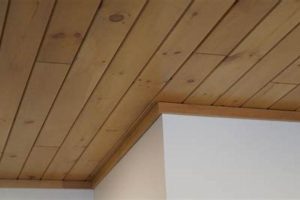
An area residing directly beneath a building’s roof, converted from a raw, often unused area into a habitable room or series of rooms, characterized by sloped ceilings and integration with the existing structure’s climate control and electrical systems, is the subject of this discussion. This transformation often includes insulation, flooring, drywall, and windows to meet building codes and ensure comfort. For instance, an uninsulated, dusty storage area can be transformed into a functional home office, bedroom, or recreation room.
The conversion of underutilized overhead areas offers numerous advantages, including increased living space without expanding the building’s footprint. Historically, these conversions provided affordable housing solutions and allowed families to maximize available resources. Today, they remain a cost-effective way to add value and functionality to a property, potentially increasing its market appeal and resale price. Properly executed, such a project can improve energy efficiency and create a comfortable, versatile area for various purposes.
The following discussion will delve into the essential considerations for planning and executing such a renovation. Topics will include structural integrity, insulation options, ventilation strategies, electrical and plumbing requirements, code compliance, and design considerations to ensure a successful and valuable addition to the home.
Essential Renovation Guidance
Maximizing the potential of overhead building sections requires careful planning and execution. These guidelines provide critical considerations for a successful conversion project.
Tip 1: Assess Structural Integrity: A structural engineer must evaluate the existing framing’s capacity to support the intended load, including added weight from flooring, drywall, and occupants. Reinforcement may be necessary to ensure safety and compliance with building codes.
Tip 2: Prioritize Insulation and Ventilation: Adequate insulation is crucial for temperature regulation and energy efficiency. Proper ventilation prevents moisture buildup, which can lead to mold growth and structural damage. Consider closed-cell spray foam or rigid foam board insulation, coupled with ridge vents and soffit vents for optimal airflow.
Tip 3: Address Egress Requirements: Building codes typically require a designated escape route in case of a fire. This may involve installing a properly sized window or a second staircase. Ensure compliance to avoid potential safety hazards and legal complications.
Tip 4: Consider Headroom and Layout: The available height significantly impacts the usability of the overhead section. Optimize the layout to maximize space and minimize areas with restricted headroom. Utilize knee walls and dormers to expand usable floor space and improve natural light.
Tip 5: Plan for Electrical and Plumbing Needs: Determine electrical and plumbing requirements based on the intended use. Consult with licensed professionals to ensure safe and code-compliant installations. Consider recessed lighting and strategically placed outlets for convenience.
Tip 6: Manage Sound Transmission: Implement soundproofing measures to minimize noise transfer to and from the adjacent living spaces. Utilize resilient channels, sound-dampening insulation, and solid-core doors to reduce noise pollution.
Careful attention to these factors ensures a functional, safe, and valuable addition to the property.
The subsequent sections will address design aesthetics and strategies for maximizing the usability and appeal of the renovated overhead area.
1. Structural Reinforcement

Structural reinforcement is a critical prerequisite when converting an unfinished overhead area into a habitable space. Existing building structures are often designed for specific load-bearing capacities. Modifying these structures by adding flooring, walls, and living area necessitates careful consideration of the increased weight and stress.
- Load Distribution Analysis
A qualified structural engineer must conduct a thorough analysis of the existing framing, including rafters, joists, and supporting walls, to determine its load-bearing capacity. This analysis considers both static loads (e.g., weight of materials) and dynamic loads (e.g., occupants and furniture). Inadequate load distribution can result in structural failure, leading to safety hazards and significant property damage. The analysis informs the type and extent of reinforcement required.
- Joist Strengthening Techniques
Often, existing floor joists require strengthening to support the additional load. This can be achieved through several methods, including sistering (attaching new joists alongside existing ones), reinforcing with steel flitch plates, or adding bridging to distribute weight. The specific technique depends on the extent of the load increase and the existing joist dimensions and spacing. Proper installation by qualified professionals is paramount for effectiveness.
- Rafter Support Augmentation
Rafters, which support the roof, may also require reinforcement, particularly if the overhead area will house heavy objects or if the existing rafters are undersized or damaged. Reinforcement methods can include adding collar ties, knee walls, or structural ridge beams to distribute the roof load more effectively. Considerations must be given to the existing roof pitch and the desired ceiling height when implementing these techniques.
- Foundation and Wall Integrity
The transfer of increased loads from the renovated overhead area ultimately impacts the foundation and supporting walls of the building. A structural assessment should also evaluate the capacity of these elements to bear the additional weight. Reinforcement of foundation walls or the addition of support columns may be necessary to prevent settlement or structural instability. Ignoring this aspect can lead to long-term structural problems throughout the building.
The integration of robust structural reinforcement is not merely an optional upgrade but a fundamental requirement for ensuring the safety, longevity, and code compliance of any overhead area conversion. Careful planning, professional assessment, and skilled execution are essential for mitigating risks and creating a structurally sound and habitable living space.
2. Code Compliance

Adherence to building codes is paramount when converting an unfinished attic space into a habitable living area. These regulations ensure occupant safety, structural integrity, and energy efficiency, establishing minimum standards for various aspects of the renovation process. Ignoring code compliance can result in safety hazards, legal liabilities, and potential difficulties during property resale.
- Egress Requirements
Building codes mandate specific egress requirements for habitable attics, ensuring occupants can safely exit in the event of a fire or other emergency. These requirements typically include a minimum ceiling height in the egress path, a properly sized window suitable for emergency escape (egress window), or a second means of access, such as a staircase. Failure to meet egress requirements can lead to entrapment during an emergency and render the space legally uninhabitable.
- Fire Safety Regulations
Fire safety is a primary concern in attic conversions. Codes often specify the use of fire-resistant materials for walls, ceilings, and floors to slow the spread of fire and provide occupants with valuable time to escape. Smoke detectors are required in all sleeping areas and on each level of the home. Furthermore, fire blocking may be necessary to prevent fire from spreading rapidly through concealed spaces within the wall and floor assemblies. Strict adherence to these regulations is crucial for minimizing fire hazards and protecting lives.
- Structural Load Capacity
As previously discussed under structural reinforcement, codes dictate minimum requirements for the load-bearing capacity of floors and roofs. When converting an attic, the existing structure must be able to support the added weight of flooring, walls, furniture, and occupants. Building codes provide specific guidelines for calculating load capacities and ensuring the structural integrity of the renovated space. Failure to comply with these requirements can compromise the building’s stability and lead to structural failure.
- Ventilation and Moisture Control
Proper ventilation and moisture control are essential for preventing mold growth, maintaining indoor air quality, and protecting the building’s structural components. Building codes mandate specific ventilation requirements for habitable attics, ensuring adequate airflow to remove moisture and prevent condensation. This may involve the installation of soffit vents, ridge vents, or other ventilation systems. Failure to address ventilation and moisture control can lead to health problems, structural damage, and costly repairs.
These examples demonstrate that code compliance is not a mere formality but an integral aspect of transforming an unfinished attic into a safe, comfortable, and legally habitable living space. Consulting with qualified architects, engineers, and contractors familiar with local building codes is essential for ensuring a successful and compliant conversion project.
3. Insulation Efficiency

Insulation efficiency is a critical determinant of comfort, energy consumption, and structural longevity in finished attic spaces. The location of attics directly beneath the roof subjects them to extreme temperature fluctuations and significant heat transfer, making effective insulation paramount for creating a habitable and energy-efficient environment.
- Thermal Resistance (R-value) Selection
The R-value of insulation materials quantifies their resistance to heat flow. Building codes typically specify minimum R-values for attic insulation based on climate zone. Choosing insulation with an appropriate R-value is essential for minimizing heat loss in winter and heat gain in summer. Insufficient R-value leads to increased energy bills and uncomfortable temperature variations within the finished space. Example: Fiberglass batts, cellulose, and spray foam offer varying R-values per inch, requiring careful selection to meet or exceed code requirements.
- Air Sealing Techniques
Effective insulation relies on proper air sealing to prevent air leakage through cracks, gaps, and penetrations in the attic envelope. Air leakage compromises the thermal performance of insulation, allowing conditioned air to escape and unconditioned air to enter. Air sealing measures include caulking, weather stripping, and the application of spray foam to seal around wiring, plumbing, and other penetrations. Without adequate air sealing, the benefits of high-R-value insulation are significantly diminished.
- Moisture Management Strategies
Insulation materials can be susceptible to moisture damage, which reduces their thermal performance and promotes mold growth. Implementing moisture management strategies, such as vapor barriers and ventilation systems, is crucial for maintaining the integrity of insulation in finished attic spaces. Vapor barriers restrict the movement of moisture from the interior of the home into the insulation, while ventilation systems remove excess moisture from the attic space. Proper moisture management safeguards the long-term effectiveness of insulation and prevents potential health hazards.
- Insulation Material Selection
Various insulation materials are available for use in finished attic spaces, each with its own advantages and disadvantages. Fiberglass batts are a cost-effective option but require careful installation to avoid gaps and compression. Cellulose is an environmentally friendly option with good thermal performance and sound-dampening properties. Spray foam provides excellent air sealing and insulation but can be more expensive. The optimal material choice depends on factors such as budget, desired performance characteristics, and installation complexity. Understanding the properties of different insulation materials is essential for making informed decisions.
These facets underscore the importance of a holistic approach to insulation in finished attic spaces. Merely installing insulation without considering R-value, air sealing, moisture management, and material selection can lead to suboptimal results. A comprehensive insulation strategy, implemented by qualified professionals, maximizes energy efficiency, enhances comfort, and protects the structural integrity of the converted attic area.
4. Egress Availability

Egress availability, the provision of safe and unobstructed exit pathways from a building, assumes paramount importance when transforming an unfinished attic into a habitable space. The creation of a finished attic establishes a new living area that necessitates compliance with established safety standards, primarily focused on facilitating rapid evacuation during emergencies such as fires. Inadequate egress poses a direct threat to occupant safety, potentially leading to injury or loss of life. The absence of compliant egress options can render the finished attic legally uninhabitable and significantly devalue the property. For example, a finished attic lacking a code-compliant egress window or a second staircase effectively traps occupants in the event of a fire blocking the primary entry, thereby creating a life-threatening scenario.
The requirements for egress from finished attics typically involve minimum dimensions for escape windows, maximum sill heights above the floor, and specific provisions for staircase construction, including handrails and headroom clearance. Furthermore, the placement of smoke detectors and the use of fire-resistant materials are intrinsically linked to egress strategies. Consider a situation where a family converts their attic into a bedroom without installing an egress window. A fire breaks out downstairs, preventing access to the main staircase. The occupants are then trapped, lacking a viable escape route, highlighting the critical need for proactive egress planning during the renovation process. In contrast, a finished attic equipped with an appropriately sized egress window allows occupants to safely exit, awaiting emergency responders. Building codes often require a minimum net clear opening area (e.g., 5.7 square feet) and a maximum sill height (e.g., 44 inches) for egress windows to ensure accessibility for occupants of all ages and physical abilities.
Ensuring adequate egress availability in finished attics necessitates meticulous planning, adherence to local building codes, and potentially significant structural modifications. The integration of egress considerations early in the design phase minimizes costly revisions and ensures a safe and legally compliant finished attic space. Neglecting egress requirements not only jeopardizes occupant safety but also exposes homeowners to potential legal liabilities and the risk of forced remediation to achieve code compliance. Therefore, egress availability is not merely a desirable feature but a fundamental prerequisite for the responsible and legal transformation of an unfinished attic into a functional living space.
5. Ventilation Adequacy

Ventilation adequacy is a non-negotiable aspect of transforming an unfinished attic into a habitable area. Its presence or absence directly impacts air quality, structural integrity, and the overall health and comfort of the occupants. Insufficient ventilation in a finished attic space creates an environment conducive to moisture accumulation, mold growth, and increased energy consumption, thereby negating the benefits of creating additional living space.
- Moisture Control and Mold Prevention
Adequate ventilation facilitates the removal of moisture generated from daily activities, such as showering, cooking, and even breathing. Inadequate ventilation allows this moisture to condense on cooler surfaces, leading to the proliferation of mold and mildew. Mold not only degrades indoor air quality, posing significant health risks to occupants, but also deteriorates structural components like wood framing and insulation. An example is the formation of black mold on attic sheathing due to trapped moisture, necessitating costly remediation and potentially impacting the building’s structural stability.
- Temperature Regulation and Energy Efficiency
Proper ventilation aids in the regulation of attic temperature, particularly during extreme weather conditions. In summer, ventilation allows hot air trapped under the roof to escape, reducing the burden on air conditioning systems and minimizing energy consumption. Conversely, in winter, ventilation helps to prevent ice dam formation by maintaining a consistent roof temperature. An example is the installation of ridge vents and soffit vents to facilitate continuous airflow, preventing the buildup of heat in summer and mitigating ice damming in winter, thereby reducing energy costs and preventing structural damage.
- Air Quality Management and Pollutant Removal
Ventilation plays a crucial role in maintaining indoor air quality by removing airborne pollutants, such as volatile organic compounds (VOCs) released from building materials and furnishings. Insufficient ventilation allows these pollutants to accumulate, posing health risks to occupants, particularly those with respiratory sensitivities. For example, new carpeting or paint in a finished attic can release VOCs. Proper ventilation ensures these compounds are effectively diluted and removed, improving indoor air quality and promoting a healthier living environment.
- Preservation of Structural Components
Adequate ventilation contributes to the preservation of the attic’s structural components by preventing moisture buildup and related damage. Excessive moisture can lead to wood rot, corrosion of metal fasteners, and degradation of insulation, compromising the structural integrity of the attic and requiring costly repairs. An example is the deterioration of roof rafters due to prolonged exposure to moisture, leading to structural weakening and potential roof collapse. Proper ventilation mitigates this risk by maintaining a dry environment, extending the lifespan of structural components and preserving the building’s integrity.
These interconnected facets of ventilation adequacy underscore its critical role in the success of any finished attic space project. Failure to address ventilation requirements can result in a host of problems, ranging from health hazards and structural damage to increased energy costs and legal liabilities. Therefore, a comprehensive ventilation strategy is an essential investment in the long-term health, safety, and value of the finished attic space.
6. Usable Headroom

Usable headroom constitutes a pivotal determinant in the feasibility, functionality, and overall value of any finished attic space. Its presence or absence dictates the extent to which the transformed area can serve its intended purpose and contribute meaningfully to the building’s habitable square footage. Inadequate headroom renders a finished attic space functionally limited, potentially negating the benefits of the renovation.
- Code Compliance and Minimum Requirements
Building codes typically stipulate minimum headroom requirements for habitable spaces, including finished attics. These requirements often specify a minimum ceiling height over a certain percentage of the floor area. Failure to meet these code-mandated thresholds renders the space legally uninhabitable and subject to potential remediation. For instance, the International Residential Code (IRC) often requires a minimum ceiling height of 7 feet over at least 50% of the floor area. Non-compliance can lead to revoked occupancy permits and costly reconstruction.
- Impact on Functionality and Ergonomics
Usable headroom directly influences the functionality and ergonomic comfort of a finished attic space. Sufficient headroom allows occupants to move freely, stand upright, and perform everyday tasks without physical discomfort or limitation. Inadequate headroom restricts movement, making the space feel cramped and unsuitable for prolonged use. Imagine a finished attic bedroom with a ceiling height of only 6 feet; occupants would be forced to stoop or crouch, resulting in discomfort and limiting the room’s practical usability.
- Design Considerations and Space Optimization
The available headroom dictates design choices and space optimization strategies in finished attic spaces. Low headroom necessitates creative solutions to maximize usable area, such as incorporating knee walls to increase vertical space along the perimeter and utilizing dormers to extend the ceiling height. Layout decisions must prioritize areas with sufficient headroom for primary activities, such as walking and standing. A well-designed finished attic effectively utilizes every available inch of headroom to create a functional and aesthetically pleasing living space.
- Resale Value and Market Appeal
Usable headroom significantly impacts the resale value and market appeal of a home with a finished attic. Prospective buyers often scrutinize ceiling heights when evaluating a property, viewing adequate headroom as a desirable feature that enhances the perceived value and usability of the space. A finished attic with limited headroom may deter potential buyers, reducing the property’s marketability. Homes with finished attics that offer generous headroom and a comfortable living environment command higher prices and attract a broader range of buyers.
These considerations underscore the pivotal role of usable headroom in determining the success of a finished attic space. It not only influences compliance with building codes and ergonomic comfort but also dictates design choices and impacts the property’s resale value. Therefore, assessing and maximizing usable headroom is essential for creating a functional, valuable, and legally compliant finished attic.
Frequently Asked Questions
This section addresses common inquiries and misconceptions regarding the conversion of unfinished attic areas into habitable living spaces. The information presented aims to provide clarity and guidance for homeowners considering such a project.
Question 1: What constitutes a “finished attic space” according to building codes?
A finished attic space, under most building codes, is an attic that has been converted into a habitable living area, meeting specific requirements for ceiling height, egress, ventilation, insulation, and structural integrity. The exact criteria vary by jurisdiction, but generally, the space must be suitable for year-round living and compliant with all applicable safety regulations.
Question 2: Does converting an attic space always require a building permit?
In the vast majority of jurisdictions, converting an unfinished attic into a finished space necessitates obtaining a building permit. This is because the project typically involves structural modifications, electrical wiring, plumbing, and changes to the building’s envelope, all of which are subject to regulatory oversight to ensure safety and code compliance.
Question 3: What are the primary challenges associated with finishing an attic space?
Common challenges include limited headroom, difficult access, inadequate insulation, structural limitations, ventilation deficiencies, and code compliance issues. Overcoming these challenges often requires careful planning, professional expertise, and potentially significant investment.
Question 4: How does finishing an attic impact the overall value of a property?
A properly executed finished attic space generally increases a property’s value by adding usable square footage and enhancing its appeal to potential buyers. However, the value increase depends on the quality of the workmanship, compliance with building codes, and the overall design and functionality of the space. A poorly designed or non-compliant finished attic may detract from the property’s value.
Question 5: What is the typical cost range for finishing an attic space?
The cost of finishing an attic varies significantly depending on factors such as the size of the space, the complexity of the project, the materials used, and local labor rates. A basic conversion may cost tens of thousands of dollars, while more elaborate projects involving structural modifications, dormers, and high-end finishes can easily exceed that investment.
Question 6: What are the key considerations for soundproofing a finished attic space?
Effective soundproofing requires addressing airborne and impact noise transmission. Strategies include using resilient channels to isolate drywall from framing, installing sound-dampening insulation, employing solid-core doors, and sealing gaps around penetrations. Soundproofing is particularly important if the finished attic space will be used as a bedroom or home office.
These FAQs highlight the complexity and importance of careful planning when considering a finished attic space project. Consulting with qualified professionals is strongly advised to ensure a successful and code-compliant outcome.
The subsequent discussion will address design aesthetics and strategies for maximizing the usability and appeal of the renovated overhead area.
Conclusion
The preceding discussion has explored various critical aspects of “finished attic space” projects. Emphasis has been placed on code compliance, structural integrity, insulation efficiency, ventilation adequacy, egress availability, and usable headroom. Understanding these core elements is paramount for homeowners and contractors alike to ensure safe, functional, and legally habitable converted attic areas.
Proper execution of a “finished attic space” renovation demands meticulous planning, diligent adherence to building regulations, and informed decision-making regarding materials and construction techniques. The long-term value and safety of the resulting living space hinge upon a commitment to these principles. Prioritizing these considerations safeguards the investment and ensures a comfortable and secure environment for occupants.