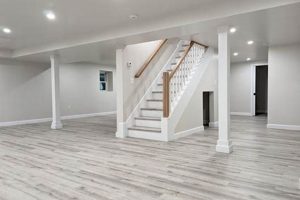
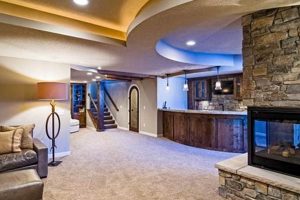
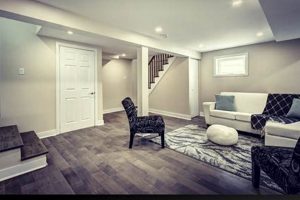
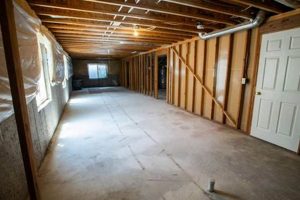
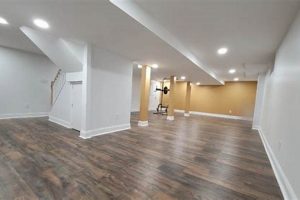
A subterranean sleeping quarter created through the conversion of a lower-level space, often initially purposed for storage or utilities, into a habitable room. This involves essential construction such as insulation, moisture control, and the installation of egress windows to meet safety regulations, culminating in an area suitable for rest and privacy. For instance, a family might transform their unused lower level into an extra guest suite to accommodate visiting relatives.
This type of conversion can significantly enhance a property’s market value and expand living space without altering the building’s footprint. Beyond increased square footage, it offers potential for additional rental income, privacy for occupants, and a dedicated area away from the main living spaces. Historically, these spaces were often damp and underutilized; modern construction techniques and building codes have allowed for their safe and comfortable integration into residential environments.
The following sections will delve into essential aspects of designing and constructing this type of room, including code compliance, moisture management, and various design considerations to maximize comfort and functionality. Further, the process of ensuring adequate ventilation, lighting, and soundproofing within these below-grade spaces will be examined.
Guidance for Subterranean Sleeping Quarters
The construction of sleeping quarters below ground requires careful planning and execution to ensure safety, comfort, and code compliance. The following guidelines provide essential considerations for transforming a basement into a habitable bedroom.
Tip 1: Egress Window Compliance: Ensure compliance with local building codes regarding egress windows. Egress windows must meet minimum size requirements for both width and height, allowing for safe escape in the event of an emergency. For example, check that the window provides at least 5.7 square feet of opening area with a minimum height of 24 inches and a minimum width of 20 inches.
Tip 2: Moisture Management: Implement comprehensive moisture management strategies. This involves installing a vapor barrier on the exterior walls and floor before finishing. Also, consider using a dehumidifier to maintain appropriate humidity levels, thereby preventing mold and mildew growth.
Tip 3: Insulation Requirements: Adhere to local insulation standards for below-grade walls and floors. Proper insulation helps regulate temperature, reduce energy consumption, and prevent condensation. Research specific R-values recommended for basement insulation in your climate zone.
Tip 4: Proper Ventilation: Ensure adequate ventilation to maintain air quality and prevent the buildup of stale air and pollutants. Install an exhaust fan or consider a heat recovery ventilator (HRV) to exchange indoor air with fresh outdoor air.
Tip 5: Lighting Considerations: Plan for sufficient natural and artificial lighting. Supplement limited natural light with strategically placed artificial light fixtures, including overhead lighting, task lighting, and accent lighting, to create a comfortable and well-lit environment. Confirm electrical work adhere to local code.
Tip 6: Soundproofing Strategies: Employ soundproofing techniques to minimize noise transmission from other areas of the house. This might include using soundproof insulation, installing solid-core doors, and adding sound-dampening materials to the ceiling.
Tip 7: Electrical Safety: Ensure all electrical work is performed by a qualified electrician and meets local codes. Ground fault circuit interrupters (GFCIs) are essential in wet or damp locations to prevent electrical shock.
Implementing these measures will result in the creation of safe, comfortable, and code-compliant subterranean sleeping quarters, enhancing the living space and value of the property.
In conclusion, meticulous planning and execution are paramount when undertaking such a project.
1. Egress and safety

The integration of egress and safety measures is a non-negotiable element in any habitable below-grade sleeping quarter. Egress, in this context, refers to the provision of a readily accessible exit route independent of the primary entrance. In a fire or other emergency, reliance on a single point of access could prove fatal. Building codes mandate specific requirements for egress windows in such rooms to ensure occupants can safely evacuate. These requirements typically stipulate minimum dimensions for the window opening and ease of operability from within the room, without the need for tools or specialized knowledge. The absence of compliant egress constitutes a severe safety hazard and a legal violation, rendering the space unfit for residential use.
A real-life example illustrates the critical nature of egress provisions. In a residential fire in a dwelling, occupants of a basement bedroom without an adequate egress window were trapped and suffered smoke inhalation injuries before being rescued by firefighters. Had a code-compliant egress window been present, they could have evacuated independently and avoided injury. This underscores the practical significance of understanding and adhering to egress requirements. Furthermore, the presence of smoke detectors and carbon monoxide detectors, coupled with a well-defined escape plan, forms an integral part of a comprehensive safety strategy. These measures provide early warning of potential hazards, enabling occupants to react promptly and utilize the egress route effectively.
In summary, egress and safety considerations are foundational to the creation of a lawful and habitable subterranean sleeping quarter. The inclusion of compliant egress windows, coupled with working smoke and carbon monoxide detectors and a practiced evacuation plan, provides a critical layer of protection for occupants. Failure to address these elements not only violates building codes but also jeopardizes the well-being of individuals residing within the space. Therefore, any conversion project must prioritize egress and safety to ensure a secure and code-compliant living environment.
2. Moisture management

Effective moisture management is paramount for the long-term integrity and habitability of any subterranean sleeping quarter. Below-grade environments are inherently susceptible to moisture intrusion from various sources, including groundwater seepage, rainwater runoff, and condensation. Failure to address these potential sources can lead to a cascade of detrimental effects, ranging from mold and mildew growth to structural damage and compromised indoor air quality. The absence of a robust moisture management strategy directly undermines the intended purpose of the conversion, rendering the space uninhabitable and potentially hazardous to occupants’ health. In essence, the conversion of a basement into a bedroom necessitates proactive measures to mitigate the pervasive threat of moisture.
A comprehensive approach to moisture management encompasses several key elements. Exterior waterproofing measures, such as the application of a sealant to the foundation walls and the installation of a drainage system, prevent groundwater from penetrating the structure. Interior vapor barriers reduce moisture migration from the concrete slab and walls into the living space. Proper ventilation, facilitated by exhaust fans or dehumidifiers, helps to control humidity levels and prevent condensation. The selection of moisture-resistant building materials, such as treated lumber and mold-resistant drywall, provides an additional layer of protection. For example, the use of closed-cell spray foam insulation not only provides thermal resistance but also acts as a vapor barrier, minimizing moisture accumulation within the wall cavity. These proactive measures collectively create a moisture-resistant envelope, safeguarding the living space from the adverse effects of excessive moisture.
In conclusion, the correlation between effective moisture management and a functional, safe, and durable subterranean sleeping quarter is undeniable. The implementation of a comprehensive moisture management strategy is not merely a best practice; it is an essential prerequisite for transforming a basement into a habitable and healthy living space. Failure to prioritize moisture management will inevitably result in costly repairs, compromised air quality, and a significantly reduced quality of life for the occupants. The long-term success of any basement conversion hinges on the meticulous planning and execution of appropriate moisture mitigation measures.
3. Insulation performance

Insulation performance is integral to the functionality and habitability of a finished basement bedroom. Subterranean environments present unique thermal challenges due to ground contact and inherent temperature fluctuations. Inadequate insulation results in significant heat loss during colder months and heat gain during warmer periods, leading to discomfort for occupants and increased energy consumption. Effective insulation mitigates these temperature swings, creating a more stable and comfortable indoor climate. Furthermore, proper insulation reduces the likelihood of condensation on interior surfaces, preventing mold growth and preserving indoor air quality. The performance of insulation directly impacts the overall comfort, health, and energy efficiency of the space.
Consider the example of a basement bedroom in a region with cold winters. Without adequate insulation, the room temperature may drop significantly below that of the rest of the house, making it difficult to heat and maintain a comfortable living environment. This leads to increased energy bills as the heating system struggles to compensate for the heat loss through the uninsulated walls and floor. Conversely, in warmer climates, poor insulation allows excessive heat to penetrate the space, creating an uncomfortably warm environment. The selection of appropriate insulation materials, such as rigid foam board or spray foam, with sufficient R-value for the specific climate zone is crucial. Proper installation, ensuring complete coverage and minimal air gaps, further enhances the insulation’s effectiveness. Therefore, meticulous attention to insulation performance is essential for achieving optimal comfort and energy efficiency.
In summary, the relationship between insulation performance and the quality of a finished basement bedroom is direct and significant. Effective insulation is not merely an optional upgrade but a fundamental requirement for creating a comfortable, healthy, and energy-efficient living space. Neglecting insulation performance leads to a range of problems, including discomfort, increased energy costs, and potential health hazards. The investment in high-quality insulation and proper installation techniques is a critical factor in the successful transformation of a basement into a habitable bedroom.
4. Code adherence

Code adherence is intrinsically linked to the creation of a legal and safe finished basement bedroom. Building codes establish minimum standards for construction and habitability, encompassing structural integrity, fire safety, ventilation, and sanitation. A finished basement bedroom that does not adhere to these codes may pose significant risks to occupants and invalidate property insurance coverage. Moreover, failure to comply with local regulations can result in fines, legal action, and the forced demolition or alteration of non-compliant structures. Therefore, adherence to building codes is not merely a formality but a fundamental prerequisite for establishing a legitimate and habitable subterranean living space.
For example, most jurisdictions mandate specific ceiling heights for habitable rooms. If the finished basement bedroom does not meet the minimum ceiling height requirement, it cannot legally be considered a bedroom. Similarly, electrical work must be performed by licensed professionals and adhere to the National Electrical Code (NEC) to prevent electrical hazards. Improper wiring or grounding can lead to fires or electrocution. Additionally, many codes require hard-wired, interconnected smoke detectors with battery backups in all sleeping areas. These detectors provide early warning of fire and increase the likelihood of safe evacuation. These examples demonstrate the practical significance of code adherence in mitigating risks and ensuring the safety of occupants.
In summary, code adherence is an indispensable aspect of any finished basement bedroom project. Compliance with building codes is not simply a matter of legal compliance but a critical component of ensuring safety, habitability, and long-term property value. Failure to adhere to these standards can have severe consequences, ranging from financial penalties to life-threatening hazards. Therefore, thorough research of local building codes and consultation with qualified professionals are essential steps in any finished basement bedroom conversion project.
5. Habitability concerns

Habitability concerns constitute a critical nexus in the creation of a functional and desirable finished basement bedroom. These concerns encompass factors directly affecting the comfort, health, and psychological well-being of occupants. Unaddressed habitability issues transform a potentially valuable living space into an undesirable, even detrimental, area. Consequently, thoughtful consideration of these concerns is essential for maximizing the utility and value of the finished space. For instance, a basement with inadequate lighting, poor ventilation, and persistent dampness creates an environment that is not conducive to rest or productive activity, rendering it an unsuitable bedroom.
Specific habitability factors necessitate careful evaluation. Natural light availability is often limited in basements, necessitating the strategic implementation of artificial lighting solutions to mimic natural illumination and prevent feelings of isolation or confinement. Proper ventilation is crucial for maintaining air quality and preventing the accumulation of stale odors or pollutants. Temperature regulation is also vital; basements tend to be cooler than above-ground spaces, requiring adequate insulation and heating systems to ensure a comfortable temperature. Noise levels should be minimized through soundproofing measures to create a peaceful and private environment. One example of a successful mitigation strategy is the installation of a subfloor with a moisture barrier, combined with ample lighting and a well-designed ventilation system, converting a dark and damp basement into a comfortable and functional sleeping area.
In summary, habitability concerns are not peripheral considerations but rather integral components of a successful finished basement bedroom conversion. Addressing these concerns effectively necessitates a holistic approach encompassing lighting, ventilation, temperature control, and noise reduction. By prioritizing habitability, the transformation of a basement into a bedroom can significantly enhance the overall quality of life for occupants and increase the property’s market appeal. Ignoring these aspects risks creating a space that is functionally useless and potentially detrimental to occupant well-being. The success of such a conversion hinges on recognizing and proactively resolving these critical habitability challenges.
Frequently Asked Questions
This section addresses common inquiries regarding the creation and regulation of sleeping quarters in below-grade spaces.
Question 1: What constitutes a legal egress window in a finished basement bedroom?
Egress windows must meet minimum size requirements for both opening area and dimensions, typically dictated by local building codes. These specifications ensure a readily accessible escape route in emergencies. Consult local codes for precise measurements.
Question 2: How can moisture be effectively managed in a below-grade bedroom?
Comprehensive moisture management involves exterior waterproofing, interior vapor barriers, proper ventilation, and the use of moisture-resistant building materials. A multi-faceted approach is necessary for long-term prevention of moisture-related issues.
Question 3: What level of insulation is recommended for a finished basement bedroom?
Insulation requirements vary based on climate zone and local building codes. Adherence to recommended R-values for walls and floors is crucial for maintaining a comfortable temperature and minimizing energy consumption.
Question 4: How can adequate ventilation be ensured in a subterranean sleeping quarter?
Proper ventilation is achieved through the installation of exhaust fans, heat recovery ventilators (HRVs), or energy recovery ventilators (ERVs) to exchange indoor air with fresh outdoor air, thereby maintaining air quality.
Question 5: What are the key electrical safety considerations for a below-grade bedroom?
All electrical work must be performed by qualified electricians and adhere to local electrical codes. Ground fault circuit interrupters (GFCIs) are essential in wet or damp locations to prevent electrical shock.
Question 6: What are the potential consequences of failing to adhere to building codes?
Failure to comply with building codes can result in fines, legal action, and the forced demolition or alteration of non-compliant structures. It may also invalidate property insurance coverage and pose significant safety risks to occupants.
Proper planning and execution are crucial to ensure the safety, comfort, and code compliance of any subterranean sleeping quarters.
The following section explores the design elements in basement conversion projects.
Finished Basement Bedroom
The transformation of a below-grade space into a finished basement bedroom necessitates rigorous adherence to building codes, moisture mitigation strategies, and the prioritization of occupant safety and comfort. Egress windows, proper insulation, and effective ventilation are not optional enhancements but essential components that determine the legality and habitability of the resulting space. The absence of these elements compromises the structural integrity, air quality, and overall safety of the conversion, potentially leading to severe legal and health ramifications.
Therefore, any undertaking to create a finished basement bedroom requires a commitment to meticulous planning, professional execution, and unwavering adherence to all applicable regulations. The conversion should be viewed not merely as a home improvement project but as a significant investment in occupant well-being and long-term property value. Prioritizing code compliance and safety is essential for any project.