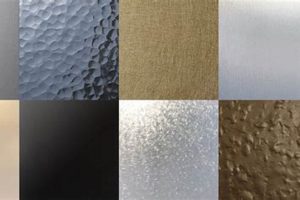
Surface treatments applied to metallic substrates alter their inherent properties, providing enhanced aesthetics, corrosion resistance, or improved functionality. Examples include coatings, platings, and mechanical treatments that modify the texture and appearance of the underlying material.
The selection of an appropriate surface modification method is crucial for extending the lifespan of metallic components, ensuring optimal performance in diverse operating environments, and achieving desired visual characteristics. Historically, these processes have played a significant role in industries ranging from architecture and automotive to aerospace and electronics.
Subsequent sections will delve into specific types of applied coatings, the criteria for process selection, and considerations regarding environmental impact and cost-effectiveness.
Essential Considerations
Selecting the appropriate surface treatment is paramount for achieving desired performance and longevity. Careful evaluation of operational requirements and environmental factors is essential.
Tip 1: Material Compatibility: Verify the chosen process is chemically and physically compatible with the base metal. Incompatible combinations may lead to premature failure or reduced performance.
Tip 2: Corrosion Resistance: Specify the level of protection required based on the anticipated environmental conditions. Salt spray testing standards provide a benchmark for evaluating corrosion resistance.
Tip 3: Adhesion Testing: Conduct adhesion tests, such as pull-off or scratch tests, to ensure the applied layer is adequately bonded to the substrate. Poor adhesion can result in delamination.
Tip 4: Thickness Control: Define precise thickness requirements to achieve the desired functional properties without compromising the mechanical integrity of the component. Excessive thickness can induce stress.
Tip 5: Surface Preparation: Implement thorough surface preparation techniques, including cleaning, degreasing, and etching, to ensure optimal adhesion and performance. Inadequate preparation is a common cause of failure.
Tip 6: Regulatory Compliance: Adhere to all applicable environmental regulations and safety standards during the application and disposal of processing chemicals. Sustainable alternatives should be prioritized.
Tip 7: Cost-Benefit Analysis: Conduct a comprehensive cost-benefit analysis, considering the initial investment, maintenance requirements, and life-cycle costs. Selecting the most cost-effective option requires careful evaluation.
By adhering to these considerations, manufacturers can ensure the selected method provides the necessary protection, enhances the aesthetic appeal, and contributes to the long-term reliability of metallic components.
The following sections will provide an in-depth examination of specific processes and their respective applications.
1. Protection

The application of surface treatments to metallic components significantly enhances their resistance to degradation in various operational environments. This protective function extends service life, minimizes maintenance requirements, and ensures consistent performance.
- Corrosion Resistance
Certain surface treatments act as a barrier, preventing or slowing down the oxidation and chemical degradation of the base metal. Examples include galvanizing, which applies a zinc coating to steel, and anodizing, which forms a protective oxide layer on aluminum. In marine environments, these treatments are crucial for preventing rust and maintaining structural integrity.
- Wear Resistance
Specific techniques increase the hardness and durability of the surface, mitigating abrasive wear and friction. Hard chrome plating, nitriding, and carburizing are processes used to enhance the surface hardness of components subject to repetitive contact or abrasion. This is critical in applications such as gears, bearings, and cutting tools.
- Chemical Resistance
Coatings can be formulated to withstand exposure to aggressive chemicals, acids, and solvents. Epoxy coatings and fluoropolymer coatings provide a barrier against chemical attack in industrial processing plants, laboratories, and storage facilities. The selection of a chemically resistant surface treatment is essential for maintaining the integrity of equipment and preventing contamination.
- Environmental Shielding
Some specialized finishes offer protection from extreme temperatures, UV radiation, and other environmental factors. Thermal barrier coatings (TBCs) are employed in aerospace applications to protect turbine blades from high-temperature exhaust gases. UV-resistant coatings are used in outdoor structures to prevent degradation from sunlight, ensuring the longevity of paint and plastic components.
These protective mechanisms offered by diverse treatments underscore their importance in extending the lifespan and reliability of metallic components. The correct process selection is essential for matching the specific operational requirements of each application and achieving optimal performance.
2. Aesthetics

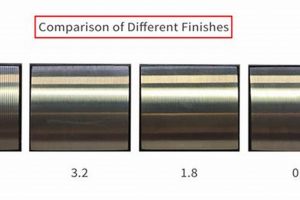
Surface treatments significantly influence the visual characteristics of metallic components, extending beyond mere protection to encompass the aesthetic appeal of a product. Color, texture, and reflectivity are all properties altered to achieve specific design objectives. A polished finish on stainless steel, for instance, provides a modern, high-end appearance valued in architectural applications and consumer goods. Conversely, powder coating offers a wide spectrum of colors and textures, enabling customization to meet branding or functional requirements. The choice of treatment directly impacts the perceived quality and marketability of the end product.
The integration of aesthetic considerations into the selection process often results in enhanced product value. For example, automotive manufacturers utilize multi-layer paint systems not only for corrosion resistance but also for achieving a deep, lustrous finish that contributes to the vehicle’s overall appeal. In electronic devices, anodized aluminum casings offer a combination of durability and visual sophistication, enhancing the user’s perception of quality. The ability to customize surface appearance allows designers to align the product’s aesthetics with the target market’s preferences, driving sales and reinforcing brand identity.
However, balancing aesthetic objectives with functional requirements and cost constraints can pose challenges. Certain treatments that provide superior aesthetics may compromise durability or increase production costs. Therefore, a comprehensive evaluation of trade-offs is essential to ensure that the selected method aligns with the overall product goals. Understanding the interplay between aesthetics, functionality, and cost is crucial for achieving optimal outcomes in surface treatment applications.
3. Functionality
The surface treatment applied to a metallic component directly influences its functionality by altering key physical and chemical properties. Selecting a process based solely on aesthetics or cost, without considering the intended function, often leads to premature failure or sub-optimal performance. Functional considerations dictate requirements such as hardness, electrical conductivity, thermal resistance, and friction coefficient. For example, applying a non-conductive coating to a busbar in electrical equipment would impede its primary function of conducting electricity. Similarly, using a low-friction coating on components intended for high-torque applications might result in slippage and operational inefficiencies.
Real-world examples illustrate the practical significance of understanding the relationship between surface treatment and functionality. In the aerospace industry, turbine blades utilize thermal barrier coatings (TBCs) to withstand extreme temperatures and prevent thermal fatigue, significantly extending engine lifespan and improving fuel efficiency. In the medical device sector, titanium implants undergo surface modification to enhance biocompatibility and promote osseointegration, crucial for successful implantation and long-term integration with the surrounding bone tissue. These instances underscore the critical role of treatments in enabling components to perform their intended functions effectively and reliably. Improper process selection can lead to catastrophic failures, highlighting the need for a holistic approach that prioritizes functional requirements.
A comprehensive understanding of the connection between surface treatment and functionality is paramount for engineers and designers. Challenges arise when balancing multiple, potentially conflicting, functional requirements. For instance, a treatment that enhances wear resistance might simultaneously increase surface roughness, affecting fluid flow characteristics. Therefore, a careful trade-off analysis and rigorous testing are necessary to ensure the selected method achieves the optimal balance of properties. By prioritizing functional requirements, engineers can leverage the benefits of surface treatments to enhance component performance, extend product life, and improve overall system reliability.
4. Durability

Surface treatments applied to metallic components directly influence their resistance to degradation over time, dictating the lifespan and reliability of the finished product. The durability conferred by a specific method is a critical performance metric, particularly in applications where components are exposed to harsh environmental conditions or demanding operational stresses.
- Corrosion Resistance and Coating Integrity
The ability of a finish to withstand corrosive environments is a primary determinant of its long-term performance. Techniques such as galvanizing, powder coating, and electroplating create protective barriers that prevent the ingress of moisture, salts, and other corrosive agents. The integrity of this barrier, assessed through standardized testing methods like salt spray exposure, is a key indicator of durability. Premature failure of the coating, through cracking, blistering, or delamination, significantly reduces the component’s lifespan.
- Abrasion and Wear Resistance
In applications involving moving parts or exposure to abrasive materials, the surface finish must resist wear and erosion. Hard chrome plating, nitriding, and various ceramic coatings increase surface hardness and reduce friction, minimizing material loss and maintaining dimensional stability over extended use. The selection of a wear-resistant finish is particularly critical in industries such as mining, agriculture, and manufacturing, where equipment is subjected to constant abrasion.
- UV Resistance and Color Stability
For components exposed to direct sunlight, the finish must resist degradation from ultraviolet (UV) radiation. Prolonged UV exposure can cause fading, chalking, and embrittlement, compromising both the aesthetic appearance and the structural integrity of the coating. Specific formulations, such as those incorporating UV absorbers, are designed to enhance resistance to UV-induced degradation, ensuring long-term color stability and preventing premature failure in outdoor applications.
- Impact and Mechanical Stress Resistance
The ability of a finish to withstand impact and mechanical stress is critical in applications where components are subject to physical abuse or sudden loads. Powder coatings and specialized paints offer enhanced flexibility and impact resistance, preventing cracking or chipping under stress. The selection of a finish with adequate impact resistance is crucial in industries such as automotive, construction, and transportation, where components are routinely subjected to mechanical stresses.
In conclusion, the durability conferred by various surface treatments directly impacts the longevity, performance, and overall value of metallic components. The selection of an appropriate method must consider the specific environmental conditions, operational stresses, and performance requirements of the intended application. A comprehensive understanding of durability factors is essential for ensuring that the chosen finish provides adequate protection and maintains its integrity over the lifespan of the product.
5. Cost

Economic considerations are integral to the selection and implementation of surface treatments for metallic components. Cost encompasses not only the initial investment but also life-cycle expenses, including maintenance, repair, and potential replacement costs. Optimizing economic efficiency requires a thorough evaluation of various methods and their associated financial implications.
- Material Costs
The raw materials utilized in different processes vary significantly in price, directly influencing the overall cost. Precious metals, such as gold or platinum, employed in specialized plating applications, inherently increase expenses. Conversely, zinc and chromate conversion coatings are relatively inexpensive. The choice of material must balance performance requirements with budgetary constraints.
- Application Costs
The complexity and energy intensity of the application process contribute substantially to the overall cost. Processes requiring specialized equipment, skilled labor, and strict environmental controls, such as vacuum deposition or plasma spraying, are more expensive than simpler techniques like painting or powder coating. Automation can mitigate labor costs but requires significant capital investment.
- Pre-Treatment Costs
Surface preparation is often a necessary prerequisite to ensure proper adhesion and performance. Cleaning, degreasing, etching, and abrasive blasting can add significantly to the initial cost. The extent of pre-treatment depends on the substrate material, the selected finish, and the required level of performance. Inadequate preparation may lead to premature failure and increased long-term costs.
- Life-Cycle Costs
A comprehensive cost analysis must consider the long-term performance and maintenance requirements. While a low initial investment may be attractive, finishes with limited durability or corrosion resistance may require frequent repairs or replacements, resulting in higher cumulative expenses. Factors such as corrosion protection, wear resistance, and UV stability contribute significantly to the overall life-cycle cost.
In summary, a holistic understanding of all cost components is crucial for making informed decisions. Engineers and designers must carefully weigh the initial investment, application expenses, and long-term performance characteristics to select the most economically viable surface treatment for a given application. This approach ensures that the chosen method delivers optimal value while meeting the necessary functional and aesthetic requirements.
6. Sustainability

The intersection of environmental responsibility and industrial practices is increasingly critical. Within the realm of surface treatments for metallic components, sustainability considerations are paramount. The selection of processes and materials must align with principles of environmental stewardship, minimizing adverse impacts throughout the entire lifecycle.
- Reduced Volatile Organic Compound (VOC) Emissions
Traditional solvent-based coatings release significant quantities of VOCs into the atmosphere, contributing to air pollution and posing health risks. Sustainable alternatives, such as powder coatings, waterborne coatings, and UV-curable coatings, substantially reduce or eliminate VOC emissions. The transition to these processes mitigates environmental impact and enhances worker safety.
- Minimization of Hazardous Waste Generation
Certain surface treatment processes generate substantial quantities of hazardous waste, including heavy metal-containing sludges, spent chemicals, and contaminated wastewater. Environmentally responsible alternatives prioritize the use of less toxic materials and implement closed-loop systems to minimize waste generation. Examples include trivalent chromium conversion coatings as replacements for hexavalent chromium, and electrolytic recovery systems for reclaiming valuable metals from waste streams.
- Resource Conservation and Energy Efficiency
Sustainable practices emphasize efficient resource utilization and energy consumption. Processes such as thin-film deposition and surface modification techniques minimize material usage compared to traditional plating or coating methods. Furthermore, energy-efficient equipment, optimized process parameters, and waste heat recovery systems reduce energy consumption and lower the carbon footprint of surface treatment operations.
- Extended Product Lifespan and Recyclability
Durable and corrosion-resistant surface treatments extend the service life of metallic components, reducing the need for frequent replacements and minimizing material consumption. Selecting processes that enhance recyclability is also crucial. Surface treatments that do not impede the recycling process or allow for easy separation of materials at the end of the component’s life cycle contribute to a circular economy.
The pursuit of sustainability in surface treatments necessitates a holistic approach, considering environmental impact, resource efficiency, and lifecycle considerations. By embracing innovative technologies and responsible practices, industries can minimize the environmental footprint of their operations while maintaining or improving the performance and durability of metallic components.
Frequently Asked Questions About Surface Treatments for Metals
The following section addresses common inquiries regarding surface treatments for metallic components, providing clarity on selection, application, and performance characteristics.
Question 1: What are the primary factors influencing the selection of a particular surface treatment?
The selection process hinges on operational requirements, environmental conditions, and desired performance attributes. These include corrosion resistance, wear resistance, aesthetic considerations, functional requirements, and budgetary constraints. A comprehensive analysis of these factors is essential for informed decision-making.
Question 2: How does surface preparation impact the effectiveness of a surface treatment?
Surface preparation is critical for ensuring proper adhesion and performance. Contaminants, oxides, and other surface imperfections must be removed to create a clean and receptive substrate. Inadequate preparation can lead to premature failure, delamination, and reduced service life.
Question 3: What are the environmental considerations associated with different surface treatment processes?
Certain processes generate hazardous waste, emit volatile organic compounds (VOCs), and consume significant energy. Sustainable alternatives, such as powder coatings, waterborne coatings, and trivalent chromium conversion coatings, minimize environmental impact and adhere to regulatory requirements. Responsible waste management practices are also essential.
Question 4: How can the durability of a surface treatment be assessed?
Durability is typically assessed through standardized testing methods, including salt spray exposure, abrasion resistance testing, UV exposure testing, and impact testing. These tests evaluate the coating’s ability to withstand environmental stresses and maintain its integrity over time. The results provide a benchmark for comparing different methods.
Question 5: What is the role of surface treatments in enhancing the functionality of metallic components?
Surface treatments can modify key physical and chemical properties, enhancing functionality. Examples include increasing hardness for wear resistance, improving electrical conductivity for electronic applications, and promoting biocompatibility for medical implants. The specific functional requirements dictate the choice of method.
Question 6: How does cost influence the selection of a surface treatment?
Cost considerations encompass initial investment, application expenses, and life-cycle costs. While a low initial cost may be appealing, long-term performance and maintenance requirements must also be factored in. A comprehensive cost-benefit analysis is essential for selecting the most economically viable option.
In summary, the effective utilization of surface treatments requires a holistic understanding of factors encompassing performance, environmental impact, and economic viability. Careful planning ensures optimal outcomes.
The following section presents a glossary of key terms related to surface treatments.
Conclusion
The preceding discussion has presented a comprehensive overview of surface treatments for metallic components. Critical parameters, including protection, aesthetics, functionality, durability, cost, and sustainability, must be carefully considered. Informed decisions are predicated on understanding the interplay between these factors and their impact on overall performance and lifecycle costs.
The effective implementation of finishes for metal is paramount for ensuring the longevity, reliability, and value of engineered products. Continued advancements in materials science and processing technologies will undoubtedly yield innovative solutions, further optimizing the performance and sustainability of metallic components across diverse industries. A commitment to informed selection and responsible application remains crucial for maximizing the benefits of these technologies.