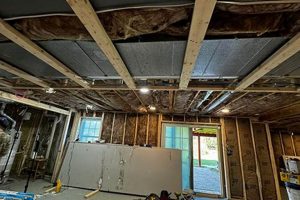
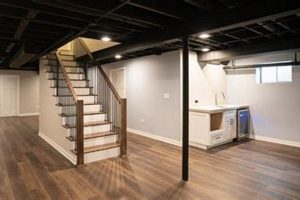
Implementing a subsurface water management system in conjunction with the improvement of below-grade living spaces involves installing a drainage pathway to redirect water away from the foundation. This method mitigates hydrostatic pressure and potential water intrusion, creating a drier and more usable environment. A typical application would involve excavating along the footing, laying perforated pipe surrounded by gravel, and then covering it with a filter fabric before backfilling.
This approach offers several advantages, including preventing mold growth, reducing the risk of structural damage caused by water, and increasing the overall value and comfort of the residence. Historically, such systems have been employed in agricultural settings to improve soil conditions and prevent waterlogging, and the principles have been adapted for residential applications to combat basement moisture problems. The effectiveness of this technique in safeguarding against water damage cannot be overstated, especially in regions with high water tables or frequent rainfall.
The subsequent sections will delve into the specific steps involved in preparing the basement for finishing, selecting appropriate materials for both the drainage system and the finished space, and implementing best practices for ensuring long-term moisture control and a healthy indoor environment.
Essential Considerations for Basement Finishing with Subsurface Drainage
The following tips are designed to provide guidance on how to effectively integrate a water management system with the process of improving a below-grade space. These recommendations emphasize proper planning, execution, and material selection for optimal performance and longevity.
Tip 1: Conduct a Thorough Site Assessment: Before commencing any work, evaluate the existing conditions. Assess the water table level, soil composition, and the severity of any existing moisture problems. This assessment will inform the design and scope of the project.
Tip 2: Proper Excavation Depth and Slope: Ensure the trench for the drainage system is excavated to the proper depth, typically reaching the footing of the foundation. Maintain a consistent slope to facilitate water flow towards the discharge point. A slope of at least one inch per eight feet is generally recommended.
Tip 3: Select Appropriate Drainage Pipe: Use perforated drainage pipe specifically designed for subsurface applications. Choose a diameter that is adequate for the anticipated water volume. Consider using rigid PVC pipe for greater durability and resistance to crushing.
Tip 4: Utilize a Quality Filter Fabric: Enclose the gravel surrounding the drainage pipe with a geotextile filter fabric. This fabric prevents soil particles from clogging the system and ensures long-term functionality. Overlap the fabric adequately to prevent soil infiltration.
Tip 5: Ensure Proper Discharge: The drainage system must have a proper discharge point, such as a sump pump connected to a storm sewer or a daylight drain. Ensure the discharge point is located away from the foundation to prevent water from re-entering the system.
Tip 6: Implement a Comprehensive Waterproofing Strategy: In addition to the subsurface drainage, consider applying a waterproof membrane to the exterior of the foundation walls. This provides an additional layer of protection against water intrusion.
Tip 7: Install a Vapor Barrier: After the drainage system is in place, install a vapor barrier on the interior side of the basement walls before framing and insulation. This barrier helps prevent moisture from condensing on the walls and promoting mold growth.
Successfully integrating a subsurface drainage system with the process of improving a below-grade space hinges on meticulous planning, careful execution, and the use of appropriate materials. By addressing water management concerns proactively, a dry, comfortable, and usable living space can be created.
The following section will explore the long-term maintenance and upkeep requirements for such systems, ensuring continued effectiveness and preventing future issues.
1. Waterproofing Membrane Application

Waterproofing membrane application is a critical component when undertaking a project involving subsurface drainage and the improvement of below-grade living spaces. Its role is to provide an impermeable barrier against hydrostatic pressure and water migration, thereby safeguarding the finished basement environment. When properly integrated, it complements the functions of the subsurface drainage system.
- Exterior Foundation Protection
The application of a waterproofing membrane to the exterior of the foundation wall acts as the first line of defense against water intrusion. This barrier prevents water from penetrating the concrete or masonry, minimizing the risk of moisture accumulation within the wall itself. Materials commonly used for this purpose include bituminous coatings, modified asphalt membranes, and cementitious waterproofing compounds. For example, a foundation situated in an area with a high water table benefits significantly from a robust exterior waterproofing membrane, preventing water from seeping into the basement even if the drainage system becomes temporarily overwhelmed.
- Mitigation of Hydrostatic Pressure
Hydrostatic pressure, exerted by groundwater against the foundation, can force water through even minor cracks or imperfections in the concrete. A properly applied waterproofing membrane resists this pressure, preventing water from entering the basement through these vulnerabilities. The choice of membrane should be based on the anticipated level of hydrostatic pressure at the site. For instance, a self-adhering sheet membrane offers superior resistance to hydrostatic pressure compared to a brush-applied coating.
- Enhanced Air Quality and Mold Prevention
By preventing water intrusion, waterproofing membrane application plays a vital role in maintaining healthy indoor air quality. Damp basements are breeding grounds for mold and mildew, which can trigger allergies and respiratory problems. A dry basement, achieved through effective waterproofing, reduces the likelihood of mold growth, contributing to a healthier living environment. Consider a basement prone to condensation: without a waterproofing membrane, moisture could seep into the walls, creating an ideal environment for mold even if a subsurface drainage system is present.
- Long-Term Structural Integrity
Water intrusion can lead to the deterioration of foundation materials over time. Freezing and thawing cycles, in particular, can cause cracks to widen and concrete to crumble. Waterproofing membrane application helps to protect the foundation from these destructive processes, ensuring its long-term structural integrity. In areas with severe winters, a waterproofing membrane is essential to prevent water that has penetrated the concrete from freezing and causing further damage.
In conclusion, waterproofing membrane application is an indispensable element in any basement finishing project that includes a subsurface drainage system. It provides a critical layer of protection against water intrusion, mitigating hydrostatic pressure, enhancing air quality, preventing mold growth, and safeguarding the long-term structural integrity of the foundation. These benefits directly contribute to the creation of a comfortable, healthy, and durable finished basement space.
2. Proper Excavation Depth

When finishing a basement with a subsurface drainage system, the depth of excavation is a determinant factor in the system’s performance. Improper depth compromises the system’s ability to intercept groundwater effectively, leading to potential moisture issues within the finished space. The system’s purpose is to relieve hydrostatic pressure against the foundation walls and divert water away from the basement. Excavating to the correct depth ensures the perforated pipe is positioned to capture water before it reaches the foundation. For example, a drainage system installed too shallow may only collect surface runoff, failing to address groundwater seepage that occurs at the footing level.
The generally accepted practice involves excavating down to the footing of the foundation. This placement allows the drainage pipe to be situated at the lowest point, maximizing its capacity to collect water migrating towards the basement. Failing to reach this depth means the drainage system functions sub-optimally, potentially resulting in water accumulation and subsequent structural damage. Consider a scenario where a basement finishing project neglects to excavate deeply enough: overtime, hydrostatic pressure builds, forcing moisture through the foundation walls, causing paint to peel, mold to grow, and ultimately, compromising the integrity of the finished basement. The effort saved during excavation is often outweighed by the cost of remediation and repair.
In conclusion, proper excavation depth is not merely a procedural step but a foundational element of successful below-grade finishing with integrated drainage. A commitment to reaching the footing level during excavation is essential for ensuring long-term moisture control, preventing water damage, and preserving the integrity of the finished basement. Neglecting this crucial step often leads to recurring water problems, negating the investment in basement finishing. Therefore, adherence to proper excavation depth is paramount for homeowners and contractors alike.
3. Effective Drainage Slope

Effective drainage slope is a critical factor in the successful implementation of a subsurface drainage system when undertaking basement finishing projects. A properly graded slope ensures water is efficiently directed away from the foundation, preventing hydrostatic pressure buildup and potential water intrusion into the finished space. The absence of a sufficient slope can render the entire system ineffective, regardless of other design considerations.
- Gravity-Driven Water Evacuation
The primary function of a drainage system relies on gravity to move water from the perimeter of the foundation to a designated discharge point. An inadequate slope impedes this natural flow, leading to stagnant water within the system. This stagnation not only reduces the system’s overall capacity but can also promote the accumulation of silt and debris, ultimately clogging the drainage pathways. For example, a near-level drainage pipe will accumulate sediment far more quickly than one with a consistent downward grade, necessitating more frequent maintenance.
- Minimizing Standing Water Risks
Standing water within a subsurface drainage system creates a breeding ground for bacteria and insects, potentially leading to unpleasant odors and health concerns within the finished basement. Furthermore, prolonged contact between standing water and the foundation can accelerate the deterioration of concrete and masonry. A properly sloped system minimizes these risks by rapidly evacuating water, leaving the surrounding soil drier and less susceptible to microbial growth. Consider a scenario where heavy rainfall overwhelms the drainage system; a well-sloped system will recover far more quickly, reducing the duration of standing water.
- Preventing Backflow and Water Recirculation
If the slope of the drainage system is not consistently downward towards the discharge point, sections of the pipe may become flooded, creating the potential for backflow. This can lead to water recirculating within the system, negating its effectiveness and potentially exacerbating moisture problems. An example of this phenomenon is a low-lying section of the pipe that collects water, which then flows back towards the foundation during periods of heavy rainfall. Careful attention to maintaining a uniform and adequate slope throughout the system is essential to prevent this issue.
- Optimizing Sump Pump Efficiency
In many installations, the subsurface drainage system is connected to a sump pump, which actively discharges collected water away from the foundation. A properly sloped system maximizes the efficiency of the sump pump by ensuring water reaches the pump basin quickly and consistently. If the slope is inadequate, the sump pump may cycle more frequently and for longer durations, increasing energy consumption and potentially shortening the pump’s lifespan. A well-designed system, with an appropriate slope, allows the sump pump to operate only when necessary, resulting in cost savings and improved reliability.
The interrelation between effective drainage slope and achieving a dry, usable finished basement is undeniable. Each aspect, from gravity-driven water evacuation to sump pump optimization, is reliant upon the consistent and proper grading of the subsurface drainage system. Neglecting this critical element can compromise the entire project, leading to persistent moisture problems and undermining the investment in finishing the basement. Therefore, careful planning and execution of the drainage slope are essential for long-term success.
4. Geotextile Filter Selection

The selection of an appropriate geotextile filter is a critical consideration when implementing a subsurface drainage system in conjunction with improving a below-grade space. This selection directly impacts the long-term performance and effectiveness of the drainage system, influencing the overall success of the finished basement.
- Soil Particle Retention and Permeability
The primary function of a geotextile filter is to prevent soil particles from entering and clogging the drainage system while allowing water to freely flow through. The filter must possess the appropriate pore size distribution to retain the surrounding soil’s particles without impeding water flow. For instance, using a geotextile with excessively large pores in sandy soil will result in the migration of sand into the drainage system, ultimately reducing its capacity. Conversely, a geotextile with excessively small pores may become clogged with fine silt or clay, hindering water flow and causing the system to fail. Proper analysis of the surrounding soil composition is, therefore, crucial to determine the appropriate geotextile pore size and permeability characteristics.
- Geotextile Durability and Chemical Resistance
The geotextile material must exhibit sufficient durability to withstand the physical stresses associated with installation and long-term exposure to soil and groundwater. This includes resistance to tearing, puncture, and abrasion. Furthermore, the geotextile should be chemically inert and resistant to degradation from exposure to naturally occurring soil chemicals or contaminants. For example, a geotextile installed in an area with high iron content in the groundwater must be resistant to iron oxidation and precipitation, which can cause clogging. Similarly, in areas with acidic soil, the geotextile should be resistant to acid degradation. Selecting a geotextile that is chemically incompatible with the surrounding environment can lead to premature failure of the drainage system and subsequent moisture problems in the finished basement.
- Geotextile Type: Woven vs. Non-Woven
Geotextiles are broadly classified into woven and non-woven types, each possessing distinct characteristics that make them suitable for different applications. Woven geotextiles typically offer higher tensile strength and are often used in applications requiring reinforcement or stabilization. Non-woven geotextiles, on the other hand, generally exhibit higher permeability and are better suited for filtration applications. In the context of a subsurface drainage system around a basement, a non-woven geotextile is typically preferred due to its superior filtration properties. For example, a non-woven geotextile will more effectively prevent fine soil particles from entering the drainage system compared to a woven geotextile with the same equivalent opening size.
- Installation Considerations
The proper installation of the geotextile filter is as important as the selection of the appropriate material. The geotextile must be installed in a manner that ensures complete encapsulation of the drainage aggregate, preventing soil from directly contacting the drainage pipe. Overlapping the geotextile edges sufficiently is crucial to prevent soil infiltration at the seams. For example, failing to adequately overlap the geotextile can create pathways for soil particles to enter the drainage system, negating the benefits of selecting a high-quality geotextile. Furthermore, care must be taken during backfilling to avoid puncturing or tearing the geotextile. Proper installation techniques are essential for maximizing the effectiveness and longevity of the drainage system.
In conclusion, the selection of a suitable geotextile filter is an integral aspect of any project involving basement finishing and the implementation of subsurface drainage. Factors such as soil particle retention, durability, chemical resistance, geotextile type, and installation considerations must all be carefully evaluated to ensure the drainage system functions effectively and provides long-term protection against moisture intrusion in the finished basement. A poorly selected or improperly installed geotextile can compromise the entire system, leading to recurring water problems and undermining the investment in finishing the basement.
5. Appropriate Pipe Diameter
Selecting the appropriate pipe diameter is a crucial aspect of designing an effective subsurface drainage system for basement finishing projects. The pipe’s capacity must adequately handle anticipated water volumes to prevent water accumulation and ensure long-term dryness of the finished space.
- Water Volume and System Capacity
The pipe diameter directly influences the drainage system’s capacity to convey water away from the foundation. Smaller diameter pipes may become overwhelmed during periods of heavy rainfall or high groundwater levels, leading to water backup and potential flooding. Conversely, using an excessively large diameter pipe can be unnecessarily costly and may not improve drainage performance. The optimal pipe diameter is determined by factors such as the area’s average rainfall, soil permeability, and the depth of the water table. For instance, a property in a region with frequent heavy rains and poorly draining clay soil requires a larger diameter pipe compared to a property in a drier climate with well-draining sandy soil.
- Pipe Slope and Flow Rate
While pipe diameter dictates the maximum volume of water that can be conveyed, the slope of the pipe influences the rate at which water flows through the system. A steeper slope increases the flow rate, allowing a smaller diameter pipe to handle a given volume of water. However, excessively steep slopes can lead to erosion and sediment buildup within the pipe. In contrast, an insufficient slope reduces the flow rate, potentially causing water to pool within the system and hindering its effectiveness. The selection of the appropriate pipe diameter must, therefore, be considered in conjunction with the planned slope of the drainage system. For example, a drainage system with a shallow slope may require a larger diameter pipe to compensate for the reduced flow rate.
- Sediment Accumulation and Maintenance
The pipe diameter also affects the system’s susceptibility to sediment accumulation. Smaller diameter pipes are more prone to clogging from silt, debris, and root intrusion. Regular maintenance, such as flushing the system with water, may be necessary to prevent blockages and maintain optimal drainage performance. Larger diameter pipes provide more space for sediment to accumulate before significantly impacting water flow, reducing the frequency of required maintenance. However, larger pipes are also more costly to install. The selection of the pipe diameter should balance the initial cost with the anticipated maintenance requirements. For example, a property with mature trees near the foundation may benefit from a larger diameter pipe to reduce the risk of root intrusion, even if the water volume does not strictly necessitate it.
- Code Compliance and Best Practices
Local building codes and industry best practices often specify minimum pipe diameters for subsurface drainage systems. Adhering to these standards ensures the system meets minimum performance requirements and reduces the risk of future problems. Consulting with a qualified engineer or contractor is recommended to determine the appropriate pipe diameter based on the specific site conditions and applicable regulations. For example, some jurisdictions may require a minimum pipe diameter of 4 inches for all subsurface drainage systems, regardless of the anticipated water volume. Failing to comply with these requirements can result in code violations and costly remediation work.
The selection of the appropriate pipe diameter is a multifaceted decision that significantly impacts the effectiveness and longevity of a subsurface drainage system for basement finishing. Consideration of water volume, pipe slope, sediment accumulation, and code compliance is essential to ensure the system adequately protects the finished space from moisture damage. A well-designed and properly installed drainage system with an appropriately sized pipe is a crucial investment in the long-term value and habitability of a basement.
6. Sump pump functionality

The integration of a subsurface drainage system, commonly referred to as a French drain, in basement finishing projects necessitates a functional sump pump for effective water management. The French drain collects groundwater surrounding the foundation, channeling it towards a central collection point, typically a sump pit. The sump pump, located within this pit, serves to evacuate the accumulated water, discharging it away from the building’s foundation. Without a properly functioning sump pump, the collected water would remain in the pit, potentially leading to water infiltration into the finished basement and negating the benefits of the drainage system. For example, in a region with a high water table, a French drain system alone is insufficient; the sump pump actively removes the collected water, preventing hydrostatic pressure from building against the basement walls.
The connection between the French drain and sump pump functionality is one of cause and effect. The French drain acts as the collection mechanism, while the sump pump provides the motive force for water removal. The selection of an appropriately sized and powered sump pump is critical. The pump’s capacity should be matched to the anticipated volume of water collected by the drainage system, accounting for peak rainfall events and groundwater levels. Regular maintenance and inspection of the sump pump are essential to ensure its reliable operation. A malfunctioning or inadequately sized pump can lead to basement flooding, undermining the investment in the finished space and potentially causing significant property damage. Consider a scenario where a homeowner installs a French drain system but neglects to maintain the sump pump; a power outage during a heavy storm renders the pump inoperable, resulting in basement flooding despite the presence of the drainage system.
In summary, a functional sump pump is an indispensable component of a basement finishing project that incorporates a French drain. The sump pump actively removes water collected by the drainage system, preventing water infiltration and protecting the finished space from damage. Proper sizing, regular maintenance, and backup power solutions are essential to ensure reliable sump pump operation and safeguard the basement against water-related problems. The effectiveness of a French drain is directly dependent on the functionality of its associated sump pump; neglecting this critical element can negate the benefits of the drainage system and result in costly consequences.
7. Vapor barrier installation

Vapor barrier installation, when integrated with a subsurface drainage system during basement finishing, serves as a crucial element in moisture management. Its primary function is to impede the diffusion of water vapor through the basement walls and floor, thereby preventing condensation and subsequent mold growth within the finished space. This addresses a different aspect of moisture control than the French drain, which manages liquid water intrusion.
- Prevention of Condensation and Mold Growth
Basement environments are often characterized by high humidity levels and cooler temperatures, conditions conducive to condensation. Water vapor present in the air can migrate through porous building materials, such as concrete, and condense on cooler surfaces. This condensation creates an environment favorable for mold and mildew growth, which can compromise indoor air quality and damage building materials. The vapor barrier effectively reduces the rate of vapor diffusion, minimizing the risk of condensation and mold proliferation. For example, consider a basement where warm, humid air from the upper floors penetrates the concrete walls; without a vapor barrier, this moisture condenses, leading to mold. The vapor barrier mitigates this by reducing vapor transmission.
- Protection of Insulation Materials
Many basement finishing projects include the installation of insulation to improve energy efficiency and thermal comfort. However, insulation materials can lose their effectiveness when they become damp. Moisture accumulation within insulation can reduce its R-value, leading to increased energy consumption and decreased comfort. A vapor barrier protects the insulation from moisture damage by preventing water vapor from migrating into the insulation layer. Fiberglass batts, for instance, are particularly susceptible to moisture damage; a vapor barrier between the batts and the concrete wall prevents moisture from compromising their insulating properties.
- Types of Vapor Barriers and Perm Ratings
Vapor barriers are classified based on their permeance, a measure of the rate at which water vapor passes through the material. Materials with low permeance values are considered vapor barriers, while those with higher permeance values are vapor retarders. The selection of an appropriate vapor barrier depends on the climate, the type of construction, and the expected moisture levels. In colder climates, a more restrictive vapor barrier is typically recommended to prevent moisture from migrating into the wall cavity during the heating season. Conversely, in warmer climates, a less restrictive vapor retarder may be sufficient to allow some level of moisture diffusion. For example, polyethylene film, commonly used as a vapor barrier, has a very low permeance, while specialized paints and coatings may function as vapor retarders.
- Installation Techniques and Overlap Requirements
Proper installation of the vapor barrier is critical to its effectiveness. The vapor barrier must be installed continuously, with all seams and penetrations carefully sealed to prevent air and vapor leakage. Overlapping the edges of the vapor barrier material and using vapor-resistant tape to seal the seams ensures a continuous barrier against moisture migration. Failing to properly seal the seams can create pathways for water vapor to bypass the vapor barrier, negating its effectiveness. For instance, gaps around electrical outlets or plumbing penetrations must be carefully sealed to prevent moisture from entering the wall cavity. Attention to detail during installation is essential for achieving optimal moisture control in the finished basement.
The integration of vapor barrier installation with a subsurface drainage system represents a comprehensive approach to moisture management in basement finishing projects. While the French drain addresses liquid water intrusion from the exterior, the vapor barrier mitigates the diffusion of water vapor from the interior. These two systems work in tandem to create a dry, comfortable, and healthy living environment in the finished basement.
Frequently Asked Questions
The following section addresses common inquiries regarding the implementation of a subsurface drainage system, frequently termed a French drain, in the context of basement finishing projects. These questions are intended to provide clarity on design considerations, functionality, and potential challenges associated with this approach.
Question 1: What is the primary function of a French drain in a basement finishing project?
The primary function is to alleviate hydrostatic pressure against the foundation walls and to redirect groundwater away from the basement. This reduces the risk of water intrusion, creating a drier and more usable living space.
Question 2: At what depth should a French drain be installed relative to the foundation?
The drain should be installed at the footing level of the foundation. This placement allows the system to intercept groundwater before it reaches the foundation slab or walls.
Question 3: What type of material is recommended for the filter surrounding the drainage pipe?
A geotextile filter fabric is recommended. This fabric allows water to pass through while preventing soil particles from clogging the drainage system.
Question 4: Is a sump pump always necessary when installing a French drain?
A sump pump is typically necessary, especially in areas with high water tables or heavy rainfall. The pump actively removes collected water, preventing it from accumulating and potentially seeping into the basement.
Question 5: How often should a French drain system be inspected and maintained?
The system should be inspected at least annually. Maintenance may include flushing the drainage pipes to remove sediment and ensuring the sump pump is functioning correctly.
Question 6: What are the potential consequences of neglecting to properly install a French drain?
Neglecting proper installation can lead to water intrusion, mold growth, structural damage to the foundation, and a compromised finished basement environment.
In summary, a properly designed and installed French drain system, coupled with regular maintenance, is crucial for ensuring a dry and comfortable finished basement. Failure to address groundwater issues can result in significant and costly problems over time.
The subsequent section will detail common misconceptions associated with “finishing basement with french drain” system. This information clarifies any remaining misunderstandings and helps you decide if this is the right choice for your situation.
Finishing Basement with French Drain
The integration of subsurface drainage with the finishing of below-grade spaces represents a significant undertaking, one requiring careful planning and diligent execution. This discussion has addressed key aspects, encompassing site assessment, material selection, installation techniques, and maintenance considerations. A properly implemented system serves to mitigate hydrostatic pressure and redirect groundwater, thereby safeguarding the finished environment against water intrusion and the associated risks of mold, structural damage, and compromised indoor air quality. The effectiveness of such a system hinges on adherence to established best practices and a thorough understanding of the principles governing groundwater management.
The decision to incorporate a subsurface drainage system should be predicated on a comprehensive evaluation of site-specific conditions and a realistic assessment of long-term maintenance requirements. While the initial investment may be substantial, the benefits of a dry, habitable, and structurally sound basement often outweigh the costs. Further research and consultation with qualified professionals are strongly encouraged to ensure a successful and enduring outcome.