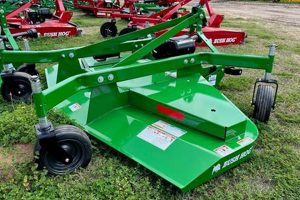
Two distinct types of mowing equipment cater to different landscaping and agricultural needs. One utilizes a series of vertical blades attached to a rotating drum, designed for heavy-duty cutting of dense vegetation. The other employs horizontally mounted blades that spin at high speeds, primarily intended for achieving a manicured, lawn-like appearance.
The selection of the appropriate mowing technology significantly impacts the efficiency and effectiveness of land management practices. The former’s robustness is advantageous for clearing overgrown areas and handling tougher materials, reducing the need for pre-cutting. Conversely, the latter excels in providing a clean, even cut on well-maintained surfaces, enhancing aesthetic appeal and promoting healthy turf growth. Their respective developmental trajectories reflect evolving demands for both functional land clearing and ornamental landscape maintenance.
The following sections will delve into a detailed comparison of these two implements, examining their design characteristics, operational capabilities, maintenance requirements, and suitability for various applications, enabling informed decision-making regarding the optimal choice for specific mowing tasks.
Optimizing Equipment Selection
Choosing between different mowing implements requires careful evaluation of operational needs and environmental factors. The following guidelines offer insights into maximizing the utility and lifespan of each type of machine.
Tip 1: Terrain Assessment: Prior to selection, thoroughly evaluate the terrain. Uneven ground, rocks, and dense undergrowth necessitate equipment designed for robust performance and impact resistance.
Tip 2: Vegetation Type: Consider the predominant vegetation. Areas with thick stalks, brush, or small trees require machinery capable of mulching and clearing dense materials, while fine grasses benefit from equipment designed to provide a clean, even cut.
Tip 3: Cut Quality Expectations: Define the desired aesthetic outcome. For a manicured lawn appearance, implements engineered for precise cutting at consistent heights are essential. Rougher terrain or fields may prioritize functionality over aesthetics.
Tip 4: Maintenance Capabilities: Assess available maintenance resources and expertise. Equipment with complex mechanisms may require specialized knowledge and tools, impacting long-term operational costs.
Tip 5: Scalability Considerations: Anticipate future needs. A smaller machine may suffice for initial requirements, but larger properties or expanding operations may necessitate equipment with greater cutting width and power.
Tip 6: Safety Protocols: Strictly adhere to manufacturer-recommended safety guidelines. Ensure operators receive proper training and protective equipment is consistently utilized to mitigate potential hazards associated with high-speed rotating blades and debris ejection.
These guidelines emphasize a strategic approach to equipment acquisition, ensuring alignment with specific operational requirements and fostering efficient land management practices.
The concluding section will summarize the key distinctions between these options and offer a conclusive perspective on their respective roles in various operational contexts.
1. Rough Cut Capability

The ability to handle dense vegetation, uneven terrain, and obstacles is paramount in many land management scenarios. Rough cut capability distinguishes mowing implements based on their capacity to efficiently clear and process coarse materials, influencing equipment selection between various options.
- Blade Design and Durability
Machinery intended for rough cutting utilizes robust blade designs, frequently incorporating thicker steel and reinforced mounting systems. Unlike the fine blades optimized for a clean finish, rough cut blades prioritize impact resistance and longevity when encountering rocks, branches, and dense stalks.
- Power and Torque Output
Effective rough cutting necessitates substantial power and torque. Engines designed for this application deliver consistent performance under load, maintaining blade speed and preventing stalling when encountering resistance from dense vegetation. The power-to-weight ratio is typically higher in rough-cut equipment to ensure efficient operation in challenging conditions.
- Deck Construction and Protection
The deck, or housing, of rough-cut equipment is constructed from heavy-gauge steel to withstand impacts from debris and protect internal components. Reinforced welds and strategically placed guards further enhance durability and minimize the risk of damage from projectiles.
- Cutting Height Adjustment and Range
Rough-cut capability is often associated with a wider range of cutting height adjustments. This allows operators to adapt to varying vegetation densities and terrain irregularities, clearing overgrown areas at initial high settings and progressively lowering the cutting height for more refined clearing.
These facets collectively define the performance of mowing equipment in demanding environments. The capacity for rough cutting aligns more closely with the capabilities of equipment designed to manage challenging landscapes, while those optimized for fine turf maintenance may lack the necessary robustness and power to operate effectively in such conditions.
2. Cut Height Precision

Cut height precision represents a critical differentiator between mowing implements. It refers to the ability to consistently and accurately maintain a specified cutting height across a given area, directly influencing the final appearance and health of the vegetation.
- Adjustment Mechanisms and Increment Resolution
Equipment designed for high cut height precision incorporates sophisticated adjustment mechanisms, allowing operators to select specific heights with minimal deviation. Increment resolution, often measured in fractions of an inch, dictates the granularity of adjustments. Implements intended for rough cutting may prioritize ease of adjustment and durability over fine-grained control, while those used for manicured lawns emphasize precise height settings.
- Deck and Blade Leveling Systems
Maintaining a level cutting plane is crucial for uniform results. Precision-oriented equipment incorporates advanced deck and blade leveling systems, ensuring that all blades operate at the same height relative to the ground. Such systems often involve adjustable linkages and leveling gauges, enabling operators to compensate for uneven terrain and maintain consistent cutting performance. In contrast, equipment designed for more forgiving applications may sacrifice precise leveling for enhanced maneuverability and ground clearance.
- Scalping Prevention Features
Scalping, the removal of turf down to the soil level, represents a significant concern in lawn maintenance. Equipment emphasizing cut height precision incorporates features designed to minimize scalping, such as anti-scalp rollers or floating decks that conform to ground contours. These features allow the implement to glide over undulations without digging into the turf, preserving its integrity and aesthetic appeal. Such features are less critical in rough cutting applications where scalping is less of a concern.
- Ground Following Capability
The ability of the mowing deck to closely follow the contours of the ground is essential for maintaining a consistent cutting height, especially on uneven terrain. Equipment with superior ground following capability utilizes flexible suspension systems or articulated decks to adapt to surface irregularities. This ensures that the blades maintain a uniform distance from the ground, resulting in a more even cut and reducing the risk of scalping. This is a key benefit of finish mowers compared to their counterparts when a professional finish is needed on undulating lawns.
These facets underscore the importance of cut height precision in achieving desired outcomes. Equipment optimized for this characteristic excels in maintaining aesthetically pleasing turf, while those prioritizing ruggedness and versatility may compromise on fine-tuned height control. The application dictates the relative value placed on precise height management capabilities.
3. Debris Management

Debris management constitutes a significant differentiating factor. The capacity to process and distribute cut materials dictates their suitability across varying operational environments. The equipment featuring vertical blades typically excels at mulching vegetation into fine particles, facilitating rapid decomposition and nutrient return to the soil. This attribute proves particularly advantageous in agricultural settings where maximizing soil fertility is a priority. Conversely, horizontal blade mowers often discharge clippings in a less processed state, requiring subsequent collection or leaving a visible layer of organic material on the surface.
The implications of differing debris management approaches extend beyond soil health. In environments where aesthetic appeal is paramount, such as golf courses or manicured lawns, the ability to minimize visible clippings is crucial. Horizontal blade mowers are frequently employed in these settings, often incorporating bagging systems to remove cut materials entirely. In contrast, the mulching action of flail mowers may be preferred in roadside maintenance, where leaving shredded vegetation reduces erosion and suppresses weed growth. The nature of the cutting system directly influences the size and distribution of the debris, dictating the necessary post-mowing procedures and the overall operational efficiency.
Effective debris management necessitates considering the downstream consequences of material processing. While mulching provides ecological benefits in certain contexts, the accumulation of excessive organic matter can lead to thatch buildup and impede turf health in others. Therefore, equipment selection must align with specific site conditions and management objectives to optimize both operational efficiency and environmental sustainability. Understanding these nuanced relationships is essential for responsible and effective vegetation management.
4. Power Requirements

Power requirements represent a fundamental consideration in the selection process. Distinct operational mechanisms dictate the horsepower needed to effectively drive and operate a mower. The type employing vertical blades, designed for processing dense vegetation, exhibits a higher power demand due to the increased resistance encountered during cutting. This necessitates more robust engines and potentially larger tractors to provide the necessary torque and rotational speed. In contrast, the type utilizing horizontal blades, optimized for manicured surfaces, generally requires less power, as it encounters less resistance and processes finer materials.
For example, clearing overgrown fields laden with thick brush and small saplings demands significant power to effectively mulch the material. The horsepower requirements for such operations are substantially greater than those needed to maintain a smooth lawn. Similarly, the size of the implement also directly correlates with power needs; wider cutting widths demand greater engine output to maintain consistent blade speed and cutting performance. In practical terms, a compact tractor with a low horsepower rating might suffice for a finish mower operating on a residential lawn, while a larger agricultural tractor with a significantly higher horsepower rating would be essential for operating a flail mower in a commercial or agricultural setting. An inadequate power supply can lead to reduced cutting efficiency, increased fuel consumption, and premature equipment wear.
Therefore, accurately assessing power requirements is critical for maximizing operational efficiency and minimizing equipment downtime. Selecting equipment with insufficient power can result in underperformance and potential damage, while over-specifying power leads to unnecessary fuel consumption and increased operational costs. The choice between these two types hinges not only on the nature of the vegetation being cut but also on the available power source and the economic implications of its utilization. A thorough understanding of these relationships facilitates informed decision-making and promotes sustainable land management practices.
5. Maintenance Complexity
Maintenance complexity constitutes a significant economic and operational factor. The intricacy of servicing and repairing directly influences downtime, labor costs, and the overall lifespan of mowing equipment. Varying design principles between different mower types inherently lead to disparities in maintenance requirements.
- Blade Replacement Procedures
Equipment employing vertically mounted blades often involves simpler blade replacement procedures due to the individual mounting of each blade. Replacing a damaged blade typically requires minimal disassembly and can be performed with basic tools. Conversely, mowers utilizing horizontally mounted blades necessitate more complex procedures, often involving the removal of the entire cutting deck and specialized tools to access and replace the blades. The frequency and ease of blade replacement directly impact downtime and maintenance costs. A roadside verge maintenance company would have its mowing vehicles working within a day or several days from a mower breakdown; this can effect time, profit and work contracts.
- Component Accessibility and Servicing
The accessibility of critical components such as belts, bearings, and drive mechanisms influences the ease of servicing. Equipment designed for heavy-duty applications often prioritizes accessibility, featuring readily removable panels and strategically placed access points. Conversely, mowers designed for aesthetic cutting may prioritize streamlined designs, resulting in less accessible components and more time-consuming maintenance procedures. A commercial or professional lawn mowing services should always check up or have the mowers check by experts so that the company won’t be delay for work.
- Lubrication Requirements and Intervals
Lubrication plays a vital role in prolonging the lifespan of moving parts. Mowers operating in demanding environments typically require more frequent lubrication intervals due to increased stress and exposure to contaminants. The location and type of lubrication points, as well as the ease of accessing them, directly influence the time and effort required for routine maintenance. Grease fittings situated in difficult-to-reach locations can significantly increase maintenance time and the likelihood of neglected lubrication, leading to premature wear. Neglecting lubrication will make a company or individual spend more due to wear and tear of the mowing implement.
- Specialized Tooling and Expertise
Certain maintenance tasks necessitate specialized tooling and expertise. Complex repairs, such as engine overhauls or transmission repairs, may require trained technicians and diagnostic equipment. Equipment with simpler designs and readily available parts can often be serviced by in-house personnel, reducing reliance on external service providers and minimizing downtime. A finish mower with its simple parts and maintenance may not need specialized tooling to fix the implement and can just be done by in house personnel.
These facets highlight the significant impact of maintenance complexity on the overall cost of ownership and operational efficiency. Equipment selection must consider the available resources, expertise, and tolerance for downtime, aligning maintenance requirements with the specific capabilities and needs of the user. Prioritizing ease of maintenance minimizes long-term costs and maximizes equipment uptime, contributing to sustainable land management practices. If the equipment is not maintained well, it would be more expensive to have it be fix because some of the parts are no longer useable.
Frequently Asked Questions
This section addresses common inquiries regarding the selection and application of different mowing technologies, offering clarification on their respective strengths and limitations.
Question 1: Is one type inherently superior to the other?
Neither mowing implement represents a universally superior option. Their respective suitability hinges upon specific operational requirements, terrain characteristics, and desired outcomes. The type employing vertically mounted blades excels in rough cutting applications, while horizontal blade mowers are optimized for achieving a manicured finish on maintained lawns.
Question 2: What is the typical lifespan of each mower type?
The lifespan depends on factors such as usage intensity, maintenance practices, and operating conditions. Equipment designed for heavy-duty applications, when properly maintained, can withstand prolonged use in demanding environments. Mowers intended for lighter-duty tasks may exhibit a shorter lifespan if subjected to similar conditions. Regular maintenance is crucial for maximizing the longevity of either implement.
Question 3: Can one type be converted into the other?
Direct conversion from one type to the other is generally not feasible. The fundamental design differences in blade configuration, deck construction, and drive mechanisms preclude simple modifications. Attempting such a conversion may compromise the structural integrity and performance capabilities of the equipment.
Question 4: What safety precautions should be observed when operating these mowers?
Adherence to manufacturer-recommended safety guidelines is paramount. Operators must wear appropriate personal protective equipment, including eye and ear protection. Prior to operation, thoroughly inspect the equipment for any signs of damage or malfunction. Maintain a safe distance from bystanders and be mindful of potential hazards such as flying debris. Regular maintenance is key to safety.
Question 5: How does cost compare between these mower types?
Initial acquisition costs can vary significantly depending on factors such as size, features, and manufacturer. Equipment designed for heavy-duty applications typically commands a higher initial investment due to its robust construction and powerful engine. However, long-term costs should also factor in maintenance, repairs, and fuel consumption, potentially influencing the overall cost of ownership. A horizontal blade type may cost more due to it’s precision and a vertical blade may cost less because it’s a workhorse.
Question 6: What is the impact on soil health?
The impact on soil health depends on factors such as mulching practices and the composition of the cut vegetation. Equipment that effectively mulches clippings can contribute to improved soil fertility and moisture retention. However, excessive thatch buildup can impede turf health. Proper management practices are essential to optimize the benefits of mulching while mitigating potential drawbacks. A mulching option from a vertical blade cutting is better since it is finely minced and can decompose at a faster rate.
This FAQ section provides foundational knowledge for informed decision-making. Proper implementation, combined with adherence to the advice given here results to optimized outcomes.
The next section will summarize the key points of the preceding discussion, offering a consolidated perspective on mowing selection.
Flail Mower vs Finish Mower
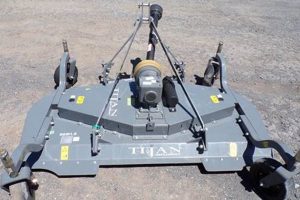
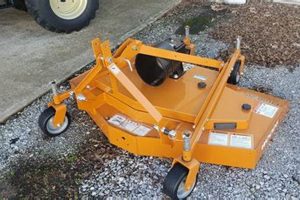
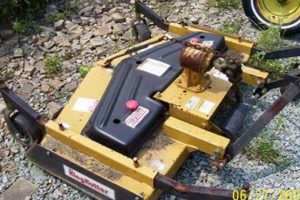
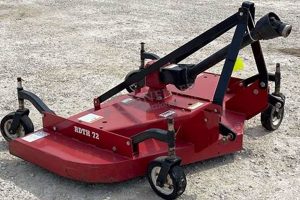
This analysis has underscored the distinct operational characteristics and suitability of flail mower vs finish mower across diverse land management scenarios. The type employing vertically mounted blades is optimally suited for demanding environments where dense vegetation and rough terrain necessitate robust cutting and mulching capabilities. Conversely, horizontal blade mowers excel in applications prioritizing a manicured aesthetic and precise cutting height, commonly found in lawn care and golf course maintenance.
Ultimately, the selection of appropriate mowing equipment constitutes a critical decision with significant implications for efficiency, cost-effectiveness, and environmental sustainability. A thorough assessment of operational needs, terrain characteristics, and desired outcomes is paramount. Thoughtful deliberation and informed decision-making will ensure optimal resource allocation and promote responsible land stewardship, leading to enhanced operational outcomes and ecological benefits.
![Buy Premium Finishing Mower for Sale - [Brand] Edition | Best Final Touch: Elevate Your Projects with Professional Finishing](https://bestfinaltouch.com/wp-content/uploads/2025/12/th-628-300x200.jpg "Buy Premium Finishing Mower for Sale - [Brand] Edition Best Final Touch: Elevate Your Projects with Professional Finishing")