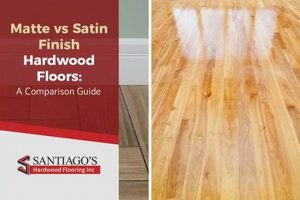
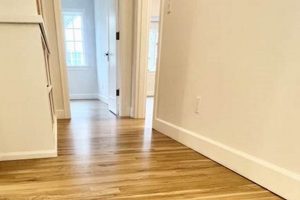
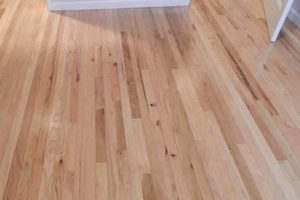
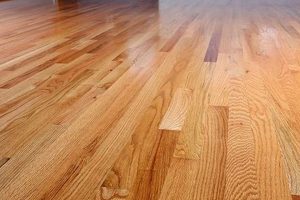
A lustrous surface treatment for timber flooring, this application creates a reflective sheen, enhancing the wood’s inherent grain and color. The resultant effect is a mirror-like appearance, often employed to amplify light within a room and impart a sense of spaciousness. As an example, imagine sunlight streaming through a window, bouncing dynamically across the smooth, radiant plane of meticulously prepared boards.
Its appeal stems from its capacity to elevate the aesthetic value of a space. Historically, such treatments were reserved for grand estates and formal settings, symbolizing affluence and meticulous craftsmanship. Beyond aesthetics, this surface type offers practical advantages, including heightened durability and increased resistance to scratches and stains compared to matte alternatives. The smooth, non-porous nature also simplifies cleaning and maintenance.
The subsequent sections will delve into the specific preparation techniques, application methods, and long-term care requirements associated with achieving and preserving this particular flooring aesthetic, along with considerations for selecting the appropriate wood species and product formulations.
Essential Considerations for Achieving a High-Reflectance Timber Floor
This section provides actionable guidance for those seeking to achieve a highly reflective surface on wood floors. Proper execution requires careful attention to detail throughout the preparation, application, and maintenance phases.
Tip 1: Surface Preparation is Paramount: Prior to application, thorough sanding is mandatory. Progress through progressively finer grits of sandpaper to achieve an exceptionally smooth, even plane. Unevenness or residual imperfections will be magnified by the reflective nature of the subsequent coating.
Tip 2: Select the Appropriate Product: Not all coatings are created equal. Opt for a specifically formulated high-gloss polyurethane or acrylic finish designed for wood floors. Consider the product’s viscosity, drying time, and volatile organic compound (VOC) content. Solvent-based formulas generally offer superior durability, while water-based options are environmentally preferable.
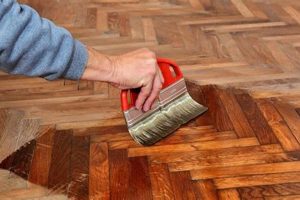
Tip 3: Apply Thin, Even Coats: Multiple thin coats are preferable to a single thick coat. Thick applications are prone to bubbling, uneven drying, and eventual cracking. Employ a high-quality applicator a microfiber roller or a lambswool applicator is often recommended and maintain a consistent pressure throughout the application process. Allow each coat to dry completely per the manufacturer’s instructions before proceeding.
Tip 4: Minimize Dust and Debris: Dust particles are anathema to a flawless, highly reflective surface. Ensure the environment is as dust-free as possible during application and drying. A tack cloth can be used to remove residual dust from the floor between coats. Adequate ventilation is also critical.
Tip 5: Consider Professional Application: Achieving a truly impeccable result is often best left to experienced professionals. These individuals possess the specialized equipment, knowledge, and skills necessary to minimize imperfections and ensure optimal adhesion and durability.
Tip 6: Protect from Scratches: While durable, a high-reflectance surface is susceptible to scratches from furniture and foot traffic. Utilize felt pads under furniture legs and consider the use of area rugs in high-traffic zones to mitigate wear and tear.
Tip 7: Proper Maintenance: Regular cleaning with a pH-neutral cleaner specifically designed for wood floors is essential. Avoid abrasive cleaners or excessive moisture, as these can damage the coating and diminish its reflective properties. Buffing can help to restore luster and remove minor imperfections.
These tips highlight the critical factors in achieving the desired effect. The success of this specific flooring finish depends on meticulous preparation, informed product selection, and diligent maintenance.
The subsequent section will address common challenges encountered and strategies for their resolution.
1. Durability

The longevity of a high-gloss surface treatment on wood floors is paramount. The intrinsic durability of the finish directly influences the floor’s resistance to wear and tear, maintaining its aesthetic appeal over time. Several factors contribute to the overall durability of such a system.
- Abrasion Resistance
Abrasion resistance denotes the finish’s capacity to withstand surface wear from foot traffic, furniture movement, and general use. A more durable finish exhibits a higher resistance to scratches, scuffs, and dulling. For example, polyurethane-based coatings generally offer superior abrasion resistance compared to lacquer finishes, resulting in a longer-lasting, glossy appearance. The choice of coating directly impacts how well the surface maintains its intended high-gloss look under daily wear.
- Impact Resistance
Impact resistance refers to the finish’s ability to withstand sudden forces without cracking or chipping. Dropped objects, heavy furniture, or even the impact of high heels can compromise a less durable finish. A finish with good impact resistance prevents these types of damage, preserving the integrity of the glossy surface. High-quality finishes incorporate additives to enhance flexibility and reduce brittleness, thereby increasing their impact resistance.
- Chemical Resistance
Chemical resistance is crucial for protecting the floor from spills and cleaning agents. Household chemicals, food spills, and even water can stain or damage a finish with poor chemical resistance, leading to discoloration and loss of gloss. Finishes formulated with specific resins and additives offer enhanced protection against chemical damage, ensuring the floor maintains its reflective surface despite exposure to common household substances.
- Adhesion Strength
Adhesion strength defines the bond between the finish and the underlying wood substrate. A strong bond prevents the finish from peeling, flaking, or blistering, even under stress or environmental changes. Proper surface preparation, including thorough sanding and cleaning, is essential for ensuring optimal adhesion. Finishes with superior adhesion properties provide a more durable and long-lasting high-gloss surface, minimizing the risk of failure over time.
These facets collectively determine the durability of a high-gloss treatment. A floor with a finish exhibiting high abrasion, impact, and chemical resistance, coupled with strong adhesion, provides a lasting and visually appealing surface. The selection of the appropriate finish, tailored to the specific demands of the environment and usage patterns, is therefore a critical decision in ensuring the long-term performance and aesthetic quality of wood floors.
2. Reflectivity

Reflectivity is the defining characteristic of a high gloss surface treatment on wood floors. The degree to which a floor reflects light directly correlates with its gloss level, influencing the perceived brightness, spaciousness, and overall aesthetic of the room. The following facets explore the nuances of this critical property.
- Specular Reflection
Specular reflection occurs when light rays bounce off a surface at an angle equal to the angle of incidence, creating a mirror-like effect. A high gloss finish maximizes specular reflection, resulting in clear, defined reflections of objects in the room. This phenomenon enhances the visual impact of the floor, making it a prominent feature of the space. For example, a carefully placed lamp’s reflection can create a dramatic focal point, demonstrating the power of specular reflection in a high-gloss environment. The clarity and intensity of the reflections are direct indicators of the quality and application of the finish.
- Light Amplification
The reflective nature of the finish contributes to light amplification within a room. By bouncing light around the space, the floor effectively increases the ambient brightness, reducing the need for artificial lighting. This effect is particularly pronounced in rooms with limited natural light, where a high gloss floor can significantly improve the overall illumination. A room with dark walls, for instance, benefits greatly from the light-amplifying properties of a reflective floor, creating a more inviting and open atmosphere.
- Clarity and Sharpness
The clarity and sharpness of reflected images are indicative of the smoothness and uniformity of the surface. A flawless application results in crisp, undistorted reflections, while imperfections or inconsistencies in the finish can lead to blurred or distorted images. The reflection of architectural details, such as crown molding or window frames, can serve as a visual test of the finish’s quality. Sharply defined reflections indicate a superior finish, meticulously applied.
- Color Enhancement
Reflectivity can enhance the perceived color of the wood. The reflected light interacts with the wood’s natural tones, intensifying its warmth and richness. This effect can be particularly noticeable with darker wood species, where the gloss finish adds depth and vibrancy to the grain. For instance, a dark walnut floor with a high gloss finish appears richer and more luxurious than the same wood with a matte treatment, showcasing the color-enhancing capabilities of reflectivity.
In summary, reflectivity is not merely a superficial attribute of a high gloss surface on wood floors; it is a fundamental characteristic that shapes the room’s aesthetic, influences its lighting, and enhances the perceived quality of the wood itself. Achieving optimal reflectivity requires careful consideration of surface preparation, product selection, and application technique, underscoring the importance of a comprehensive approach.
3. Application Technique

The successful attainment of a highly reflective surface on wood floors is inextricably linked to the chosen and executed application technique. The method employed directly influences the uniformity, smoothness, and ultimate gloss level of the finished surface. Deviations from best practices invariably result in imperfections that detract from the desired aesthetic.
- Even Coat Distribution
Achieving a uniform film thickness across the entire floor surface is critical. Variations in coating thickness lead to uneven drying rates and inconsistent reflectivity. Techniques such as using a consistent roller pressure and overlapping each pass by approximately 50% are crucial. For example, failing to maintain a wet edge can result in visible lap marks, disrupting the smooth, reflective plane. Proper distribution minimizes visual inconsistencies, ensuring a uniform sheen.
- Minimizing Air Entrapment
Air bubbles trapped within the finish layer reduce clarity and create surface imperfections. These bubbles scatter light, diminishing the overall reflectivity. Techniques to minimize air entrapment include using a slow, deliberate rolling motion, avoiding excessive agitation of the finish, and allowing sufficient time for air to release before the coating begins to cure. A self-leveling finish can also aid in mitigating this issue. The resultant surface maintains its integrity, maximizing light reflection.
- Environmental Control
Ambient temperature and humidity levels significantly impact the drying and curing process. Extremes in either direction can negatively affect the finish’s flow, leveling, and adhesion. Ideal conditions typically involve moderate temperatures (65-75F) and relative humidity levels below 60%. Maintaining these conditions promotes proper film formation, resulting in a smoother, more reflective surface. Conversely, applying a finish in excessively humid conditions can lead to clouding or blushing, reducing the overall gloss.
- Equipment Selection
The choice of applicator, be it a roller, brush, or spray system, directly influences the quality of the application. A high-quality microfiber roller with a short nap is often preferred for achieving a smooth, even finish with minimal stipple. Conversely, using an inappropriate applicator, such as a foam roller, can introduce excessive air bubbles and leave behind undesirable textures. Selecting the correct tool ensures the finish is applied optimally, enhancing reflectivity and minimizing imperfections.
These facets of application technique are indispensable for realizing a high-gloss surface on wood floors. Meticulous attention to detail during the application process, encompassing even coat distribution, air entrapment mitigation, environmental control, and appropriate equipment selection, is fundamental for achieving the desired level of reflectivity and overall aesthetic quality. Proper execution transforms the wood floor into a striking visual element, enhancing the room’s ambiance.
4. Surface Preparation
Surface preparation is a foundational element in achieving a successful high gloss finish on wood floors. Its meticulous execution is not merely a preliminary step, but rather an integral component directly influencing the final aesthetic, durability, and longevity of the reflective surface. Inadequate preparation invariably leads to imperfections that are magnified by the highly reflective nature of the finish, compromising the overall result.
- Removal of Existing Finishes
The complete and thorough removal of any pre-existing coatings is paramount. Residual finishes can interfere with the adhesion of the new high gloss treatment, leading to peeling, flaking, or uneven gloss levels. Mechanical sanding, often employing drum sanders or orbital sanders, is typically required to abrade the surface and expose the bare wood. Chemical strippers may also be employed to soften and facilitate the removal of stubborn coatings. Failure to adequately remove old finishes guarantees compromised adhesion and a less than optimal final result. For example, attempting to apply a high gloss polyurethane over an old wax finish will almost certainly result in adhesion failure and an uneven surface.
- Sanding and Leveling
Sanding is critical for creating a smooth, level substrate. The process typically involves progressing through a series of increasingly finer grits of sandpaper. Coarser grits are used to remove imperfections and level the surface, while finer grits refine the surface and prepare it for the finish. Imperfections such as scratches, dents, or uneven board heights must be addressed during this stage. For instance, neglecting to sand out deep scratches will result in those imperfections being highlighted by the reflective nature of the topcoat, rendering them even more visible than before. This leveling process ensures optimal light reflection and aesthetic consistency.
- Dust Removal and Cleaning
The removal of dust and debris is crucial to prevent contamination of the finish. Even microscopic particles can disrupt the smoothness of the surface, leading to imperfections in the final result. Thorough vacuuming, followed by tack cloth wiping, is essential to eliminate residual dust. Contaminants such as oil, grease, or silicone must also be removed using appropriate cleaning agents. For example, residue from household cleaners can interfere with the finish’s adhesion, leading to fisheyes or other surface defects. This step aims to ensure a clean and receptive surface for optimal finish adhesion and clarity.
- Wood Repair and Stabilization
Addressing any structural issues within the wood flooring is essential prior to applying the finish. Loose boards, cracks, or gaps should be repaired or filled. This ensures a stable and uniform surface, preventing future movement or expansion from compromising the finish. Wood fillers or epoxy resins may be used to repair damaged areas. Neglecting to address these structural issues can lead to the finish cracking or delaminating over time. For example, applying a high gloss finish over a loose board will likely result in the finish cracking along the joint as the board moves. This stabilization process enhances the floor’s structural integrity and contributes to the longevity of the finish.
These facets of surface preparation are inextricably linked to the ultimate success of achieving a high gloss finish on wood floors. The thorough and meticulous execution of each step ensures optimal adhesion, uniformity, and longevity of the reflective surface. A commitment to proper preparation is a commitment to achieving a lasting and aesthetically pleasing result, transforming the wood floor into a striking and durable visual element within the space.
5. Maintenance Products

The preservation of a high gloss surface on wood floors hinges critically on the selection and consistent use of appropriate maintenance products. The inherent susceptibility of high gloss finishes to scratches, dulling, and chemical damage necessitates specialized cleaning agents and protectants. Improper cleaning products, containing abrasive compounds or harsh chemicals, can irrevocably mar the finish, diminishing its reflective qualities and compromising its integrity. For example, utilizing a standard all-purpose cleaner, formulated with solvents, on a polyurethane finish may lead to clouding and eventual degradation of the gloss. Therefore, the choice of maintenance products is not merely a matter of convenience, but a determining factor in the long-term viability of the high gloss aesthetic.
Specific products formulated for wood floors with a high gloss finish are characterized by pH neutrality and the absence of abrasive particles. These formulations gently lift dirt and grime without scratching the surface or stripping away the protective layers of the finish. Additionally, specialized polishes and restorers are available to replenish the gloss and address minor surface imperfections. Regular application of these products helps to maintain the floor’s reflectivity and provides a protective barrier against daily wear and tear. Consider, for instance, the consistent use of a recommended wood floor cleaner versus an abrasive scouring pad; the former preserves the finish, while the latter actively degrades it.
In conclusion, the symbiotic relationship between high gloss wood floor finishes and specialized maintenance products is undeniable. The sustained aesthetic and functional integrity of the flooring depends on the informed selection and diligent application of cleaning and protective agents designed specifically for this surface type. Overlooking this crucial aspect invariably leads to premature degradation of the finish, necessitating costly repairs or complete refinishing. Therefore, the investment in and consistent use of appropriate maintenance products represents a proactive strategy for preserving the beauty and value of high gloss wood floors.
6. Wood Species

The selection of wood species profoundly influences the final appearance, durability, and long-term maintenance requirements of a high gloss finish on wood floors. Certain wood species possess inherent characteristics that either enhance or detract from the desired reflective sheen and overall aesthetic.
- Grain Pattern and Texture
The grain pattern and texture of the wood significantly affect the smoothness and reflectivity of the final surface. Species with tight, uniform grains, such as maple or birch, tend to yield a smoother surface that readily accepts a high gloss finish. Conversely, species with open grains or coarse textures, like oak or hickory, may require more extensive filling and leveling to achieve a similar level of reflectivity. The inherent texture of the wood directly impacts the amount of light that is reflected specularly versus diffusely.
- Porosity and Finish Absorption
The porosity of the wood species dictates how readily it absorbs the finish. Highly porous woods require multiple coats of finish to achieve a uniform gloss level, potentially leading to increased application time and material costs. Less porous woods, such as cherry or walnut, may require fewer coats to achieve the desired sheen. The absorption rate influences the depth and richness of the finish, with some species exhibiting a greater capacity to showcase the finish’s color and clarity.
- Hardness and Durability
The hardness of the wood species directly correlates with its resistance to scratches and dents, crucial considerations for maintaining a high gloss finish. Softer woods, like pine or fir, are more susceptible to damage, requiring more frequent maintenance and potentially shorter lifespans for the finish. Harder woods, such as Brazilian cherry or maple, offer greater durability, preserving the reflective surface for a longer period. The Janka hardness rating serves as a useful metric for comparing the relative hardness of different wood species.
- Color and Underlying Tone
The inherent color of the wood species interacts with the finish, influencing the final aesthetic. Lighter-colored woods, such as maple or ash, provide a neutral base that allows the finish to showcase its clarity and brilliance. Darker-colored woods, such as walnut or mahogany, may deepen the tone of the finish, adding richness and warmth to the overall appearance. The underlying color influences the perceived depth and complexity of the high gloss surface.
The interplay between these characteristics ultimately determines the suitability of a given wood species for a high gloss finish on wood floors. Careful consideration of grain pattern, porosity, hardness, and color is essential for achieving a durable, aesthetically pleasing, and long-lasting reflective surface.
7. Light Amplification

Light amplification, in the context of high gloss wood floor finishes, represents a significant enhancement of the illumination levels within a space. The reflective properties of the finish interact with both natural and artificial light sources, redistributing light throughout the room and influencing its perceived brightness and spaciousness.
- Specular Reflection and Light Redistribution
Specular reflection, characteristic of high gloss surfaces, causes light rays to bounce off the floor at an angle equal to the angle of incidence. This phenomenon redistributes light throughout the room, illuminating areas that would otherwise remain shadowed. Consider a room with limited natural light; a high gloss floor can significantly increase the ambient brightness by reflecting light from windows and lamps. The strategic placement of light sources can further amplify this effect, creating a more uniformly illuminated environment.
- Perceived Brightness and Visual Acuity
The increased illumination provided by light amplification directly impacts perceived brightness. The human eye perceives a room with a high gloss floor as brighter than a room with a matte finish, even if the actual light output is the same. This increased brightness can enhance visual acuity, making it easier to discern details and perform tasks. A brighter environment can also contribute to a more positive and energetic atmosphere, influencing mood and productivity.
- Spatial Perception and Room Size
Light amplification can alter the perception of spatial dimensions. The reflective surface creates a sense of depth and openness, making the room appear larger than it actually is. The reflected light expands the visual boundaries of the space, creating an illusion of greater volume. This effect is particularly pronounced in smaller rooms, where a high gloss floor can significantly enhance the feeling of spaciousness.
- Color Saturation and Vibrancy
Light amplification can enhance the perceived color saturation and vibrancy of the room. The reflected light interacts with the colors of the walls, furniture, and accessories, intensifying their hues. This effect can create a more visually dynamic and engaging environment. A room with muted color schemes can benefit from the reflective properties of a high gloss floor, adding depth and richness to the overall aesthetic.
In conclusion, the relationship between light amplification and high gloss wood floor finishes extends beyond mere aesthetics. The reflective properties of the finish actively contribute to the illumination levels, spatial perception, and overall visual environment of the room. The strategic utilization of light amplification can transform a space, enhancing its functionality, appeal, and overall ambiance.
Frequently Asked Questions
This section addresses common inquiries regarding high gloss surface treatments for timber flooring. The aim is to provide clarity and factual information on their application, maintenance, and suitability.
Question 1: Is a high gloss finish suitable for high-traffic areas?
The suitability of a high gloss treatment in high-traffic areas is contingent upon the wood species, the quality of the finish, and the diligence of maintenance. While generally durable, high gloss surfaces are susceptible to scratches. Mitigation strategies include felt pads under furniture and regular cleaning. Certain wood species, notably those with high Janka hardness ratings, offer greater scratch resistance.
Question 2: How does a high gloss finish impact the appearance of imperfections?
High gloss treatments tend to accentuate imperfections. The reflective nature of the finish amplifies minor scratches, dents, and inconsistencies in the wood. Prior to application, meticulous surface preparation, including thorough sanding, is imperative to minimize visible flaws. The selection of a self-leveling finish can also aid in mitigating the appearance of minor imperfections.
Question 3: What is the typical lifespan of a high gloss finish on wood floors?
The lifespan of a high gloss application varies significantly based on usage patterns, environmental conditions, and maintenance practices. With proper care, a high-quality finish can endure for several years. However, in high-traffic areas or environments with elevated humidity levels, more frequent maintenance or refinishing may be necessary. Consistent adherence to recommended cleaning protocols is crucial for extending the finish’s longevity.
Question 4: Can a high gloss finish be applied to all wood species?
While a high gloss finish can technically be applied to most wood species, certain species are inherently more suitable. Denser, fine-grained woods, such as maple or birch, tend to yield a smoother, more reflective surface. More porous species may require additional coats of finish to achieve the desired gloss level. A compatibility assessment is advisable prior to commencing the finishing process.
Question 5: What are the key differences between water-based and oil-based high gloss finishes?
Water-based and oil-based high gloss treatments exhibit distinct characteristics. Water-based finishes generally offer lower VOC emissions and faster drying times, but may lack the durability and depth of shine associated with oil-based options. Oil-based finishes tend to be more durable and offer a richer, warmer tone, but require longer drying times and may emit higher levels of volatile organic compounds.
Question 6: How often should a high gloss wood floor be professionally polished?
The frequency of professional polishing depends on usage patterns and aesthetic preferences. In high-traffic areas, periodic polishing, perhaps annually, can help to restore the finish’s luster and remove minor surface scratches. In less heavily trafficked areas, polishing may only be necessary every few years. The key is to assess the floor’s appearance and address any dulling or scratching promptly.
In summation, high gloss surface treatments offer a distinctive aesthetic. Understanding their limitations and committing to proper care ensures long-term satisfaction.
The subsequent section will delve into the environmental considerations associated with high gloss floor finishes.
Conclusion
This exploration has elucidated the multifaceted considerations surrounding high gloss finish on wood floors. From the pivotal role of surface preparation and the nuanced selection of appropriate wood species to the critical importance of consistent maintenance practices, the pursuit of a durable and aesthetically pleasing reflective surface demands diligence and informed decision-making. The interplay between light amplification, reflectivity, and the inherent characteristics of the chosen finish dictates the long-term viability and visual impact of the installation.
As advancements in coating technology continue to evolve, informed evaluation of product formulations and application techniques remains paramount. The responsible selection and meticulous implementation of strategies detailed herein will contribute to the creation of resilient and visually striking flooring installations that withstand the test of time, enhancing the value and ambiance of interior spaces. Further research and ongoing adherence to best practices are essential for optimizing the performance and longevity of these sophisticated surface treatments.