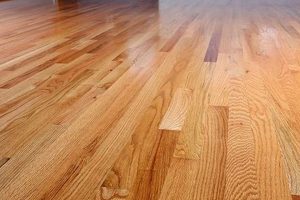
A surface treatment applied to timber flooring, resulting in a highly reflective and lustrous appearance, enhances the wood’s natural grain while providing a protective layer. This type of coating, often achieved through multiple applications and specialized buffing techniques, yields a mirror-like sheen. An example would be the treatment of parquet floors in a formal dining room to accentuate the intricate design.
The application of such a coating offers several benefits, including amplified visual appeal and increased light reflection within a space. Historically, this aesthetic has been associated with luxury and sophistication. Further, the protective barrier formed against wear and tear can extend the lifespan of the underlying wooden structure. Its durability, however, must be considered alongside the need for careful maintenance to prevent scratches and maintain the desired luster.
Subsequent sections will delve into the application process, explore the various types of products available, discuss the necessary maintenance procedures, and address potential challenges associated with achieving and preserving the desired level of reflectivity on wooden floors.
Essential Considerations for a Reflective Wood Surface
Achieving and maintaining a highly reflective wooden surface requires meticulous attention to detail and adherence to specific procedures. The following tips offer guidance for maximizing the aesthetic and functional benefits of this type of flooring treatment.
Tip 1: Surface Preparation is Paramount: Prior to application, ensure the wood is completely free of dust, debris, and existing finishes. Sanding to a smooth, even surface is essential for optimal adhesion and a uniform final appearance. Example: Use progressively finer grits of sandpaper, concluding with a grit of at least 220, to eliminate imperfections.
Tip 2: Choose the Correct Product: Not all products are created equal. Select a formulation specifically designed for imparting a high level of reflectivity and compatible with the wood species. Example: Consider water-based polyurethane options for lighter woods to minimize ambering, or solvent-based versions for enhanced durability in high-traffic areas.
Tip 3: Apply Thin, Even Coats: Multiple thin coats are preferable to a single thick coat, which is prone to bubbling, streaking, and uneven drying. Example: Employ a high-quality applicator, such as a microfiber pad or a foam brush, and maintain a consistent pressure to ensure uniform distribution.
Tip 4: Allow Sufficient Drying Time: Adhere strictly to the manufacturer’s recommended drying times between coats. Premature application of subsequent coats can result in trapped solvents, leading to a cloudy or uneven finish. Example: Verify complete dryness by lightly touching the surface; it should feel firm and tack-free.
Tip 5: Buff Between Coats: Lightly buffing between coats with fine-grit sandpaper or a specialized buffing pad removes any imperfections and enhances adhesion of subsequent layers. Example: Use a 320-grit sanding screen attached to a pole sander for efficient and even buffing.
Tip 6: Maintain Consistent Humidity: Fluctuations in humidity can negatively impact the curing process and lead to cracking or peeling. Example: Maintain a stable humidity level between 40% and 60% during and after application.
Tip 7: Implement a Regular Maintenance Schedule: Routine cleaning with a microfiber mop and a pH-neutral cleaner will prevent the buildup of dirt and grime, preserving the reflective quality. Example: Avoid abrasive cleaners or scrubbing pads, which can scratch the surface.
Tip 8: Use Protective Measures: Place felt pads under furniture legs and use area rugs in high-traffic zones to minimize wear and tear. Example: Regularly inspect and replace worn felt pads to prevent scratching.
By diligently following these guidelines, a durable and visually striking wooden surface can be achieved, enhancing the aesthetic appeal of the space and preserving the integrity of the flooring for years to come.
The following section will address common challenges encountered during the application and maintenance process, offering practical solutions for overcoming these obstacles.
1. Durability expectations

The anticipated lifespan and resistance to wear directly influence the selection and application of surface treatments. A highly reflective coating, while aesthetically appealing, may present specific challenges regarding long-term performance. The degree to which it can withstand scratches, abrasions, and impacts dictates its suitability for environments with varying levels of foot traffic. For example, in a residential setting with limited traffic, a product offering a high sheen might be acceptable, whereas a commercial space demands a more resilient formulation. In essence, the desired level of reflectivity must be balanced with the practical requirement for longevity and resistance to damage.
Furthermore, proper application techniques are paramount for maximizing durability. Insufficient surface preparation or inadequate curing times can significantly compromise the coating’s ability to withstand everyday use. The choice of wood species also plays a critical role; harder woods, such as oak or maple, inherently offer greater resistance to dents and scratches compared to softer varieties. Consider the example of a dance studio, where a high-sheen finish on a softer wood, despite its initial attractiveness, would be quickly compromised without rigorous and frequent maintenance. The selection of the appropriate topcoat and the implementation of regular upkeep practices are crucial for mitigating wear and maintaining the intended appearance.
In conclusion, achieving a durable surface treatment necessitates a clear understanding of the expected usage conditions and a careful selection of materials and application methods. Prioritizing longevity and wear resistance is essential for preserving the aesthetic value and functional integrity of the flooring over time. Neglecting the importance of durability considerations when selecting a high-sheen finish can lead to premature degradation and the need for costly repairs or replacements, emphasizing the need for a balanced approach that addresses both aesthetic and practical requirements.
2. Application technique

The attainment of a timber floor exhibiting a high degree of reflectivity is inextricably linked to the methods employed during the coating process. The application technique directly influences the uniformity, smoothness, and overall clarity of the final surface. Improper techniques can result in visible imperfections, such as streaks, bubbles, or uneven sheen levels, thereby diminishing the desired aesthetic. For instance, the use of an inappropriate applicator, such as a low-quality brush or roller, can introduce air bubbles into the coating, resulting in a textured, rather than a smooth, surface. This significantly detracts from the reflective quality, regardless of the product’s inherent potential.
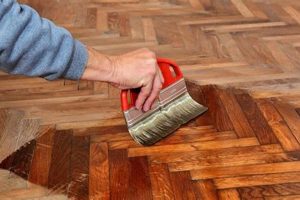
Effective application necessitates meticulous surface preparation, including thorough sanding to remove existing imperfections and ensuring a clean, dust-free substrate. The application of multiple thin coats, rather than a single thick coat, is generally recommended to minimize the risk of sagging, wrinkling, or solvent entrapment. Each coat must be allowed to dry completely before the subsequent application, adhering strictly to the manufacturer’s specified drying times. Moreover, inter-coat abrasion, typically achieved through light sanding with fine-grit sandpaper, promotes adhesion between layers and removes any minor imperfections that may have developed during the drying process. Consider the example of a parquet floor where the complex pattern necessitates careful, even application to prevent pooling of the coating in the grooves and to ensure uniform reflectivity across the entire surface. The expertise and skill of the applicator are, therefore, paramount in achieving the desired outcome.
In summary, achieving a superior outcome hinges on a combination of factors, with application technique being a critical determinant. Proper surface preparation, the application of thin, even coats, adherence to drying times, and inter-coat abrasion are essential elements in achieving a highly reflective timber floor surface. Any deviation from established best practices can compromise the aesthetic and functional qualities of the finished floor, emphasizing the need for skilled application and a thorough understanding of the coating process.
3. Underlying wood preparation

The successful application of a surface treatment resulting in a highly reflective wooden floor is fundamentally dependent on the condition and preparation of the substrate. The quality of the underlying wood preparation directly dictates the final aesthetic and durability. Surface imperfections, such as scratches, dents, or residual finishes, will be magnified by the reflective coating, compromising the intended visual effect. Inadequate sanding, for instance, will leave behind unevenness that is accentuated by the sheen, resulting in a distorted and unprofessional appearance. Similarly, failure to remove existing coatings completely will prevent proper adhesion of the new finish, leading to premature peeling or cracking. The process of achieving an immaculate, mirror-like surface mandates a meticulous approach to substrate preparation, recognizing it as a non-negotiable component of the overall outcome.
Consider the example of restoring an antique hardwood floor. If the existing finish is not completely removed and the wood is not properly leveled, any subsequent application of a highly reflective product will highlight the floor’s imperfections, rendering the restoration visually unappealing. The practical significance of this understanding extends beyond aesthetics. Proper preparation ensures optimal adhesion, thereby enhancing the durability and longevity of the finish. This translates to reduced maintenance costs and a longer lifespan for the flooring. Techniques such as multi-step sanding with progressively finer grits, wood filling for cracks or holes, and thorough cleaning to remove dust and debris are essential steps in achieving a suitable substrate for a high-sheen coating.
In conclusion, the attainment of a visually appealing and durable surface treatment is inextricably linked to the quality of the underlying wood preparation. A commitment to thorough and meticulous preparation is not merely a preliminary step, but a crucial investment that directly impacts the aesthetic, longevity, and overall success of the flooring project. Failure to adequately prepare the substrate will inevitably result in a compromised finish, regardless of the quality of the coating itself. Recognizing the importance of this relationship is paramount for professionals and homeowners alike who seek to achieve a truly exceptional result.
4. Maintenance requirements

A surface treatment designed to produce a highly reflective wooden floor necessitates a rigorous and consistent maintenance regime. The cause-and-effect relationship is straightforward: inadequate or inappropriate maintenance invariably leads to a decline in the finish’s aesthetic qualities and a reduction in its lifespan. These flooring systems are inherently susceptible to scratches and abrasions from everyday use. Unlike matte or satin finishes that can more effectively conceal minor imperfections, a highly reflective surface amplifies even the smallest blemishes, rendering them readily visible. Therefore, adherence to specific maintenance protocols is not merely an option but a critical component of preserving the coating’s intended visual impact. The importance of appropriate maintenance is highlighted in commercial spaces, where heavy foot traffic can rapidly degrade the surface without diligent care. Examples such as regular sweeping, damp mopping with pH-neutral cleaners, and the strategic placement of mats in high-traffic areas are essential for mitigating wear.
The selection of appropriate cleaning products is of paramount importance. Abrasive cleaners, or those containing harsh chemicals, can dull the surface and erode the coating over time, negating the reflective properties and requiring costly repairs. Similarly, the use of improper cleaning tools, such as scrub brushes or scouring pads, can inflict irreparable scratches. Ideal practices involve employing microfiber mops and gentle cleaning solutions specifically formulated for wood floors. Protective measures, such as felt pads under furniture legs and the use of area rugs, are also critical for minimizing the potential for scratches and dents. Consider the example of a residential setting where pets and children are present; proactive measures, such as regular nail trimming for pets and immediate cleanup of spills, are necessary to prevent permanent damage to the finish. Periodic reapplication of the surface treatment may also be required to restore the reflective quality in high-traffic areas. The understanding and implementation of these practices directly correlate with the long-term appearance and structural integrity of the flooring.
In conclusion, the sustained aesthetic appeal and durability of timber floors treated to achieve a highly reflective surface are contingent upon consistent and appropriate maintenance. The challenges associated with maintaining such a finish, including its vulnerability to scratches and the need for specialized cleaning products, necessitate a proactive and informed approach. Recognizing the connection between maintenance practices and the long-term performance of the floor is crucial for both homeowners and commercial property managers. Failure to prioritize maintenance will inevitably result in a decline in the floor’s appearance and a reduction in its lifespan, underscoring the practical significance of this often-overlooked aspect of flooring management.
5. Reflectivity level

The defining characteristic of a timber floor subjected to a surface treatment to achieve a “high gloss wood floor finish” is its capacity to reflect light. The term “Reflectivity level” quantifies this capacity, essentially dictating the intensity and clarity of the reflections produced. It serves as a measurable metric that directly impacts the perceived aesthetic of the flooring. Higher values indicate a more mirror-like surface, creating a brighter and more visually striking effect. Conversely, lower values correspond to a less pronounced sheen. For example, a flooring system marketed as “ultra-high gloss” would possess a significantly higher reflectivity rating compared to one described as “glossy” or “semi-gloss”. The selection of the appropriate coating hinges on the desired aesthetic outcome, with careful consideration given to the existing lighting conditions and architectural style of the space.
The significance of the reflectivity level extends beyond mere aesthetics; it also influences the perceived size and brightness of a room. Floors with a high reflectivity level can amplify natural and artificial light, making a space appear larger and more inviting. In commercial settings, such as retail stores, this effect can be strategically employed to enhance product visibility and create a more appealing shopping environment. In contrast, in residential settings, an excessively high reflectivity level might create glare or reflect unwanted light sources, leading to visual discomfort. Therefore, a careful evaluation of the intended use and ambient lighting is crucial when selecting the appropriate finish. The reflectivity level also affects the visibility of imperfections; higher values tend to accentuate scratches and dust particles more readily than lower values, necessitating more frequent and diligent cleaning. The maintenance requirements are, therefore, directly linked to the chosen level of reflectivity.
In conclusion, the reflectivity level is an integral component of “high gloss wood floor finish,” influencing both the visual impact and the practical considerations associated with its implementation and maintenance. A thorough understanding of the relationship between reflectivity, light, space, and maintenance requirements is essential for achieving a satisfactory outcome. While a high reflectivity level can create a stunning visual effect, it also demands a greater commitment to upkeep and requires careful consideration of the surrounding environment. The success of any “high gloss wood floor finish” project hinges on a well-informed decision regarding the appropriate reflectivity level, balancing aesthetic desires with practical realities.
Frequently Asked Questions
The following addresses common inquiries regarding the application, maintenance, and suitability of a highly reflective surface treatment for wooden flooring.
Question 1: Is a high gloss wood floor finish appropriate for high-traffic areas?
The suitability depends on the specific product and the anticipated wear. While aesthetically appealing, surfaces with a higher sheen exhibit scratches and imperfections more readily. A durable, commercial-grade coating, coupled with rigorous maintenance, may be acceptable, but alternatives such as satin or matte finishes often prove more practical.
Question 2: What is the typical lifespan of a high gloss wood floor finish?
Lifespan is significantly influenced by foot traffic, maintenance practices, and the quality of the coating. With proper care, a well-applied surface treatment can last for several years. However, areas subjected to heavy use may require periodic reapplication or refinishing to maintain the desired appearance.
Question 3: What is the best method for cleaning a high gloss wood floor finish?
Routine cleaning should involve sweeping or vacuuming to remove loose debris. Damp mopping with a pH-neutral cleaner specifically designed for wood floors is recommended. Abrasive cleaners or scrub brushes are strictly prohibited as they can damage the surface.
Question 4: Can a high gloss wood floor finish be applied over existing flooring?
Application over existing flooring is possible, provided the underlying surface is properly prepared. This typically involves sanding to remove the old finish and ensuring a smooth, even substrate. However, compatibility with the existing material should be verified to prevent adhesion issues.
Question 5: Does a high gloss wood floor finish require professional installation?
While DIY application is feasible, professional installation is generally recommended, particularly for large or complex areas. Skilled applicators possess the necessary expertise and equipment to ensure a uniform and durable finish, minimizing the risk of imperfections or premature failure.
Question 6: What are the potential drawbacks of a high gloss wood floor finish?
Potential drawbacks include increased visibility of scratches and dust, the need for more frequent cleaning, and the possibility of glare in brightly lit environments. The selection of this type of flooring should be carefully considered, taking into account the specific needs and conditions of the space.
Achieving a satisfactory outcome requires a comprehensive understanding of the specific requirements associated with “high gloss wood floor finish”, encompassing proper preparation, application, and ongoing maintenance.
The next section will address specific product recommendations and considerations for selecting the optimal surface treatment for particular applications.
High Gloss Wood Floor Finish
This exploration has underscored the multifaceted nature of “high gloss wood floor finish,” moving beyond mere aesthetic appeal to address critical aspects of preparation, application, maintenance, and suitability. The interplay between reflectivity level, durability expectations, and underlying wood preparation has been thoroughly examined. Factors such as traffic volume, cleaning protocols, and the inherent characteristics of the wood species have been identified as pivotal determinants of long-term performance. A judicious approach, informed by a comprehensive understanding of these variables, is essential for achieving a successful and enduring result.
The decision to implement “high gloss wood floor finish” warrants careful consideration, weighing the desired visual impact against the practical realities of maintenance and potential drawbacks. A commitment to meticulous preparation, skilled application, and diligent upkeep is indispensable for preserving the integrity and aesthetic value of the investment. Ultimately, the informed selection and responsible stewardship of “high gloss wood floor finish” will dictate its long-term success and contribution to the overall ambiance of the space.