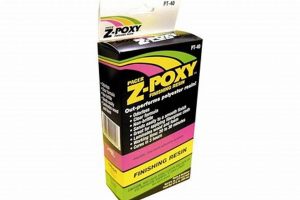
The creation of a slip-resistant surface on floors or other areas is often achieved by incorporating materials into a coating that increases friction. This is commonly done with epoxy resins, resulting in surfaces that are safer, particularly in environments prone to moisture or heavy foot traffic. The process involves a combination of careful surface preparation, precise mixing of epoxy components, and the even distribution of anti-slip additives.
Safety is the primary motivator for integrating a non-skid element into epoxy coatings. By increasing traction, the likelihood of accidents, such as falls, is significantly reduced. This is particularly beneficial in industrial settings, marine environments, and even residential garages, where spills or wet conditions can create hazardous situations. Historically, various methods have been employed to create these surfaces, ranging from simple texturing to the addition of abrasive materials, all aimed at improving grip and minimizing the risk of slips.
Understanding the preparation steps, the appropriate choice of epoxy and non-skid additives, mixing techniques, and application methods are vital to achieve a durable and effective slip-resistant epoxy coating. The following sections will detail each of these aspects, providing guidance on achieving a professional and long-lasting result.
Application Tips for Slip-Resistant Epoxy Coatings
Achieving a durable and effective non-skid epoxy surface requires meticulous attention to detail and adherence to best practices. The following tips offer guidance for optimal results.
Tip 1: Surface Preparation is Paramount: Thoroughly clean and prepare the substrate. This includes removing any existing coatings, dirt, oil, or contaminants. Grinding or etching the surface ensures proper adhesion of the epoxy. Inadequate preparation leads to premature coating failure and compromised slip resistance.
Tip 2: Select the Appropriate Epoxy Resin: Choose an epoxy formulation specifically designed for flooring or the intended application. Consider factors such as chemical resistance, UV exposure, and traffic volume. Industrial-grade epoxies offer superior durability and longevity compared to general-purpose options.
Tip 3: Choose the Correct Non-Skid Additive: A variety of non-skid additives are available, including aggregates like aluminum oxide, silica sand, and polymers. The selection depends on the desired level of slip resistance and the texture preference. Finer aggregates are suitable for light-duty applications, while coarser aggregates provide more aggressive traction for heavy-duty environments.
Tip 4: Precise Mixing is Essential: Carefully measure and mix the epoxy components according to the manufacturer’s instructions. Incorrect ratios result in improper curing and diminished performance. Utilize a mechanical mixer for thorough and consistent blending.
Tip 5: Even Distribution of Non-Skid Additive: Thoroughly incorporate the non-skid additive into the mixed epoxy. Ensure uniform distribution throughout the coating to maintain consistent slip resistance across the entire surface. Consider using a notched squeegee or roller to apply the epoxy and distribute the additive evenly.
Tip 6: Apply in Thin Coats: Multiple thin coats are preferable to a single thick coat. Thin coats promote better adhesion and reduce the risk of bubbles or imperfections. Allow each coat to cure fully before applying the subsequent layer.
Tip 7: Consider Environmental Conditions: Temperature and humidity affect the curing process of epoxy resins. Apply the coating within the recommended temperature range specified by the manufacturer. Avoid application in excessively humid conditions, as moisture can interfere with curing and affect the final finish.
Adhering to these guidelines will enhance the effectiveness and longevity of the slip-resistant epoxy coating, contributing to a safer environment and reducing the risk of accidents.
The next section will delve into common challenges and troubleshooting techniques associated with non-skid epoxy applications.
1. Surface Preparation

Effective surface preparation constitutes a foundational step in the successful application of epoxy coatings with non-skid properties. The integrity of the bond between the epoxy and the substrate hinges on a clean, properly prepared surface, impacting the longevity and effectiveness of the final application.
- Removal of Contaminants
The presence of oil, grease, dirt, or existing coatings impedes epoxy adhesion. Mechanical abrasion, chemical cleaning, or a combination of both, must be employed to eliminate these contaminants. Failure to do so can result in delamination of the epoxy and subsequent loss of non-skid characteristics.
- Profiling the Substrate
Epoxy requires a textured surface for optimal mechanical interlocking. Grinding, sanding, or acid etching can create this profile, increasing the surface area available for bonding. The specific profile required depends on the type of epoxy and the substrate material. Concrete, for example, often requires aggressive grinding to achieve an adequate profile.
- Moisture Mitigation
Excessive moisture within the substrate can interfere with epoxy curing and promote blistering or bubbling. Moisture testing should be conducted prior to application, and appropriate moisture mitigation strategies implemented if necessary. This may involve the application of a moisture vapor barrier or allowing the substrate to dry sufficiently.
- Repairing Imperfections
Cracks, holes, and other surface imperfections should be repaired prior to epoxy application. These imperfections can compromise the structural integrity of the coating and create uneven surfaces, impacting the uniformity of the non-skid finish. Suitable patching compounds or epoxy fillers can be used to address these issues.
The cumulative effect of proper surface preparation directly influences the performance and lifespan of the non-skid epoxy coating. By meticulously addressing each of these facets, a solid foundation is established, ensuring the epoxy adheres effectively and provides long-lasting slip resistance. The resulting surface not only enhances safety but also contributes to the aesthetic appeal and overall value of the treated area.
2. Epoxy Selection

The choice of epoxy resin is paramount in achieving a successful non-skid finish. Selecting the appropriate epoxy directly influences the coating’s durability, adhesion, chemical resistance, and, ultimately, its ability to provide long-term slip resistance.
- Viscosity and Additive Suspension
Epoxy viscosity affects the suspension of non-skid additives. Lower viscosity epoxies may allow additives to settle, creating uneven slip resistance. Higher viscosity epoxies can better maintain a uniform distribution of additives, ensuring consistent traction across the surface. For example, in applications using heavier aggregates like aluminum oxide, a higher viscosity epoxy is generally preferred.
- Chemical Resistance and Environmental Factors
The selected epoxy must withstand the anticipated chemical exposure and environmental conditions. Epoxies formulated for industrial settings often offer superior resistance to solvents, acids, and alkalis compared to general-purpose epoxies. UV exposure can also degrade certain epoxies, leading to discoloration and reduced performance. Marine environments necessitate epoxies designed for constant water immersion and salt spray exposure.
- Curing Time and Application Window
Epoxy curing time impacts the application process. Fast-curing epoxies reduce downtime but require rapid application and additive incorporation. Slower-curing epoxies provide a longer working time, allowing for more precise placement and distribution of non-skid materials. The ambient temperature and humidity also influence curing time, potentially requiring adjustments to the epoxy formulation.
- Adhesion to Substrate
Different epoxies exhibit varying degrees of adhesion to different substrates. Concrete, steel, and wood each require epoxies specifically formulated for optimal bonding. Inadequate adhesion results in coating failure, compromising both the aesthetic appearance and the slip-resistant properties of the finished surface. Surface preparation techniques, as detailed previously, also play a crucial role in maximizing adhesion.
Therefore, epoxy selection is not merely a matter of cost or availability but a critical decision that directly impacts the performance and longevity of the non-skid coating. Consideration of viscosity, chemical resistance, curing time, and substrate compatibility is essential to achieving a safe and durable slip-resistant surface. Inappropriate epoxy selection can lead to premature failure, increased maintenance costs, and, most importantly, a compromised safety environment.
3. Additive Type

The selection of a non-skid additive is a pivotal decision point in achieving the desired safety and performance characteristics when applying epoxy coatings. The type of additive directly influences the texture, slip resistance, durability, and aesthetic qualities of the final surface.
- Aggregate Size and Texture
The size and texture of the non-skid aggregate significantly impact the coefficient of friction. Coarser aggregates, such as aluminum oxide or silica sand, provide a more aggressive texture and higher slip resistance, suitable for high-traffic areas or environments with frequent spills. Finer aggregates, like polymer beads or micro-spheres, offer a subtler texture that may be more aesthetically pleasing while still providing adequate slip resistance for lighter-duty applications. The selection should align with the specific use case and safety requirements.
- Material Composition and Durability
The material composition of the non-skid additive affects its durability and resistance to wear and tear. Aluminum oxide, known for its hardness and abrasion resistance, is a common choice for industrial floors subject to heavy foot traffic or equipment. Polymer additives offer good chemical resistance and flexibility, making them suitable for applications where the surface may be subject to movement or vibration. The chosen material must withstand the intended service conditions to maintain its non-skid properties over time.
- Loading Rate and Dispersion
The loading rate, or the amount of additive incorporated into the epoxy, directly impacts the effectiveness of the non-skid finish. Insufficient loading may result in inadequate slip resistance, while excessive loading can compromise the epoxy’s structural integrity and lead to cracking or delamination. Proper dispersion of the additive within the epoxy matrix is also crucial. Inadequate mixing can result in uneven distribution, creating areas with varying levels of slip resistance. Adhering to the manufacturer’s recommendations regarding loading rates and mixing procedures is essential.
- Color and Aesthetic Considerations
Non-skid additives are available in various colors and can be used to enhance the aesthetic appeal of the epoxy coating. Colored quartz aggregates, for example, can be blended to create custom designs or match existing color schemes. The choice of additive color should also consider its impact on visibility, particularly in low-light conditions. Light-colored aggregates can improve visibility and reduce the risk of accidents. Careful consideration of color and aesthetic factors can contribute to a safer and more visually appealing finished surface.
The selection and application of the non-skid additive are critical determinants of the overall success of the epoxy coating. Balancing the need for adequate slip resistance with considerations of durability, aesthetics, and ease of application is essential. A thorough understanding of the available additive types and their properties allows for the creation of safe, durable, and visually appealing surfaces.
4. Mixing Ratios

The achievement of a durable and effective non-skid epoxy finish is inextricably linked to precise mixing ratios of the epoxy resin components. Incorrect proportions of the resin and hardener, the primary components of epoxy systems, directly impact the chemical reaction necessary for proper curing. Deviation from recommended mixing ratios results in either an incomplete cure, leaving a soft and tacky surface, or an excessively rapid cure, precluding adequate working time and potentially causing exothermic reactions that compromise the coating’s integrity. In the context of a non-skid finish, improper curing weakens the bond between the epoxy and the non-skid additive, leading to premature wear and a reduction in slip resistance. For instance, if an epoxy resin specified for a 2:1 mixing ratio is applied at 1:1, the resulting finish may exhibit poor adhesion to the substrate, leading to detachment of the non-skid aggregate under normal use.
Furthermore, the integration of the non-skid additive itself is dependent on the epoxy’s viscosity, which is directly affected by the accuracy of the mixing ratios. If the epoxy is not mixed according to specifications, the resulting altered viscosity can prevent the uniform suspension and distribution of the non-skid material. This can create areas with inadequate slip resistance interspersed with areas where the additive is overly concentrated, resulting in an inconsistent and potentially hazardous surface. In practical application, this translates to a situation where some areas of a coated floor remain slippery while others provide excessive traction, defeating the purpose of a uniform non-skid treatment. Such inconsistencies also impact the aesthetic uniformity of the finish.
In summary, the maintenance of prescribed mixing ratios is not merely a procedural step but a fundamental requirement for achieving a functional and lasting non-skid epoxy finish. Deviations from these ratios introduce a cascade of potential problems, ranging from weakened adhesion and inconsistent slip resistance to compromised durability and aesthetic imperfections. Rigorous adherence to the manufacturer’s specifications, including the use of calibrated measuring devices and thorough mixing techniques, is therefore indispensable to ensure the long-term effectiveness and safety of the non-skid epoxy application. The challenge lies in the need for meticulous execution, especially in large-scale projects where human error can be amplified, underscoring the importance of rigorous quality control measures.
5. Application Technique

Application technique is a critical determinant in the successful creation of a slip-resistant surface using epoxy coatings. The method by which the epoxy and non-skid additives are applied directly impacts the uniformity, thickness, and overall effectiveness of the final finish. Inadequate application leads to inconsistent slip resistance and compromised durability.
- Layer Thickness and Uniformity
Maintaining a consistent layer thickness during epoxy application is essential for ensuring uniform distribution of the non-skid additive. Uneven application results in areas with varying degrees of slip resistance. Techniques such as using a notched squeegee or a calibrated roller help control the epoxy layer thickness and ensure a consistent surface profile. For instance, applying the epoxy too thickly in some areas can cause the non-skid aggregate to sink, reducing its effectiveness, while applying it too thinly may not provide adequate coverage.
- Timing of Additive Incorporation
The timing of incorporating the non-skid additive into the epoxy is crucial. Introducing the additive too early, before the epoxy has had a chance to level, can result in uneven distribution or settling. Adding it too late, after the epoxy has begun to cure, may prevent proper bonding and lead to premature wear. A common approach involves broadcasting the additive onto the wet epoxy surface immediately after application, allowing it to sink slightly and become embedded in the curing resin. The optimal timing depends on the specific epoxy formulation and the type of additive used.
- Application Equipment and Tools
The selection of appropriate application equipment plays a significant role in achieving a consistent and effective non-skid finish. Using the wrong type of roller or squeegee can lead to uneven spreading, air entrapment, or damage to the epoxy layer. For example, a high-nap roller may introduce excessive air bubbles into the epoxy, weakening the bond and creating surface imperfections. Conversely, a short-nap roller may not adequately distribute the non-skid additive. The choice of equipment should be tailored to the viscosity of the epoxy, the size of the area being coated, and the desired surface texture.
- Environmental Considerations During Application
Environmental factors such as temperature and humidity significantly influence the curing process of epoxy resins. Applying epoxy in excessively hot or cold conditions can affect its viscosity, curing time, and adhesion properties. High humidity can interfere with the curing process, leading to a weakened bond and a compromised non-skid finish. Maintaining optimal environmental conditions, typically within the range specified by the manufacturer, is essential for achieving a durable and effective application. This may involve using climate control measures to regulate temperature and humidity during the application process.
In conclusion, application technique is not merely a procedural step, but a critical factor that directly influences the safety, durability, and aesthetic appeal of a non-skid epoxy coating. Mastering the proper application techniques, including controlling layer thickness, timing additive incorporation, selecting appropriate equipment, and managing environmental conditions, is essential for creating a slip-resistant surface that meets the required performance standards.
6. Curing Time

Curing time, the duration required for an epoxy resin to fully harden and achieve its designed mechanical and chemical properties, constitutes a critical parameter in the application of epoxy coatings with non-skid finishes. Deviations from recommended curing times can compromise the bond strength, durability, and slip-resistant characteristics of the final surface.
- Impact on Additive Retention
Insufficient curing time prior to exposure to traffic or environmental stressors can result in the dislodgement of the non-skid additive. If the epoxy has not reached its full hardness, the abrasive particles may not be securely anchored within the resin matrix. This leads to a reduction in slip resistance over time and premature wear of the coating. For instance, if a floor with aluminum oxide particles is opened to foot traffic before adequate curing, the particles can be sheared off, leaving a smooth and potentially slippery surface.
- Influence on Bond Strength
The development of optimal bond strength between the epoxy and the substrate is directly related to the curing process. Premature stressing of the coating before full cure can induce internal stresses that weaken the bond and lead to delamination or cracking. In cases where the epoxy is applied over concrete, insufficient curing time may prevent the epoxy from fully penetrating and interlocking with the concrete pores, resulting in a weak and unreliable bond. This effect is exacerbated in environments with temperature fluctuations or heavy loads.
- Correlation with Chemical Resistance
The chemical resistance of an epoxy coating is dependent on complete cross-linking of the resin molecules during the curing process. Interrupting the curing process or exposing the uncured coating to chemicals can prevent the full development of chemical resistance. This can lead to degradation of the coating upon exposure to solvents, acids, or other corrosive substances, compromising its structural integrity and slip-resistant properties. For example, exposing an incompletely cured epoxy floor to cleaning agents can cause swelling, softening, and a reduction in its ability to retain the non-skid additives.
- Effect on Surface Hardness
The hardness of the epoxy surface is a direct indicator of its wear resistance and durability. Insufficient curing results in a softer surface that is more susceptible to scratches, abrasions, and other forms of mechanical damage. This not only detracts from the aesthetic appearance of the coating but also reduces its long-term slip resistance. A soft epoxy surface can also accumulate dirt and grime more readily, creating a slippery film that further diminishes its safety characteristics.
The relationship between curing time and the successful application of epoxy with a non-skid finish underscores the necessity of adhering to the manufacturer’s recommended curing schedule. While expedited curing methods, such as heat curing, may be employed in certain situations, they must be carefully controlled to ensure complete and uniform cross-linking of the epoxy resin. Failure to respect curing time compromises the longevity, performance, and safety of the slip-resistant epoxy coating, rendering the application ineffective. The optimal result always hinges on the full chemical transformation of the resin components.
7. Safety Measures

The application of epoxy coatings with a non-skid finish presents inherent hazards that necessitate rigorous adherence to safety measures. These measures are not merely ancillary precautions but integral components of the application process, directly influencing the well-being of personnel and the integrity of the finished product. The chemical nature of epoxy resins and associated solvents requires stringent controls to minimize exposure and prevent adverse health effects. Inadequate ventilation, for example, can lead to the accumulation of volatile organic compounds (VOCs), resulting in respiratory irritation, dizziness, or more severe health consequences. Similarly, direct skin contact with epoxy resins can cause dermatitis or allergic reactions, underscoring the need for appropriate personal protective equipment. Ignoring these considerations jeopardizes worker safety and potentially compromises the quality of the application.
Specific safety protocols encompass several key areas: ventilation, personal protective equipment (PPE), and hazard communication. Adequate ventilation, achieved through the use of exhaust fans or respirators, minimizes the inhalation of harmful vapors. PPE, including gloves, eye protection, and protective clothing, prevents direct contact with epoxy resins and solvents. Hazard communication, such as providing Safety Data Sheets (SDS) and conducting training sessions, ensures that personnel are fully informed about the potential hazards and appropriate handling procedures. In situations involving confined spaces, additional precautions, such as air monitoring and rescue procedures, are essential to prevent asphyxiation or other life-threatening situations. A failure to implement these measures can result in accidents, injuries, and legal liabilities.
In conclusion, safety measures are not a supplementary concern but a critical element of the epoxy application process, directly linked to the health and safety of personnel and the quality of the final non-skid finish. Comprehensive safety protocols, encompassing ventilation, PPE, and hazard communication, are essential to mitigate the risks associated with epoxy resins and solvents. Consistent enforcement of these measures, coupled with ongoing training and awareness programs, fosters a culture of safety and ensures the responsible application of epoxy coatings, resulting in safer working environments and durable, slip-resistant surfaces. The economic costs associated with implementing these measures are far outweighed by the potential costs of accidents, injuries, and compromised project integrity.
Frequently Asked Questions
The following questions address common concerns and misconceptions regarding the application of epoxy coatings with a non-skid finish. Each question provides detailed information to guide professionals and DIY enthusiasts alike.
Question 1: How critical is surface preparation prior to applying a non-skid epoxy coating?
Surface preparation is paramount. The long-term performance and adhesion of the epoxy coating hinge on a properly prepared substrate. Inadequate preparation will lead to premature failure, including peeling, blistering, and compromised slip resistance.
Question 2: What factors should influence the selection of a non-skid additive?
The choice of non-skid additive depends on the intended application, the desired level of slip resistance, and the aesthetic requirements. Considerations include aggregate size, material composition, and color. High-traffic areas necessitate more durable and aggressive additives.
Question 3: How do environmental conditions affect the curing process of epoxy resins?
Temperature and humidity significantly influence the curing process. Extreme temperatures can alter the viscosity and curing rate of the epoxy, while high humidity can interfere with the curing reaction, leading to a weakened bond. Adherence to the manufacturer’s recommended application parameters is crucial.
Question 4: What safety measures are essential during the application of non-skid epoxy coatings?
Adequate ventilation, personal protective equipment (PPE), and proper hazard communication are essential. Epoxy resins and solvents can be harmful if inhaled or come into contact with skin. Respirators, gloves, and eye protection are mandatory to minimize exposure and prevent adverse health effects.
Question 5: What is the consequence of deviating from recommended mixing ratios?
Deviations from the prescribed mixing ratios of the epoxy components compromise the chemical reaction necessary for proper curing. This can result in a soft, tacky surface, or an excessively rapid cure, impacting the bond strength and durability of the coating. A meticulously accurate approach to mixing is required.
Question 6: How can one ensure uniform distribution of the non-skid additive within the epoxy matrix?
The uniform distribution of the non-skid additive is facilitated through thorough mixing and the use of appropriate application techniques. Mechanical mixing is recommended to ensure consistent blending, and notched squeegees or calibrated rollers can assist in achieving even application of the epoxy and additive mixture.
These FAQs highlight the critical considerations for a successful non-skid epoxy application. Careful attention to these aspects contributes to a durable, safe, and aesthetically pleasing finished product.
The subsequent section delves into advanced techniques and troubleshooting tips for complex non-skid epoxy applications.
Conclusion
The process of applying epoxy with a non skid finish demands rigorous attention to detail across multiple stages, from substrate preparation to curing. The selection of appropriate materials, adherence to precise mixing ratios, and meticulous application techniques are critical factors influencing the long-term performance and safety of the treated surface. Compromising any of these steps introduces the potential for diminished slip resistance, reduced durability, and increased risk of accidents.
The information presented offers a framework for achieving reliable and lasting results. While the technical aspects require careful consideration, the ultimate goal remains the creation of safer environments. Continued diligence in applying established best practices and staying abreast of advancements in epoxy technology is essential to ensure both the effectiveness and longevity of non-skid epoxy applications, contributing to enhanced safety and reduced liability.