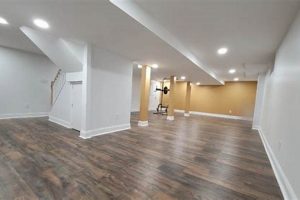
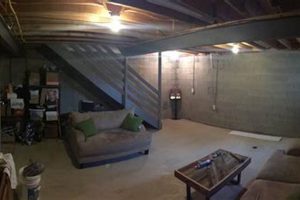
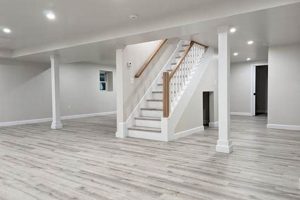
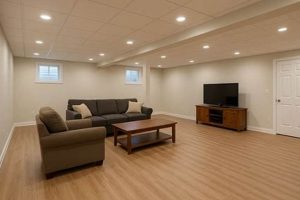
The process of completing the overhead surface in a subterranean level, often left exposed during initial construction, enhances both the aesthetic appeal and functional performance of the space. It involves selecting appropriate materials and employing specific techniques to cover the joists, pipes, wiring, and other utilities typically visible in an unfinished state. An example includes installing drywall, suspended ceilings, or wood panels to create a more refined and comfortable environment below grade.
Completing the overhead surface in a basement significantly improves the room’s ambiance by concealing unsightly infrastructure and providing a clean, uniform appearance. Furthermore, it can contribute to enhanced thermal and acoustic insulation, leading to greater energy efficiency and noise reduction. Historically, this area was frequently left unfinished due to cost constraints or a lack of perceived need, but contemporary design trends and increased awareness of the benefits now encourage its completion to maximize the utility and value of the subterranean square footage.
The following sections will detail the various methods available for this undertaking, focusing on material selection, installation procedures, and considerations for addressing common challenges, such as moisture control and limited headroom, to achieve a successful and long-lasting result.
Essential Considerations for Completing a Subterranean Overhead Surface
Successfully executing this task requires careful planning and attention to detail. The following guidelines provide critical insights for ensuring a durable, aesthetically pleasing, and code-compliant result.
Tip 1: Address Moisture Concerns Prior to Commencement: Basement environments are prone to humidity. Thoroughly inspect for leaks and implement waterproofing measures, such as vapor barriers or drainage systems, to prevent future issues and protect the chosen materials.
Tip 2: Prioritize Headroom Optimization: Basements often have limited vertical space. Explore options that minimize height loss, such as surface-mounting electrical wiring or utilizing thin-profile suspension systems, to maximize usable space.
Tip 3: Strategically Plan for Utility Access: Incorporate access panels or removable sections to facilitate future maintenance or repairs of plumbing, electrical wiring, or HVAC systems located above. This avoids the need for disruptive demolition.
Tip 4: Consider Acoustic Performance: Basement spaces often benefit from improved sound absorption. Incorporate materials with acoustic properties, such as mineral wool insulation or specialized ceiling tiles, to reduce echo and noise transmission.
Tip 5: Select Code-Compliant Materials: Ensure all materials used meet local building codes and fire safety regulations. This may include using fire-rated drywall or adhering to specific electrical wiring standards.
Tip 6: Properly Insulate for Energy Efficiency: Adding insulation between the floor joists above can significantly improve energy efficiency and reduce heating and cooling costs. Choose insulation with an appropriate R-value for the climate.
Tip 7: Plan for Adequate Lighting: Consider the lighting scheme early in the planning process. Recessed lighting, track lighting, or pendant lights can be integrated into the completed overhead surface for optimal illumination.
These considerations offer a framework for mitigating potential issues and achieving a finished overhead surface that enhances the functionality and value of the basement space. By implementing these strategies, the outcome will be both aesthetically pleasing and practically sound.
The subsequent sections will delve into specific material choices and installation techniques, offering further guidance for a successful project completion.
1. Moisture Mitigation

The effective management of moisture is paramount when completing a subterranean overhead surface. The inherent characteristics of basements, including their below-grade location and proximity to soil, make them susceptible to elevated humidity levels and potential water intrusion. Failure to address these factors before and during the finishing process can lead to a cascade of problems, ultimately undermining the integrity and longevity of the completed surface. For example, excessive moisture can promote the growth of mold and mildew, which not only compromise indoor air quality but also cause the deterioration of building materials such as drywall, wood, and insulation. The presence of leaks, even minor ones, can create persistent dampness, leading to structural damage and the need for costly repairs. Therefore, a comprehensive moisture mitigation strategy is an indispensable component of achieving a durable and healthy overhead surface in a basement environment.
The implementation of a robust moisture mitigation plan typically involves several key steps. Initially, a thorough inspection should be conducted to identify any existing sources of moisture, such as foundation cracks, leaking pipes, or inadequate drainage. Corrective measures should be implemented to eliminate these sources. Next, a vapor barrier should be installed between the foundation wall and any framing or insulation to prevent moisture from migrating through the walls and into the finished space. Proper ventilation is also crucial for maintaining a healthy moisture balance. This can be achieved through the installation of exhaust fans or dehumidifiers. Furthermore, the choice of materials used in finishing the overhead surface should be carefully considered. Moisture-resistant drywall, mold-inhibiting paints, and other specialized products can help to minimize the risk of moisture-related problems. Regular monitoring of humidity levels and prompt attention to any signs of water intrusion are essential for maintaining a dry and healthy environment.
In conclusion, moisture mitigation is not merely an optional step but a fundamental requirement for a successful completion of a subterranean overhead surface. By addressing potential sources of moisture, implementing appropriate protective measures, and utilizing moisture-resistant materials, it is possible to create a dry, healthy, and durable space that will provide years of enjoyment. Neglecting this crucial aspect can lead to significant problems, including structural damage, health hazards, and the need for extensive and costly repairs. Therefore, a proactive and comprehensive approach to moisture mitigation is essential for maximizing the value and longevity of any finished basement.
2. Headroom Maximization

In the context of completing an overhead surface in a subterranean level, headroom maximization assumes critical importance due to the frequently limited vertical space inherent in such structures. The act of finishing the overhead area invariably involves some reduction in the available height, as materials and construction methods inevitably occupy space. Therefore, careful consideration must be given to techniques and materials that minimize this reduction, preserving as much usable height as possible. The correlation between headroom maximization and the overall usability of the finished basement is direct: increased headroom translates to a more comfortable and functional living space, while inadequate headroom can create a cramped and undesirable environment. A poorly executed overhead surface that significantly reduces headroom can render the basement less appealing and potentially decrease its overall value.
Strategies for headroom maximization encompass various approaches, each with its own advantages and trade-offs. Surface-mounting electrical wiring and plumbing, as opposed to concealing them within a dropped ceiling, is a common method. Utilizing thinner materials, such as low-profile LED lighting fixtures or lightweight ceiling panels, can also help to minimize vertical space consumption. The choice of finishing method itself plays a crucial role; for instance, directly attaching drywall to the floor joists, rather than installing a suspended ceiling, provides a more significant preservation of headroom. In some cases, structural modifications, such as underpinning the foundation to lower the basement floor, may be considered, although these are typically more costly and complex. Selecting appropriate strategies depends on the specific constraints of the basement, budgetary considerations, and the desired aesthetic outcome. An example includes opting for a directly attached drywall with carefully planned surface conduit runs instead of a suspended ceiling to maximize every available inch in a basement with 7-foot ceilings.
In summary, headroom maximization is an essential component of achieving a successful completion of a subterranean overhead surface. By carefully considering available options, selecting appropriate materials, and implementing efficient installation techniques, it is possible to create a finished basement that is both aesthetically pleasing and comfortably habitable. The challenges presented by limited vertical space necessitate a proactive and thoughtful approach to ensure that the final result maximizes the usable height and enhances the overall functionality of the space. Ignoring this consideration can have significant negative consequences, impacting the perceived value and long-term enjoyment of the finished basement.
3. Utility Accessibility

The practice of completing a subterranean overhead surface necessitates meticulous consideration of utility accessibility. The concealment of essential building systemselectrical wiring, plumbing lines, HVAC ductworkbehind a finished ceiling creates a potential impediment to future maintenance, repairs, or modifications. The lack of adequate access provisions can lead to destructive interventions, increasing costs and disrupting the use of the space. An unaddressed pipe leak, for instance, hidden behind a drywall ceiling, might remain undetected for an extended period, causing extensive water damage before its eventual discovery. This directly emphasizes that prioritizing utility accessibility is a critical component of the overhead finishing process.
Facilitating access can be achieved through various design and construction strategies. Installing strategically positioned access panels allows for visual inspection and physical intervention without compromising the integrity of the finished surface. These panels should be appropriately sized and located to provide adequate clearance for typical maintenance tasks. Removable ceiling tiles, particularly within suspended ceiling systems, offer another viable solution, enabling easy access to a broader area above the ceiling. Another practical approach involves maintaining detailed documentation of utility locations, including photographs and as-built drawings, to assist future technicians in identifying and accessing specific components. The foresight demonstrated in incorporating these strategies can minimize disruption and significantly reduce the expense associated with future utility-related work.
In summary, addressing utility accessibility is not merely a matter of convenience but a fundamental requirement for responsible and sustainable overhead surface completion. By proactively integrating access solutions and maintaining accurate records, one can ensure the long-term serviceability of essential building systems without sacrificing the aesthetic benefits of a finished ceiling. Neglecting this aspect increases the likelihood of costly and disruptive interventions, ultimately undermining the value and utility of the finished basement space.
4. Acoustic Management
Acoustic management plays a crucial role in the successful completion of a subterranean overhead surface. The inherent characteristics of basement spaces, such as concrete walls and floors, often contribute to undesirable sound reflections and reverberation. This can result in poor speech intelligibility, increased noise levels, and a generally unpleasant auditory environment. Therefore, integrating strategies for acoustic control during the ceiling finishing process is essential for creating a comfortable and functional space. Failing to address acoustics can negate the benefits of other improvements, such as enhanced aesthetics and increased usable area. Consider, for instance, a home theater constructed in a basement without proper sound absorption; the reverberant sound field would significantly detract from the viewing experience.
Several methods can be employed to manage acoustics during ceiling finishing. The selection of appropriate materials is paramount. Acoustic ceiling tiles, mineral wool insulation, and specialized sound-dampening panels are designed to absorb sound energy, reducing reflections and reverberation. The strategic placement of these materials is also critical. Covering a significant portion of the ceiling surface with absorptive materials can substantially improve the acoustic properties of the space. Additionally, incorporating air gaps between the ceiling and the joists above can further enhance sound isolation. For example, installing a suspended ceiling with sound-absorbing tiles and mineral wool insulation can significantly reduce noise transmission to upper floors and improve the clarity of sound within the basement itself. The effectiveness of these measures is contingent upon careful planning and proper installation techniques.
In summary, acoustic management is an integral component of successfully completing a subterranean overhead surface. By strategically incorporating sound-absorbing materials and design principles, it is possible to mitigate the adverse acoustic characteristics of basement spaces, creating a more comfortable, functional, and enjoyable environment. Overlooking acoustic considerations can diminish the overall value of the finished basement, rendering it less appealing for activities such as home theater viewing, music listening, or general relaxation. Therefore, a proactive and well-informed approach to acoustic management is essential for maximizing the benefits of any basement finishing project.
5. Code Compliance

The execution of overhead surface completion within a subterranean level is inextricably linked to code compliance. Adherence to local building codes and regulations is not merely a procedural formality; it constitutes a fundamental requirement for ensuring the safety, durability, and legal permissibility of the finished space. Failure to comply with applicable codes can result in costly rework, legal penalties, and, most significantly, compromise the safety of occupants. The correlation is straightforward: code compliance dictates the materials, methods, and safeguards necessary for creating a structurally sound and hazard-free environment.
Code-related considerations in basement ceiling finishes often encompass several key areas. Fire safety regulations dictate the use of fire-resistant materials, such as fire-rated drywall, to minimize the spread of flames in the event of a fire. Electrical codes govern the safe installation and wiring of lighting fixtures and other electrical components, preventing electrical hazards. Structural codes specify the minimum load-bearing capacity of the ceiling structure and the proper fastening techniques to ensure its stability. Moreover, codes related to ventilation and moisture control are critical for maintaining indoor air quality and preventing the growth of mold and mildew. An example of this would be a municipality requiring that any recessed lighting installed in a basement ceiling be IC-rated (Insulation Contact rated) to prevent overheating and potential fire hazards when in contact with insulation.
In summary, code compliance is an indispensable component of any overhead surface completion project. It directly impacts the safety, structural integrity, and long-term viability of the finished space. By adhering to applicable codes and regulations, building owners can avoid legal issues, ensure the well-being of occupants, and maximize the value of their property. Neglecting code compliance can have severe consequences, ranging from financial penalties to life-threatening hazards. Therefore, a thorough understanding of local building codes and regulations is essential for all parties involved in basement finishing projects.
Frequently Asked Questions
The following questions address common concerns and misconceptions regarding the process of completing an overhead surface in a subterranean level. These answers aim to provide clarity and guidance for those undertaking such projects.
Question 1: Is a permit required to complete a ceiling in a basement?
Most jurisdictions mandate that a permit be obtained prior to commencing significant alterations to a residential structure, including finishing a basement ceiling. The specific requirements vary by locality; consulting the local building department is essential to ascertain the necessity for a permit and ensure compliance with applicable codes.
Question 2: What type of insulation is best for a basement ceiling?
Several insulation options exist for basement ceilings, each with varying R-values and moisture resistance properties. Rigid foam board, fiberglass batts, and spray foam insulation are commonly utilized. The optimal choice depends on the climate, budget, and specific moisture conditions within the basement environment. A professional assessment can help determine the most appropriate insulation type.
Question 3: How does one address low headroom when finishing a basement ceiling?
Low headroom can be mitigated through careful material selection and construction techniques. Options include surface-mounting utilities, utilizing thin-profile lighting fixtures, and directly attaching drywall to the floor joists rather than installing a suspended ceiling. Structural modifications, such as underpinning the foundation, may be considered, but these are typically more costly.
Question 4: What are the common mistakes to avoid when finishing a basement ceiling?
Common errors include neglecting moisture mitigation, failing to obtain necessary permits, improper insulation installation, inadequate planning for utility access, and overlooking acoustic considerations. Addressing these issues proactively can prevent costly rework and ensure a successful outcome.
Question 5: Can a homeowner complete a basement ceiling project independently, or is professional assistance recommended?
The feasibility of a homeowner undertaking this task independently depends on their skill level, experience, and the complexity of the project. While some homeowners may possess the necessary skills for simpler installations, complex projects involving electrical wiring, plumbing, or structural modifications often warrant professional assistance to ensure safety and code compliance.
Question 6: How does one integrate lighting into a finished basement ceiling?
Various lighting options exist, including recessed lighting, track lighting, and pendant lights. Careful planning is essential to ensure adequate illumination and proper wiring. Local electrical codes must be adhered to, and professional assistance may be required for electrical installations.
These FAQs represent a selection of common inquiries related to completing an overhead surface in a subterranean level. Addressing these concerns proactively can contribute to a more successful and satisfying project outcome.
The subsequent section will explore the impact on property value, offering insights into the financial implications of finishing a basement ceiling.
Concluding Remarks on Subterranean Overhead Surface Completion
This discourse has examined various facets of how to finish a ceiling in a basement, underlining the critical considerations of moisture mitigation, headroom maximization, utility accessibility, acoustic management, and code compliance. The successful execution of such a project necessitates meticulous planning, informed material selection, and adherence to established construction practices. Overlooking any of these core principles can compromise the structural integrity, aesthetic appeal, and overall functionality of the completed space.
The decision to undertake this endeavor should be approached with a clear understanding of the potential challenges and the long-term implications for property value and occupant well-being. A properly executed ceiling finish not only enhances the usability of the subterranean area but also contributes to the overall resilience and marketability of the property. Thoughtful planning and diligent execution are paramount to realizing the full benefits of this undertaking.