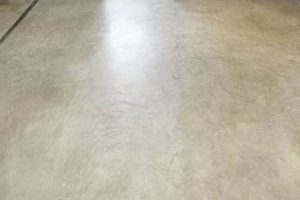
The process of applying a protective or decorative coating to a concrete surface within a vehicle storage area is a common home improvement project. This typically involves surface preparation, application of a primer or base coat, and then the application of a topcoat designed for durability and resistance to chemicals, abrasions, and impacts. A professionally executed result enhances the appearance and longevity of the underlying concrete.
A properly treated area of this type offers several advantages, including increased resistance to staining from oil and other vehicle fluids, improved ease of cleaning, and a generally more appealing aesthetic. Historically, untreated concrete has been susceptible to deterioration from environmental factors and daily use; therefore, preventative measures such as protective coatings extend the lifespan of the structural element. Moreover, a well-maintained area can positively impact property value.
The following will detail key aspects concerning surface preparation, coating selection, application techniques, and maintenance considerations relevant to achieving a durable and aesthetically pleasing result for such a surface.
Essential Considerations for Surface Treatment
Achieving a long-lasting and aesthetically pleasing surface requires meticulous planning and execution. The following tips highlight crucial steps for a successful project.
Tip 1: Surface Preparation is Paramount. A thorough cleaning is essential. Remove all traces of oil, grease, dirt, and existing coatings through pressure washing, grinding, or chemical etching. The surface must be porous to ensure proper adhesion of subsequent coatings.
Tip 2: Moisture Testing is Critical. Conduct a moisture vapor transmission test to determine the moisture content of the concrete slab. Excessive moisture can lead to coating failure, blistering, or delamination. Ensure moisture levels are within the coating manufacturer’s specifications before proceeding.
Tip 3: Choose the Right Coating. Select a coating system appropriate for the intended use and environmental conditions. Options include epoxy, polyurethane, acrylic, and polyaspartic coatings. Each possesses varying degrees of durability, chemical resistance, and UV stability. Consider vehicular traffic, chemical exposure, and desired aesthetics when making a selection.
Tip 4: Follow Manufacturer’s Instructions Precisely. Adhere strictly to the coating manufacturer’s instructions regarding mixing ratios, application methods, and curing times. Deviations can compromise the coating’s performance and longevity.
Tip 5: Apply Coatings in Thin, Even Layers. Multiple thin coats are preferable to a single thick coat. This minimizes the risk of air entrapment, solvent entrapment, and uneven curing. Allow each coat to cure fully before applying the next.
Tip 6: Consider Anti-Skid Additives. Incorporate anti-skid additives into the final coat to enhance traction, particularly in areas prone to moisture or spills. This improves safety and reduces the risk of slips and falls.
Tip 7: Proper Ventilation is Essential. Ensure adequate ventilation during application and curing to minimize exposure to hazardous fumes and promote proper curing. Use respirators and fans as needed.
Adhering to these guidelines can significantly improve the outcome and ensure a durable, attractive, and functional surface for years to come. Proper planning and execution are vital investments.
The next section will explore common issues and troubleshooting techniques that may arise during the application process.
1. Preparation

Within the context of successfully executing procedures for concrete surfacing, the initial phase of preparation is fundamentally critical. It is the necessary precursor that directly dictates the adhesion, longevity, and aesthetic outcome of any subsequent coating application. Inadequate preparation invariably leads to coating failure, manifested as peeling, blistering, or delamination. For instance, the presence of even microscopic oil contaminants inhibits bonding, preventing the coating from properly adhering to the concrete substrate.
The preparation phase typically encompasses several key processes: thorough cleaning to eliminate surface debris, degreasing to remove oil and grease residues, and profiling to create a suitable surface texture. Profiling, often achieved through mechanical abrasion or chemical etching, establishes a slightly roughened surface, analogous to sanding wood before painting. This increased surface area provides a stronger mechanical bond for the coating. Real-world examples abound where neglecting these preparatory steps resulted in costly rework and compromised structural integrity. A scenario often encountered involves failing to properly remove existing coatings or sealers, resulting in incompatibility issues and premature coating failure.
In summary, meticulous preparation is not merely a preliminary step; it is an intrinsic component of achieving a durable and aesthetically pleasing surface. Overlooking or inadequately performing surface preparation ultimately undermines the entire project, regardless of the quality of the coating materials employed. Understanding and prioritizing these preparatory measures are essential for a lasting outcome.
2. Moisture Mitigation

Moisture mitigation is an indispensable component within the undertaking of properly surfacing concrete in a vehicular storage structure. The presence of excessive moisture within the concrete slab compromises the adhesion and longevity of any applied coating. Failure to address moisture issues results in costly and premature deterioration of the finished surface.
- Moisture Vapor Transmission Testing
Prior to coating application, moisture vapor transmission (MVT) testing is paramount. This testing quantifies the rate at which moisture is escaping from the concrete. Exceeding the coating manufacturer’s specified MVT rate necessitates remediation. Common testing methods include anhydrous calcium chloride tests and relative humidity probes. Accurate MVT assessment prevents future coating failures related to moisture-driven delamination.
- Source Identification and Remediation
Identifying the source of moisture is crucial. Potential sources include groundwater seepage, inadequate drainage around the structure, and condensation. Remediation strategies vary depending on the source. Exterior waterproofing may be required to prevent groundwater intrusion. Improved ventilation and vapor barriers mitigate condensation. Addressing the root cause of moisture intrusion ensures the long-term integrity of the surface treatment.
- Moisture-Resistant Coatings
Certain coating formulations are specifically designed to withstand elevated moisture levels. These coatings typically possess enhanced breathability, allowing moisture vapor to escape without compromising adhesion. Examples include moisture-cured urethanes and epoxy systems formulated with moisture-tolerant additives. Selection of a moisture-resistant coating provides an additional layer of protection against moisture-related failures, even after mitigation efforts.
- Vapor Barriers
Installation of a vapor barrier beneath the concrete slab during initial construction is the most effective form of moisture mitigation. However, for existing structures, topical vapor barriers can be applied prior to coating. These barriers reduce the rate of moisture vapor transmission, providing a more stable and suitable substrate for coating application. The effectiveness of topical vapor barriers depends on proper surface preparation and application according to the manufacturer’s specifications.
In summary, moisture mitigation is a multifaceted process involving assessment, source identification, remediation, and coating selection. Ignoring this critical aspect increases the risk of coating failure, necessitating costly repairs and compromising the functional lifespan. Proper execution of moisture mitigation strategies ensures a durable and aesthetically pleasing surface, contributing to the overall value and usability of the structure.
3. Coating Selection

Appropriate coating selection is a critical determinant in the success of surface treatments for concrete in vehicle storage structures. The chosen material dictates the longevity, aesthetic appeal, and functional performance of the finished surface. Proper coating selection necessitates a comprehensive understanding of the performance requirements, environmental factors, and substrate characteristics.
- Epoxy Coatings
Epoxy coatings are characterized by their exceptional hardness, chemical resistance, and strong adhesion properties. They are well-suited for high-traffic areas subjected to vehicular fluids, such as oil and gasoline. However, epoxy coatings are susceptible to UV degradation, leading to yellowing and chalking over time. In applications exposed to direct sunlight, a UV-resistant topcoat is recommended to mitigate this effect. The selection of an epoxy coating hinges on the trade-off between durability and UV stability.
- Polyurethane Coatings
Polyurethane coatings exhibit superior flexibility, abrasion resistance, and UV stability compared to epoxy coatings. These characteristics make them suitable for areas requiring impact resistance and color retention. Polyurethane coatings are often used as topcoats over epoxy primers to provide a durable and aesthetically pleasing finish. The higher cost of polyurethane coatings must be weighed against the benefits of enhanced durability and UV resistance.
- Polyaspartic Coatings
Polyaspartic coatings represent a newer generation of concrete surfacing materials characterized by rapid curing times, high abrasion resistance, and excellent chemical resistance. They offer a compelling alternative to epoxy and polyurethane coatings, particularly in time-sensitive applications. Polyaspartic coatings are typically more expensive than traditional epoxy or polyurethane systems, but their faster curing times and enhanced performance characteristics may justify the increased cost.
- Acrylic Coatings
Acrylic coatings are generally less expensive than epoxy, polyurethane, or polyaspartic coatings. They offer acceptable levels of protection against staining and wear in low-traffic applications. However, acrylic coatings are less durable and chemically resistant than other options. They are typically used in residential settings where heavy-duty performance is not required. The selection of an acrylic coating prioritizes cost-effectiveness over long-term durability.
In conclusion, coating selection requires a thorough evaluation of performance requirements, environmental factors, and budgetary constraints. Each coating type possesses unique characteristics that make it suitable for specific applications. A well-informed coating selection process is essential for achieving a durable, aesthetically pleasing, and functional surface that meets the demands of the intended use.
4. Application Method
The chosen application method directly influences the final outcome of any surface treatment. The method employed must align with the selected coating’s properties and the existing surface conditions to ensure optimal adhesion, uniform coverage, and a durable finish.
- Surface Preparation Techniques and Their Impact
The application method is intrinsically linked to the preceding surface preparation. For instance, acid etching necessitates thorough neutralization and rinsing to prevent coating failure. Similarly, mechanical grinding creates dust that must be completely removed prior to coating application. Improperly prepared surfaces, regardless of the application technique, will compromise coating adhesion and longevity. Example: Insufficiently neutralized acid residue will interfere with epoxy curing, leading to a soft, tacky finish.
- Equipment Selection and its Relevance
The appropriate equipment is paramount. Coatings can be applied using rollers, brushes, squeegees, or sprayers, each offering distinct advantages and disadvantages. Rollers are suitable for uniform application on relatively smooth surfaces. Sprayers provide efficient coverage on large areas and textured surfaces. The selection of equipment must consider the coating’s viscosity, desired film thickness, and the applicator’s skill level. Improper equipment can result in uneven coverage, air entrapment, and wasted material. Example: Using a low-quality roller can leave lint and bubbles in the coating, detracting from the final appearance.
- Environmental Conditions and Their Influence
Environmental factors, such as temperature and humidity, significantly impact the application process and curing time. Most coatings have specific temperature ranges within which they can be effectively applied. High humidity can interfere with the curing process, leading to a cloudy or uneven finish. Application should be avoided during periods of extreme heat or cold. Environmental monitoring is essential to ensure optimal coating performance. Example: Applying an epoxy coating in cold temperatures can significantly extend the curing time and reduce its final hardness.
- Layering Techniques and Their Importance
The application of multiple thin coats is generally preferred over a single thick coat. Multiple layers allow for better control over film thickness, minimize the risk of air entrapment, and improve inter-coat adhesion. Each layer must be allowed to cure properly before the subsequent layer is applied. Proper layering techniques contribute to a more durable and aesthetically pleasing finish. Example: Applying a single thick coat of epoxy can trap air bubbles, resulting in a weakened and unsightly surface.
In summary, the application method is not merely a procedural step; it is an integrated component of the overall system. Its success hinges on careful consideration of surface preparation, equipment selection, environmental conditions, and layering techniques. Failure to properly execute the application method can compromise the coating’s performance and necessitate costly rework. Attention to detail during the application phase is crucial for achieving a long-lasting and aesthetically pleasing result.
5. Curing Time

The period allotted for a coating to fully harden and achieve its intended performance characteristics is a critical factor in concrete surface treatment. Premature exposure to traffic or environmental stressors before complete hardening compromises the coating’s physical and chemical properties, leading to premature failure. The duration varies depending on the coating type, ambient temperature, humidity levels, and the applied film thickness. Manufacturer’s specifications provide precise guidance on the required curing time for optimal results. For example, epoxy coatings typically require a minimum of 72 hours for light foot traffic and several days for vehicular traffic, while polyaspartic coatings may cure within 24 hours. Deviation from recommended curing times can result in a soft, tacky surface susceptible to scratches, stains, and delamination.
The curing process involves chemical reactions that cross-link the coating’s polymer chains, forming a robust and durable matrix. Insufficient curing inhibits this cross-linking, resulting in a weaker and more vulnerable coating. Furthermore, trapped solvents within the coating can compromise its long-term stability and lead to blistering or discoloration. Environmental factors, such as low temperatures or high humidity, slow down the curing process, necessitating extended curing times. The application of a thicker film requires longer curing to allow for complete solvent evaporation and cross-linking. Postponing the introduction of heavy objects or vehicles onto the surface until the curing process is complete is imperative to prevent damage and ensure the coating’s longevity. Implementing barriers or signage to restrict access during the curing phase serves as a practical measure to protect the freshly coated surface.
In summary, curing time is a non-negotiable element in successful concrete surface treatment. Adhering to the manufacturer’s specified curing time is paramount to achieving the coating’s intended performance characteristics. Monitoring environmental conditions and adjusting curing times accordingly, as well as implementing protective measures to prevent premature exposure, contributes to a durable, aesthetically pleasing, and long-lasting surface. Failure to adequately address curing time considerations results in compromised coating integrity and costly rework.
6. Maintenance

The long-term success of any concrete floor surface treatment is inextricably linked to consistent and appropriate maintenance procedures. The initial application is only one phase; sustained performance relies on diligent upkeep. The purpose of maintenance is to preserve the integrity of the coating, mitigate potential damage from environmental factors or usage, and extend the lifespan of the investment. Neglecting maintenance practices will inevitably lead to premature coating failure, requiring costly repairs or complete reapplication. The connection between maintenance and the longevity of a properly coated surface is a direct cause-and-effect relationship. Example: Regularly sweeping and mopping removes abrasive particles that would otherwise gradually wear down the coating’s surface.
Maintenance regimes must be tailored to the specific coating type and the usage patterns of the area. Epoxy coatings, known for their chemical resistance, still benefit from prompt cleanup of spills to prevent prolonged exposure. Polyurethane coatings, valued for their abrasion resistance, require periodic inspections for scratches or gouges that could compromise their protective barrier. The implementation of walk-off mats at entry points reduces the introduction of dirt and debris, minimizing abrasive wear. The use of appropriate cleaning agents, as recommended by the coating manufacturer, is also crucial; harsh chemicals can damage or discolor the coating. Example: The use of citrus-based cleaners on certain epoxy coatings can lead to softening and eventual degradation of the surface.
Ultimately, maintenance is not an optional afterthought but an integral component of the entire concrete surface treatment process. It is a proactive investment that protects the initial expenditure and ensures the continued functionality and aesthetic appeal of the area. A well-defined maintenance plan, consistently executed, represents a cost-effective strategy for maximizing the return on investment and avoiding the significant expense of premature coating replacement. This understanding underscores the practical significance of integrating maintenance into the planning and execution phases of any surface treatment endeavor.
Frequently Asked Questions
The following addresses common inquiries regarding procedures for achieving a durable and aesthetically pleasing concrete surface in areas where vehicles are stored. The information provided is intended to clarify key considerations and best practices.
Question 1: What are the primary benefits of applying a coating?
The application of a suitable coating enhances resistance to staining from vehicular fluids (oil, gasoline, antifreeze), reduces dust generation, improves cleanability, and increases the overall aesthetic appeal. Furthermore, a protective coating extends the lifespan of the underlying concrete by preventing damage from chemicals, abrasion, and freeze-thaw cycles.
Question 2: Is professional installation necessary, or can the procedure be executed as a DIY project?
While a DIY approach is feasible, professional installation offers advantages in terms of expertise, specialized equipment, and warranty coverage. Professionals possess the knowledge to properly assess the surface, select the appropriate coating, and execute the application with optimal results. DIY installations may be subject to errors that compromise the coating’s performance and longevity.
Question 3: How long does the application process typically take?
The duration varies depending on the size of the area, the complexity of the preparation required, and the type of coating selected. A typical two-car requires several days, including surface preparation, coating application (multiple coats may be necessary), and curing time. Polyaspartic coatings offer significantly faster curing times compared to traditional epoxy systems.
Question 4: What is the typical lifespan of a properly installed coating?
With proper installation and maintenance, a coating can last for several years or even decades. The actual lifespan depends on factors such as traffic volume, exposure to chemicals, and adherence to maintenance recommendations. Regular cleaning and prompt repair of any damage extend the coating’s functional lifespan.
Question 5: What are the most common reasons for coating failure?
The most frequent causes of coating failure include inadequate surface preparation (insufficient cleaning, profiling, or moisture testing), improper coating selection (choosing a coating not suited to the intended use or environmental conditions), and incorrect application techniques (deviating from manufacturer’s instructions regarding mixing ratios, application methods, or curing times). Neglecting these critical aspects compromises the coating’s performance and durability.
Question 6: How can the coated surface be maintained to maximize its lifespan?
Regular sweeping and mopping with a mild detergent are essential for removing dirt and debris. Prompt cleanup of spills prevents staining and chemical damage. Avoid dragging heavy objects across the surface. Periodically inspect the coating for scratches, gouges, or other signs of damage and repair them promptly to prevent further deterioration. Adhering to these maintenance practices maximizes the coating’s longevity and aesthetic appeal.
Proper surface preparation, coating selection, application, and maintenance are all equally crucial elements that affect how to finish a garage floor. A balanced approach to these four elements can have a good result.
The next section will provide a concluding summary of the benefits of properly surfacing concrete in vehicular storage areas.
Concluding Remarks
This exploration has detailed the multifaceted nature of achieving a durable and aesthetically pleasing concrete surface in vehicular storage areas. Key considerations encompass meticulous surface preparation, appropriate moisture mitigation strategies, informed coating selection based on performance requirements, precise application techniques adhering to manufacturer specifications, and consistent maintenance practices to ensure longevity. Each element contributes significantly to the overall success of the project, and neglecting any aspect can compromise the final result.
Ultimately, the decision to invest in these procedures represents a commitment to enhancing the value and functionality of the structure. By prioritizing proper techniques and materials, a long-lasting and resilient surface is achieved, minimizing future maintenance costs and maximizing the usability of the space. A well-executed project provides enduring benefits, contributing to both structural integrity and aesthetic appeal.