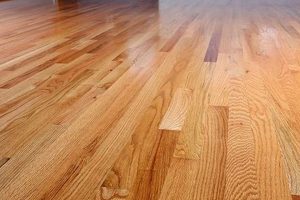
The process of applying a protective and aesthetic coating to bare, previously untreated wooden floorboards is a complex undertaking. This involves sanding, staining (optional), and sealing the wood to enhance its durability and appearance. A common example includes transforming newly installed, raw oak planks into a polished, resilient surface ready for daily use.
Completing this task properly offers several advantages. It protects the wood from moisture damage, scratches, and wear, significantly extending the lifespan of the flooring. Furthermore, it allows for customization of the floor’s appearance through the selection of stains and finishes, contributing to the overall aesthetic of the space. Historically, this practice has been essential in preserving and enhancing the value of wood flooring in residential and commercial properties.
Understanding the necessary tools, materials, and techniques is crucial for achieving a professional-quality result. The subsequent sections will detail the steps involved, from preparing the surface to applying the final coats, providing a comprehensive guide to completing this home improvement project successfully.
Essential Considerations for Floor Finishing
The following points provide valuable insights for achieving optimal results when undertaking this project.
Tip 1: Moisture Content Assessment: Prior to beginning, measure the moisture content of both the wood flooring and the subfloor. Discrepancies can lead to warping or gapping after the finish is applied.
Tip 2: Surface Preparation is Paramount: Thorough sanding is critical. Progress through multiple grits of sandpaper, ensuring each pass removes the scratches from the previous grit. The final sanding should result in a smooth, even surface.
Tip 3: Stain Application Technique: If staining, apply the stain evenly and according to the manufacturer’s instructions. Avoid excessive application, and always wipe off excess stain promptly to prevent blotching.
Tip 4: Choosing the Right Finish: Select a finish appropriate for the intended use and traffic level of the floor. Consider factors such as durability, sheen, and volatile organic compound (VOC) content.
Tip 5: Application of Finish Coats: Apply finish coats in thin, even layers, allowing sufficient drying time between coats as specified by the manufacturer. Avoid creating drips or puddles.
Tip 6: Buffing Between Coats: Lightly buffing between coats of finish can improve adhesion and create a smoother final surface. Use a fine-grit abrasive screen or pad.
Tip 7: Environmental Control: Maintain a consistent temperature and humidity level in the work area. This will help the finish dry properly and prevent issues such as blushing or clouding.
Tip 8: Cure Time: Allow the finish to fully cure before placing furniture or allowing heavy traffic on the floor. The manufacturer’s instructions should be consulted for recommended cure times.
Adhering to these recommendations will significantly enhance the quality and longevity of the finished flooring, resulting in a durable and aesthetically pleasing surface.
The subsequent sections will offer a step-by-step guide.
1. Surface Preparation
Surface preparation is a foundational element in achieving a successful and durable floor finish. The condition of the underlying surface directly impacts the adhesion, appearance, and longevity of the final coating. Contaminants, imperfections, or unevenness present before finishing will be magnified by the finish, compromising the overall result. For example, if old adhesive residue is left on the wood, the new finish may not bond properly, leading to peeling or bubbling. Similarly, unsanded areas will appear dull and textured compared to the smooth, finished sections.
The process typically involves several stages: thorough cleaning to remove dust, dirt, and debris; leveling to eliminate uneven boards or high spots; and sanding to create a smooth, uniform surface. Sanding is critical because it not only levels the floor but also opens the wood pores, allowing the stain and finish to penetrate effectively. A real-world scenario would involve addressing cupping (where edges of boards are higher than the center) or crowning (where the center of boards are higher than the edges) through multiple passes with progressively finer grits of sandpaper. Failure to address these issues during preparation will result in an uneven and unprofessional-looking finish.
In summary, proper surface preparation is not merely a preliminary step but an integral part of the finishing process. It ensures optimal adhesion, a uniform appearance, and long-term durability. Neglecting this phase will invariably lead to unsatisfactory results, necessitating costly repairs or complete refinishing. The time and effort invested in thorough surface preparation represent a significant return in the quality and longevity of the finished floor.
2. Moisture Management

Moisture management is a critical element in the successful completion of any floor finishing project. Unaddressed moisture imbalances can lead to significant problems, compromising the integrity and appearance of the finished hardwood floor. Therefore, a thorough understanding and implementation of proper moisture control techniques is essential.
- Acclimation of Wood
Acclimation refers to allowing the unfinished hardwood flooring to adjust to the environmental conditions of the installation site before the finishing process begins. This involves storing the wood within the room where it will be installed for a period of days or weeks, allowing it to reach equilibrium with the ambient temperature and humidity. Failure to acclimate can result in the wood expanding or contracting after finishing, leading to gaps, cupping, or crowning.
- Subfloor Moisture Testing
The moisture content of the subfloor is equally important. Excessive moisture in the subfloor can migrate into the hardwood flooring, causing similar problems as inadequate acclimation. Moisture meters are used to assess the moisture levels of both the wood and the subfloor, ensuring they are within acceptable ranges before proceeding. A concrete subfloor, for example, must be fully cured and dry before hardwood installation and finishing.
- Environmental Control During Finishing
Maintaining consistent temperature and humidity levels during the finishing process is crucial. Fluctuations in these conditions can affect the drying time and properties of the finish, leading to issues such as blistering or clouding. The manufacturer’s recommendations for temperature and humidity should be strictly followed throughout the application and curing phases.
- Vapor Barriers
In certain situations, the use of a vapor barrier may be necessary to prevent moisture migration from the subfloor into the hardwood flooring. This is particularly important in basements or over concrete slabs where moisture levels are typically higher. The vapor barrier acts as a shield, protecting the wood from excessive moisture and preventing potential damage.
These facets of moisture management are interconnected and collectively contribute to the long-term stability and aesthetic appeal of the finished hardwood floor. Disregarding any of these aspects can have detrimental consequences, necessitating costly repairs or even complete replacement of the flooring. Therefore, diligent attention to moisture control is paramount throughout the entire finishing process.
3. Sanding Techniques
Sanding techniques are integral to achieving a smooth, uniform surface, critical for proper adhesion and an aesthetically pleasing final result. The process involves removing imperfections, leveling the surface, and preparing the wood for staining and finishing. Insufficient or improper sanding will invariably lead to visible flaws and a compromised finish.
- Grit Progression
Grit progression refers to the sequential use of sandpaper with increasing fineness, beginning with coarser grits to remove substantial imperfections and transitioning to finer grits to refine the surface. For instance, a typical sequence might involve 36-grit to remove old finishes or severe unevenness, followed by 60-grit, 80-grit, 100-grit, and finally 120-grit for final smoothing. Skipping grits or using too coarse a grit initially can cause deep scratches that are difficult to remove, while failing to use fine enough grits will result in a rough, uneven surface. The appropriate grit progression depends on the initial condition of the floor and the type of wood being sanded.
- Sanding Equipment
Various sanding machines are employed, each suited to different stages and scales of the sanding process. A drum sander is typically used for initial leveling and removal of old finishes due to its aggressive material removal rate. An edger is used to sand along walls and in corners where the drum sander cannot reach. An orbital sander is often used for final sanding and between coats of finish to create a smooth surface and improve adhesion. Selecting the appropriate equipment and using it correctly is essential for achieving a uniform sanding pattern and avoiding damage to the wood. For example, improper operation of a drum sander can quickly lead to gouges or dips in the floor.
- Sanding Patterns
The sanding pattern refers to the direction and overlap of sanding passes across the floor. A common approach involves making multiple passes, each overlapping the previous pass by approximately 50%, and alternating the direction of each pass. This ensures uniform material removal and minimizes the risk of creating visible sanding marks. When using a drum sander, it is generally recommended to sand diagonally across the room first, followed by passes along the length and width. Edging should blend smoothly with the drum-sanded areas. Inconsistent sanding patterns can result in unevenness and visible variations in the final finish.
- Dust Containment
Sanding generates a significant amount of dust, which can be detrimental to both the health of the operator and the quality of the finish. Dust containment systems, such as vacuum attachments for sanding machines and plastic sheeting to seal off the work area, are essential for minimizing dust exposure and preventing contamination of the finished surface. Airborne dust can settle on the wet finish, creating a textured or uneven appearance. Moreover, dust can pose a fire hazard and respiratory risks if not properly managed. Therefore, effective dust containment is a critical component of proper sanding techniques.
The effective application of sanding techniques, encompassing grit progression, appropriate equipment, systematic patterns, and dust containment, directly influences the quality and longevity of the resulting surface. A properly sanded floor will accept stain and finish evenly, resist wear and tear, and contribute significantly to the overall aesthetic appeal of the space. Neglecting these critical elements will invariably lead to a substandard finish, requiring costly repairs or complete refinishing.
4. Stain Selection

The selection of a stain is a pivotal decision within the process of applying a finish to bare hardwood floors. This choice dictates the floor’s final aesthetic, influencing the overall ambience and complementing the architectural style of the space. Therefore, careful consideration must be given to the nuances of stain selection.
- Wood Species and Undertones
Different wood species react uniquely to stains. Oak, with its open grain, absorbs stain more readily than maple, which possesses a tighter grain. Furthermore, each wood type has inherent undertones that can influence the final color. For instance, cherry wood has reddish undertones, while walnut exhibits darker, richer hues. Selecting a stain that complements or enhances these natural undertones is crucial. Applying a red-toned stain to cherry wood may intensify the red, while a neutral stain might better showcase its natural grain.
- Color Palette and Design Considerations
The chosen stain color should harmonize with the existing or intended dcor of the room. Light stains can brighten a space and create a sense of openness, while dark stains can add warmth and sophistication. Consider the color of walls, furniture, and textiles when making a selection. For a minimalist, modern design, a gray-toned stain might be suitable. For a traditional, rustic aesthetic, a warm brown stain may be preferable.
- Stain Formulation and Application
Stain formulations vary widely, from oil-based to water-based options, each offering distinct characteristics. Oil-based stains typically provide richer, more vibrant colors and longer working times but emit higher levels of volatile organic compounds (VOCs). Water-based stains are lower in VOCs, dry faster, and offer easier cleanup. The application technique also significantly affects the outcome. Consistent application, even coverage, and proper wiping are essential to prevent blotching or uneven color distribution. A test application on a small, inconspicuous area is recommended before staining the entire floor.
- Durability and Maintenance
While the stain itself does not provide a protective layer, the chosen color can influence the perceived durability of the floor. Darker stains tend to show scratches and wear more readily than lighter stains. Therefore, in high-traffic areas, a lighter stain might be a more practical choice. Regardless of the stain color, a durable topcoat finish is essential to protect the wood from scratches, moisture, and wear. Regular cleaning and maintenance are also necessary to preserve the floor’s appearance over time.
In conclusion, the careful selection of a stain is an integral component when bare hardwood floors are to be sealed. Factors such as wood species, color palette, stain formulation, and durability considerations must be meticulously evaluated to achieve a harmonious and long-lasting result. The stain sets the foundation for the final appearance, while the protective finish ensures its preservation. Thus, the stain selection process should be approached with diligence and informed decision-making.
5. Finish Application

The application of a protective finish represents a critical stage in completing bare hardwood floors. This process directly impacts the durability, appearance, and longevity of the flooring. Proper technique and material selection are essential for achieving optimal results. The facets of application require a detailed examination.
- Selecting the Appropriate Finish
The choice of finish should be based on the intended use of the floor, the desired level of sheen, and considerations for volatile organic compounds (VOCs). Polyurethane finishes offer excellent durability and are available in both oil-based and water-based formulations. Oil-based polyurethanes provide a warm tone and durable surface but have higher VOC content. Water-based polyurethanes are lower in VOCs and dry faster but may require more coats to achieve comparable durability. Other options include varnish, lacquer, and penetrating oil finishes, each with its own characteristics and suitability for different applications. For instance, a high-traffic area would benefit from a durable polyurethane, while a low-traffic area might be suitable for a more aesthetically focused penetrating oil.
- Application Techniques
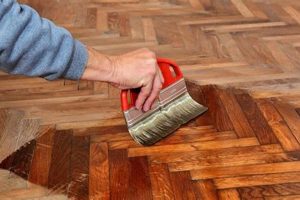
The method of applying the finish significantly influences the final outcome. Options include using a brush, roller, or applicator pad. Brushing is suitable for small areas or intricate details, while rollers are more efficient for large, open surfaces. Applicator pads provide a smooth, even finish with minimal brush marks. Regardless of the method, it is crucial to apply thin, even coats, avoiding drips, puddles, or excessive overlap. Proper technique involves maintaining a wet edge and working in the direction of the wood grain. An example would be using a lambswool applicator to apply a thin coat of water-based polyurethane, ensuring consistent coverage and minimal streaking.
- Number of Coats and Drying Time
The number of coats required depends on the type of finish and the desired level of protection. Typically, two to three coats are recommended, with light sanding or buffing between coats to improve adhesion and smoothness. Adequate drying time between coats is essential to allow the finish to fully cure and prevent issues such as bubbling or clouding. The manufacturer’s instructions should be strictly followed regarding drying times and recoating intervals. A failure to allow adequate drying time, for instance, might result in a soft, easily damaged finish.
- Environmental Control
Maintaining a consistent temperature and humidity level during the application and drying process is crucial for achieving optimal results. Extreme temperatures or humidity can affect the viscosity of the finish, the drying time, and the final appearance. Ideally, the temperature should be within the range recommended by the manufacturer, typically between 60F and 80F, and the humidity should be moderate. Avoiding drafts or direct sunlight during drying can also prevent issues such as uneven drying or blistering. A real-world example would involve ensuring adequate ventilation while avoiding strong breezes that could carry dust or debris onto the wet finish.
These facets of finish application are intrinsically linked to the broader process of sealing bare hardwood floors. Selecting the correct materials, employing proper techniques, and controlling the environment collectively determine the quality and longevity of the finished product. By addressing each of these facets with diligence and attention to detail, a durable and aesthetically pleasing result can be achieved, enhancing the value and beauty of the hardwood flooring.
6. Cure Time

Cure time, in the context of completing bare hardwood floors, refers to the period required for the applied finish to achieve its maximum hardness, durability, and chemical resistance. This phase is a critical, often underestimated, component of the finishing process. Insufficient cure time compromises the integrity of the finish, rendering it susceptible to damage from furniture placement, foot traffic, and cleaning agents. The duration of the cure time varies significantly depending on the type of finish used, environmental conditions, and the thickness of the applied coats. For example, a water-based polyurethane finish might require a cure time of several days, while an oil-based polyurethane could necessitate several weeks to fully harden. Premature use of the floor can lead to scratches, dents, and a compromised aesthetic appearance.
The practical significance of understanding cure time lies in preventing costly repairs and ensuring the long-term performance of the flooring. Rushing the cure time can result in trapped solvents within the finish, leading to a soft, easily damaged surface. In extreme cases, premature use can even cause the finish to delaminate from the wood. A real-world application involves carefully monitoring the environmental conditions, particularly temperature and humidity, as these factors can significantly impact the cure rate. Higher temperatures and lower humidity generally accelerate the curing process, while lower temperatures and higher humidity can prolong it. Manufacturers’ recommendations for cure times should always be strictly adhered to, and precautions should be taken to protect the floor during this vulnerable period, such as covering it with breathable materials or restricting access.
In summary, cure time is not merely a waiting period but an active component in achieving a durable and long-lasting floor finish. It is a non-negotiable element that directly influences the quality, appearance, and longevity of the treated hardwood. While patience is required, understanding the underlying science and adhering to best practices ensures that the investment in the flooring and its finishing is protected, preventing future problems and maximizing the lifespan of the surface. Overlooking this crucial step can lead to premature failure, necessitating costly rework and undermining the entire finishing effort.
7. Maintenance Protocol

A well-defined maintenance protocol is integral to preserving the integrity and aesthetic appeal achieved through applying a finish to bare hardwood floors. While the finishing process establishes the initial protection, ongoing maintenance ensures longevity and minimizes the need for future refinishing. This protocol encompasses various practices designed to mitigate wear, prevent damage, and sustain the floor’s appearance.
- Regular Cleaning
Consistent cleaning removes dirt, dust, and debris that can abrade the finish over time. Abrasive particles act as sandpaper, gradually dulling the surface and increasing its susceptibility to scratches and wear. Regular sweeping or vacuuming with a soft brush attachment is essential. Damp mopping with a pH-neutral cleaner designed for hardwood floors is also recommended, ensuring excess water is avoided to prevent moisture damage. Neglecting regular cleaning accelerates the degradation of the finish, necessitating more frequent and costly refinishing.
- Protective Measures
Implementing protective measures minimizes the risk of scratches, dents, and other physical damage. Placing mats at entrances prevents dirt and debris from being tracked onto the floor. Using felt pads under furniture legs reduces the likelihood of scratches when moving furniture. Avoiding high-heeled shoes or other footwear that can exert excessive pressure on the surface is also advisable. In commercial settings, heavy traffic areas may benefit from additional protection, such as area rugs. Failure to implement these measures can lead to premature wear and an unsightly appearance.
- Spot Treatment and Spill Management
Promptly addressing spills and stains prevents permanent damage to the finish and underlying wood. Liquids, especially those containing acids or dyes, can penetrate the finish and cause discoloration or warping. Spills should be wiped up immediately with a clean, absorbent cloth. Stubborn stains may require specialized cleaning products designed for hardwood floors. Allowing spills to linger can result in irreversible damage, requiring spot refinishing or even board replacement.
- Periodic Inspection and Repair
Regular inspection of the floor allows for early detection of potential problems, such as scratches, worn areas, or water damage. Addressing these issues promptly prevents them from escalating into more significant and costly repairs. Minor scratches can often be repaired with touch-up kits or refinishing pens. Worn areas may require spot refinishing. Water damage should be addressed immediately to prevent mold growth and structural damage. Neglecting periodic inspection and repair can lead to extensive damage and the need for complete floor replacement.
These facets of a maintenance protocol are intrinsically linked to the initial finishing process. The quality of the finish, the level of protection it provides, and the adherence to a consistent maintenance routine collectively determine the long-term performance and aesthetic appeal of the bare hardwood floors. By recognizing the interdependence of these factors and implementing a comprehensive maintenance plan, the investment in the finishing process can be effectively preserved, ensuring lasting beauty and durability.
Frequently Asked Questions
The following questions address common inquiries regarding the proper procedures and considerations involved in completing this task.
Question 1: What is the primary risk associated with failing to properly acclimate unfinished hardwood flooring prior to finishing?
Insufficient acclimation can result in dimensional changes within the wood after the finish is applied, leading to gaps, cupping, or crowning of the floorboards.
Question 2: Why is it crucial to use a consistent sanding pattern when preparing unfinished hardwood floors?
Inconsistent sanding patterns create an uneven surface that will be readily apparent after the finish is applied, resulting in a non-uniform appearance and potentially compromised adhesion.
Question 3: What factors influence the selection of an appropriate stain for unfinished hardwood flooring?
Wood species, existing dcor, and desired aesthetic outcomes all influence the choice of stain. Consideration must be given to the wood’s natural undertones and the overall color palette of the space.
Question 4: Why is the number of finish coats considered an important facet of sealing bare hardwood floors?
The number of finish coats directly impacts the durability and level of protection afforded to the underlying wood. Insufficient coats can lead to premature wear and damage, while excessive coats may result in an uneven appearance.
Question 5: How does ambient temperature impact the curing process of applied finishes?
Temperature influences the rate at which solvents evaporate from the finish. Deviations from recommended temperature ranges can result in prolonged curing times or compromised film formation.
Question 6: What constitutes an effective maintenance protocol for finished hardwood flooring?
An effective protocol includes regular cleaning, implementation of protective measures, prompt spill management, and periodic inspection to identify and address potential issues before they escalate.
Proper execution during the completion of unfinished hardwood flooring is very crucial. It must be done efficiently for the protection and long term use.
This section can be an assistance for you to understand the proper procedures and considerations.
Concluding Remarks
The preceding discussion comprehensively addressed the integral facets of how to finish unfinished hardwood floors. From meticulous surface preparation and moisture management to judicious stain selection, precise finish application, and adherence to cure time protocols, each stage demands rigorous attention to detail. A robust maintenance protocol ensures longevity and sustained aesthetic appeal. Each of these process are equally importatnt to avoid issues in the long run.
Understanding and diligently executing these procedures ensures a durable, visually appealing, and long-lasting hardwood floor. The investment of time and resources in proper technique yields a significant return, enhancing the value and ambiance of the living space. Continued adherence to best practices will safeguard the integrity of the finished surface for years to come.