Achieving an even, flawless painted surface is a desired outcome in various applications, from home improvement projects to professional automotive work. The process involves careful surface preparation, appropriate product selection, and precise application techniques to minimize imperfections and maximize visual appeal. For instance, a professionally painted cabinet door, free of brush strokes and texture, exemplifies this ideal.
A superior final appearance not only enhances aesthetic value but also contributes to the longevity of the paint job. A smooth surface is less prone to dirt accumulation and is easier to clean, thus maintaining its appearance for an extended period. Historically, craftspeople have dedicated significant effort to developing methods for achieving a blemish-free painted facade, reflecting the enduring appreciation for quality and attention to detail.
The following discussion will detail the crucial steps necessary for producing such a result, focusing on preparatory measures, the selection of appropriate application tools, and proven painting methodologies. Mastering these elements is essential for anyone striving for a high-quality, professionally finished outcome.
Techniques for Achieving a Flawless Painted Surface
The attainment of a smooth, unblemished paint application relies on meticulous execution and adherence to established best practices. The following guidelines outline essential strategies for maximizing the likelihood of a professional-grade result.
Tip 1: Surface Preparation is Paramount: Prior to any paint application, thoroughly clean the surface. Remove any dust, dirt, grease, or loose particles. Sanding may be necessary to create a uniform texture and improve adhesion. For example, using a tack cloth after sanding ensures the complete removal of sanding residue.
Tip 2: Utilize High-Quality Primers: Applying a primer specifically formulated for the surface material is crucial. Primer seals porous surfaces, provides a consistent base for the paint, and enhances adhesion. Employing a stain-blocking primer is particularly important when painting over previously stained or damaged areas.
Tip 3: Select the Appropriate Paint: The type of paint chosen should be suitable for both the surface and the intended environment. Consider factors such as durability, washability, and gloss level. High-quality paints generally contain higher levels of pigment and resin, resulting in improved coverage and a smoother finish.
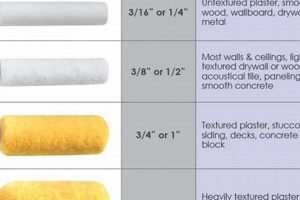
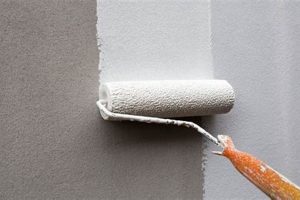
Tip 4: Employ Quality Application Tools: The selection of brushes and rollers significantly impacts the final outcome. Opt for high-quality brushes with fine bristles that minimize brush strokes. Use lint-free rollers to avoid texture imperfections in the paint film. Clean the tools thoroughly after each use to maintain their effectiveness.
Tip 5: Thin the Paint Appropriately: Depending on the paint type and application method, thinning the paint may be necessary to improve its flow and leveling properties. Follow the manufacturer’s recommendations for thinning ratios. Over-thinning can compromise coverage, while insufficient thinning can lead to brush marks or orange peel texture.
Tip 6: Apply Multiple Thin Coats: Applying several thin, even coats is preferable to applying one thick coat. Thin coats dry more evenly and reduce the risk of runs, drips, and sags. Allow each coat to dry completely before applying the next.
Tip 7: Sand Between Coats (Optional): For an exceptionally smooth finish, lightly sand the surface between coats using fine-grit sandpaper (e.g., 320-grit or higher). This removes any minor imperfections and creates a smoother surface for the subsequent coat.
Tip 8: Maintain a Consistent Wet Edge: When applying paint, maintain a “wet edge” to prevent lap marks and ensure a seamless blend between adjacent sections. This involves working quickly and overlapping each brush stroke or roller pass slightly with the previous one.
Adherence to these techniques will significantly improve the likelihood of achieving a smooth, professional-quality paint finish, enhancing the appearance and longevity of the painted surface.
The following section will elaborate on specific application methods and troubleshooting techniques to further refine the painting process.
1. Surface Preparation

The connection between surface preparation and achieving a smooth paint finish is fundamental and causal. Inadequate preparation directly impedes the realization of a flawless surface. The surface must be free of contaminants, imperfections, and loose material to ensure optimal paint adhesion and leveling. Contaminants, such as dust, grease, or silicone residue, create barriers preventing direct contact between the paint and the underlying material. This results in uneven coverage, compromised adhesion, and potential for premature paint failure. Imperfections, such as scratches, dents, or existing texture, will telegraph through the paint film, negating efforts to create a smooth appearance. For example, painting over an unprepared wall with wallpaper glue residue will invariably lead to poor adhesion and an uneven, textured finish, irrespective of the quality of the paint or the skill of the applicator. Similarly, applying paint directly to rusted metal will not only fail to provide adequate protection against corrosion but also result in a rough, unsightly surface.
The practical application of this understanding necessitates a multi-step process. This process typically involves cleaning the surface with appropriate detergents or solvents to remove contaminants. Sanding is often required to remove loose material, smooth imperfections, and create a “key” for the paint to adhere to. Filling holes or dents with appropriate fillers ensures a uniform base. Priming is crucial for sealing porous surfaces, promoting adhesion, and blocking stains. The specific methods and materials used for surface preparation will vary depending on the substrate and the existing condition of the surface. However, the underlying principle remains constant: a properly prepared surface is the essential foundation for a smooth paint finish.
In summary, effective surface preparation is not merely a preliminary step but an integral component of achieving a professional-quality paint job. Failure to invest adequate time and effort in this phase invariably leads to compromised results and increased long-term maintenance costs. Recognizing the direct cause-and-effect relationship between surface preparation and finish quality is crucial for realizing the desired aesthetic and functional benefits of a painted surface. While challenges may arise in addressing complex surface conditions, thorough preparation remains the most effective strategy for ensuring a smooth, durable, and visually appealing final result.
2. Product Selection

The achievement of a uniformly smooth painted surface is directly contingent upon judicious product selection. The paint itself, primer, thinning agents, and even application tools contribute significantly to the final outcome. An inappropriate choice in any of these areas can impede the ability to attain a flawless appearance, regardless of application skill. For instance, using a low-quality paint with inadequate pigment levels often results in poor coverage and a textured finish, even when applied with expert technique. Similarly, neglecting to select a primer compatible with both the substrate and the chosen paint can lead to adhesion problems and an uneven surface.
Consider the specific example of painting kitchen cabinets. Opting for a standard interior paint, rather than a durable enamel formulated for high-use surfaces, will likely result in a finish that is prone to chipping and scratching, undermining any initial smoothness achieved. Furthermore, if a water-based paint is applied over an oil-based primer without proper surface preparation, adhesion will be compromised, leading to peeling and an uneven texture. The selection of brushes and rollers also plays a critical role. Low-quality brushes can leave brush strokes, while inexpensive rollers may shed lint, both negatively impacting the final smooth finish. Similarly, using the wrong type of thinner can alter the paint’s viscosity, leading to runs, sags, or an “orange peel” effect.
In conclusion, careful consideration of product characteristics and compatibility is essential for achieving a smooth, professional paint finish. The selection process must account for the substrate material, the intended use of the painted surface, and the specific properties of each product involved. While proper application techniques are undoubtedly important, they cannot compensate for fundamental deficiencies in the materials employed. Thus, investing in high-quality, appropriate products is a crucial step in realizing a truly flawless result.
3. Application Technique
The correlation between application technique and achieving a smooth paint finish is direct and undeniable; the former is a critical determinant of the latter. The method by which paint is applied significantly influences the final surface texture and appearance. A flawed application technique can introduce imperfections that compromise the smoothness of the painted surface, even when high-quality paints and thorough surface preparation are employed. This influence is causal: incorrect techniques generate visible defects, such as brush strokes, roller marks, runs, and sags, directly impeding a flawless outcome. For instance, applying paint too thickly increases the likelihood of uneven drying, resulting in a textured, rather than smooth, surface. Conversely, applying paint too thinly can lead to insufficient coverage and the visibility of underlying imperfections, also disrupting smoothness.
Consider the specific example of spraying a lacquer finish on a piece of furniture. An inconsistent spray pattern, caused by improper gun setup or inconsistent hand movement, will result in an uneven coating thickness and a mottled appearance. Similarly, when applying paint with a brush, neglecting to maintain a “wet edge” can lead to visible lap marks, where each brush stroke dries before the next is applied, creating a ridge or texture. Roller application necessitates selecting the appropriate nap length for the surface; using a high-nap roller on a smooth surface will create an undesirable stippled texture. Furthermore, the angle at which the application tool is held, the amount of pressure applied, and the speed of movement all affect the uniformity and smoothness of the paint film. The influence of these factors can be mitigated through careful training, practice, and adherence to established best practices for each application method.
In summary, proficient application technique is indispensable for realizing a smooth paint finish. While careful surface preparation and quality materials contribute to the overall result, the manner in which the paint is applied serves as a critical final determinant of surface quality. Mastery of appropriate techniques for each application method, coupled with diligent attention to detail, will significantly enhance the likelihood of achieving the desired aesthetic and functional benefits of a professionally painted surface. A continuous commitment to refinement and process improvement will ensure consistent and high-quality results, regardless of the complexity of the project.
4. Equipment Quality
The relationship between equipment quality and the attainment of a smooth paint finish is causative. The tools employed directly affect the consistency and uniformity of paint application, thus determining the final surface texture. Inferior equipment introduces variables that impede the creation of a flawless result, irrespective of surface preparation or applicator skill. For instance, using a low-quality spray gun results in inconsistent atomization of the paint, leading to an uneven film thickness and a textured, rather than smooth, finish. Similarly, inexpensive brushes with poorly constructed bristles shed during application, embedding imperfections within the paint film. The consistent, even distribution of paint a prerequisite for smoothness relies on the reliable and predictable performance of application tools.
Consider the practical example of applying a clear coat to an automotive finish. A professional-grade spray gun, equipped with precision nozzles and adjustable pressure settings, allows for precise control over the spray pattern and material flow. This control is essential for achieving a uniform, glass-like surface. In contrast, a consumer-grade spray gun often lacks these features, resulting in an uneven spray pattern, runs, and sags. The use of high-quality rollers with tightly woven, lint-free fabric is similarly critical for achieving a smooth finish on walls or ceilings. Low-quality rollers tend to leave behind a textured stipple or shed fibers into the paint, compromising the final appearance. Furthermore, proper maintenance and cleaning of equipment are essential to preserve its functionality and ensure consistent performance. Clogged nozzles, dirty brushes, or improperly maintained spray guns will invariably lead to application problems and a compromised finish.
In conclusion, equipment quality is not merely a peripheral consideration but an essential determinant in achieving a smooth paint finish. The investment in high-quality application tools, coupled with proper maintenance and usage, directly contributes to the consistency, uniformity, and overall aesthetic appeal of the painted surface. While skilled application and surface preparation are undoubtedly important, these factors cannot fully compensate for the limitations imposed by inferior equipment. Therefore, recognizing the direct link between equipment quality and finish quality is crucial for anyone seeking to achieve professional-level results. Ignoring this connection inevitably results in increased rework, material waste, and a final outcome that falls short of expectations.
5. Environmental Conditions
The surrounding environment exerts a considerable influence on the outcome of any painting project, specifically impacting the realization of a smooth finish. Atmospheric conditions, including temperature, humidity, and air movement, interact with the paint during application and drying, directly affecting its flow, leveling, and curing characteristics. Consequently, a thorough understanding and careful management of these factors are essential for achieving optimal results.
- Temperature’s Effect on Viscosity and Drying
Temperature directly affects paint viscosity. Lower temperatures increase viscosity, making the paint thicker and more difficult to apply smoothly. Conversely, higher temperatures decrease viscosity, potentially causing runs and sags. Optimal drying also depends on temperature; excessively low temperatures prolong drying times, increasing the risk of dust contamination and surface imperfections. In contrast, very high temperatures can cause the surface of the paint to dry too quickly, trapping solvents beneath and leading to blistering or cracking. Maintaining a stable temperature within the manufacturer’s recommended range is, therefore, crucial.
- Humidity’s Influence on Curing and Adhesion
High humidity levels impede the evaporation of solvents from the paint, extending drying times and increasing the likelihood of moisture-related defects. Water-based paints are particularly susceptible to humidity, potentially leading to poor adhesion and a compromised finish. Conversely, extremely low humidity can cause paints to dry too rapidly, resulting in poor flow and leveling. Balancing humidity levels within an acceptable range, often through the use of dehumidifiers or humidifiers, is necessary to ensure proper curing and optimal adhesion.
- Air Movement and Contamination
Excessive air movement introduces dust and airborne particles, which can settle on the wet paint surface, creating imperfections and compromising the smoothness of the finish. Strong drafts can also cause uneven drying, leading to surface defects. Conversely, stagnant air can prolong drying times and create an environment conducive to solvent entrapment. Controlling air movement through ventilation and dust control measures, such as the use of tack cloths and air filters, is essential to minimize contamination and promote uniform drying.
- Lighting Conditions for Inspection
Adequate and appropriate lighting is indispensable for identifying surface imperfections during preparation and application. Poor lighting can mask flaws, such as scratches, uneven areas, or dust contamination, leading to a substandard final finish. Utilizing consistent and well-placed lighting sources allows for thorough inspection and timely correction of defects, maximizing the likelihood of a smooth and flawless painted surface.
In conclusion, achieving a consistently smooth paint finish necessitates careful consideration and management of environmental conditions. Temperature, humidity, air movement, and lighting exert a profound influence on paint behavior and surface quality. Ignoring these factors significantly increases the risk of surface defects and compromised aesthetic outcomes. Implementing appropriate control measures, such as maintaining stable temperatures and humidity levels, controlling air movement, and ensuring adequate lighting, is essential for realizing the desired level of smoothness and overall finish quality.
Frequently Asked Questions
The following addresses common inquiries related to obtaining a consistently smooth and professional painted surface, providing detailed explanations and practical guidance.
Question 1: What is the most crucial factor in achieving a smooth paint finish?
Surface preparation is paramount. Proper cleaning, sanding, and priming establish a solid foundation for the paint, ensuring adhesion and minimizing imperfections.
Question 2: Does the type of paint impact the smoothness of the finish?
Yes. High-quality paints generally contain finer pigments and better leveling properties, resulting in a smoother appearance compared to lower-grade alternatives.
Question 3: How does thinning paint affect the final result?
Proper thinning improves paint flow and leveling, reducing brush strokes and other application marks. Over-thinning, however, can compromise coverage.
Question 4: What role do brushes and rollers play in achieving a smooth finish?
High-quality brushes with fine bristles and lint-free rollers are essential. Inferior tools can leave brush strokes or introduce texture imperfections.
Question 5: Is sanding between coats necessary for a smooth paint finish?
Light sanding between coats removes minor imperfections and creates a smoother surface for subsequent layers, resulting in an improved final outcome.
Question 6: How do environmental conditions influence the painting process?
Temperature, humidity, and air movement affect paint drying and curing. Maintaining optimal conditions minimizes defects and promotes a smooth, even finish.
In essence, a successful outcome hinges on meticulous attention to detail, employing quality materials, and mastering proper application techniques.
The next phase will provide more comprehensive insight into techniques of achieving a flawless painted surface.
How to Get a Smooth Paint Finish
The foregoing discussion has elucidated the multifaceted nature of “how to get a smooth paint finish.” Achieving this objective demands a holistic approach, integrating scrupulous surface preparation, judicious product selection, precise application techniques, investment in high-quality equipment, and careful management of environmental conditions. Neglecting any one of these elements can compromise the final result, diminishing the overall aesthetic and functional value of the painted surface. Understanding the causal relationships between these factors and the final outcome is paramount for consistently achieving professional-grade results.
Mastering the art of obtaining a smooth paint finish represents a commitment to excellence, requiring diligent practice, continuous learning, and a keen attention to detail. The rewards, however, are significant: enhanced aesthetic appeal, improved durability, and increased value. By embracing the principles outlined herein, individuals and professionals alike can elevate their painting endeavors to new levels of quality and craftsmanship.