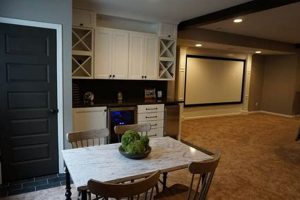
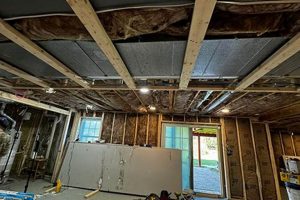
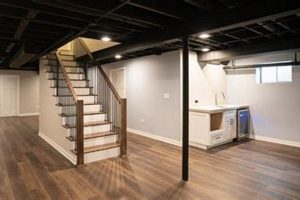
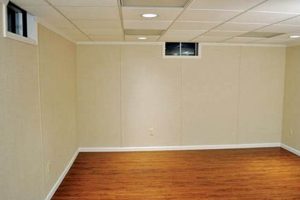
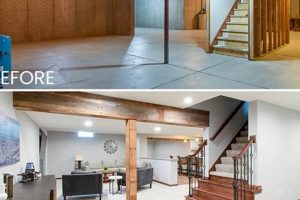
Transforming unused subterranean spaces into functional living areas with limited financial resources represents a common homeowner objective. This process typically involves strategies to minimize material expenses, maximize do-it-yourself labor, and prioritize essential structural and finishing elements over elaborate design features. For example, opting for cost-effective flooring alternatives like painted concrete or laminate can significantly reduce the overall project expenditure.
Creating additional living space within an existing structure can enhance property value and improve the homeowner’s quality of life. This approach avoids the complexities and costs associated with above-ground additions. Historically, these projects have offered homeowners an accessible avenue to expand their homes affordably, often relying on resourceful material selection and phased construction strategies.
The subsequent discussion will delve into specific strategies for material selection, labor management, and design considerations critical for achieving a successful and cost-effective transformation of subterranean areas.
Strategies for Cost-Conscious Basement Finishing
The following guidelines provide actionable strategies for completing a basement finishing project while adhering to a strict budget.
Tip 1: Prioritize Essential Structural Work: Address any existing moisture issues or structural deficiencies before commencing cosmetic improvements. This might include sealing foundation cracks, installing a sump pump, or improving drainage to prevent future problems.
Tip 2: Maximize Do-It-Yourself Labor: Tasks such as demolition, framing, insulation, and painting can significantly reduce expenses if performed by the homeowner. Allocate sufficient time and research to ensure quality workmanship.
Tip 3: Opt for Cost-Effective Flooring Materials: Explore alternatives to traditional carpeting, such as painted concrete, epoxy coatings, or laminate flooring. These options offer durability and aesthetic appeal at a lower price point.
Tip 4: Utilize Salvaged or Recycled Materials: Source materials from salvage yards, online marketplaces, or construction surplus outlets. Doors, windows, and lighting fixtures can often be obtained at significantly reduced prices.
Tip 5: Employ Strategic Lighting Solutions: Maximize natural light by enlarging existing windows or adding window wells. Supplement with energy-efficient LED lighting fixtures to minimize energy consumption and costs.
Tip 6: Simplify Design Elements: Avoid elaborate architectural details or custom finishes that add unnecessary expense. Focus on creating a functional and comfortable space with clean lines and minimal ornamentation.
Tip 7: Plan and Phase the Project: Break the project into manageable phases to distribute expenses over time and avoid overwhelming financial constraints. Prioritize essential areas and postpone less critical elements until additional funds are available.
Implementing these strategies can enable homeowners to create a valuable and functional living space without exceeding budgetary limitations. Careful planning and resourcefulness are key to achieving a successful and affordable project.
The subsequent sections will discuss specific considerations for design and layout, emphasizing the integration of functionality and cost-effectiveness.
1. Essential Structural Integrity

Essential structural integrity represents a non-negotiable element when undertaking a low-budget basement finishing project. Addressing underlying structural issues, such as foundation cracks or water intrusion, prior to any cosmetic improvements is paramount. Neglecting these foundational concerns will invariably lead to escalated costs and potential health hazards in the long term, effectively negating the initial budgetary constraints. For example, failing to properly waterproof a basement before installing drywall can result in mold growth, necessitating costly remediation and reconstruction.
The connection between structural soundness and cost-effectiveness stems from the principle of preventative maintenance. Investing in necessary repairs or reinforcements upfront, while potentially increasing the initial expenditure, drastically reduces the likelihood of future structural failures. Consider the case of a homeowner who foregoes addressing minor foundation settling before finishing a basement. Over time, this settling can worsen, leading to wall cracks, uneven floors, and potential structural instability, ultimately requiring extensive and expensive repairs that far exceed the initial cost of addressing the problem. Moreover, a structurally compromised basement poses significant safety risks, further underscoring the importance of prioritizing integrity.
In conclusion, while the allure of a finished basement on a tight budget is understandable, prioritizing essential structural integrity is critical. Ignoring underlying problems to save money in the short term often results in significantly higher expenses and potential safety risks down the line. A comprehensive assessment of the basement’s structural condition, followed by necessary repairs or improvements, ensures a durable, safe, and ultimately more cost-effective finished space.
2. Cost-Effective Material Selection

Cost-effective material selection is a cornerstone of any successful low-budget basement finishing project. The principle dictates a judicious approach to sourcing materials, balancing affordability with durability, aesthetics, and functionality. The choice of materials directly impacts the project’s overall cost, influencing the potential for staying within budgetary limits. For instance, selecting laminate flooring over hardwood can represent a significant cost saving without drastically compromising the final appearance. Similarly, opting for fiberglass insulation instead of spray foam can substantially reduce material expenses while still providing adequate thermal performance.
The significance of this selection process extends beyond mere monetary savings. The long-term durability and maintenance requirements of chosen materials must also be considered. While a less expensive material may seem appealing initially, its susceptibility to damage or shorter lifespan could necessitate costly repairs or replacements in the future. A practical example is the use of moisture-resistant drywall in basement applications. Although slightly more expensive than standard drywall, its resistance to mold and mildew prevents costly remediation due to water damage, a common occurrence in subterranean environments. This highlights the necessity of evaluating the total cost of ownership, factoring in both upfront expenses and potential long-term liabilities.
In summary, cost-effective material selection for low-budget basement finishing is not solely about minimizing initial expenditure. It requires a holistic assessment that balances affordability with durability, functionality, and long-term maintenance considerations. Strategic decisions regarding material choices can significantly impact the project’s overall success, ensuring a finished basement that is both aesthetically pleasing and financially sustainable. The challenge lies in identifying materials that offer the best value proposition, meeting functional requirements without exceeding budgetary constraints.
3. DIY Labor Maximization

DIY labor maximization serves as a critical cost-saving mechanism in the context of low-budget finished basements. The fundamental principle involves homeowners undertaking portions of the renovation work themselves, thereby reducing the expenses associated with hiring professional contractors. The extent to which a homeowner can engage in DIY labor directly impacts the overall budget, allowing for resource allocation towards materials and essential contracted services. Successfully executing DIY tasks demands a realistic self-assessment of skills, time commitment, and available resources.
The benefits extend beyond direct financial savings. Engaging in DIY labor can foster a sense of ownership and pride in the finished space. However, certain tasks necessitate professional expertise. Electrical work, plumbing modifications, and structural alterations often require licensed professionals to ensure safety and code compliance. Attempting these tasks without proper training can lead to hazardous conditions and costly remediation. A practical example involves homeowners successfully completing drywall installation and painting themselves, but contracting out electrical wiring to a licensed electrician. This balanced approach maximizes cost savings while mitigating risks associated with specialized trades.
In conclusion, DIY labor maximization is a significant component of achieving a finished basement on a limited budget. This strategy demands a careful evaluation of skills, a realistic assessment of project requirements, and a willingness to contract out specialized tasks to qualified professionals. Success hinges on striking a balance between cost savings and ensuring the safety and structural integrity of the finished basement.
4. Strategic Phased Construction
Strategic phased construction, in the context of projects aimed at achieving low budget finished basements, represents a methodology of breaking down a large renovation into smaller, more manageable stages. This approach allows homeowners to distribute expenses over time, thereby mitigating the financial strain associated with a comprehensive project. Furthermore, it enables adjustments based on evolving budgets and priorities.
- Budgetary Control and Flexibility
Phased construction enables precise control over project expenses by allowing homeowners to allocate resources strategically across different stages. For example, the initial phase might focus on essential structural work, such as waterproofing, before progressing to cosmetic improvements. This approach provides the flexibility to pause or adjust the project scope if unforeseen expenses arise, preventing the project from exceeding the homeowner’s financial capacity.
- Prioritization of Essential Elements
Strategic phasing facilitates the prioritization of essential elements, ensuring that critical aspects of the finished basement are addressed first. This might involve completing necessary electrical or plumbing work before focusing on aesthetic enhancements. By prioritizing essential elements, homeowners can ensure that the basement is functional and safe before investing in less critical features, such as decorative finishes.
- Resource Management and Procurement
Phased construction allows for more efficient resource management by enabling homeowners to purchase materials incrementally as needed. This approach reduces the need for large upfront investments and minimizes the risk of material waste. For example, instead of purchasing all flooring materials at once, homeowners can purchase them in smaller quantities as they complete each phase of the flooring installation, aligning procurement with the construction schedule.
- Minimizing Disruption and Inconvenience
By breaking the project into distinct phases, homeowners can minimize the disruption and inconvenience associated with a full-scale basement renovation. Each phase can be planned and executed in a way that minimizes the impact on the homeowner’s daily life. For example, one phase might involve finishing a small portion of the basement to create a temporary living space while other areas are undergoing renovation, reducing the overall disruption to the household.
The implementation of strategic phased construction enables homeowners to achieve a finished basement within the constraints of a limited budget. By prioritizing essential elements, managing resources effectively, and minimizing disruption, this methodology provides a practical framework for completing a renovation project incrementally, aligning progress with financial capabilities.
5. Minimalist Design Implementation

Minimalist design implementation, characterized by simplicity, functionality, and the absence of excessive ornamentation, offers a pragmatic approach to achieving aesthetically pleasing and cost-effective finished basements. This design philosophy emphasizes essential elements and eschews unnecessary embellishments, aligning directly with budgetary constraints.
- Reduced Material Costs
Minimalist design inherently reduces material costs by prioritizing essential components and eliminating decorative elements. For example, opting for simple, unadorned trim and moldings significantly lowers material expenses compared to elaborate, ornate designs. Similarly, the use of neutral paint colors and minimal accent walls reduces the need for specialty finishes and costly decorative materials. The focus shifts from elaborate aesthetics to functional, unembellished surfaces, resulting in substantial savings.
- Streamlined Construction Process
Minimalist design simplifies the construction process, leading to reduced labor costs and faster project completion times. Simple, clean lines and uncomplicated layouts minimize the need for complex carpentry and intricate detailing, reducing the hours required for installation. For example, a minimalist basement layout might feature open spaces with minimal built-in cabinetry, simplifying the framing, drywall, and finishing processes. The streamlined construction process translates directly into lower labor expenses and faster project turnaround.
- Focus on Functionality
Minimalist design prioritizes functionality and efficient space utilization, ensuring that the finished basement serves its intended purpose effectively. This involves thoughtful planning of the layout to maximize usable space and minimize wasted areas. For example, a minimalist basement might incorporate multi-functional furniture and storage solutions to optimize space utilization. The focus on functionality ensures that every element serves a purpose, contributing to a well-organized and efficient living area.
- Enhanced Aesthetics through Simplicity
While minimalist design emphasizes simplicity, it does not compromise on aesthetics. Instead, it achieves visual appeal through clean lines, balanced proportions, and a cohesive color palette. The absence of clutter and unnecessary ornamentation creates a sense of calm and spaciousness, enhancing the overall aesthetic appeal of the finished basement. For example, a minimalist basement might feature a neutral color scheme with strategic pops of color through artwork or accessories, creating a visually appealing and uncluttered environment.
In summary, minimalist design implementation presents a viable and effective strategy for achieving a finished basement within budgetary limitations. By reducing material costs, streamlining the construction process, prioritizing functionality, and enhancing aesthetics through simplicity, this design philosophy provides a framework for creating a comfortable, visually appealing, and cost-effective living space. The emphasis on essential elements and the elimination of unnecessary embellishments ensures that resources are allocated efficiently, maximizing the value of the finished basement.
6. Recycled Material Utilization

Recycled material utilization represents a significant cost-saving strategy in the context of budget-conscious basement finishing. The direct correlation stems from the lower acquisition cost of reclaimed materials compared to new counterparts. This cost reduction can significantly impact the overall project expenditure, enabling resources to be directed toward essential structural improvements or specialized labor. For example, reclaimed lumber, sourced from deconstructed buildings, can be used for framing or accent walls, offering a substantial discount relative to newly milled lumber. The impact is particularly pronounced in larger projects where the quantity of materials required is substantial. Therefore, incorporating recycled materials becomes a critical component of minimizing costs while maximizing the potential of a low budget basement transformation.
The practical application of this approach extends beyond simple cost reduction. Sourcing materials from salvage yards or online marketplaces often provides access to unique architectural elements and finishes that are not readily available through conventional retail channels. Reclaimed doors, windows, or light fixtures can add character and historical depth to a finished basement, enhancing its aesthetic appeal without incurring significant expense. Furthermore, the use of recycled materials reduces the environmental impact associated with new construction, aligning the project with sustainability principles. For example, utilizing recycled carpet tiles or reclaimed brick for flooring can provide a durable and visually appealing surface while minimizing waste generation. The resourceful use of these salvaged items contributes to a unique and responsible transformation.
In conclusion, recycled material utilization is inextricably linked to the feasibility and success of low-budget finished basements. It presents a dual benefit of cost savings and aesthetic enhancement, while simultaneously promoting environmental sustainability. The key challenge lies in identifying reliable sources of quality reclaimed materials and adapting design plans to accommodate their unique characteristics. Successfully navigating these challenges unlocks a pathway to achieving an affordable and distinctive finished basement, demonstrating the practical significance of resourcefulness and creative repurposing.
7. Efficient Space Optimization

Efficient space optimization is paramount in the context of achieving low budget finished basements. Maximizing usable area while minimizing unnecessary construction or material expenditure directly contributes to cost-effectiveness. This strategic approach transforms often underutilized subterranean spaces into functional living areas, enhancing property value without significant financial burden.
- Multifunctional Furniture Integration
Integrating multifunctional furniture, such as sofa beds, storage ottomans, and convertible tables, allows a single space to serve multiple purposes. For instance, a guest bedroom can double as a home office or recreational area. In a basement with limited square footage, this approach minimizes the need for dedicated spaces, reducing construction costs associated with partitioning walls and separate room finishing.
- Vertical Storage Solutions
Utilizing vertical storage solutions maximizes usable space by exploiting the vertical dimension of the basement. Installing shelving units, cabinets, or built-in storage from floor to ceiling allows for efficient organization of items while minimizing floor space consumption. This strategy is particularly effective in basements with lower ceiling heights, as it helps to declutter the space and create a more open and airy feel. Proper design can integrate these solutions seamlessly, contributing to both functionality and aesthetic appeal.
- Strategic Lighting Design
Strategic lighting design enhances the perception of space and can make a smaller basement appear larger and more inviting. Employing a combination of ambient, task, and accent lighting can create depth and dimension, highlighting specific areas and minimizing shadows. For example, recessed lighting provides even illumination, while strategically placed lamps can draw attention to focal points, creating a sense of spaciousness. A well-lit basement feels less confined, contributing to its overall usability and appeal, while optimizing energy consumption and cost.
- Open Concept Layouts
Adopting open concept layouts eliminates the need for excessive walls and partitions, maximizing the flow of space and creating a more spacious feel. Combining living, dining, and recreational areas into a single open zone can significantly reduce construction costs associated with framing and finishing individual rooms. This design approach also allows for greater flexibility in furniture arrangement and usage, adapting to changing needs and preferences. For example, a single, large space can accommodate both a home theater and a play area for children, enhancing the functionality and versatility of the finished basement.
These facets of efficient space optimization are integral to transforming basements affordably. By prioritizing multifunctional elements, exploiting vertical storage, employing strategic lighting, and embracing open layouts, homeowners can create functional, aesthetically pleasing, and cost-effective living spaces. The careful application of these principles demonstrates that maximizing space does not necessitate exceeding budgetary limitations, contributing to the overall success of low budget finished basement projects.
Frequently Asked Questions
The following questions address common inquiries regarding the successful completion of basement finishing projects within limited financial constraints.
Question 1: What constitutes a “low budget” in the context of basement finishing?
The definition of “low budget” is subjective and contingent upon regional material costs, the basement’s size, and the scope of the project. However, it generally implies a resource allocation focused on essential structural improvements, cost-effective material selection, and the maximization of DIY labor to minimize expenses.
Question 2: What are the most critical areas to prioritize when finishing a basement on a budget?
Prioritization should focus on essential structural elements, including addressing moisture issues (waterproofing), ensuring proper insulation, and maintaining structural integrity. These foundational aspects are paramount to prevent future damage and costly repairs.
Question 3: Are permits necessary for low-budget basement finishing projects?
Permit requirements vary by jurisdiction. However, it is generally advisable to obtain necessary permits for any structural modifications, electrical work, or plumbing alterations to ensure compliance with local building codes and safety regulations. Failure to obtain permits can result in fines and mandatory remediation.
Question 4: What are some cost-effective flooring options for finished basements?
Cost-effective flooring options include painted concrete, epoxy coatings, laminate flooring, and vinyl tile. These materials offer durability, ease of maintenance, and aesthetic appeal at a lower price point compared to hardwood or carpeting.
Question 5: How can moisture issues be addressed affordably in a basement?
Affordable moisture control measures include sealing foundation cracks, improving exterior drainage, installing a sump pump, and using a dehumidifier. Proper ventilation and moisture-resistant building materials are also essential preventative measures.
Question 6: What are the potential risks associated with cutting corners to save money on a basement finishing project?
Cutting corners on essential aspects, such as waterproofing or electrical work, can lead to significant long-term problems. These issues may include structural damage, mold growth, electrical hazards, and decreased property value, ultimately exceeding the initial cost savings.
Adhering to these guidelines can contribute to the successful and cost-effective transformation of basement spaces.
The subsequent section will explore specific strategies for effectively managing DIY labor, balancing expertise with budgetary constraints.
Low Budget Finished Basements
The preceding discussion has explored strategies for achieving finished basement spaces within constrained budgetary frameworks. Key themes have included prioritization of structural integrity, judicious material selection, the maximization of do-it-yourself labor, strategic phased construction, minimalist design implementation, the utilization of recycled materials, and efficient space optimization. These principles, when applied systematically, offer a viable pathway to enhancing property value and expanding living space without incurring unsustainable financial burdens.
The successful execution of a low budget finished basement project necessitates careful planning, realistic expectation management, and a commitment to diligent execution. The long-term benefits of increased living space and enhanced property value should be weighed against the potential risks of compromising structural integrity or safety to achieve short-term cost savings. Homeowners are encouraged to thoroughly research local building codes, consult with qualified professionals when necessary, and prioritize quality workmanship to ensure a durable and valuable finished basement space.