The application of coatings, treatments, or processes to metallic surfaces to alter their properties is a crucial manufacturing step. This procedure aims to enhance attributes such as corrosion resistance, wear resistance, aesthetic appeal, or electrical conductivity. For example, applying a phosphate conversion coating to steel provides a protective layer against rust, while electroplating with gold improves electrical conductivity and appearance.
This surface modification plays a vital role across numerous industries, extending product lifespan and improving performance. Historically, rudimentary methods were employed, but modern techniques now involve advanced chemical and electrochemical processes. These enhancements lead to reduced maintenance costs, increased operational efficiency, and improved product value, all contributing to overall economic and functional benefits.
Subsequent sections will delve into specific methods employed, including electrodeposition, conversion coating, and mechanical treatments. Furthermore, an analysis of quality control measures and environmental considerations within the scope of surface engineering will be presented. Finally, a discussion on emerging technologies and future trends will conclude this overview of surface enhancements.
Practical Considerations for Metal Surface Enhancement
The following points offer important insights for achieving optimal results during metal surface modification processes, ensuring durability and performance of the finished product.
Tip 1: Surface Preparation is Paramount: Thorough cleaning and pre-treatment are crucial before applying any coating. Contaminants like oil, grease, or rust can significantly impede adhesion and compromise the protective qualities of the finish. For example, alkaline cleaning followed by acid etching is often necessary for aluminum prior to anodizing.
Tip 2: Select the Appropriate Process for the Material: Different metals require specific processes to achieve the desired properties. Applying a process suitable for steel to aluminum, for instance, may yield inadequate or even detrimental results. Consult material compatibility charts and technical specifications for optimal process selection.
Tip 3: Precise Control of Process Parameters is Essential: Maintaining consistent temperature, current density (for electroplating), and chemical concentrations are vital for uniform and predictable results. Deviations can lead to uneven coating thickness, porosity, or other defects. Implement robust process monitoring and control systems.
Tip 4: Optimize Coating Thickness for the Application: The required thickness depends on the intended use of the finished part. Thicker coatings provide enhanced corrosion or wear resistance, but can also increase costs and potentially affect dimensional tolerances. Conduct thorough performance testing to determine the optimal thickness.
Tip 5: Implement Rigorous Quality Control Procedures: Regular inspection of finished parts is necessary to ensure compliance with specifications. This includes visual examination, thickness measurements, adhesion testing, and corrosion resistance testing. Statistical process control (SPC) can be used to monitor and improve process stability.
Tip 6: Consider Environmental Regulations and Waste Management: Many surface treatment processes generate hazardous waste. Adhere to all applicable environmental regulations regarding waste disposal and emissions control. Explore environmentally friendly alternatives whenever possible, such as trivalent chromium plating or powder coating.
Tip 7: Proper Post-Treatment is Necessary: Some processes require post-treatment steps to fully develop the desired properties. For example, chromate conversion coatings typically require a curing period to achieve optimal corrosion resistance. Follow the manufacturer’s recommendations for post-treatment procedures.
Careful attention to these considerations will contribute to enhanced product quality, extended service life, and reduced costs associated with metal component production and maintenance. These guidelines underscore the importance of informed decision-making throughout the treatment process.
The subsequent section provides a detailed overview of emerging technologies and potential advancements in surface engineering.
1. Corrosion Resistance

Corrosion resistance, a critical attribute of many metallic components, is significantly enhanced through the application of appropriate surface treatments. The degradation of metals due to electrochemical or chemical reactions with their environment can lead to structural failure, loss of functionality, and costly repairs or replacements. Therefore, processes aimed at mitigating or preventing corrosion are integral to the field of surface modification.
A primary objective of surface treatments is to create a barrier between the metal substrate and the corrosive environment. This is accomplished by applying coatings such as paints, polymers, or metallic layers via electroplating or other deposition techniques. For instance, galvanizing steel with a zinc coating provides sacrificial protection; the zinc corrodes preferentially, protecting the underlying steel. Another example includes chromate conversion coatings applied to aluminum, forming a passive oxide layer that inhibits corrosion. The effectiveness of these treatments depends on factors such as coating thickness, adhesion to the substrate, and the specific corrosive environment.
Understanding the mechanisms of corrosion and the properties of different surface treatments is essential for selecting the appropriate protection method. Proper surface preparation, application techniques, and ongoing maintenance are crucial for ensuring long-term corrosion resistance. Ignoring these factors can lead to premature failure, negating the benefits of surface modifications. Therefore, integrating comprehensive corrosion protection strategies is essential for the durability and reliability of metal components across various industries.
2. Aesthetic Enhancement

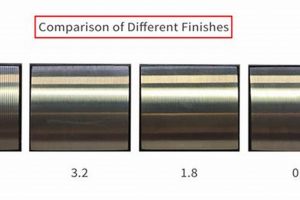
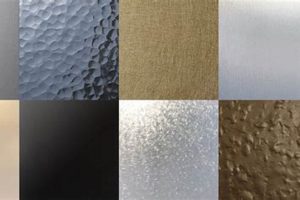
Aesthetic enhancement, achieved through various surface treatments, is a significant driver in many manufacturing sectors. These processes impart visual appeal, influencing consumer perception and ultimately affecting product value. Finishes can range from simple polishing to complex multi-layered coatings, each designed to achieve a specific look and feel. For instance, a brushed finish on stainless steel provides a modern, high-end appearance, while powder coating can provide a wide range of colors and textures, improving durability and visual appeal simultaneously.
The connection between aesthetic enhancement and surface modification lies in the ability to control the surface properties of the metal. This control extends beyond merely changing the color or texture; it includes manipulating the reflectivity, gloss, and even the tactile qualities of the material. Anodizing, for example, not only protects aluminum from corrosion but also creates a porous surface that can be dyed in a variety of colors. Similarly, specialized plating techniques can be used to deposit decorative coatings like gold or silver, enhancing the perceived value of the product. Consider the automotive industry where chrome plating on trim provides a visually appealing accent that speaks to a product’s luxury and quality.
Understanding the aesthetic impact of surface treatments is crucial for manufacturers seeking to differentiate their products in competitive markets. However, achieving desired aesthetic qualities requires careful consideration of process parameters, material selection, and quality control. Imperfections in the surface preparation or coating application can detract from the overall appearance and negatively impact consumer perception. Therefore, a holistic approach that integrates aesthetic considerations with functional requirements is essential for maximizing the benefits of surface modification.
3. Wear Reduction

Wear reduction is a primary objective in many surface engineering applications, directly influencing the lifespan and operational efficiency of mechanical components. Surface treatments are implemented to minimize material loss resulting from friction, abrasion, erosion, or adhesion. The efficacy of these treatments significantly impacts industries ranging from aerospace and automotive to manufacturing and energy production.
- Hardfacing
Hardfacing involves depositing a wear-resistant material onto a base metal to create a durable surface. This process typically uses welding techniques to apply alloys such as carbides or high-chromium alloys, increasing the surface hardness and minimizing abrasive wear. Applications include bulldozer blades, mining equipment, and valve components exposed to high-wear environments. The choice of hardfacing material is critical and depends on the specific wear mechanism encountered in service.
- Surface Hardening
Surface hardening techniques, such as carburizing, nitriding, and induction hardening, alter the surface microstructure of metals to increase hardness and wear resistance without affecting the bulk properties of the material. Carburizing, for example, diffuses carbon into the surface of steel, creating a hard, wear-resistant layer. These methods are commonly used on gears, camshafts, and bearings to improve their durability and performance under load.
- Coatings and Thin Films
Coatings and thin films provide a barrier between the substrate material and the environment, reducing wear through physical separation. Examples include physical vapor deposition (PVD) coatings like titanium nitride (TiN) and diamond-like carbon (DLC), which offer high hardness, low friction, and excellent wear resistance. These coatings are applied to cutting tools, molds, and automotive components to extend their service life and improve performance.
- Lubricant-Infused Surfaces
Creating surfaces that retain or release lubricants can significantly reduce friction and wear. This can be achieved through micro-texturing, laser surface treatment, or by incorporating lubricant-filled microcapsules within a coating. These surfaces provide a continuous supply of lubricant to the contact area, minimizing direct metal-to-metal contact and reducing wear rates. Applications include bearings, seals, and sliding surfaces in engines and machinery.
The selection of the appropriate surface treatment for wear reduction requires a comprehensive understanding of the operating conditions, including the type of wear, applied loads, temperature, and environment. Proper surface preparation, process control, and quality assurance are essential for achieving the desired wear resistance and ensuring the long-term reliability of components. The application of these finishing technologies leads to enhanced product performance, reduced maintenance costs, and extended operational life.
4. Surface Hardness

Surface hardness, a critical material property, is frequently enhanced or modified through various surface finishing techniques. This connection is a fundamental aspect of materials science and engineering, impacting the performance and durability of components across numerous industries. A direct consequence of altering surface hardness is enhanced resistance to wear, abrasion, and indentation, thereby extending the service life of the finished product. For example, case hardening processes such as carburizing or nitriding increase the surface hardness of steel components, making them more resistant to wear in applications like gears and bearings.
The importance of surface hardness as a component of surface treatments stems from its direct influence on mechanical behavior. When a material is subjected to external forces, the surface is often the first point of contact and therefore experiences the highest stress concentration. Surface treatments that improve hardness, such as shot peening, introduce compressive residual stresses, which counteract tensile stresses induced during operation. This increases fatigue life and prevents premature failure. An example can be found in the aerospace industry, where turbine blades are surface treated to withstand high-stress, high-temperature environments.
In summary, the connection between surface hardness and finishing processes is significant, with a direct influence on the durability and reliability of finished metal products. The modification of surface hardness leads to improved wear resistance, fatigue life, and overall performance, making it a critical factor in engineering design and manufacturing. Recognizing this relationship is essential for selecting appropriate surface treatments to meet the specific demands of various applications, ultimately leading to improved product performance and longevity.
5. Electrical Conductivity

The relationship between electrical conductivity and surface treatment is a critical consideration in numerous electrical and electronic applications. The inherent electrical conductivity of a metal can be significantly affected, either positively or negatively, by the type of surface finishing process applied. Surface treatments can introduce impurities, alter the crystal structure, or create insulating layers, all of which impact the flow of electrical current. For instance, the presence of an oxide layer on aluminum significantly reduces its conductivity compared to a clean, oxide-free surface. Therefore, in applications requiring efficient electrical conduction, careful selection and control of the surface finishing process are crucial.
Surface finishing processes can be specifically tailored to either enhance or reduce electrical conductivity depending on the intended application. Electroplating with highly conductive metals such as gold, silver, or copper is often employed to improve the conductivity of contacts, connectors, and printed circuit boards. These coatings provide a low-resistance path for current flow, ensuring reliable electrical performance. Conversely, anodizing, while enhancing corrosion resistance, creates an electrically insulating oxide layer on aluminum. This is utilized in applications where electrical isolation is required, such as in capacitor manufacturing. Moreover, the surface roughness resulting from certain finishing processes can affect the contact resistance between two conducting surfaces. Smoother surfaces generally exhibit lower contact resistance and improved electrical performance.
In conclusion, the interplay between electrical conductivity and surface modification is a complex but essential aspect of engineering design and manufacturing. Understanding how different finishing processes impact electrical properties is critical for optimizing performance and reliability in electrical and electronic systems. By carefully selecting and controlling surface treatments, engineers can achieve the desired balance between electrical conductivity, corrosion resistance, and other functional requirements, ultimately leading to improved product performance and longevity.
Frequently Asked Questions About Metals Finishing
The following questions address common inquiries regarding the principles, processes, and applications of surface engineering.
Question 1: What is the primary purpose of applying surface finishing to metals?
Surface treatment aims to alter the properties of a metal’s surface to improve its performance, durability, or aesthetics. This can involve enhancing corrosion resistance, increasing wear resistance, modifying electrical conductivity, or providing a decorative finish.
Question 2: What are some common types of surface finishing processes?
Common processes include electroplating, anodizing, powder coating, painting, passivation, and various forms of conversion coating such as phosphating and chromating. Mechanical treatments such as polishing, grinding, and shot peening are also utilized.
Question 3: How does electroplating enhance a metal’s properties?
Electroplating involves depositing a thin layer of a different metal onto a substrate material through an electrochemical process. This can provide enhanced corrosion resistance, wear resistance, or improved electrical conductivity depending on the choice of plating material.
Question 4: What factors influence the selection of a surface treatment?
The selection depends on several factors, including the base metal, the intended application, the environmental conditions, the required performance characteristics (e.g., corrosion resistance, hardness, electrical conductivity), cost considerations, and regulatory requirements.
Question 5: What are the environmental considerations associated with surface treatments?
Many surface finishing processes involve the use of hazardous chemicals and generate waste products that require careful management and disposal. Compliance with environmental regulations is essential, and efforts are being made to develop more environmentally friendly alternatives.
Question 6: How is the quality of finished surfaces assessed and controlled?
Quality control involves a variety of tests and inspections, including visual examination, thickness measurements, adhesion testing, corrosion resistance testing, hardness testing, and chemical analysis. Statistical process control (SPC) methods are often employed to monitor and improve process stability.
These FAQs address key aspects of metal surface treatments. Selecting appropriate techniques and adhering to best practices are critical for achieving optimal results.
The following section presents future trends and emerging technologies in the realm of surface modification.
Conclusion
This exploration has underscored the critical role of metals finishing in diverse industrial applications. From enhancing corrosion resistance and wear reduction to improving aesthetic appeal and electrical conductivity, surface treatments are indispensable for optimizing the performance and longevity of metal components. Selecting the appropriate finishing process, controlling process parameters, and implementing rigorous quality control measures are crucial for achieving desired outcomes and ensuring product reliability.
As technology advances and demands for materials with enhanced properties increase, the field of metals finishing will continue to evolve. Investment in research and development, adoption of environmentally sustainable practices, and a commitment to quality are essential for sustaining competitiveness and meeting the challenges of a rapidly changing industrial landscape. Continued innovation in this area will directly contribute to advancements across various sectors, driving economic growth and improving the performance of products relied upon daily.