Substances blended into paint formulations modify their properties, influencing application and final appearance. These modifiers can address common issues like brushstrokes, uneven leveling, and surface imperfections, ultimately leading to a more refined and aesthetically pleasing coating. For instance, some products lower surface tension, allowing the paint to flow more readily and self-level, reducing or eliminating visible application marks.
The incorporation of such agents offers several advantages. They enhance the visual appeal of painted surfaces by creating a uniform and flawless look. This improvement can be especially critical in high-end applications or when working with surfaces prone to showing imperfections. Historically, achieving comparable results often required extensive surface preparation and multiple coats of paint, increasing both time and material costs. The use of these additives streamlines the painting process, contributing to cost savings and improved efficiency.
The subsequent sections will delve into the specific types available, their mechanisms of action, selection criteria, and best practices for incorporating them into various paint types and application scenarios.
Enhancing Paint Application for Superior Results
The following guidelines offer practical advice for optimizing paint application through the strategic use of modifying agents to achieve a flawless surface.
Tip 1: Select the Appropriate Type: Consider the paint’s base (oil or water) and intended use when selecting an additive. Incompatible pairings can lead to undesirable effects, such as paint separation or reduced adhesion. Consult the manufacturer’s recommendations for compatibility.
Tip 2: Precise Measurement is Critical: Adhere strictly to the recommended dosage provided by the manufacturer. Overuse can negatively impact drying time, gloss levels, or paint durability, while underuse may not produce the desired level of smoothness.
Tip 3: Thorough Mixing is Essential: Ensure complete and uniform dispersion of the modifier throughout the paint. Inadequate mixing can result in localized areas with inconsistent sheen or texture. Use a mixing stick or drill-mounted mixer for larger volumes.
Tip 4: Test Before Committing: Before applying to the entire project, test the modified paint on a small, inconspicuous area. This allows for verification of compatibility and ensures the desired aesthetic result is achieved without unexpected side effects.
Tip 5: Consider Environmental Conditions: Temperature and humidity can impact the effectiveness of certain modifiers. Consult the product data sheet for optimal application conditions.
Tip 6: Account for Application Method: The application method (brush, roller, spray) may influence the choice and amount of modifier used. Spray applications often benefit from modifiers that reduce viscosity and promote even atomization.
Tip 7: Surface Preparation Remains Paramount: While these agents can minimize minor imperfections, they are not a substitute for proper surface preparation. Ensure the surface is clean, dry, and free of contaminants before painting.
By carefully considering these guidelines, professionals can significantly improve the quality and appearance of painted surfaces, achieving a smooth, professional finish.
The final section will address common issues and troubleshooting techniques when working with these materials.
1. Rheology Modifiers

Rheology modifiers are crucial components in the formulation of coatings designed to produce a smooth finish. These additives control the flow and deformation characteristics of the paint, impacting its application properties and final appearance. Their selection and proper incorporation are essential for achieving the desired aesthetic outcome.
- Thixotropy and Sag Resistance
Many rheology modifiers impart thixotropic behavior to paint. This means the paint’s viscosity decreases under shear stress (e.g., during brushing or spraying) allowing it to flow readily and level out imperfections. Once the shear stress is removed, the viscosity increases, preventing sagging or running on vertical surfaces. An example is the use of modified clays in architectural coatings to ensure a uniform film build without drips.
- Viscosity Control and Leveling
Rheology modifiers precisely control the viscosity of the paint. Optimized viscosity promotes proper leveling, where the paint flows to fill minor surface irregularities and brushstrokes. Cellulose ethers, for instance, can be used to increase the viscosity of water-based paints, improving their leveling characteristics and resulting in a smoother, more uniform finish. This is particularly important for high-gloss paints where surface imperfections are more noticeable.
- Spray Application Characteristics
In spray applications, rheology modifiers play a key role in atomization and film formation. They ensure the paint breaks up into fine droplets and forms a smooth, even film on the substrate. Additives like associative thickeners are used to enhance the sprayability of paints, minimizing orange peel and other surface defects. This is crucial in automotive coatings and industrial applications where a flawless finish is paramount.
- Suspension and Anti-Settling Properties
Rheology modifiers also prevent pigment settling in paints during storage. They maintain the uniform suspension of pigments and other solid particles, ensuring consistent color and performance when the paint is applied. Fumed silica, for example, is used in paints to create a network structure that suspends the pigments and prevents them from settling at the bottom of the container. This ensures consistent color and gloss from the first to the last brushstroke.
The diverse functions of rheology modifiers underscore their importance in achieving a smooth paint finish. By controlling viscosity, promoting leveling, and ensuring proper application characteristics, these additives are essential tools for formulators seeking to create high-quality coatings with superior aesthetic properties. Choosing the correct modifier and its proper concentration is crucial for a successful outcome.
2. Surface tension reduction
Surface tension reduction plays a pivotal role in the efficacy of paint additives designed to produce smooth finishes. The inherent surface tension of a liquid influences its ability to wet and spread across a substrate. Modifying this property through the incorporation of specialized additives is fundamental to achieving uniform coatings and minimizing surface imperfections.
- Enhanced Wetting and Substrate Adhesion
Reducing surface tension allows paint to more effectively wet the substrate, displacing air and contaminants from the surface. Improved wetting promotes stronger adhesion, reducing the likelihood of defects such as blistering or peeling. An example is the addition of silicone-based surfactants to paints formulated for application on non-porous surfaces like metal or glass, ensuring complete coverage and durable adhesion.
- Improved Leveling and Flow
Lowering surface tension facilitates the flow and leveling of the paint film after application. This helps to minimize brushstrokes, roller marks, and other surface irregularities, resulting in a smoother, more uniform appearance. Fluorosurfactants, for instance, can be incorporated to reduce surface tension significantly, enabling the paint to flow freely and self-level, creating a virtually flawless surface. This is particularly critical in high-gloss coatings where even minor imperfections are highly visible.
- Prevention of Crater Formation
Surface tension differentials within the paint film can lead to crater formation, a defect characterized by small, circular depressions in the coating. Additives that reduce surface tension minimize these differentials, preventing the formation of craters and ensuring a smooth, uniform finish. This is particularly important when painting in environments with airborne contaminants such as silicone oils, which can exacerbate cratering problems.
- Enhanced Pigment Dispersion and Stability
Reduced surface tension facilitates the wetting and dispersion of pigments within the paint formulation. This ensures uniform color distribution and prevents pigment settling or flocculation, which can negatively impact the smoothness and appearance of the final coating. Dispersants, often based on polymeric surfactants, are used to stabilize pigment dispersions and prevent reagglomeration, contributing to a smoother, more consistent finish.
The strategic manipulation of surface tension through the use of specialized additives is thus essential to achieving smooth, aesthetically pleasing paint finishes. By improving wetting, leveling, preventing defects, and enhancing pigment dispersion, these modifiers contribute significantly to the overall quality and durability of painted surfaces.
3. Leveling Agents

Leveling agents are a class of paint additives specifically designed to enhance the flow and uniformity of a coating after application. Their primary function is to minimize or eliminate surface imperfections, such as brushstrokes, roller marks, and orange peel, thereby contributing significantly to a smoother, more aesthetically pleasing finish. The efficacy of a paint system in achieving a flawless surface is directly linked to the inclusion and performance of appropriate leveling agents.
- Surface Tension Modification
Leveling agents often operate by reducing the surface tension of the paint, allowing it to spread more easily across the substrate. This reduction in surface tension promotes the flow of the paint film, filling in minor irregularities and creating a more uniform surface. For example, silicone-based leveling agents are commonly used in automotive coatings to achieve a high-gloss, defect-free finish. Their ability to lower surface tension facilitates the elimination of imperfections, resulting in a mirror-like appearance.
- Viscosity Control
Certain leveling agents influence the viscosity of the paint, promoting optimal flow characteristics. They prevent the paint from either running or sagging on vertical surfaces while simultaneously allowing it to level effectively. Acrylic leveling agents are frequently incorporated into water-based architectural paints to balance these properties. Their presence ensures that the paint maintains adequate viscosity to prevent sagging, yet still flows sufficiently to eliminate brushstrokes and create a smooth, even coating.
- Film Formation Enhancement
Leveling agents can also influence the film formation process, promoting coalescence of the paint particles and creating a more homogenous and continuous film. This is particularly important in water-based paints, where the evaporation of water can lead to uneven film formation and surface defects. Coalescing agents, a type of leveling agent, facilitate the fusion of polymer particles, resulting in a smoother, more durable finish. The inclusion of these agents is critical in achieving the desired aesthetic and performance characteristics of the coating.
- Substrate Wetting Improvement
Effective leveling requires the paint to wet the substrate completely. Leveling agents can improve the wetting properties of the paint, ensuring that it adheres properly to the surface and minimizes the formation of defects such as craters or pinholes. Surfactants, often used as leveling agents, reduce the interfacial tension between the paint and the substrate, promoting wetting and adhesion. This is essential for achieving a smooth, uniform coating, especially on surfaces with low surface energy or contaminants.
The successful incorporation of leveling agents is crucial for achieving a smooth finish in various paint applications. By manipulating surface tension, controlling viscosity, enhancing film formation, and improving substrate wetting, these additives contribute significantly to the overall aesthetic appeal and performance of painted surfaces. The selection of an appropriate leveling agent depends on the specific paint formulation, application method, and desired finish characteristics.
4. Defoamer inclusion

The incorporation of defoamers is an essential aspect of paint formulation, particularly when the objective is to achieve a smooth and uniform finish. Foam, if not controlled, can introduce significant defects into the final coating, compromising its aesthetic appeal and protective properties. Defoamers act to prevent or eliminate foam formation during manufacturing, application, and film drying.
- Foam Generation Mechanisms
Foam in paints typically arises from the stabilization of air bubbles by surfactants, polymers, and other components present in the formulation. Agitation during manufacturing and application can exacerbate this phenomenon. Water-based paints, due to their higher surfactant content, are particularly susceptible to foam formation. The presence of foam can lead to a variety of issues, including reduced gloss, pinholing, and an uneven surface texture. The inclusion of defoamers is therefore crucial to disrupt these stabilization mechanisms and ensure a smooth film.
- Defoamer Types and Function
Defoamers are generally classified into mineral oil-based, silicone-based, and polymer-based categories. Mineral oil-based defoamers disrupt foam by introducing hydrophobic particles that destabilize the air-water interface. Silicone-based defoamers offer superior foam control due to their low surface tension and rapid spreading properties. Polymer-based defoamers represent a more environmentally friendly option and can be tailored to specific paint chemistries. The choice of defoamer depends on the paint formulation, application method, and regulatory requirements.
- Impact on Coating Properties
The correct selection and dosage of defoamers are critical to avoid negative impacts on coating properties. Overuse can lead to surface defects such as crawling or cratering, while underuse may result in insufficient foam control. Defoamers can also affect gloss, recoatability, and overall film integrity. Therefore, careful consideration must be given to compatibility with other paint components and the intended application environment. Testing is essential to determine the optimal defoamer type and concentration.
- Application Considerations
The effectiveness of defoamers can be influenced by application methods and environmental conditions. High-shear application techniques, such as spraying, can generate significant foam. Higher temperatures and humidities can also affect foam stability. Formulators must consider these factors when selecting and incorporating defoamers. For example, paints intended for spray application may require higher concentrations of defoamers to ensure a smooth and defect-free finish. Additionally, the timing of defoamer addition during the manufacturing process can impact its performance.
In conclusion, defoamer inclusion is a vital element in the pursuit of a smooth paint finish. The choice of defoamer, its concentration, and its compatibility with other components are all critical factors in achieving the desired aesthetic and functional properties of the coating. Careful attention to these details is essential to minimize defects and ensure a high-quality, uniform surface.
5. Application technique

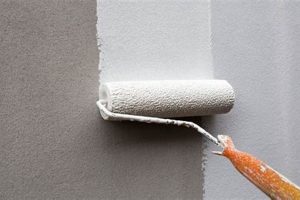
The effectiveness of paint additives designed to yield a smooth finish is inextricably linked to the application technique employed. Even the most sophisticated additives will fail to deliver optimal results if the application method is flawed. The technique directly influences the uniformity of the paint film, the degree of leveling achieved, and the potential for introducing defects. For example, using an incorrect spray nozzle with a fast-drying paint, even one containing leveling agents, can result in orange peel due to insufficient atomization and film coalescence. Similarly, applying paint with an overly saturated roller can lead to excessive film thickness and sagging, negating the benefits of rheology modifiers designed to prevent such issues.
Different application methods necessitate tailored approaches to additive selection and adjustment. Spray application demands additives that facilitate fine atomization and prevent cobwebbing, while brush application benefits from additives that enhance flow and minimize brushstrokes. Consider the use of extenders in paints applied by brush; these additives increase open time, allowing brushstrokes to level out before the paint sets. In contrast, for spray applications, particularly those using airless sprayers, additives might be needed to reduce viscosity and prevent tip clogging. Furthermore, environmental conditions, such as temperature and humidity, impact paint drying rates and, consequently, the effectiveness of additives. These factors must be accounted for when selecting both additives and application techniques.
In conclusion, achieving a smooth paint finish is not solely dependent on the chemical composition of the paint and its additives. The application technique serves as a critical variable that directly influences the final outcome. Proper selection and execution of the application method, coupled with a thorough understanding of how additives interact with that method, are essential for realizing the full potential of paint systems designed for smoothness. Mastery of both elements the chemistry of the paint and the physics of its application is paramount for consistently achieving professional-quality results.
Frequently Asked Questions
This section addresses common inquiries regarding the use of additives to enhance the smoothness of painted surfaces. The aim is to provide clear and concise answers based on established principles of paint formulation and application.
Question 1: What constitutes a “smooth finish” in the context of paint application?
A smooth finish is characterized by the absence of visible surface imperfections, such as brushstrokes, roller marks, orange peel, or pinholes. It exhibits a uniform sheen and a tactilely even surface. The degree of smoothness required often depends on the application and the desired aesthetic.
Question 2: Do paint additives completely eliminate the need for surface preparation?
No, paint additives are not a substitute for proper surface preparation. While they can minimize minor imperfections, they cannot compensate for underlying issues such as dirt, grease, loose paint, or uneven surfaces. Adequate surface preparation remains essential for optimal adhesion and a lasting, smooth finish.
Question 3: Can the same paint additive be used for both oil-based and water-based paints?
Generally, no. Paint additives are often formulated to be compatible with specific paint chemistries. Using an incompatible additive can lead to undesirable effects such as paint separation, reduced adhesion, or altered drying times. It is imperative to consult the additive manufacturer’s recommendations to ensure compatibility.
Question 4: How does the application method influence the selection of paint additives?
The application method significantly impacts additive selection. Spray application typically benefits from additives that reduce viscosity and promote atomization, while brush application may require additives that enhance flow and leveling. The choice of additive should be tailored to the specific demands of the chosen application technique.
Question 5: Is it possible to add too much of a paint additive?
Yes, exceeding the recommended dosage of a paint additive can have detrimental effects. Overuse may lead to issues such as delayed drying, altered gloss levels, reduced durability, or the formation of surface defects. Strict adherence to the manufacturer’s guidelines is crucial for achieving the desired results.
Question 6: How should the effectiveness of a paint additive be evaluated?
The effectiveness of a paint additive should be evaluated through a combination of visual inspection and performance testing. Visual inspection can reveal improvements in leveling, gloss, and the absence of surface defects. Performance testing may involve assessing adhesion, durability, and resistance to specific environmental factors.
In summary, achieving a smooth paint finish relies on a combination of proper surface preparation, appropriate additive selection, careful application technique, and adherence to manufacturer’s recommendations. A thorough understanding of these factors is essential for consistently achieving professional-quality results.
The next section will discuss troubleshooting common issues encountered when using paint additives.
Paint Additives for Smooth Finish
The preceding discussion has illuminated the pivotal role of paint additives in achieving a smooth and aesthetically pleasing finish. From the modification of rheological properties to the reduction of surface tension and the suppression of foam, these substances offer a targeted approach to mitigating common application challenges and enhancing the overall quality of painted surfaces. Proper selection, dosage, and application technique, informed by a thorough understanding of paint chemistry and environmental factors, remain paramount for realizing the full potential of these additives.
The continued advancement in materials science promises further innovations in paint additive technology, offering the potential for even greater control over coating properties and the elimination of surface imperfections. A commitment to rigorous testing and adherence to best practices will ensure that these advancements translate into consistently superior results, enhancing both the visual appeal and the longevity of painted surfaces. Further investigation and development in this area will undoubtedly contribute to elevated standards within the coatings industry.