A surface treatment applied to metal, producing a layer of oxides, carbonates, or other chemical compounds, is frequently sought for aesthetic and protective qualities. This layer, often resulting from natural weathering processes or accelerated chemical treatments, changes the appearance of the underlying material. Examples include the green layer on aged copper roofing or the darkened surface of antique bronze sculptures.
The developed surface offers several advantages, including enhanced corrosion resistance, a unique visual appeal, and historical depth. It can provide a protective barrier against further environmental degradation, extending the lifespan of the metal object. Furthermore, it contributes to a sense of age and authenticity, often increasing the value and desirability of the item, particularly in artistic and architectural applications. The resulting aesthetic connects an object to its past, suggesting permanence and enduring quality.
The subsequent sections will delve into the specific methods of achieving this surface alteration, the various metals suitable for this type of treatment, and the range of applications where its characteristics are particularly beneficial. The durability and maintenance considerations will also be discussed, providing a complete overview of this specialized metalworking technique.
Guidance on Achieving Desired Surface Qualities on Metals
The following guidelines provide essential considerations for achieving specific surface alterations on metals. These suggestions aim to optimize the outcome based on the desired aesthetic and protective properties.
Tip 1: Metal Selection: The choice of base metal significantly influences the final result. Copper alloys, brass, and bronze react differently to chemical treatments and weathering processes. Consider the inherent color and reactivity of the metal when selecting a material.
Tip 2: Surface Preparation: Prior to initiating the surface treatment, thorough cleaning is crucial. Remove any existing coatings, oils, or contaminants to ensure uniform development across the entire surface. Methods such as degreasing and light abrasion may be required.
Tip 3: Controlled Environment: Where artificial patination is employed, maintaining a consistent environment is essential. Factors like temperature, humidity, and chemical concentration directly affect the speed and uniformity of the chemical reaction.
Tip 4: Layered Application: Achieving complex or multi-tonal surface alterations often requires sequential application of different chemical solutions. Allow each layer to fully react and dry before applying the next to achieve the desired depth and complexity.
Tip 5: Neutralization: After the desired surface is achieved through chemical means, thorough neutralization is necessary. This process halts the chemical reaction and prevents unwanted changes or degradation over time. Use appropriate neutralizing agents and rinse thoroughly.
Tip 6: Sealing and Protection: Applying a protective sealant can significantly extend the lifespan of the altered surface. A sealant prevents further oxidation, abrasion, and environmental damage. The choice of sealant should be compatible with the underlying metal and the intended environment.
Tip 7: Documentation: Maintaining detailed records of the processes and chemicals used is recommended, especially in artistic or restoration projects. This documentation enables replication and provides valuable information for future maintenance or repairs.
By adhering to these guidelines, enhanced control over the final outcome can be exercised, resulting in durable and aesthetically pleasing metal surfaces with the desired aged appearance.
The subsequent sections will address potential challenges and troubleshooting techniques related to achieving such surface treatments, offering practical solutions for common issues encountered during the process.
1. Surface Reactivity

Surface reactivity is a foundational aspect of achieving an intentional aged appearance on metal. The inherent chemical properties of a metal determine its susceptibility and response to various treatments designed to alter its surface composition and appearance. Understanding this reactivity is crucial for selecting appropriate methods and predicting the final outcome.
- Electrochemical Potential
Each metal possesses a unique electrochemical potential, indicating its tendency to corrode or oxidize. Metals with higher electrochemical potentials react more readily with oxidizing agents, accelerating the formation of surface compounds. This characteristic is exploited in artificial patination processes, where controlled electrochemical reactions are induced to create the desired visual effect. For example, copper, with its relatively high electrochemical potential, readily forms oxides and carbonates when exposed to specific chemical solutions, resulting in the characteristic green or blue hues.
- Alloying Elements
The presence of alloying elements significantly modifies the surface reactivity of a metal. Alloying elements can either enhance or inhibit the formation of surface compounds, depending on their individual electrochemical properties. For instance, the addition of chromium to steel creates a passive chromium oxide layer, providing corrosion resistance and hindering the development of a uniform aged appearance. Conversely, alloying copper with tin to create bronze can result in a different surface response compared to pure copper, altering the color and texture of the resultant layer.
- Passivation
Some metals, such as aluminum and stainless steel, exhibit inherent passivation properties, forming a thin, protective oxide layer that inhibits further corrosion. Achieving a desired aged surface on these metals often requires pre-treatment to remove or disrupt the passive layer, allowing for a more uniform and controlled reaction with patinating agents. Techniques such as etching or mechanical abrasion are commonly employed to overcome passivation and promote the formation of the intended surface.
- Environmental Sensitivity
The reactivity of a metal surface is also influenced by environmental conditions, including humidity, temperature, and the presence of corrosive agents. Exposure to acidic environments can accelerate the formation of surface compounds, while alkaline conditions may inhibit the process. Understanding the environmental sensitivity of a metal is essential for predicting its long-term behavior and for selecting appropriate protective coatings to maintain the desired visual effect. For example, a surface on bronze exposed to marine environments will likely develop a different surface composition compared to the same surface in a dry, indoor setting.
These facets of surface reactivity are intricately linked to the successful development and long-term performance of surfaces that exhibit an intentionally aged appearance. By carefully considering the electrochemical potential, alloying elements, passivation properties, and environmental sensitivity of a metal, it is possible to control and manipulate its surface to achieve the desired visual and protective characteristics. This understanding is essential for both the creation of new works and the preservation of existing artifacts.
2. Chemical Composition

The chemical composition of the metal substrate is a primary determinant in the formation and characteristics of an intentionally aged surface. The constituent elements and their proportions directly influence the types of chemical reactions that occur, the resulting compounds formed, and the overall appearance of the modified surface. For instance, a high copper content in a brass alloy facilitates the formation of copper carbonates and sulfates, contributing to the characteristic green or blue hues observed in aged brass. Conversely, a stainless steel alloy, rich in chromium, forms a passive chromium oxide layer, hindering the development of a traditional aged appearance unless specific chemical treatments are employed to disrupt this passive layer.
The application of chemical solutions to accelerate the aging process relies heavily on understanding the substrate’s composition. These solutions, often containing acids, bases, or salts, react selectively with certain elements within the metal. For example, ferric chloride is commonly used to impart an aged appearance to bronze. The iron ions react with the copper and tin in the bronze, forming various oxides and chlorides that contribute to a darkened, mottled surface. In contrast, a similar treatment applied to aluminum would yield a markedly different result due to aluminum’s different chemical properties and reaction pathways. The precise control of chemical concentrations and exposure times is crucial to achieve the desired aesthetic outcome while minimizing the risk of corrosion or damage to the metal.
In summary, the chemical composition of the metal directly governs the processes and outcomes associated with achieving an intentionally aged surface. Understanding the elemental makeup and reactivity of the substrate is fundamental for selecting appropriate treatment methods, predicting the resulting appearance, and ensuring the long-term stability and durability of the treated metal. The success of creating and maintaining such surfaces hinges on a comprehensive knowledge of these chemical interactions and their effects on the material’s properties.
3. Application Methods

The methods employed to apply chemical treatments significantly influence the resultant surface characteristics of metals designed to exhibit an intentionally aged appearance. These techniques determine the uniformity, depth, and overall aesthetic quality of the modified surface. Selection of an appropriate application method is critical for achieving the desired effect and ensuring the long-term stability of the coating.
- Immersion
Immersion involves submerging the metal object in a chemical solution. This method promotes uniform coverage, particularly for complex geometries. Immersion is often used for creating a base layer or for achieving an overall darkening effect. However, it may not be suitable for large objects or when selective surface treatments are desired. An example is the immersion of small brass components in a copper sulfate solution to initiate a uniform darkening effect.
- Spraying
Spraying allows for controlled application of chemical solutions, enabling selective treatments and gradient effects. This method is suitable for large surfaces and intricate designs. Spraying can be used to create variations in color and texture. However, achieving uniform coverage requires skilled application techniques and appropriate spray equipment. For instance, spraying a diluted ferric chloride solution onto a steel sculpture can create a mottled, rusted appearance with varying degrees of intensity.
- Brushing/Swabbing
Brushing or swabbing involves manually applying chemical solutions to the metal surface. This method is suitable for small areas and intricate details, allowing for precise control over the application. Brushing can be used to highlight specific features or to create localized effects. However, achieving consistent results across larger areas can be challenging. An example includes using a brush to apply a patina solution to the recessed areas of a bronze plaque to accentuate the details.
- Fuming
Fuming involves exposing the metal object to chemical vapors. This method produces a uniform and delicate surface alteration, often resulting in subtle color changes. Fuming is particularly suitable for achieving consistent results on complex shapes and delicate surfaces. However, it requires specialized equipment and strict safety precautions. An example involves exposing silver jewelry to ammonia vapors to create a darkened, antiqued finish.
The chosen application method directly impacts the final outcome, dictating the uniformity, depth, and aesthetic qualities. Understanding the advantages and limitations of each technique is crucial for achieving the desired surface alteration on metals intended to display an aged appearance. Consideration of the object’s size, geometry, and the desired aesthetic effect is essential for selecting the most appropriate application method.
4. Environmental Factors

Environmental conditions play a pivotal role in the development, appearance, and longevity of surfaces on metals intended to exhibit an intentionally aged aesthetic. These factors, ranging from atmospheric composition to temperature fluctuations, exert a profound influence on the chemical processes that drive the formation and evolution of surface compounds.
- Atmospheric Composition
The composition of the surrounding atmosphere significantly influences the rate and type of corrosion reactions that occur on metal surfaces. Exposure to pollutants such as sulfur dioxide and nitrogen oxides accelerates the formation of sulfates and nitrates, contributing to the darkening and degradation of surfaces. Conversely, exposure to marine environments with high concentrations of chlorides can lead to the formation of copper chlorides, imparting a green or blue coloration. The presence of moisture, in the form of humidity or precipitation, further facilitates these reactions by providing a medium for ion transport and electrochemical processes. The specific atmospheric conditions in a given location directly impact the final appearance and long-term stability of the treated surface. For example, a copper roof in an industrial city will likely develop a darker and more uneven patina compared to one in a rural setting.
- Temperature Fluctuations
Temperature variations induce expansion and contraction of metal surfaces, leading to stress and potential cracking of the surface compounds. These fluctuations can accelerate the degradation of protective coatings and promote the formation of new corrosion sites. Furthermore, temperature influences the rate of chemical reactions, with higher temperatures generally accelerating the formation of surface layers. The combination of thermal stress and increased reaction rates can significantly alter the morphology and composition of the surface over time. For example, a bronze sculpture exposed to extreme temperature variations may exhibit increased cracking and flaking of the surface compared to a sculpture maintained in a stable indoor environment.
- Ultraviolet Radiation
Exposure to ultraviolet (UV) radiation can degrade organic coatings and sealants applied to protect surfaces, leading to a loss of gloss, discoloration, and reduced adhesion. UV radiation can also directly affect the metal surface, promoting oxidation and accelerating the breakdown of existing surface compounds. The intensity and duration of UV exposure are critical factors in determining the extent of damage. Surfaces located in areas with high levels of solar radiation, such as desert climates, are particularly susceptible to UV degradation. The selection of UV-resistant coatings and sealants is essential for maintaining the appearance and protective properties of these altered metal surfaces.
- Biological Activity
The presence of microorganisms, such as bacteria and fungi, can contribute to the formation of surface compounds and the degradation of protective coatings. These organisms secrete organic acids and enzymes that can corrode metal surfaces and promote the growth of biofilms. Biological activity is particularly prevalent in humid and shaded environments. The types of microorganisms present and their metabolic activity directly influence the appearance and composition of the surface. For example, the growth of lichens on a stone monument can contribute to the formation of a mottled surface, while the presence of sulfate-reducing bacteria can accelerate the corrosion of iron and steel structures in soil.
In summation, environmental factors exert a pervasive influence on surfaces crafted to exhibit an intentionally aged appearance. Understanding and mitigating the effects of atmospheric composition, temperature fluctuations, UV radiation, and biological activity are essential for preserving the aesthetic qualities and extending the lifespan of these modified metal surfaces. Careful consideration of the intended environment is crucial during the design and application phases, ensuring that appropriate materials, treatments, and protective coatings are selected to withstand the specific challenges posed by the surrounding conditions. The interaction of these elements governs the visual and physical evolution, necessitating a comprehensive approach to both their creation and long-term care.
5. Durability Assessment

The long-term performance of metal surfaces treated to exhibit an intentionally aged appearance is intrinsically linked to durability assessment. The processes employed to create a patina or similar surface alteration can, paradoxically, both enhance and compromise the material’s resistance to environmental degradation. Thus, evaluating the durability of such finishes becomes a critical component in ensuring their longevity and maintaining the desired aesthetic qualities. This assessment involves a systematic examination of the finish’s resistance to various factors, including abrasion, corrosion, UV radiation, and chemical exposure. Without a thorough evaluation, there is a substantial risk of premature failure, resulting in aesthetic degradation and, in some cases, structural compromise of the underlying metal.
Real-world examples highlight the practical significance of durability assessment. Consider architectural bronze cladding treated to develop a rich, dark surface. Without appropriate testing to determine its resistance to acid rain and atmospheric pollutants, the finish may quickly degrade, leading to an uneven and unsightly appearance. Similarly, artistic metal sculptures subjected to outdoor display require careful assessment of their surface’s resistance to UV radiation and temperature fluctuations to prevent fading, cracking, or delamination. Accelerated weathering tests, salt spray tests, and adhesion tests are among the methods utilized to simulate these environmental conditions and predict the long-term performance of the altered metal surface. The results of these tests inform decisions regarding the selection of appropriate protective coatings or maintenance strategies, such as regular cleaning and re-application of sealants.
In summary, durability assessment is an indispensable element in the successful application and preservation of metal surfaces treated to exhibit an intentionally aged aesthetic. It bridges the gap between the desired visual outcome and the long-term performance requirements, ensuring that the altered surface not only meets aesthetic expectations but also withstands the challenges posed by its intended environment. Challenges in this field include the difficulty in accurately simulating real-world conditions in a laboratory setting and the need for standardized testing procedures. However, ongoing research and development efforts are continuously refining durability assessment methodologies, contributing to the increased reliability and longevity of these aesthetically enhanced metal surfaces.
6. Aesthetic Variation
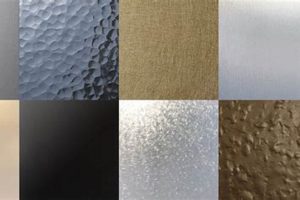
Aesthetic variation is an inherent characteristic and a primary driver in the selection and application of surfaces that mimic aged appearances. The deliberate manipulation of surface treatments results in a spectrum of visual outcomes, ranging from subtle tonal shifts to pronounced textural differences. The cause of this variation stems from the interplay between the metal’s inherent properties, the applied chemical processes, and the environmental factors to which the surface is exposed. The importance of aesthetic variation lies in its capacity to imbue objects with a sense of history, authenticity, and unique character. For instance, architectural panels utilizing this type of surface might be treated to achieve variations in color and texture, evoking the appearance of naturally weathered materials and adding visual interest to a building facade. The absence of aesthetic variation could result in a surface that appears artificial or lacking in depth.
The practical significance of understanding aesthetic variation extends to several domains. In art and sculpture, it allows artists to precisely control the visual message conveyed by their work. A sculpture designed to evoke a sense of antiquity might benefit from a highly varied surface, while a more contemporary piece might utilize a more uniform application. In restoration projects, matching the existing aesthetic characteristics of a surface is crucial for maintaining the integrity of the original design. Conservators must carefully analyze the existing surface and replicate the processes that led to its current appearance. This may involve employing a combination of chemical treatments, mechanical abrasion, and controlled weathering to achieve the desired aesthetic match. In industrial design, manufacturers can leverage the appeal of aged surfaces to create products that evoke a sense of quality and durability, even in mass-produced items. This involves careful consideration of the manufacturing processes and the selection of materials that will yield predictable and aesthetically pleasing variations.
In summary, aesthetic variation is an essential component. It contributes to the visual appeal, historical narrative, and perceived value of the object. Challenges in this area include the difficulty in predicting and controlling the final appearance of a surface, as well as the subjective nature of aesthetic preferences. Nevertheless, the ability to manipulate and harness aesthetic variation is a valuable skill for artists, conservators, designers, and manufacturers seeking to create visually compelling and historically evocative metal surfaces. The controlled application, while often complex, connects the intended design with the final aesthetic achievement.
7. Protective Qualities

The formation of a surface on metal imparts specific protective characteristics, acting as a barrier against environmental degradation. The controlled application of chemical treatments induces the formation of stable compounds, which enhance corrosion resistance compared to the untreated metal. This protection stems from the newly formed surface’s ability to reduce the rate of electrochemical reactions that lead to corrosion. For instance, the naturally occurring on copper roofing not only provides a distinctive aesthetic but also shields the underlying copper from further oxidation and weathering. This effect is also observed in artificially patinated bronze sculptures, where the chemically induced surface offers a degree of protection against atmospheric pollutants and moisture. The practical significance of these protective attributes is found in the extended lifespan of metal structures and artifacts, minimizing the need for frequent maintenance or replacement.
Further enhancement of these protective characteristics can be achieved through the application of sealants or waxes following the patination process. These coatings provide an additional barrier against moisture penetration and abrasive wear, further extending the lifespan of the altered metal surface. Examples include the use of microcrystalline waxes on museum artifacts to prevent atmospheric corrosion and the application of clear coatings on architectural metalwork to resist UV degradation. The selection of appropriate protective coatings is crucial for maximizing the longevity and performance of the modified surface. In industrial applications, pre-patinated steel components used in outdoor machinery demonstrate the effectiveness of combining chemical treatments with protective coatings to withstand harsh environmental conditions.
In summary, the protective qualities inherent in the surface of metals treated for an aged appearance are integral to their overall value and utility. This protection is a primary benefit alongside the aesthetic enhancement, requiring a thorough understanding of chemical interactions and environmental factors. Addressing challenges, such as ensuring uniform surface formation and selecting compatible protective coatings, is essential for achieving durable and visually appealing results. This combination of aesthetic enhancement and functional protection is a key factor in the widespread adoption of this surface treatment across diverse industries and artistic disciplines.
Frequently Asked Questions
This section addresses common inquiries regarding metal surfaces treated to achieve an intentionally aged or altered appearance. The information provided aims to clarify fundamental aspects of this specialized metalworking technique.
Question 1: Does an intentionally aged surface inherently improve corrosion resistance?
A surface, while often aesthetically desirable, does not automatically enhance corrosion resistance. The protective properties depend on the specific chemical compounds formed and the metal’s environment. Some altered surfaces can provide enhanced protection, while others may be more susceptible to corrosion if not properly sealed or maintained.
Question 2: Are all metals suitable for achieving an intentionally aged surface?
No, not all metals respond equally well to treatments aimed at creating an aged appearance. Copper alloys, such as brass and bronze, are particularly well-suited due to their reactivity and the formation of aesthetically pleasing compounds. Other metals, like stainless steel and aluminum, require specialized treatments to achieve comparable results.
Question 3: Can an intentionally aged surface be replicated consistently?
Achieving consistent results can be challenging due to the numerous variables involved, including metal composition, surface preparation, chemical concentrations, and environmental conditions. While precise control of these factors can improve reproducibility, some degree of variation is often unavoidable and may contribute to the unique character of the surface.
Question 4: Is the surface durable, and what maintenance is required?
Durability depends on several factors, including the type of metal, the specific surface treatment used, and the environmental conditions. Generally, regular cleaning and the application of protective coatings, such as waxes or sealants, can extend the lifespan and maintain the aesthetic qualities. Specific maintenance requirements vary depending on the application and exposure conditions.
Question 5: How does UV radiation affect an intentionally aged surface?
Exposure to ultraviolet (UV) radiation can degrade certain chemical compounds and protective coatings, leading to fading, discoloration, or cracking. The extent of UV damage depends on the intensity and duration of exposure, as well as the specific materials used in the surface treatment. The use of UV-resistant coatings and sealants can mitigate these effects.
Question 6: Are there health or safety concerns associated with creating an intentionally aged surface?
Yes, the chemicals used in creating such a surface can pose health and safety risks. Proper ventilation, personal protective equipment (PPE), and adherence to safety guidelines are essential when handling these chemicals. Disposal of chemical waste must also be done responsibly, following local regulations.
Understanding these FAQs is crucial for anyone considering the application or maintenance of metal surfaces designed to exhibit an aged appearance. Proper planning and execution are essential for achieving the desired aesthetic results and ensuring long-term durability.
The subsequent section will delve into potential challenges and troubleshooting techniques related to these surfaces, offering practical solutions for common issues encountered during the process.
Patina Finish Metal
This exposition has detailed the multifaceted nature of surfaces on metals created to exhibit age. The discussion encompassed the influence of substrate reactivity, controlled chemical applications, environmental considerations, and the critical assessment of durability. Aesthetic variation, intrinsic to these surfaces, was explored in terms of its impact on visual perception and authenticity. The protective characteristics conferred by such surface treatments, along with frequently asked questions, have further illuminated the complexity inherent in achieving durable and aesthetically pleasing results.
The intentional alteration of metal surfaces represents a nuanced practice, demanding a comprehensive understanding of both material science and artistic principles. Continued research and rigorous quality control are essential for advancing the reliability and longevity of surfaces. A commitment to informed application and diligent maintenance will ensure that these metal surfaces not only achieve their intended aesthetic purpose but also endure as enduring testaments to craftsmanship and innovation.