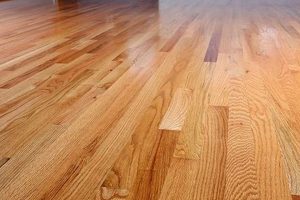
The selection between factory-coated and job-site-applied hardwood flooring represents a fundamental decision point in construction and renovation projects. One involves planks treated with a durable finish in a controlled manufacturing environment, while the other entails applying stains and protective layers after installation. This choice impacts cost, installation time, and long-term performance. For instance, a homebuilder might choose the former to expedite project completion, or the latter to precisely match existing dcor.
The significance of this decision stems from its effects on durability, aesthetic customization, and overall project timeline. Selecting one approach over the other influences the floor’s resistance to wear and tear, the range of available color options, and the potential for on-site adjustments. Historically, on-site finishing was the standard, offering unparalleled customization. However, advances in manufacturing have made factory finishes increasingly competitive in both quality and appearance.
The subsequent discussion will delve into the comparative advantages and disadvantages of each flooring option. This will encompass aspects such as installation procedures, cost analysis, available finish types, and maintenance requirements, facilitating a well-informed decision-making process.
Considerations in Hardwood Flooring Selection
Careful evaluation of distinct characteristics is crucial when choosing between prefinished and site-finished hardwood flooring.
Tip 1: Environmental Control: Site-finished floors necessitate a controlled environment during the finishing process. Dust and temperature fluctuations can negatively impact the final appearance and durability of the finish. Prefinished flooring, conversely, eliminates this concern, as the finish is applied in a controlled factory setting.
Tip 2: Acclimation Period: Both types require acclimation to the environment. However, site-finished floors may demand a more extended period, allowing the wood to stabilize before sanding and finishing. Failure to properly acclimate can result in gapping or buckling after finishing.
Tip 3: Stain Customization: Site finishing allows for custom stain mixing and matching to existing décor. Prefinished options offer a range of standard colors, but bespoke staining is generally not possible.
Tip 4: On-Site Disruption: Site finishing generates significant dust and fumes, requiring thorough masking and ventilation. Prefinished flooring minimizes on-site disruption, leading to a faster and cleaner installation process.
Tip 5: Initial Cost vs. Long-Term Value: Prefinished flooring often has a higher upfront material cost, but reduced labor costs can offset this. Site-finished floors may be initially less expensive, but the cost of sanding, staining, and multiple coats of finish must be considered. Long-term value hinges on the durability of the chosen finish and the quality of installation.
Tip 6: Repair and Refinishing: While both can be refinished, seamlessly blending a repair on site-finished floors can be more straightforward. Achieving a perfect match on prefinished flooring may require replacing entire boards or sections.
Tip 7: Bevel Edge Considerations: Many prefinished floors feature beveled edges. Site-finished floors can be sanded perfectly flush, resulting in a smooth, seamless surface. Consider the aesthetic preference for either a beveled or a smooth surface.
Selecting the appropriate flooring solution demands a clear understanding of project-specific constraints, budget considerations, and aesthetic priorities. Thorough evaluation of these factors ensures a satisfactory and durable flooring outcome.
The following section will provide a comparative analysis of the cost implications associated with these two flooring options.
1. Durability of finish
The durability of the applied finish stands as a critical differentiator between factory-applied and job-site-applied hardwood flooring. Finish durability directly impacts the lifespan of the floor, its resistance to wear, and the frequency of required maintenance and refinishing. The choice between these finishing methods necessitates a clear understanding of the finish composition, application process, and environmental factors affecting its performance.
- Finish Composition and Application
Prefinished wood floors typically receive multiple coats of a durable finish, often involving ultraviolet (UV) curing techniques in a controlled environment. This ensures consistent application and thorough hardening, resulting in a resilient surface. Site-finished floors, conversely, rely on on-site application, which may be subject to variations in environmental conditions and applicator skill. The finish composition itself also differs, with prefinished options often utilizing more advanced formulations for enhanced scratch and abrasion resistance.
- Abrasion and Scratch Resistance
Resistance to everyday wear and tear, including scratches and abrasions, is a key measure of finish durability. Factory-applied finishes often outperform site-applied finishes in standardized abrasion tests due to the controlled application process and advanced finish formulations. This translates to a longer lifespan and reduced need for refinishing, particularly in high-traffic areas.
- Chemical Resistance
The ability to withstand exposure to common household chemicals, such as cleaning agents and spills, is another crucial aspect of finish durability. Prefinished floors may exhibit superior chemical resistance due to the use of specialized coatings designed to resist staining and damage from such substances. Site-finished floors may be more susceptible to chemical damage depending on the specific finish used and its application.
- UV Protection
Exposure to ultraviolet (UV) radiation from sunlight can cause fading and discoloration of wood floors over time. Some prefinished floors incorporate UV inhibitors into the finish formulation to mitigate this effect. While UV protection can be added to site-applied finishes, the effectiveness may vary depending on the product and application. This consideration is especially relevant for rooms with significant sun exposure.
The durability of the finish plays a pivotal role in the overall longevity and maintenance requirements of hardwood flooring. While advancements in site-applied finishes have narrowed the gap, factory-applied finishes often offer superior resistance to wear, scratches, chemicals, and UV damage due to controlled application and advanced formulations. This superior durability can translate to long-term cost savings and reduced maintenance efforts over the lifespan of the floor.
2. Installation Time Reduction

The timeframe required for hardwood flooring installation is a significant determinant in project planning and execution. The selection between prefinished and site-finished hardwood directly influences the duration of the installation process, impacting overall project timelines and associated costs.
- Elimination of On-Site Finishing Processes
Prefinished wood flooring inherently reduces installation time by eliminating the need for sanding, staining, and applying multiple coats of finish on-site. These steps, essential for site-finished floors, require significant time for each coat to dry and cure, extending the overall installation period. The absence of these processes with prefinished flooring allows for immediate use of the floor upon installation.
- Minimized Disruption to Occupied Spaces
The installation of site-finished floors involves substantial dust generation during sanding and strong fumes during finishing. Consequently, extensive masking and ventilation are required, often necessitating temporary relocation of occupants. Prefinished flooring minimizes these disruptions, enabling faster and less intrusive installation, particularly beneficial in occupied residences or commercial spaces.
- Simplified Installation Procedures
Prefinished flooring often incorporates precision milling and consistent dimensions, facilitating quicker and more straightforward installation. The uniformity of prefinished planks reduces the need for extensive on-site adjustments and modifications, streamlining the process. Site-finished floors may require additional time for leveling and ensuring a uniform surface prior to finishing.
- Expedited Project Completion
The cumulative effect of eliminating on-site finishing, minimizing disruption, and simplifying installation procedures results in a significantly faster project completion time for prefinished wood floors. This accelerated timeline translates to reduced labor costs, minimized inconvenience, and earlier access to the finished space. In commercial projects, reduced downtime can have substantial financial implications.
The reduced installation time associated with prefinished wood flooring offers notable advantages in terms of project efficiency, cost savings, and minimized disruption. The selection of prefinished flooring, therefore, presents a compelling solution when time constraints are a primary consideration.
3. Customization possibilities
The level of aesthetic customization afforded by different hardwood flooring options represents a key determinant in the selection process. Site-finished floors offer unparalleled control over the final appearance, while prefinished options provide a range of pre-determined styles. This distinction significantly impacts the ability to achieve a specific design vision.
- Stain Color Matching
Site finishing allows for precise stain color matching to existing woodwork, furniture, or other design elements within the space. Custom stain blends can be created on-site, ensuring a seamless integration with the overall aesthetic. Prefinished floors, while available in a variety of colors, offer limited ability to match custom hues, potentially requiring compromises in the design scheme. An example would be perfectly replicating the stain of antique trim in a historic home, a feat readily achievable with site finishing.
- Sheen Level Selection
The sheen level, ranging from matte to high gloss, significantly influences the perceived formality and light reflectivity of the floor. Site finishing allows for complete control over the final sheen, enabling a precise match to the desired ambiance. Prefinished floors come with pre-determined sheen levels, which may not align perfectly with the intended design. Choosing a specific sheen to complement artwork or lighting is a common consideration illustrating this facet.
- Wood Species and Grade Variation
While both prefinished and site-finished floors offer a variety of wood species, site finishing often provides greater flexibility in selecting specific grades and cuts of lumber. This allows for greater control over the character and grain patterns of the flooring. Prefinished options typically offer a limited selection of grades, potentially restricting the ability to achieve a highly customized look. Sourcing quarter-sawn white oak with specific grain patterns is an example where site finishing offers a distinct advantage.
- On-Site Adjustments and Repairs
Site-finished floors allow for seamless blending of repairs and modifications. Scratches, dents, or replaced boards can be integrated seamlessly into the existing floor through sanding and refinishing. Achieving a perfect match on prefinished floors can be challenging, potentially requiring replacement of entire boards or sections to maintain a consistent appearance. This is particularly relevant in older homes where floorboards may have unique characteristics acquired over time.
The spectrum of customization possibilities underscores a fundamental divergence between site-finished and prefinished hardwood flooring. While prefinished options offer convenience and consistency, site finishing provides the ultimate control over color, sheen, and character, enabling the realization of highly personalized design visions. The selection ultimately hinges on the relative importance of customization versus other factors such as cost and installation time.
4. On-site disruption levels

On-site disruption levels constitute a critical consideration when evaluating hardwood flooring options. The extent of disturbance to a living or working environment during installation varies significantly between prefinished and site-finished wood floors, influencing occupant comfort and project logistics.
- Dust Generation
Site-finished floors necessitate extensive sanding to create a smooth, even surface prior to staining and finishing. This process generates substantial amounts of fine dust that can permeate the surrounding environment, requiring thorough masking and cleanup. Prefinished floors, having been sanded and finished in a controlled factory setting, minimize dust generation during installation, leading to a cleaner and less disruptive process. The presence of sensitive electronics or occupants with respiratory sensitivities amplifies the significance of this factor.
- Fumes and Odors
The application of stains and finishes to site-finished floors releases volatile organic compounds (VOCs) that produce strong odors and can pose health risks. Adequate ventilation is essential to mitigate these effects, potentially requiring temporary evacuation of the premises. Prefinished floors, having undergone finishing in a controlled environment with VOC capture systems, eliminate this source of on-site fumes, contributing to a healthier and more comfortable installation environment. The selection of low-VOC finishes for site-finished floors can reduce, but not eliminate, this disruption.
- Noise Levels
The sanding process associated with site-finished floors generates significant noise, which can be disruptive to occupants and neighbors. The installation of prefinished floors, primarily involving cutting and fastening, produces considerably less noise. This difference is particularly relevant in multi-unit dwellings or environments where noise restrictions are in place. Careful consideration of working hours can somewhat mitigate the noise impact of site-finished installations.
- Duration of Inconvenience
The overall duration of the flooring installation process, including sanding, staining, finishing, and curing, is typically longer for site-finished floors than for prefinished floors. This extended timeline translates to a prolonged period of disruption for occupants. Prefinished floors, requiring only installation, significantly reduce the overall project duration, minimizing inconvenience and allowing for earlier occupancy of the space.
The degree of on-site disruption represents a key differentiator between prefinished and site-finished wood flooring. The reduced dust, fumes, noise, and installation time associated with prefinished floors make them a compelling choice for projects where minimizing disturbance is a priority, particularly in occupied spaces or sensitive environments. Conversely, the heightened disruption associated with site-finished floors may necessitate careful planning and mitigation strategies to ensure occupant comfort and project success.
5. Long-term cost analysis

A comprehensive long-term cost analysis is essential when evaluating flooring options. Initial price points often obscure the complete financial picture. Factoring in maintenance, repairs, and potential refinishing over the lifespan of the floor provides a more accurate basis for comparison.
- Material Costs and Initial Installation
Prefinished wood flooring typically has a higher initial material cost compared to unfinished options. However, the reduced labor expenses associated with simpler and faster installation can offset this difference. Site-finished floors may have lower material costs, but require professional sanding, staining, and finishing, increasing labor expenses. The total upfront cost requires careful calculation, considering both materials and labor rates in the specific geographic area.
- Maintenance and Cleaning
The maintenance requirements and associated costs differ between the two flooring types. Prefinished floors often have more durable factory finishes that resist staining and scratching, potentially reducing the need for specialized cleaning products or frequent maintenance. Site-finished floors may require more frequent waxing or polishing to maintain their appearance and protect the finish. The cost of cleaning supplies and professional maintenance services should be factored into the long-term analysis.
- Repair and Refinishing Expenses
Over time, all wood floors will experience wear and tear. The cost of repairing scratches, dents, or water damage can vary depending on the flooring type and the extent of the damage. While both prefinished and site-finished floors can be refinished, the cost and complexity of the process can differ. Site-finished floors can be seamlessly refinished, blending repairs into the existing surface. Matching the finish on prefinished floors during repairs can be more challenging, potentially requiring replacement of entire boards or sections. The anticipated frequency and cost of repairs and refinishing should be considered.
- Lifespan and Replacement Costs
The expected lifespan of the flooring and the potential cost of replacement represent a significant component of the long-term cost analysis. More durable finishes and robust construction can extend the lifespan of the floor, delaying the need for costly replacement. While both prefinished and site-finished floors can last for decades with proper care, the quality of the materials, the installation workmanship, and the maintenance practices all influence longevity. Estimating the lifespan and factoring in the cost of removal and replacement provides a complete picture of the long-term financial implications.
By considering these elements, a thorough long-term cost analysis provides a realistic comparison between prefinished and site-finished wood floors. This analysis moves beyond the initial price tag, providing a framework for evaluating the total cost of ownership over the lifespan of the flooring.
Frequently Asked Questions
This section addresses common inquiries regarding the selection and performance characteristics of prefinished and site-finished hardwood flooring. It aims to clarify misconceptions and provide objective information for informed decision-making.
Question 1: What are the primary differences in the installation process?
Prefinished wood floors are installed with minimal on-site finishing required, typically involving only cutting and fastening. Site-finished floors necessitate sanding, staining, and the application of multiple coats of finish after installation. This difference significantly impacts installation time and on-site disruption.
Question 2: How does durability compare between the two options?
Prefinished floors often exhibit greater durability due to the controlled factory application of multiple coats of a robust finish, frequently employing UV-curing technology. Site-finished floors rely on on-site application, which may be subject to variations in environmental conditions and applicator skill, potentially affecting long-term durability.
Question 3: Is one option more cost-effective in the long run?
While prefinished floors generally have higher initial material costs, the reduced labor costs associated with simpler installation can offset this. Site-finished floors may appear initially less expensive, but the additional expenses for sanding, staining, finishing, and potential future refinishing must be considered in a long-term cost analysis.
Question 4: Which option offers greater customization flexibility?
Site-finished floors provide unparalleled customization. Custom stain blends can be created to match existing dcor, and the sheen level can be precisely controlled. Prefinished floors offer a range of pre-determined styles, but lack the ability to create bespoke finishes on-site.
Question 5: What is the impact on indoor air quality during and after installation?
Site-finished floors release volatile organic compounds (VOCs) during the staining and finishing process, potentially affecting indoor air quality. Prefinished floors, finished in a controlled factory environment with VOC capture systems, minimize on-site VOC emissions, resulting in a healthier installation process.
Question 6: How do repair and refinishing procedures differ?
Site-finished floors allow for seamless blending of repairs and modifications through sanding and refinishing. Achieving a perfect match on prefinished floors can be challenging, potentially requiring replacement of entire boards or sections to maintain a consistent appearance.
In summary, the choice between prefinished and site-finished hardwood flooring involves a trade-off between convenience, customization, and long-term performance. Evaluating these factors in the context of specific project requirements is crucial for informed decision-making.
The subsequent section will provide a structured comparison table, summarizing the key advantages and disadvantages of each flooring type.
Prefinished Wood Floors vs. Site Finished
This exploration of prefinished wood floors vs site finished reveals a complex interplay of factors influencing the selection process. Durability, installation time, customization possibilities, on-site disruption, and long-term cost implications emerge as primary considerations. Prefinished options offer efficiencies in installation and controlled factory finishes, while site-finished alternatives provide unparalleled customization and seamless repair capabilities. Each choice presents inherent trade-offs that must be weighed against specific project requirements and priorities.
The decision regarding hardwood flooring warrants careful deliberation. By thoroughly evaluating the presented information and considering the unique demands of the intended application, informed choices can be made. The ultimate objective remains the selection of a flooring solution that balances aesthetic appeal, functional performance, and long-term value, contributing to a durable and satisfying outcome.