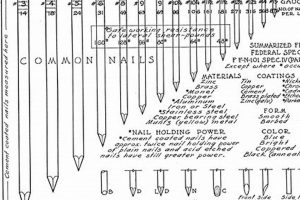
The act of extracting slender fasteners, typically headless or with small heads, used in woodworking and trim applications, is a common task in both renovation and construction. This process often involves specialized tools designed to grip and pull the fastener without damaging the surrounding material. A practical example is the dismantling of old furniture for repurposing, where these fasteners must be carefully withdrawn to avoid splitting the wood.
Effective execution of this extraction process is crucial for preserving the integrity of materials and ensuring a clean surface for subsequent work. This approach minimizes the risk of surface imperfections and facilitates smoother repairs or modifications. Historically, this task was performed with basic tools and required considerable skill; modern tools and techniques have increased efficiency and reduced the potential for damage.
The following sections will detail specific methods and tools employed in this procedure, focusing on techniques that minimize surface marring and maximize efficiency. Various scenarios requiring this process will also be explored, along with best practices for achieving optimal results in diverse applications.
Extraction Techniques
The following guidelines offer practical advice for the successful removal of small-headed fasteners, minimizing damage and maximizing efficiency.
Tip 1: Utilize a Nail Set: Employ a nail set and hammer to drive the fastener further into the material if the protruding portion is insufficient for gripping. This creates clearance for prying from the opposite side, minimizing surface damage.
Tip 2: Employ Pliers or Nippers: When a portion of the fastener is exposed, use pliers or nippers to grip the head. A gentle rocking motion, rather than a direct pull, often facilitates easier extraction.
Tip 3: Protect Surrounding Surfaces: Place a thin piece of wood or cardboard between the prying tool and the material surface. This acts as a buffer, preventing indentations or scratches.
Tip 4: Consider the Angle of Extraction: Pull the fastener out along the same angle it was driven in. Deviating from this angle increases the risk of bending or breaking the fastener, potentially damaging the surrounding material.
Tip 5: Apply Heat (Cautiously): In instances where the fastener is heavily corroded or stuck, localized heat application can help loosen the bond. Exercise extreme caution to avoid scorching or igniting the surrounding material. A heat gun is preferable to an open flame.
Tip 6: Leverage a Specialized Tool: Consider investing in a dedicated nail puller. These tools are specifically designed to grip and extract fasteners efficiently, often with minimal surface disruption.
Tip 7: Patience is Paramount: Avoid applying excessive force. Rushing the process increases the likelihood of damaging the material or breaking the fastener. Take breaks if needed and reassess the approach.
Adhering to these techniques ensures a cleaner, more efficient process, reducing the need for extensive repairs or patching after the fastener has been extracted.
The subsequent section will explore common challenges encountered during this task and strategies for overcoming them.
1. Surface Preservation

Surface preservation, within the context of removing slender fasteners, refers to the practice of extracting the fastener while minimizing or eliminating damage to the surrounding material. This is a critical component because these fasteners are frequently used in applications where aesthetics and material integrity are paramount, such as furniture construction, trim work, and cabinet making. Damage resulting from improper extraction can necessitate extensive repairs, including filling, sanding, and refinishing, increasing project time and cost. A causal relationship exists: improper fastener removal directly leads to surface damage. For example, forcefully prying a fastener without proper backing or support can cause splintering in wood or denting in softer materials. The effectiveness of extraction techniques directly impacts the final quality of the finished product.
The practical significance of understanding this connection is demonstrated in various real-world scenarios. Consider the removal of fasteners from antique furniture. Here, maintaining the original surface is often more valuable than the speed of the extraction. Similarly, in architectural restoration, preserving the original moldings and trim requires meticulous fastener removal techniques to avoid damaging irreplaceable historical elements. Furthermore, understanding material properties plays a crucial role. Softer woods like pine require gentler extraction methods compared to hardwoods like oak. This necessitates selecting appropriate tools and techniques, such as using a nail set to recess the fastener and pulling from the back or employing specialized nail pullers designed to minimize surface contact.
In summary, surface preservation is an indispensable element in removing these fasteners. It encompasses a range of techniques and considerations, from proper tool selection to understanding material properties. The challenges associated with balancing speed and preservation are often significant, particularly in delicate or historical contexts. By prioritizing surface preservation, one can effectively minimize repair work, maintain material integrity, and ensure a high-quality final result. This understanding directly contributes to successful outcomes in woodworking, restoration, and other related trades.
2. Tool Selection

Tool selection is a critical determinant in the successful extraction of small-headed fasteners. The appropriate tool minimizes damage to the surrounding material and ensures efficient removal, significantly impacting the quality and speed of the task. An ill-suited tool can lead to material deformation, fastener breakage, or incomplete extraction, necessitating additional time and resources for repair or correction.
- Nail Sets
Nail sets, or nail punches, serve to recess the head of the fastener below the surface. This technique is particularly useful when the fastener head is flush or slightly below the surface, providing sufficient clearance for subsequent prying from the opposite side. Recessing the head, rather than directly attempting to grip it, reduces the risk of splintering the surrounding material, particularly in softer woods. Example: In furniture repair, a nail set is often used to recess before using pliers from the back, preventing damage to the wood’s finish.
- Pliers and Nippers
Pliers and nippers are employed to grip and extract fasteners with exposed heads. The choice between the two depends on the amount of exposed fastener and the desired leverage. Pliers offer a broader gripping surface and greater leverage for fasteners that protrude further, while nippers provide a more precise grip for fasteners with minimal exposure. Example: When dismantling a picture frame, nippers can carefully extract the small fasteners without damaging the frame’s delicate corners.
- Specialized Nail Pullers
Specialized nail pullers are designed specifically for fastener extraction, often incorporating features to minimize surface damage. These tools typically employ a pincer-like mechanism to grip the fastener head and a lever or fulcrum to apply force. The design often incorporates a wide base to distribute pressure and prevent indentation of the surrounding material. Example: A dedicated nail puller is beneficial in deck repair, where numerous fasteners need removal with minimal damage to the decking boards.
- Pry Bars and Wood Chisels
Pry bars and wood chisels can be utilized, with extreme caution, to lift and extract fasteners. These tools should be used in conjunction with a protective barrier, such as a thin piece of wood or cardboard, to prevent direct contact between the tool and the material surface. This technique is most suitable for situations where the fastener is deeply embedded or when other methods have proven ineffective. Example: During demolition work, a pry bar can be used to carefully remove trim, but only with adequate surface protection to avoid causing substantial damage to the wall or trim.
The correlation between tool selection and successful fastener extraction is direct and substantial. Utilizing the appropriate tool, in conjunction with proper technique, significantly minimizes the risk of material damage, facilitates efficient removal, and contributes to a higher quality outcome in a variety of woodworking, renovation, and construction applications. Therefore, a thoughtful assessment of the specific task and material properties is essential prior to commencing the extraction process.
3. Angle of Withdrawal

The angle of withdrawal, in the context of fastener extraction, fundamentally influences the success and the potential for damage during the process. The direction in which force is applied to extract a fastener significantly impacts the distribution of stress on both the fastener and the surrounding material. Deviation from the ideal angle can lead to increased resistance, material deformation, and a higher likelihood of fastener breakage. Understanding and controlling the angle of withdrawal is, therefore, paramount for achieving clean, efficient, and damage-free extraction.
- Minimizing Shear Stress
Extracting a fastener along the same axis it was initially driven in minimizes shear stress on the surrounding material. Shear stress, created by forces acting parallel to the material’s surface, is a primary cause of splitting and splintering. By aligning the extraction force with the fastener’s original trajectory, the force is primarily directed against the fastener’s holding power, rather than against the material’s structural integrity. For example, when extracting a fastener from a delicate piece of trim, maintaining alignment with the original drive angle reduces the risk of separating wood fibers.
- Preventing Fastener Deformation
Applying force at an angle significantly different from the original drive angle can cause the fastener to bend or break within the material. This is particularly problematic with hardened fasteners or those that have corroded over time. A bent or broken fastener is more difficult to remove and can further damage the surrounding material during subsequent extraction attempts. Consider a rusted fastener in an exterior application; attempting to extract it at an acute angle may cause it to snap off, leaving the embedded portion extremely challenging to remove.
- Optimizing Tool Engagement
The design of many fastener extraction tools is predicated on the assumption that force will be applied along the fastener’s axis. Deviating from this angle can reduce the effectiveness of the tool’s grip, causing slippage or incomplete extraction. Proper alignment ensures maximum surface contact between the tool and the fastener head, maximizing the transfer of force and minimizing the risk of damage to the tool or the fastener. For instance, a nail puller designed to grip the head requires direct axial alignment to prevent the tool from slipping off and marring the surrounding surface.
- Managing Material Grain
The grain of the material also influences the ideal angle of withdrawal. Extracting a fastener perpendicular to the grain is more likely to cause splitting than extracting it parallel to the grain. Recognizing the grain direction and adjusting the extraction angle accordingly can significantly reduce the risk of damage, especially in woods prone to splitting. In woodworking, understanding the grain direction when removing fasteners from a joint is critical for maintaining the integrity of the wood and the strength of the joint.
In conclusion, the angle of withdrawal is an inextricable element of successful fastener extraction. By understanding the principles outlined above and carefully applying them in practice, individuals can significantly improve the efficiency of the process and minimize the potential for damage to valuable materials. The importance of this factor is particularly pronounced in applications where aesthetics, historical preservation, or material integrity are paramount.
4. Gentle Force
The application of gentle force is a cornerstone of successful fastener extraction, especially when dealing with small-headed fasteners. This approach minimizes the risk of damage to the surrounding material, preserves the integrity of both the fastener and the substrate, and enhances the overall efficiency of the removal process.
- Preventing Material Splintering
Excessive force during fastener removal can lead to splintering, cracking, or deformation of the material, particularly in softer woods or brittle materials. Applying controlled, incremental force allows the material to yield gradually, reducing the likelihood of sudden breakage. For example, when removing small-headed fasteners from antique furniture, gentle pressure ensures the preservation of delicate wood fibers.
- Minimizing Fastener Deformation
The use of excessive force can cause the fastener itself to bend or break within the material. This complicates the extraction process and may necessitate the use of specialized tools or techniques to remove the remaining portion. Applying gentle, sustained force allows the fastener to gradually loosen its grip without exceeding its yield strength. An instance of this is when extracting a corroded fastener; consistent, gentle pressure is less likely to cause breakage than a sudden, forceful pull.
- Optimizing Tool Efficiency
Gentle force allows tools to engage more effectively with the fastener. Overly aggressive application of force can cause tools to slip or damage the fastener head, hindering the extraction process. Gradual pressure, combined with the appropriate tool, maximizes the transfer of force and improves the grip on the fastener. For instance, using a nail puller with slow, deliberate pressure reduces the chance of the tool slipping off the fastener head.
- Reducing Surface Marring
The application of excessive force often leads to unintended surface damage. Prying or hammering with undue force can leave marks, indentations, or scratches on the surrounding material. A gentler approach minimizes contact pressure and reduces the likelihood of leaving visible imperfections. An example is the extraction of fasteners from trim work where a gentle technique prevents damage to the painted or finished surface.
In summary, the principle of gentle force is central to successful fastener extraction. By adhering to this approach, individuals can effectively minimize material damage, prevent fastener deformation, optimize tool efficiency, and reduce surface marring, ultimately contributing to a more efficient and higher-quality outcome. This is applicable to any scenario where this is required, ranging from delicate restoration work to general construction and demolition.
5. Material Sensitivity

Material sensitivity, in the context of fastener removal, refers to the susceptibility of various materials to damage during the extraction process. Different materials exhibit varying degrees of fragility, density, and elasticity, directly influencing the techniques and tools required for safe and effective fastener removal.
- Wood Species Variation
Different wood species exhibit distinct responses to fastener removal. Softwoods, such as pine and cedar, are more prone to splitting and splintering compared to hardwoods like oak or maple. When removing fasteners from softwoods, gentler techniques and specialized tools, such as nail sets and fine-nosed pliers, are necessary to minimize surface damage. Conversely, hardwoods may require more force, but careful application is still crucial to prevent cracking. In practical terms, removing small-headed fasteners from a pine window frame demands a more delicate approach than removing them from an oak table.
- Material Age and Condition
The age and condition of a material significantly affect its sensitivity during fastener removal. Aged wood, particularly if it has been exposed to moisture or temperature fluctuations, can become brittle and more susceptible to damage. Similarly, materials that have been previously repaired or altered may have weakened areas that are prone to failure. When dealing with older materials, thorough inspection and cautious techniques are essential. For example, removing fasteners from antique furniture requires utmost care to avoid irreparable damage to the aged wood.
- Presence of Finishes and Coatings
The presence of finishes, coatings, or laminates introduces another layer of complexity to fastener removal. These surface treatments can be easily damaged by improper extraction techniques, resulting in unsightly blemishes or requiring costly repairs. When removing fasteners from finished surfaces, protective measures, such as using a thin piece of wood or cardboard as a buffer, are necessary to prevent scratching or denting. Consider the removal of fasteners from laminated cabinets; any damage to the laminate is highly visible and difficult to repair seamlessly.
- Composite Material Composition
The composition of composite materials significantly influences fastener removal. Materials such as particleboard or MDF (Medium-Density Fiberboard) are particularly sensitive due to their layered construction and reliance on adhesives. Excessive force or improper techniques can easily cause delamination or crumbling. When removing fasteners from composite materials, careful consideration must be given to the type of adhesive used and the direction of the grain or layering. Removing these fasteners from an MDF shelf, for instance, requires a delicate approach to avoid causing the material to crumble around the fastener.
Understanding and accounting for material sensitivity is paramount when extracting these types of fasteners. The selection of appropriate tools, the application of gentle force, and the use of protective measures are all essential for minimizing damage and preserving the integrity of the material. A careful assessment of the material’s properties is a prerequisite for successful and damage-free fastener removal in any application.
6. Complete Removal

The concept of complete removal, within the context of removing slender fasteners, emphasizes the necessity of extracting the entire fastener from the material. This principle extends beyond merely detaching the fastener; it demands ensuring no portion remains embedded, protruding, or otherwise compromising the integrity of the substrate or hindering subsequent operations.
- Facilitating Subsequent Processes
Complete removal prepares the surface for subsequent processes such as refinishing, reassembly, or the installation of new fasteners. Any remaining portion of the old fastener obstructs these processes, necessitating additional time and effort for correction. For example, in furniture restoration, a protruding fastener fragment prevents proper sanding and finishing, resulting in an uneven surface.
- Preventing Material Degradation
Incomplete fastener removal can lead to accelerated material degradation. Residual metal can promote corrosion in surrounding wood, particularly in damp environments. Furthermore, sharp remnants pose a safety hazard and can cause injury. Consider the case of a deck repair: incomplete fastener removal creates a potential for splinters and accelerates wood rot due to moisture trapped around the remaining metal.
- Ensuring Structural Integrity
In certain applications, complete fastener removal is crucial for maintaining structural integrity. Remaining portions can weaken joints or create stress points, reducing the overall strength of the assembly. In cabinet making, failure to completely remove old fasteners can compromise the stability of the cabinet structure when new fasteners are installed nearby.
- Optimizing Aesthetic Outcomes
Complete removal is essential for achieving optimal aesthetic outcomes. Even small remnants can detract from the appearance of a finished product. In trim work, for instance, incomplete fastener removal leaves unsightly bumps or shadows beneath paint or stain, compromising the final visual appeal.
The principle of complete removal transcends mere expediency; it is fundamental to ensuring the quality, safety, and longevity of projects involving these types of fasteners. From preserving structural integrity to optimizing aesthetic results, the comprehensive extraction of the entire fastener is a critical factor in achieving successful outcomes in a wide range of applications. Complete fastener removal contributes significantly to both the functional and aesthetic longevity of the repaired or refurbished structure.
Frequently Asked Questions
The following questions address common concerns and misconceptions regarding the removal of small-headed fasteners from various materials. The responses aim to provide clarity and promote best practices in this task.
Question 1: What is the primary factor determining the difficulty of extracting these fasteners?
The primary factor influencing extraction difficulty is the combination of material type and the fastener’s condition. Softer materials offer less resistance but are prone to splintering. Corroded fasteners present a greater challenge regardless of the material.
Question 2: How can damage to the surrounding surface be minimized during extraction?
Surface damage can be minimized by using appropriate tools such as nail sets and specialized nail pullers, applying gentle and controlled force, and providing support to the surrounding material to prevent splintering or denting.
Question 3: Is heat application a recommended technique for all types of fasteners?
Heat application is not universally recommended. It should be reserved for instances of severe corrosion or stubborn adhesion. Excessive heat can damage certain materials and pose a fire hazard. Proper precautions are essential.
Question 4: What is the significance of extracting a fastener along its original drive angle?
Extracting a fastener along its original drive angle minimizes shear stress on the surrounding material, reducing the likelihood of splitting or splintering. Deviating from this angle increases resistance and can cause the fastener to bend or break.
Question 5: What is the most common mistake made during fastener extraction?
The most common mistake is applying excessive force in an attempt to expedite the process. This often results in material damage, fastener breakage, or incomplete extraction. Patience and controlled force are crucial.
Question 6: When is professional assistance recommended for fastener extraction?
Professional assistance is advisable when dealing with fragile or historically significant materials, complex fastener configurations, or when previous attempts have resulted in damage. Expert intervention can prevent further complications and ensure optimal results.
In summary, successful fastener extraction requires a combination of appropriate tools, controlled techniques, and a thorough understanding of material properties. Prioritizing surface preservation and applying gentle force are paramount.
The subsequent section will provide a detailed exploration of specific scenarios requiring the removal of these fasteners and corresponding best practices.
Remove Finishing Nails
The preceding exploration has delineated the critical aspects of how to “remove finishing nails” effectively, emphasizing surface preservation, tool selection, angle of withdrawal, gentle force, material sensitivity, and complete removal. The techniques and considerations outlined are vital for minimizing damage and ensuring optimal results across various applications. Understanding and implementing these best practices is essential for achieving successful fastener extraction.
Mastery of “remove finishing nails” contributes significantly to the longevity and aesthetic quality of repaired or refurbished structures. Continued adherence to these principles will ensure that future projects are executed with precision and care, preserving material integrity and maximizing the value of skilled craftsmanship. Further research and practical experience will enhance proficiency in this essential skill.