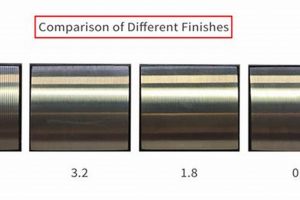
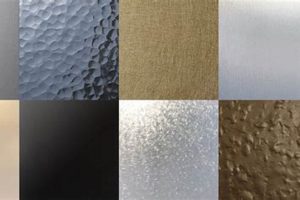
The process involves propelling abrasive material against a metallic surface under high pressure. This treatment alters the texture, creating a matte appearance. One may observe this surface preparation technique on architectural elements, automotive parts, and various industrial components, often employed to remove imperfections or prepare surfaces for coatings.
Surface preparation through abrasive blasting offers numerous advantages. It enhances adhesion for paints and coatings, improves corrosion resistance by removing scale and rust, and provides a uniform aesthetic. The method has been utilized for decades across diverse industries, playing a crucial role in extending the lifespan and improving the performance of metal products.
The ensuing discussion will delve into specific applications of this surface treatment, detailing considerations for material selection, optimal blasting parameters, and techniques for achieving desired surface profiles. Factors influencing the resulting aesthetic and functional properties will also be examined.
Tips for Optimal Results
Achieving a desirable outcome requires careful consideration of several factors. Adhering to the following guidelines will contribute to a successful and durable result.
Tip 1: Material Selection: The choice of abrasive media significantly impacts the surface profile and finish. Aluminum oxide is suitable for creating a fine, uniform texture, while steel grit is more effective for removing heavy coatings or rust. Select the media based on the substrate material and desired outcome.
Tip 2: Pressure Regulation: Maintaining consistent air pressure is crucial for uniformity. Excessive pressure can damage the substrate, while insufficient pressure may result in an uneven surface. Calibrate the equipment and monitor the pressure during the entire operation.
Tip 3: Nozzle Distance and Angle: The distance and angle at which the nozzle is held relative to the surface influence the impact force and coverage area. Maintain a consistent distance and angle to ensure uniform treatment. Typically, a perpendicular angle at a distance of 18-36 inches is recommended, but adjust based on the material and media being used.
Tip 4: Surface Preparation: Ensure the metallic surface is clean and free from contaminants such as oil, grease, or loose particles before commencing the process. Proper cleaning enhances the effectiveness of the abrasive blasting and promotes better adhesion of subsequent coatings.
Tip 5: Adequate Ventilation and Safety: Abrasive blasting generates dust and debris that can be hazardous to health. Ensure adequate ventilation in the work area and wear appropriate personal protective equipment, including a respirator, safety glasses, and gloves.
Tip 6: Post-Blasting Cleaning: After completing the operation, thoroughly clean the surface to remove any residual abrasive media or dust. This ensures optimal adhesion for subsequent coatings or treatments.
Tip 7: Coating Application Timing: Apply protective coatings or paints as soon as possible after abrasive blasting to prevent oxidation and maintain the prepared surface’s integrity. The freshly prepared surface is most receptive to coatings, ensuring optimal adhesion and longevity.
By implementing these techniques, one can maximize the benefits and ensure a high-quality, long-lasting result. Careful planning and execution are paramount.
The following sections will explore specific applications and the long-term maintenance of surfaces treated using this method.
1. Abrasive Media

The choice of abrasive media is paramount in determining the resultant characteristics of a metal surface prepared by abrasive blasting. The media’s material composition, size, and shape directly influence the surface profile, cleanliness, and suitability for subsequent coatings or treatments. Proper selection is critical for achieving the desired aesthetic and functional properties.
- Material Composition and Hardness
The abrasive media’s composition, ranging from softer materials like plastic beads to harder materials such as aluminum oxide or silicon carbide, determines its cutting efficiency and impact on the substrate. Harder media are typically employed for removing thick coatings or scale, while softer media are suitable for creating a finer surface texture without significant material removal. For example, steel grit is often used for descaling steel, whereas glass beads are preferred for creating a smooth, decorative finish on aluminum.
- Particle Size and Shape
The size and shape of the abrasive particles directly influence the roughness and uniformity of the treated surface. Finer particles create a smoother, more uniform finish, while coarser particles result in a rougher profile. Angular particles, such as crushed garnet, provide a more aggressive cutting action than rounded particles like glass beads. The selection of particle size and shape must align with the desired surface characteristics and the requirements of any subsequent coatings or treatments.
- Impact Velocity and Angle
The velocity at which the abrasive media impacts the surface and the angle of impact affect the efficiency of material removal and the resulting surface profile. Higher impact velocities increase the rate of material removal but may also cause excessive surface damage. The angle of impact influences the type of surface modification; a perpendicular angle promotes direct material removal, while an oblique angle can create a more textured surface. Controlled adjustments to these parameters are crucial for achieving consistent and predictable results.
- Recyclability and Environmental Impact
The recyclability of the abrasive media and its potential environmental impact are increasingly important considerations. Certain media, such as steel grit and aluminum oxide, can be recycled multiple times, reducing waste and cost. Other media, like silica sand, pose significant health hazards due to the risk of silicosis and are subject to stricter regulations. The selection of abrasive media should balance performance requirements with environmental responsibility and worker safety.
The properties of the abrasive media directly determine the success of the surface preparation process. The media contributes to an application-specific outcome. Understanding these facets ensures the desired finish. Proper selection yields functional and lasting results.
2. Air Pressure

Air pressure serves as a critical operational parameter in abrasive blasting processes. Its precise regulation directly influences the efficiency, effectiveness, and consistency of the resulting surface finish. Insufficient or excessive pressure can compromise the desired outcome, affecting the substrate’s properties and the longevity of subsequent coatings.
- Kinetic Energy Transfer
Air pressure governs the kinetic energy imparted to the abrasive media. Higher pressure translates to greater velocity, resulting in increased impact force upon the metal surface. This heightened force accelerates the removal of coatings, rust, or other surface contaminants. However, exceeding the optimal pressure threshold can lead to substrate damage, such as warping or pitting, particularly on thinner gauge materials. An appropriate balance must be struck to ensure effective cleaning without compromising the structural integrity of the metal.
- Abrasive Media Consumption
Air pressure significantly impacts the consumption rate of abrasive media. Elevated pressure settings propel media at a higher rate, leading to faster depletion of the abrasive supply. This increased consumption translates to higher operational costs and potential downtime for media replenishment. Conversely, insufficient pressure can result in inefficient cleaning, requiring prolonged blasting times and increased labor costs. Precise control over air pressure is thus crucial for optimizing media usage and minimizing operational expenses.
- Surface Profile Consistency
Consistent air pressure is essential for achieving a uniform surface profile. Fluctuations in pressure can lead to variations in the depth and texture of the treated surface. Inconsistent profiles can compromise the adhesion of subsequent coatings, resulting in premature failure and reduced corrosion resistance. Maintaining stable pressure levels throughout the blasting process ensures a consistent anchor pattern for optimal coating adhesion and long-term performance.
- Dust Generation and Visibility
Air pressure influences the amount of dust generated during the abrasive blasting process. Higher pressures tend to create more dust, reducing visibility and potentially posing health hazards to operators. Increased dust levels can also contaminate the treated surface, hindering coating adhesion. Effective dust control measures, such as ventilation systems and appropriate personal protective equipment, are necessary to mitigate these risks. Lowering the air pressure within acceptable limits can reduce dust generation, improving visibility and minimizing health concerns.
The effective management of air pressure is integral to achieving a high-quality, long-lasting finish. Accurate calibration of equipment and continuous monitoring of pressure levels are essential for optimizing performance and minimizing operational costs. Proper control of this parameter allows for efficient surface preparation, ensuring optimal coating adhesion and long-term corrosion protection.
3. Nozzle Distance

Nozzle distance, the space separating the nozzle from the target metal surface during abrasive blasting, is a critical factor influencing the characteristics of the resulting surface treatment. This parameter affects abrasive media velocity, impact angle, and overall surface coverage, impacting the final texture and cleanliness of the metal.
- Abrasive Velocity and Impact Energy
As abrasive media exits the nozzle, its velocity diminishes with increased distance due to air resistance and dispersion. A shorter distance maintains higher particle velocity, resulting in greater impact energy and more aggressive material removal. Conversely, a greater distance reduces impact energy, producing a gentler effect. The optimal distance balances efficient material removal with the prevention of substrate damage, such as warping or excessive surface roughness. In practical terms, achieving an even and consistent surface on thin aluminum sheet requires a greater nozzle distance than preparing a thick steel plate for industrial coating.
- Surface Coverage and Uniformity
Nozzle distance affects the area of surface covered by the abrasive stream. A closer distance concentrates the abrasive impact on a smaller area, resulting in a more focused, potentially uneven finish. A greater distance disperses the abrasive over a wider area, promoting a more uniform but less intense treatment. Achieving a uniform surface profile across large metal panels requires a wider nozzle distance and careful attention to overlapping passes.
- Abrasive Pattern and Angle of Incidence
The angle at which the abrasive stream impacts the surface is influenced by nozzle distance. A closer distance generally results in a more perpendicular impact, maximizing direct material removal. A greater distance can increase the angle of incidence, creating a more oblique impact and influencing the texture of the finished surface. Adjusting the angle can be used to create specific surface profiles, such as those required for optimal paint adhesion in automotive applications.
- Dust Dispersion and Operator Visibility
Nozzle distance affects the dispersion of dust generated during the abrasive blasting process. A shorter distance concentrates dust near the operator, potentially reducing visibility and increasing health hazards. A greater distance allows dust to disperse more widely, improving visibility but potentially contaminating surrounding areas. Effective dust collection systems and proper personal protective equipment are essential regardless of nozzle distance, but managing this parameter can contribute to a safer and more efficient working environment.
In summary, careful management of nozzle distance is crucial for achieving the desired surface properties. The selection of an appropriate distance depends on the metal substrate, the abrasive media, and the intended application of the sandblasted metal. Fine-tuning this parameter ensures optimal surface preparation and contributes to the overall quality and longevity of the finished product.
4. Surface Cleanliness

Surface cleanliness is a foundational prerequisite for achieving a quality finish via abrasive blasting. The presence of contaminants on the metal substrate impedes the effectiveness of the process, compromising the desired texture and adhesion characteristics. A meticulously cleaned surface ensures optimal interaction between the abrasive media and the metal, facilitating the creation of a consistent and durable finish.
- Removal of Oils and Greases
Oils and greases create a barrier between the abrasive media and the metal surface, preventing efficient removal of oxides and other surface imperfections. These contaminants can also cause the abrasive media to become less effective, leading to an uneven and inconsistent finish. Degreasing agents, such as solvents or alkaline cleaners, are employed to ensure the complete removal of these substances prior to abrasive blasting. Failure to remove these contaminants can result in inadequate surface preparation and subsequent coating failures.
- Elimination of Rust and Scale
Rust and scale, byproducts of corrosion, compromise the integrity of the metal surface and prevent the creation of a uniform anchor profile for subsequent coatings. Abrasive blasting is often employed to remove these corrosion products; however, the efficiency of this process is dependent on the initial surface cleanliness. Loosely adhered rust and scale can interfere with the abrasive stream, hindering its ability to create the desired surface texture. Mechanical methods, such as wire brushing or grinding, may be necessary to remove heavy rust or scale before abrasive blasting to ensure optimal surface preparation.
- Removal of Existing Coatings
Existing coatings, such as paint or powder coating, must be completely removed before abrasive blasting to ensure proper surface preparation. Residual coatings can prevent the abrasive media from effectively reaching the metal substrate, resulting in an uneven and inconsistent finish. Chemical strippers or mechanical methods, such as grinding or sanding, are commonly used to remove existing coatings. The choice of removal method depends on the type of coating and the substrate material. Complete removal of these coatings is essential for achieving the desired surface profile and ensuring proper adhesion of subsequent coatings.
- Removal of Weld Spatter and Burrs
Weld spatter and burrs, common occurrences in metal fabrication, create surface irregularities that can interfere with the abrasive blasting process. These irregularities can prevent the creation of a uniform surface profile and compromise the adhesion of subsequent coatings. Mechanical methods, such as grinding or filing, are typically employed to remove weld spatter and burrs before abrasive blasting. Smoothing these surface imperfections ensures a more consistent and aesthetically pleasing result.
In summary, surface cleanliness is an indispensable precursor to achieving a quality abrasive blasted metal finish. The removal of oils, greases, rust, scale, existing coatings, weld spatter, and burrs ensures optimal interaction between the abrasive media and the metal substrate, leading to a consistent, durable, and aesthetically pleasing finish. Neglecting surface cleanliness can compromise the effectiveness of the abrasive blasting process, resulting in inadequate surface preparation and premature coating failures.
5. Coating Adhesion

The efficacy of surface treatment is intrinsically linked to the subsequent coatings ability to adhere to the prepared substrate. Abrasive blasting, when properly executed, creates a surface profile that enhances this adhesion. The interlocking between the coating and the metal substrate forms the basis for long-term performance and protection.
- Surface Roughness and Anchor Profile
Abrasive blasting creates a controlled roughness, or anchor profile, on the metal surface. This profile increases the surface area available for coating adhesion. The peaks and valleys created by the blasting process provide mechanical interlocking, preventing the coating from detaching under stress. The depth and shape of the anchor profile must be tailored to the specific coating material for optimal results. For example, a thicker coating may require a deeper profile than a thin film coating.
- Surface Energy and Wetting
Abrasive blasting increases the surface energy of the metal, promoting better wetting of the surface by the coating material. High surface energy allows the coating to spread evenly and thoroughly, maximizing contact with the substrate. Contaminants, such as oils or greases, can reduce surface energy and hinder wetting. Therefore, thorough cleaning prior to abrasive blasting is essential for achieving optimal coating adhesion. Proper wetting ensures a strong and uniform bond between the coating and the metal.
- Chemical Bonding and Interfacial Interactions
Abrasive blasting can expose fresh metal, facilitating chemical bonding between the coating and the substrate. The type of metal, the abrasive media used, and the coating composition all influence the nature and strength of these chemical bonds. Some coatings may require specific surface treatments, such as phosphating or chromating, to enhance chemical bonding. Strong interfacial interactions between the coating and the metal contribute to long-term adhesion and corrosion resistance. For example, epoxy coatings often bond chemically with steel, providing superior protection against corrosion.
- Coating Application Techniques
Even with proper surface preparation, the application technique of the coating plays a critical role in adhesion. Spraying, brushing, or dipping methods must be carefully controlled to ensure uniform coverage and avoid trapping air pockets. The viscosity of the coating, the application temperature, and the drying or curing process all affect the quality of adhesion. Proper application techniques maximize contact between the coating and the prepared surface, optimizing the mechanical and chemical bonds that contribute to long-term performance.
The interplay between surface roughness, surface energy, chemical bonding, and application techniques determines the ultimate success of a coating system applied to a surface prepared by abrasive blasting. Achieving optimal coating adhesion requires a holistic approach that considers all these factors, ensuring long-term protection and performance of the coated metal component.
6. Corrosion Resistance

Abrasive blasting significantly influences the corrosion resistance of metal substrates. The process, by removing existing corrosion products such as rust and scale, creates a clean surface ready for protective coatings. The increased surface area resulting from the blast profile enhances the adhesion of these coatings, which subsequently act as barriers against corrosive elements. For instance, in marine environments, steel structures treated with abrasive blasting and then coated with specialized marine-grade paints exhibit prolonged resistance to saltwater corrosion, a critical factor in the lifespan and safety of such constructions. Improper surface preparation, however, can negate these benefits. Residual contaminants, if not thoroughly removed, can undermine the coating’s adhesion and create pathways for corrosion to initiate.
The selection of abrasive media also plays a crucial role in determining the level of corrosion protection. Certain media, if embedded in the metal surface, can accelerate corrosion. For example, chloride-containing abrasives used on stainless steel can lead to pitting corrosion. Conversely, using appropriate media and ensuring thorough post-blast cleaning minimizes this risk. Furthermore, the immediate application of a protective coating after abrasive blasting is crucial. A freshly blasted surface is highly susceptible to flash rust, a rapid form of surface corrosion that can compromise coating adhesion and overall corrosion resistance. This underscores the need for a streamlined process, minimizing the time between surface preparation and coating application.
Abrasive blasting, when meticulously executed with appropriate materials and techniques, forms a vital step in enhancing the corrosion resistance of metal components. This surface preparation method is essential for ensuring the longevity and structural integrity of metal assets in diverse environments. While abrasive blasting itself does not impart corrosion resistance, its role in preparing the surface for protective coatings is undeniable. Proper application, combined with suitable coating systems, significantly extends the service life of metal structures and components, reducing maintenance costs and enhancing safety.
Frequently Asked Questions
The following questions address common concerns regarding the process and application of a prepared surface.
Question 1: What is the typical surface roughness achieved through this process?
The resultant surface roughness varies depending on the abrasive media, air pressure, and nozzle distance. Typical roughness values range from 1 to 5 mils (25 to 125 micrometers), but specific requirements should be outlined in project specifications.
Question 2: Is this process suitable for all types of metals?
The process can be applied to a wide array of metals, including steel, aluminum, stainless steel, and copper alloys. However, careful consideration must be given to the substrate’s thickness and susceptibility to warping, as well as the selection of appropriate abrasive media to avoid damage.
Question 3: How does this surface treatment improve coating adhesion?
Abrasive blasting creates a mechanical key, or anchor profile, on the metal surface. This profile increases the surface area available for coating adhesion, enhancing the bond strength between the coating and the substrate.
Question 4: What safety precautions are necessary during this operation?
Abrasive blasting generates dust and debris that can be hazardous to health. Appropriate personal protective equipment, including a respirator, safety glasses, and gloves, is mandatory. Adequate ventilation is also essential to minimize dust exposure.
Question 5: How should a surface be cleaned following this process?
Following blasting, the surface must be thoroughly cleaned to remove any residual abrasive media or dust. Compressed air, vacuuming, or wiping with a clean, lint-free cloth can be used to ensure a clean surface for subsequent coatings.
Question 6: How does the process influence corrosion resistance?
Abrasive blasting removes existing corrosion products, such as rust and scale, creating a clean surface for protective coatings. The enhanced coating adhesion resulting from the process contributes to improved long-term corrosion resistance.
Proper execution enhances the adhesion of protective coatings. This leads to improve long-term corrosion resistance. Diligent adherence to safety protocols is mandatory.
The following section will discuss the environmental considerations of abrasive blasting operations.
Conclusion
The preceding discussion has detailed various aspects of preparing surfaces through abrasive blasting. Key parameters impacting the resulting surface texture and coating adhesion have been examined. Proper execution, encompassing material selection, pressure regulation, and stringent cleaning protocols, is crucial for achieving optimal performance.
The utilization of a prepared surface continues to be a vital process across diverse industries. Its effectiveness in enhancing coating adhesion and corrosion resistance remains paramount. Therefore, meticulous adherence to established guidelines is essential for ensuring long-term durability and reliability of metal components.