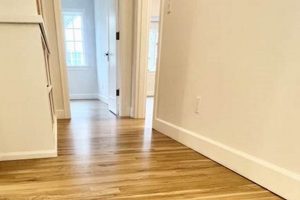
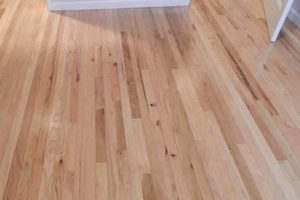
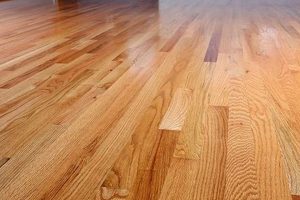
A subtle sheen characterizes this popular choice for wood flooring. It reflects light gently, offering a warm and inviting ambiance while minimizing the appearance of scratches and imperfections. This surface treatment strikes a balance between matte and glossy options, providing a sophisticated look suitable for various interior design styles.
The appeal of this particular floor treatment stems from its versatility and practicality. Its lower light reflection compared to high-gloss surfaces contributes to a more relaxed atmosphere and easier maintenance. Historically, achieving such a surface involved meticulous hand-rubbing techniques, but modern advancements have streamlined the process, making it more accessible and cost-effective for homeowners.
Understanding the characteristics and advantages of this surface allows for informed decisions regarding flooring selection and maintenance. Further discussion will cover specific aspects of this surface treatment, including application methods, durability considerations, and optimal cleaning practices to preserve its aesthetic appeal and longevity.
Preserving a Subtle Sheen
Maintaining the beauty and longevity of this type of wood floor requires careful attention and adherence to best practices. The following guidance offers insights into protecting and preserving its distinctive appearance.
Tip 1: Implement Preventative Measures: Place mats at entrances to minimize the introduction of dirt, grit, and moisture, which can gradually dull the surface and lead to premature wear.
Tip 2: Choose Appropriate Cleaning Products: Utilize pH-neutral cleaning solutions specifically formulated for wood floors. Avoid harsh chemicals, abrasive cleaners, and excessive water, as these can damage the finish and penetrate the wood.
Tip 3: Employ Proper Cleaning Techniques: Use a microfiber mop or a soft cloth dampened with the recommended cleaning solution. Avoid soaking the floor, and ensure it dries quickly and thoroughly to prevent water damage.
Tip 4: Schedule Regular Maintenance: Implement a routine cleaning schedule to remove dust and debris before they can scratch the surface. The frequency of cleaning will depend on foot traffic and environmental factors.
Tip 5: Protect Against Direct Sunlight: Minimize exposure to direct sunlight by using curtains, blinds, or UV-resistant window film. Prolonged exposure can cause fading and discoloration of the finish.
Tip 6: Address Spills Immediately: Wipe up spills promptly with a clean, dry cloth to prevent staining and water damage. Certain substances, such as acidic liquids, can etch the finish if left unattended.
Tip 7: Consider Professional Refinishing: Over time, even with proper care, this type of floor may require professional refinishing to restore its original luster and repair any accumulated damage. Consult with a qualified flooring contractor to assess the need for refinishing.
Adhering to these preventative and maintenance strategies can significantly extend the lifespan and enhance the aesthetic appeal of this particular floor surface. Prioritizing gentle cleaning methods and environmental protection is crucial.
The next section explores various options for enhancing the beauty of this kind of floor, including selecting appropriate rugs and furniture to complement its subtle sheen.
1. Durability

The durability of hardwood floors finished with a satin sealant is a critical factor determining their long-term performance and aesthetic appeal. This aspect is intricately linked to the inherent properties of the wood species, the quality of the sealant applied, and the level of foot traffic it sustains. Higher durability translates to extended lifespan and reduced maintenance requirements, making it a key consideration for both residential and commercial applications. For example, a heavily trafficked hallway surfaced with a softer wood and a low-quality finish will exhibit wear far more rapidly than a similar area fitted with a dense wood and a durable, professionally applied satin coating.
Several factors contribute to the durability of such a floor. The application process significantly impacts longevity; multiple coats of high-quality sealant, properly cured, provide a thicker, more resilient barrier against scratches and moisture penetration. Furthermore, the choice of wood species plays a vital role; hardwoods like oak, maple, and hickory offer greater resistance to dents and abrasions compared to softer woods like pine or fir. Regular maintenance, including sweeping and the use of appropriate cleaning products, also contributes significantly to preserving the integrity of the surface. A well-maintained example might be a museum floor, where careful selection of materials and meticulous upkeep ensure the floor remains presentable despite constant use.
In conclusion, the durability of a satin-finished hardwood floor is a multifaceted characteristic influenced by material selection, application technique, and maintenance practices. Understanding these interconnected elements enables informed decisions regarding floor selection and care, ultimately maximizing the lifespan and preserving the aesthetic qualities of the flooring. Addressing potential challenges such as high foot traffic and moisture exposure through proactive measures is essential for ensuring lasting performance.
2. Maintenance Ease

The selection of a satin sealant for hardwood flooring directly influences the ease with which it can be maintained. This particular finish offers a degree of practicality stemming from its ability to conceal minor scratches and imperfections more effectively than high-gloss alternatives. The lower light reflectivity inherent in a satin surface minimizes the visibility of dust and footprints, resulting in a flooring option that requires less frequent and less intensive cleaning. This reduced maintenance demand translates to both time savings and decreased expense related to specialized cleaning products and professional services. An example of this effect can be observed in a busy family home where a satin finish will maintain a presentable appearance with regular sweeping and occasional damp mopping, whereas a high-gloss floor might necessitate daily attention to remove visible smudges and scuffs. The cause-and-effect relationship is clear: choosing a satin finish inherently simplifies routine upkeep.
Further practical applications of this enhanced maintenance ease extend to commercial settings. Offices, retail spaces, and restaurants benefit from the reduced demands placed on cleaning staff, allowing them to allocate resources to other critical tasks. Additionally, the longevity of the finish is often extended due to the less frequent use of potentially abrasive cleaning methods. Consequently, the lifecycle cost of the flooring is reduced, representing a tangible economic advantage. The significance of maintenance ease as a component of flooring choice becomes particularly evident in high-traffic environments where the cumulative savings in time, labor, and materials can be substantial. Considerations should also be given to the types of cleaners selected. While the finish is forgiving, pH-neutral cleaners designed for hardwood surfaces are still recommended to prevent damage over time.
In summary, the maintenance ease afforded by satin-finished hardwood floors stems from their ability to mask imperfections and reduce the frequency of cleaning required. This characteristic offers practical benefits for both residential and commercial environments, leading to long-term cost savings and improved operational efficiency. Despite its inherent advantages, proper care and the use of appropriate cleaning products remain essential for preserving the aesthetic appeal and extending the lifespan of the flooring. The challenge remains in educating consumers about the specific maintenance requirements associated with their chosen flooring option to ensure optimal performance and satisfaction.
3. Light Reflection

Light reflection is a defining characteristic of any flooring surface, influencing the overall ambiance and perceived texture of a space. The specific level of reflection achieved by a satin sealant on hardwood significantly impacts visual appeal and maintenance requirements.
- Diffusion of Light
A satin surface scatters light more uniformly than high-gloss finishes. This diffusion minimizes glare and creates a softer, more natural illumination within the room. Examples include reducing harsh reflections from windows or lighting fixtures. The result is a less visually fatiguing environment.
- Concealment of Imperfections
The diffused light reflection inherent in a satin finish aids in concealing minor scratches, dents, and dust particles. Surfaces with a higher sheen tend to accentuate these imperfections, requiring more frequent cleaning and maintenance. Real-world applications demonstrate this advantage in high-traffic areas where scratches are inevitable.
- Impact on Color Perception
Light reflection influences how color is perceived. A satin finish tends to present colors in a more muted and subdued manner compared to glossier surfaces, which can intensify hues. This characteristic affects the selection of complementary wall colors and furniture, altering the overall design aesthetic.
- Influence on Room Size Perception
The way light bounces around a room can give the illusion of a larger or smaller space. Satin finishes, by reducing glare and creating softer shadows, can make a room feel more expansive. Smaller rooms, in particular, benefit from this effect, as the balanced light distribution avoids harsh contrasts that can make the space feel cramped.
Understanding these facets of light reflection is critical when selecting flooring. A satin surface offers a balanced approach, providing a visually appealing and practical solution that minimizes glare, conceals imperfections, and influences the perception of color and space. The choice between various sheen levels ultimately depends on individual preferences and the specific requirements of the environment.
4. Scratch Resistance

The inherent scratch resistance of a satin finish on hardwood floors is a crucial attribute determining its longevity and maintaining its visual appeal. While no surface is entirely impervious to scratches, the properties of a satin sealant offer a measure of protection and concealment compared to higher gloss alternatives.
- Composition of the Sealant
The type and quality of the sealant directly influence scratch resistance. Polyurethane-based sealants, often employed in satin finishes, provide a durable protective layer. Harder polymers resist scratching more effectively than softer acrylic-based coatings. Examples include comparing floors sealed with commercial-grade polyurethane to those treated with less robust consumer-grade products. The former typically exhibits superior scratch resistance under similar conditions.
- Surface Texture and Light Diffusion
The micro-texture of a satin finish plays a significant role. Unlike high-gloss surfaces, a satin finish diffuses light, thereby minimizing the visibility of scratches. Scratches on glossy surfaces reflect light, accentuating their presence, while those on satin surfaces are less noticeable due to the scattering of light. A comparative observation in a well-lit room demonstrates this effect: a minor scratch is far more apparent on a glossy floor than on a satin floor.
- Maintenance Practices
Proper maintenance significantly contributes to scratch resistance. Regular sweeping or vacuuming removes abrasive particles that can cause scratches over time. The use of appropriate cleaning products and avoiding harsh chemicals also preserves the integrity of the sealant. A floor that is consistently cleaned and maintained will inevitably exhibit fewer scratches compared to one that is neglected.
- Wood Species
The hardness of the wood species beneath the sealant is another determinant of overall scratch resistance. Hardwoods such as oak, maple, or hickory are more resistant to indentation and scratching compared to softer woods like pine or fir. A satin finish applied to a harder wood will offer a more durable and scratch-resistant surface than the same finish applied to a softer wood. Observing the performance of identical satin finishes on different wood species reveals this disparity.
These factors collectively contribute to the overall scratch resistance of hardwood floors treated with a satin finish. While the finish offers a degree of protection and concealment, diligent maintenance practices and the selection of appropriate materials are essential for maximizing its longevity and preserving its aesthetic qualities. The interplay between the sealant, surface texture, maintenance, and wood species ultimately determines the floor’s ability to withstand everyday wear and tear.
5. Aesthetic Versatility

The selection of a satin finish for hardwood floors is intrinsically linked to its aesthetic adaptability across diverse design schemes. The subdued sheen characteristic of this surface treatment serves as a neutral canvas, seamlessly integrating with both traditional and contemporary interiors. Unlike high-gloss options that can dominate a space, a satin finish complements existing architectural elements and furnishings, allowing other design features to take precedence. Consider, for example, a Victorian-era home where ornate molding and antique furniture are accentuated by the understated elegance of a satin-finished floor, or a minimalist modern apartment where the clean lines of the architecture are echoed by the floor’s subtle texture. This versatility stems from the finish’s ability to provide visual warmth without overwhelming the overall aesthetic.
The practical application of this aesthetic versatility is evident in its widespread adoption across various settings. Interior designers frequently specify this finish due to its compatibility with a wide range of color palettes, furniture styles, and lighting conditions. In residential settings, this adaptable flooring solution allows homeowners to effortlessly update their dcor without necessitating a complete floor replacement. Furthermore, its capacity to conceal minor imperfections contributes to a timeless appearance, minimizing the need for frequent refinishing. Commercial spaces, such as boutique hotels and upscale restaurants, leverage this adaptability to create inviting and sophisticated environments that cater to a diverse clientele. The resulting effect is a space that feels both welcoming and refined, regardless of the specific design choices implemented.
In summary, the aesthetic versatility of satin-finished hardwood floors arises from its ability to harmonize with a multitude of design elements, providing a subtle yet impactful foundation for diverse interior styles. Its understated elegance, capacity to conceal imperfections, and adaptability to various settings make it a practical and enduring choice for both residential and commercial applications. The challenge lies in recognizing that while aesthetically versatile, careful consideration of wood species and proper maintenance are vital to preserving its intended appearance over time, ensuring the longevity of its inherent beauty and functionality.
6. Application Methods

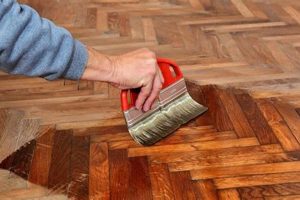
The ultimate appearance and durability of a satin sealant on hardwood flooring are significantly influenced by the chosen application methods. The proper execution of these methods is paramount to achieving the desired aesthetic result and ensuring the long-term performance of the finish.
- Surface Preparation
Thorough preparation of the wood surface is crucial. Sanding, cleaning, and ensuring the absence of contaminants are essential steps. Improper preparation can lead to adhesion failures, uneven sheen, and premature wear. Example: residual sanding dust can create a cloudy appearance under the satin finish, detracting from the desired aesthetic.
- Application Techniques
The method of application, whether by brush, roller, or spray, impacts the uniformity and thickness of the finish. Consistent application is necessary to avoid lap marks, pooling, and variations in sheen. Example: uneven roller application can result in visible streaks and inconsistent scratch resistance across the floor surface.
- Number of Coats
The quantity of sealant layers applied directly affects the durability and protection of the wood. Multiple thin coats are generally preferred over a single thick coat to promote proper curing and minimize the risk of cracking or peeling. Example: insufficient coats can leave the wood vulnerable to moisture penetration and damage from daily wear.
- Curing Time
Allowing adequate curing time between coats and before subjecting the floor to traffic is vital. Premature use can compromise the integrity of the finish, leading to scratches, dents, and adhesion problems. Example: placing furniture on a floor before the finish has fully cured can cause permanent indentations and damage to the satin layer.
These application methods underscore the importance of skilled execution in achieving a durable and aesthetically pleasing satin finish on hardwood floors. Adherence to best practices and manufacturer guidelines is essential for optimal results and long-term satisfaction with the flooring investment.
7. Cost Considerations
The decision to install hardwood floors with a satin sealant involves a multifaceted assessment of cost considerations. The initial investment encompasses material procurement, professional installation fees, and the sealant application process itself. Cause-and-effect relationships are evident; opting for lower-grade materials or foregoing professional installation may reduce upfront expenses but can lead to increased long-term costs due to diminished durability, frequent repairs, or premature replacement. The importance of cost considerations as a component of hardwood flooring selection is undeniable, influencing the overall value proposition and impacting budgetary allocations within renovation or construction projects. A real-life example would be a homeowner choosing a less expensive, pre-finished floor with a thin satin layer, only to find that it wears quickly and requires refinishing within a few years, ultimately costing more than a higher-quality, professionally finished floor would have.
Further analysis extends to the long-term maintenance expenses associated with satin-finished floors. While this type of surface generally requires less intensive cleaning than high-gloss alternatives, the cost of specialized cleaning products and periodic refinishing should be factored into the overall financial assessment. Practical applications include budgeting for routine maintenance tasks and establishing a timeline for professional refinishing based on anticipated wear and tear. Additionally, insurance implications may arise; the replacement cost of damaged flooring can vary significantly depending on the type of wood, the quality of the sealant, and the complexity of the installation process. Careful documentation of flooring specifications and insurance coverage is therefore essential.
In conclusion, the cost considerations surrounding satin-finished hardwood floors extend beyond the initial purchase price, encompassing installation fees, maintenance expenses, and potential replacement costs. A comprehensive financial analysis that accounts for both short-term and long-term factors is crucial for informed decision-making. Challenges may arise from fluctuating material costs or unforeseen installation complexities, necessitating flexibility in budgetary planning. Understanding these financial implications ensures that the selection of satin-finished hardwood floors aligns with budgetary constraints and long-term financial goals.
Frequently Asked Questions
The following addresses common inquiries regarding hardwood floors treated with a satin sealant. This information aims to provide clarity and facilitate informed decision-making.
Question 1: Is a surface treatment inherently more resistant to scratches compared to other sheen levels?
No, the scratch resistance primarily depends on the hardness of the wood species and the quality of the sealant, not exclusively the sheen level. However, imperfections tend to be less visible on surfaces with lower reflectivity.
Question 2: How frequently should one clean surfaces to maintain their appearance?
Cleaning frequency depends on foot traffic and environmental conditions. Regular sweeping or vacuuming is recommended to remove abrasive particles, followed by occasional damp mopping with a pH-neutral wood floor cleaner.
Question 3: Does the sheen level influence the perceived room size?
Yes, higher sheen levels can amplify light and create the illusion of a larger space. surfaces offer a more subdued reflection, which can contribute to a warmer, more intimate atmosphere without dramatically altering the perception of room size.
Question 4: Are specific cleaning products necessary for preserving the integrity of satin-finished floors?
Yes, pH-neutral cleaning solutions specifically formulated for hardwood floors are recommended. Avoid abrasive cleaners, harsh chemicals, and excessive water, as these can damage the finish and penetrate the wood.
Question 5: Can sunlight exposure damage or discolor surfaces?
Prolonged exposure to direct sunlight can cause fading and discoloration of the sealant and the wood itself. Implement measures to minimize sunlight exposure, such as curtains, blinds, or UV-resistant window film.
Question 6: Does the application method impact the long-term durability of surfaces?
Yes, proper surface preparation, consistent application techniques, adequate curing time, and the number of coats applied all influence the durability and longevity of the finish.
In summary, while surfaces offer a balance of aesthetics and practicality, proper maintenance, appropriate product selection, and awareness of environmental factors are essential for preserving its beauty and durability.
The next section explores common misconceptions associated with maintaining this kind of floor, providing further insights into best practices.
Conclusion
This exploration of satin finish on hardwood floors has illuminated key aspects, encompassing durability, maintenance, aesthetic versatility, and cost considerations. The nuanced balance between understated elegance and practical functionality underscores its enduring appeal. Understanding application methods, selecting appropriate cleaning products, and mitigating environmental factors directly contribute to the longevity and aesthetic preservation of this surface treatment.
The informed application of these insights empowers responsible stewardship of satin finish on hardwood floors, ensuring enduring beauty and sustained value. Continued awareness of best practices and diligent maintenance protocols remain paramount in maximizing the lifespan and appreciating the inherent qualities of this refined flooring option.