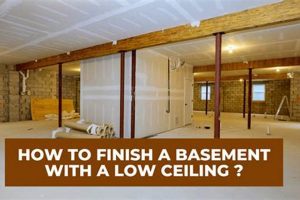
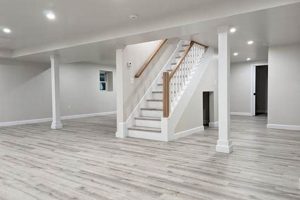
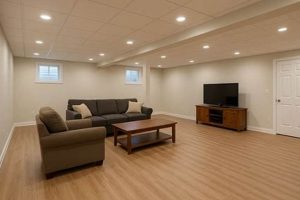
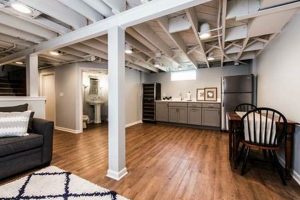
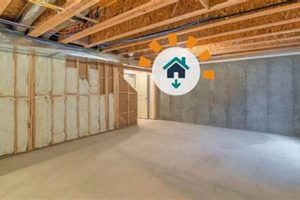
Transforming compact subterranean spaces into functional living areas presents unique design and construction considerations. Such spaces, often limited in square footage and natural light, require careful planning to maximize utility and aesthetic appeal. Examples include converting an underutilized area into a home office, a recreational room, or an additional bedroom, each tailored to the homeowner’s specific needs and preferences.
The conversion of these areas can significantly enhance property value and improve the overall quality of life within a dwelling. Historically, the utilization of below-grade space has provided crucial additional living area, particularly in densely populated regions. Modern techniques and materials offer effective solutions for moisture control, insulation, and ventilation, addressing common concerns associated with below-ground environments and making such spaces desirable and comfortable extensions of the home.
Subsequent sections will explore key aspects of planning and executing such projects, focusing on considerations such as design strategies, material selection, code compliance, and cost-effective approaches to achieving a comfortable and functional living space. Proper execution will unlock the hidden potential of these areas, transforming them from neglected storage spaces into valuable assets.
Optimizing Compact Below-Grade Living Areas
Effective space utilization is paramount when transforming limited subterranean areas into comfortable and functional living environments. The following guidelines offer insights for maximizing the potential of such spaces.
Tip 1: Prioritize Lighting Solutions: Insufficient natural light is a common challenge. Employ layered lighting strategies incorporating ambient, task, and accent lighting. Recessed fixtures, strategically placed lamps, and the incorporation of light wells can significantly enhance illumination.
Tip 2: Implement Space-Saving Furniture: Select furniture designed for small spaces, such as multi-functional pieces (e.g., sleeper sofas, storage ottomans) and wall-mounted units. Minimize bulky items to maximize available floor area.
Tip 3: Optimize Vertical Space: Utilize vertical space for storage and decoration. Shelving units, tall cabinets, and wall-mounted displays can provide ample storage without consuming valuable floor space.
Tip 4: Address Moisture Control: Implement comprehensive waterproofing measures, including proper grading, drainage, and vapor barriers. Dehumidifiers may also be necessary to maintain optimal humidity levels.
Tip 5: Ensure Adequate Ventilation: Proper ventilation is crucial for air quality and temperature regulation. Consider installing an exhaust fan or a heat recovery ventilator (HRV) to promote air circulation.
Tip 6: Choose Light Color Palettes: Light and neutral color palettes create a sense of spaciousness and brightness. Avoid dark colors, which can make the area feel smaller and more enclosed.
Tip 7: Comply with Building Codes: Adherence to local building codes is essential for safety and legality. Ensure that egress windows, ceiling height, and other requirements are met.
Transforming a limited subterranean space requires careful planning and execution. By implementing these strategies, homeowners can maximize the utility and comfort of these areas.
The subsequent section will address common challenges encountered during the conversion process and strategies for overcoming them.
1. Space Optimization

Space optimization is a fundamental prerequisite for successfully converting limited subterranean areas into habitable and functional living spaces. The inherent constraints of such settings, typically characterized by reduced square footage and limited natural light, necessitate strategic planning to maximize usable area and create a comfortable environment. The absence of effective space optimization strategies invariably leads to a cramped, inefficient, and ultimately undesirable finished basement. A direct correlation exists between the degree of space optimization achieved and the perceived value and utility of the transformed space. For example, consider two identical basements: one employing multi-functional furniture, strategic storage solutions, and an open floor plan, and the other fitted with bulky, conventional furnishings and a cluttered layout. The former will undoubtedly offer a more functional and appealing living area, despite occupying the same physical footprint.
Practical applications of space optimization techniques in these settings include the use of wall-mounted storage systems to minimize floor clutter, the incorporation of built-in shelving to maximize vertical space, and the selection of furniture with dual purposes, such as sofa beds or storage ottomans. Open floor plans, achieved by minimizing internal walls and partitions, can create a sense of spaciousness and improve the flow of movement within the basement. Careful consideration of furniture placement and scale is also critical; oversized items should be avoided, and furniture should be strategically positioned to maximize circulation paths.
In summary, space optimization represents a critical component of any successful conversion of a small subterranean area. By employing strategic design principles, carefully selecting furnishings, and maximizing the use of vertical space, homeowners can transform these often-overlooked areas into valuable and functional extensions of their homes. Failure to prioritize space optimization can result in a cramped and undesirable living environment, diminishing the overall value and utility of the finished basement.
2. Moisture Management

Moisture management is a critical consideration in the conversion of small below-grade areas into finished living spaces. The inherent characteristics of subterranean environments render them particularly susceptible to moisture intrusion, necessitating comprehensive strategies to prevent water damage, mold growth, and structural degradation. Failure to implement effective moisture management protocols can compromise the integrity of the finished space and create an unhealthy living environment.
- Waterproofing Systems
Waterproofing systems are the first line of defense against moisture infiltration. Exterior waterproofing, involving the application of waterproof membranes and coatings to the foundation walls, prevents water from entering the structure. Interior waterproofing systems, such as vapor barriers and sealants, mitigate the effects of moisture that may penetrate the foundation. Proper installation and maintenance of waterproofing systems are essential for long-term moisture control.
- Drainage Systems
Effective drainage systems are crucial for diverting water away from the foundation. Exterior drainage systems, including French drains and grading, facilitate the removal of surface water and groundwater. Interior drainage systems, such as sump pumps, collect and discharge water that accumulates beneath the slab. Regularly inspecting and maintaining drainage systems is vital to ensure their continued effectiveness.
- Ventilation and Dehumidification
Adequate ventilation and dehumidification are necessary to control indoor humidity levels. Ventilation systems promote air circulation and remove moisture-laden air. Dehumidifiers extract moisture from the air, preventing condensation and mold growth. Selecting appropriate ventilation and dehumidification systems is essential for maintaining a comfortable and healthy indoor environment.
- Material Selection
The selection of moisture-resistant building materials is a key aspect of moisture management. Materials such as closed-cell foam insulation, mold-resistant drywall, and waterproof flooring are less susceptible to water damage and mold growth. Choosing appropriate materials can significantly reduce the risk of moisture-related problems in finished below-grade areas.
The integration of robust waterproofing, efficient drainage, proper ventilation, and moisture-resistant materials is essential for creating dry, healthy, and sustainable living spaces in small subterranean areas. These measures collectively mitigate the risks associated with moisture intrusion, ensuring the longevity and habitability of the finished basement. The absence of a comprehensive moisture management strategy can result in costly repairs, health hazards, and a compromised living environment.
3. Lighting Solutions

The integration of effective illumination strategies is paramount in the successful transformation of compact subterranean areas into functional and aesthetically pleasing living spaces. Given the inherent lack of natural light, the design and implementation of artificial lighting systems become critical determinants of the space’s usability and ambiance.
- Layered Lighting Design
Layered lighting design involves the strategic combination of ambient, task, and accent lighting. Ambient lighting provides overall illumination, simulating natural light and creating a comfortable atmosphere. Task lighting focuses on specific areas, such as workstations or reading nooks, providing direct illumination for specific activities. Accent lighting highlights architectural features or decorative elements, adding visual interest and depth to the space. In a small finished basement, a well-executed layered lighting scheme can mitigate the feeling of confinement and enhance the perceived spaciousness.
- Color Temperature Management
The color temperature of light sources significantly impacts the perceived warmth and comfort of a space. Warmer color temperatures (e.g., 2700K-3000K) create a cozy and inviting atmosphere, while cooler color temperatures (e.g., 4000K-5000K) promote alertness and focus. In a small finished basement, the selection of appropriate color temperatures can influence the mood and functionality of the space, depending on its intended use.
- Fixture Selection and Placement
The choice of lighting fixtures and their placement within the space are critical factors in achieving optimal illumination. Recessed lighting, track lighting, and wall-mounted fixtures can maximize ceiling height and minimize visual clutter. Strategic placement of fixtures can direct light where it is needed most, enhancing task performance and creating visual interest. In a small finished basement, careful consideration of fixture selection and placement can optimize light distribution and minimize shadows.
- Energy Efficiency Considerations
Energy-efficient lighting technologies, such as LED lighting, offer significant cost savings and environmental benefits. LED fixtures consume less energy and have a longer lifespan compared to traditional incandescent or fluorescent lighting. In a small finished basement, the adoption of energy-efficient lighting solutions can reduce energy consumption and lower utility bills, while providing ample illumination.
The successful illumination of compact below-grade areas necessitates a holistic approach, integrating layered lighting design, color temperature management, strategic fixture selection, and energy-efficient technologies. These factors, when carefully considered and implemented, can transform a dimly lit and uninviting space into a bright, functional, and aesthetically pleasing living area, enhancing the overall value and usability of the basement.
4. Code Compliance

Code compliance is an indispensable component in the transformation of small below-grade areas into finished living spaces. It governs the safety, structural integrity, and habitability of these areas, ensuring they meet minimum standards established by local and national regulatory bodies. The absence of code adherence can result in significant legal ramifications, financial penalties, and, most importantly, compromise the safety and well-being of the occupants. Real-world examples illustrate the consequences of neglecting code requirements: inadequate egress windows preventing safe escape during emergencies, insufficient ceiling heights leading to discomfort and potential injury, and improper electrical wiring posing fire hazards. Therefore, code compliance is not merely a procedural formality, but a critical element that directly impacts the functionality and safety of a finished below-grade area.
Practical significance extends beyond immediate safety concerns. Adhering to building codes influences property value and insurability. A finished basement that meets code requirements enhances the marketability of a home and ensures eligibility for homeowners’ insurance coverage. Furthermore, future renovations or alterations are simplified when the initial conversion adhered to established guidelines. Specific code requirements often address essential elements such as structural support, fire resistance, ventilation, and the proper installation of plumbing and electrical systems. Engaging qualified professionals architects, engineers, and licensed contractors is often necessary to navigate the complexities of code compliance and ensure that all work meets the required standards. For instance, egress window size and placement are strictly regulated to allow for safe exit in the event of a fire, and electrical wiring must be performed by a licensed electrician to prevent overloading and potential hazards.
In summary, code compliance constitutes a cornerstone of the entire conversion process. It not only safeguards against immediate dangers but also impacts long-term property value and insurability. While navigating the intricacies of building codes can present challenges, the benefits of adherence far outweigh the risks associated with non-compliance. Therefore, prioritizing code compliance from the initial planning stages through final inspection is crucial for achieving a safe, functional, and legally sound finished basement.
5. Air Circulation

Effective air circulation is a non-negotiable element in the creation of habitable small finished basements. The inherent characteristics of below-grade environments often lead to compromised air quality, elevated humidity levels, and temperature stratification, all of which can negatively impact occupant comfort and structural integrity. Poor air circulation exacerbates these conditions, fostering the growth of mold and mildew, increasing the concentration of airborne pollutants, and creating an environment conducive to respiratory ailments. Consider a scenario where a finished basement lacks adequate ventilation: stagnant air traps moisture, leading to mold growth on walls and floors, and volatile organic compounds (VOCs) emitted from building materials accumulate, resulting in poor indoor air quality.
Conversely, a well-ventilated basement benefits from reduced humidity, minimized mold growth, and improved air quality. Practical applications include installing exhaust fans in bathrooms and kitchens to remove moisture-laden air, incorporating a heat recovery ventilator (HRV) or energy recovery ventilator (ERV) to introduce fresh air while minimizing energy loss, and ensuring that the existing HVAC system is properly sized and configured to effectively circulate air throughout the basement. Furthermore, open floor plans and strategic placement of furniture can promote natural air movement, minimizing stagnant zones. Real-life examples demonstrate the tangible benefits of these measures: homeowners report improved respiratory health, reduced allergy symptoms, and enhanced overall comfort in basements with effective air circulation systems.
In conclusion, air circulation is not merely an ancillary consideration, but a fundamental component of a healthy and habitable small finished basement. By prioritizing proper ventilation, utilizing appropriate mechanical systems, and implementing strategic design solutions, homeowners can mitigate the risks associated with poor air quality and create a comfortable, safe, and sustainable living environment. Addressing air circulation challenges is paramount to unlocking the full potential of below-grade space and ensuring the long-term well-being of its occupants.
6. Material Selection

The selection of appropriate materials is a critical determinant of the success and longevity of any small finished basement. Given the unique environmental challenges inherent in below-grade spaces, the choice of materials directly impacts moisture resistance, indoor air quality, thermal performance, and overall durability. Inadequate material selection can lead to costly repairs, health hazards, and a diminished living experience. Therefore, a thorough understanding of material properties and their suitability for subterranean environments is essential.
- Moisture-Resistant Framing and Sheathing
Traditional lumber framing is susceptible to moisture damage, making it a less-than-ideal choice for below-grade applications. Alternatives such as pressure-treated lumber, steel framing, or composite materials offer enhanced resistance to rot and decay. Similarly, sheathing materials should be selected for their ability to withstand moisture exposure without compromising structural integrity. Examples include cement board, fiberglass-faced gypsum panels, and specialized moisture-resistant plywood. These materials mitigate the risk of water damage and contribute to a healthier indoor environment by preventing mold growth.
- Closed-Cell Insulation
Insulation plays a crucial role in maintaining thermal comfort and preventing condensation in small finished basements. Closed-cell spray foam insulation offers superior moisture resistance compared to open-cell alternatives. Its dense structure effectively prevents water absorption and inhibits mold growth, while providing excellent thermal performance. Furthermore, closed-cell insulation can contribute to air sealing, reducing energy loss and improving indoor air quality. In contrast, fiberglass insulation can trap moisture and promote mold growth, rendering it a less suitable choice for below-grade applications.
- Mold-Resistant Drywall and Finishes
Traditional gypsum drywall is susceptible to mold growth when exposed to moisture. Mold-resistant drywall products, featuring a paperless or moisture-resistant coating, offer enhanced protection against mold proliferation. Similarly, paints and finishes should be selected for their ability to resist moisture and inhibit mold growth. Acrylic-based paints and specialized antimicrobial coatings provide a durable and aesthetically pleasing finish while contributing to a healthier indoor environment. Avoiding porous materials and finishes that readily absorb moisture is essential for long-term mold prevention.
- Waterproof Flooring
Flooring materials in small finished basements are particularly vulnerable to moisture exposure due to their proximity to the concrete slab. Waterproof flooring options, such as luxury vinyl plank (LVP), ceramic tile, and epoxy coatings, offer superior resistance to water damage and staining. These materials are impervious to moisture and can withstand fluctuating humidity levels without warping or deteriorating. In contrast, carpeting and laminate flooring can absorb moisture and promote mold growth, making them less suitable choices for below-grade applications. Selecting waterproof flooring materials is crucial for maintaining a durable and aesthetically pleasing floor surface in a challenging environment.
The aforementioned material selection considerations underscore the importance of prioritizing moisture resistance, durability, and indoor air quality in small finished basements. By carefully selecting materials that are specifically designed for below-grade environments, homeowners can mitigate the risks associated with moisture intrusion, mold growth, and structural degradation, ultimately creating a comfortable, healthy, and long-lasting living space.
7. Budget Adherence

Budget adherence represents a critical determinant in the feasibility and overall success of converting compact below-grade areas into finished living spaces. The intricate nature of these projects, encompassing structural modifications, moisture mitigation, electrical and plumbing installations, and aesthetic enhancements, inherently involves substantial financial investment. Failure to establish a realistic budget and diligently adhere to its parameters often results in projects exceeding financial resources, leading to compromised designs, unfinished work, and significant financial strain. For instance, unforeseen structural repairs, discovered only after demolition, can rapidly escalate project costs, necessitating value engineering or project abandonment if sufficient contingency funds are not allocated.
Effective budget management in the context of converting compact below-grade areas necessitates a multi-faceted approach. It begins with a thorough assessment of existing conditions, including a professional evaluation of structural integrity, moisture levels, and existing utility infrastructure. Obtaining multiple competitive bids from qualified contractors provides a realistic understanding of market costs for labor and materials. The creation of a detailed budget breakdown, encompassing all anticipated expenses from permits and demolition to finishing and furnishings, allows for meticulous tracking of expenditures throughout the project lifecycle. Furthermore, allocating a contingency fund, typically 10-15% of the total budget, provides a financial buffer to address unforeseen issues or scope modifications. Practical examples include prioritizing essential structural repairs and moisture mitigation measures over cosmetic enhancements if budget constraints arise, or opting for cost-effective material alternatives without compromising quality or functionality.
In conclusion, budget adherence is not merely a fiscal constraint but a critical driver of project success in converting small below-grade areas. By implementing proactive budgeting strategies, meticulously tracking expenditures, and prioritizing essential project elements, homeowners can mitigate financial risks, ensure project completion, and maximize the value and utility of their finished basement within predetermined financial parameters. Effective budget management transforms the conversion process from a potential financial burden into a well-controlled investment that enhances property value and quality of life.
Frequently Asked Questions
The following addresses common inquiries regarding the conversion of limited subterranean areas into functional living spaces.
Question 1: What is the minimum ceiling height required for a legally habitable small finished basement?
Minimum ceiling height requirements vary depending on local building codes. However, a commonly cited standard is seven feet. Exceptions may exist for areas under beams, ducts, or other obstructions, provided these do not constitute a significant portion of the overall ceiling area. Consult local building codes for precise specifications.
Question 2: Are egress windows mandatory in small finished basements designated as bedrooms?
Yes, egress windows are typically mandated in any below-grade space intended for use as a bedroom. Egress windows must meet specific size and accessibility requirements to provide a safe means of escape in the event of an emergency. Compliance with local building codes regarding egress window dimensions and placement is essential.
Question 3: How can moisture issues be effectively addressed in small finished basements?
Moisture control requires a multi-faceted approach. Effective strategies include exterior waterproofing measures, such as foundation coatings and drainage systems; interior vapor barriers; proper ventilation; and the use of moisture-resistant building materials. Addressing the source of moisture intrusion is paramount for long-term effectiveness.
Question 4: What are the recommended insulation strategies for small finished basements?
Closed-cell spray foam insulation is generally recommended for its superior moisture resistance and thermal performance. Alternatives include rigid foam board insulation and mineral wool insulation. Proper sealing of all seams and penetrations is crucial for maximizing insulation effectiveness and preventing air infiltration.
Question 5: Are permits required for finishing a small basement?
Permits are generally required for any structural or mechanical alterations, including finishing a basement. Obtaining the necessary permits ensures compliance with local building codes and allows for inspections to verify the safety and integrity of the work. Failure to obtain permits can result in fines, delays, and potential legal issues.
Question 6: What are the key considerations for selecting appropriate flooring materials for a small finished basement?
Waterproof flooring options, such as luxury vinyl plank (LVP), ceramic tile, and epoxy coatings, are highly recommended due to their resistance to moisture damage. Subflooring should also be moisture-resistant and properly installed to prevent mold growth. Carpeting is generally discouraged due to its susceptibility to moisture absorption.
Proper planning and execution are essential for creating a safe, comfortable, and legally compliant small finished basement.
The subsequent section provides a conclusion, summarizing key insights.
Conclusion
The preceding exploration of small finished basements underscores the criticality of meticulous planning, informed material selection, and strict adherence to building codes. The successful transformation of these limited subterranean spaces into functional and aesthetically pleasing living areas necessitates a comprehensive understanding of the inherent challenges, particularly concerning moisture management, air circulation, and lighting deficiencies. Failure to adequately address these factors can compromise structural integrity, diminish indoor air quality, and ultimately detract from the value and usability of the finished space. Effective space optimization techniques, coupled with the strategic integration of appropriate mechanical systems, contribute significantly to the overall success of these projects.
The decisions made during the planning and execution phases of small finished basements represent a substantial investment in both property value and quality of life. A commitment to quality craftsmanship, informed decision-making, and strict adherence to regulatory guidelines ensures a safe, comfortable, and sustainable living environment for years to come. Therefore, thoughtful consideration and diligent execution are paramount to realizing the full potential of these often-underutilized spaces.