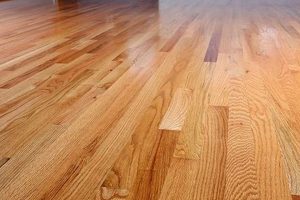
Protective coatings applied to timber floors serve to enhance their durability, appearance, and resistance to wear and tear. These surface treatments form a barrier against moisture, scratches, and stains, extending the lifespan of the flooring material. Consider, for instance, a polyurethane layer applied to oak flooring, providing a robust and glossy surface.
The selection of an appropriate sealant is crucial for preserving the integrity and aesthetic value of timber flooring. It offers several advantages, including increased longevity, ease of maintenance, and improved resistance to environmental factors. Historically, natural oils and waxes were employed, but contemporary formulations offer enhanced performance and versatility. This selection process directly impacts the flooring’s long-term performance and aesthetic.
The subsequent sections will detail the various categories of sealants available, outlining their properties, application methods, and suitability for different wood species and traffic levels. These categories include surface and penetrating types, water-based and oil-based options, and specialized treatments for specific requirements.
Application Best Practices
The following guidelines are designed to optimize the outcome of sealant application on wooden flooring. Adherence to these recommendations will contribute to a durable and aesthetically pleasing result.
Tip 1: Surface Preparation: Ensure the floor surface is thoroughly cleaned and free of dust, debris, and existing coatings before commencing application. Sanding may be required to create a uniform surface profile for optimal adhesion.
Tip 2: Environmental Control: Maintain a consistent temperature and humidity level within the recommended range specified by the product manufacturer during application and curing. Excessive moisture or temperature fluctuations can compromise the sealant’s integrity.
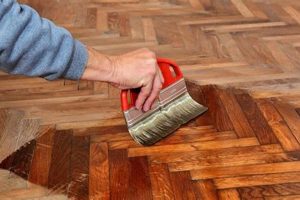
Tip 3: Application Technique: Apply the sealant in thin, even coats using appropriate applicators such as brushes, rollers, or sprayers, as directed by the manufacturer. Overlapping strokes and avoiding excessive buildup will prevent uneven drying and potential defects.
Tip 4: Adherence to Drying Times: Allow sufficient drying time between coats and before subjecting the floor to foot traffic, as specified by the product manufacturer. Premature exposure can lead to scratching, scuffing, and reduced durability.
Tip 5: Selection of Appropriate Product: Choose a sealant that is compatible with the wood species, intended use, and environmental conditions. Consulting with a flooring professional can ensure optimal performance and longevity.
Tip 6: Proper Ventilation: Ensure adequate ventilation during and after application to facilitate the evaporation of solvents and minimize potential health hazards. Use respirators and open windows or employ mechanical ventilation systems.
Tip 7: Perform a Test Application: Before applying the sealant to the entire floor, perform a small test application in an inconspicuous area to assess the compatibility of the product with the wood and to verify the desired aesthetic outcome.
Implementation of these best practices will contribute to a long-lasting, visually appealing, and protective coating for wooden flooring. Prioritizing meticulous preparation and proper application techniques are essential for achieving optimal results.
The subsequent section will provide a detailed overview of specific product types and their associated characteristics, enabling informed decision-making regarding the most suitable choice for individual flooring needs.
1. Water-based

Water-based formulations represent a significant category within protective coatings designed for timber flooring. Their defining characteristic lies in the use of water as the primary solvent and carrier for the resin system. This composition directly influences factors such as volatile organic compound (VOC) emissions, drying time, and overall environmental impact. A wood floor finished with a water-based product will typically exhibit lower levels of off-gassing compared to solvent-based alternatives. The resultant lower VOC content contributes to improved indoor air quality. Application occurs via brush, roller, or spray, with multiple thin coats typically required to achieve adequate film build and protection. The selection of a water-based sealant is driven, in part, by regulations governing VOC emissions in specific regions.
The performance characteristics of water-based products are directly related to the type and concentration of resins employed. Acrylic, polyurethane, and acrylic-urethane blends are common resin chemistries. These resins impact the film’s hardness, flexibility, and resistance to abrasion, water, and chemicals. As a practical example, a high-traffic residential kitchen may benefit from a water-based polyurethane sealant known for its durability and resistance to spills. The drying process involves the evaporation of water, leading to film formation and hardening. Certain formulations may require the addition of cross-linkers to enhance the film’s durability and chemical resistance.
In summary, water-based sealants represent a viable alternative to traditional solvent-based systems, offering reduced VOC emissions and comparable performance for many residential and commercial applications. Challenges can include extended drying times and potentially lower initial hardness compared to some solvent-based counterparts; however, ongoing advancements in resin technology continue to address these limitations. Choosing the correct water-based finish will protect the floor while having a long-lasting, safe impact on the enviornment.
2. Oil-based

Oil-based formulations represent a traditional category of timber floor sealants, distinguished by the use of petroleum-derived or plant-based oils as the primary solvent and binder. This characteristic imparts distinct properties to the sealant, influencing its penetration, appearance, and durability. The composition dictates application techniques and long-term maintenance requirements.
- Penetration and Grain Enhancement
Oil-based sealants exhibit a high degree of penetration into the wood substrate. This penetration saturates the wood fibers, enhancing the natural grain pattern and imparting a rich, warm tone to the finished surface. This contrasts with surface sealants that form a film atop the wood. For example, application to oak flooring results in a pronounced accentuation of the grain, highlighting the wood’s inherent character.
- Durability and Recoating
Oil-based sealants offer good abrasion resistance and durability, although they may be more susceptible to scratching than certain synthetic alternatives. A key advantage lies in their ease of recoating. Because the sealant penetrates the wood, subsequent coats bond effectively without requiring extensive sanding. This simplifies the maintenance process and extends the lifespan of the floor.
- Volatile Organic Compounds (VOCs)
Traditional oil-based sealants typically exhibit higher VOC content compared to water-based or low-VOC alternatives. VOCs contribute to air pollution and potential health concerns. Regulations in certain regions may restrict or discourage the use of high-VOC products. Modern formulations are increasingly incorporating modified oils and additives to reduce VOC emissions while maintaining performance characteristics.
- Application and Drying Time
Application of oil-based sealants generally involves brushing, rolling, or wiping onto the wood surface. Multiple coats are often required to achieve the desired level of protection and aesthetic. Drying times are typically longer than those of water-based sealants, often requiring several days before the floor can be subjected to heavy traffic. Proper ventilation is essential during application and curing to facilitate solvent evaporation and minimize odor.
The selection of an oil-based sealant within the range of available floor coating options necessitates a careful consideration of its unique properties. Its penetration and grain enhancement capabilities are counterbalanced by potentially higher VOC emissions and longer drying times. Decisions should be informed by specific project requirements, environmental regulations, and long-term maintenance considerations.
3. Polyurethane

Polyurethane serves as a prevalent protective coating option for wooden floors, owing to its established durability and versatility. As a category within surface protectants, its composition directly impacts the wood’s resistance to abrasion, moisture, and chemical exposure. The selection of a polyurethane finish is often driven by the level of expected foot traffic and the potential for spills or staining. For instance, residential areas with high activity or commercial spaces commonly utilize polyurethane for its robust protective properties.
The practical significance of polyurethane arises from its film-forming characteristics. Upon application, it creates a protective barrier on the surface of the wood. This barrier shields the underlying material from physical damage and ingress of liquids. Two primary types exist: oil-based and water-based. Oil-based polyurethane typically exhibits enhanced durability and imparts an amber hue to the wood, while water-based options offer lower volatile organic compound (VOC) emissions and a clearer finish. A clear distinction between the formulations is observed in the drying time, odor, and long-term yellowing tendencies.
In summary, polyurethane represents a functional choice within available sealant options. Its impact lies in the enhanced protection and longevity conferred upon wood flooring. Although the selection between oil-based and water-based variants introduces trade-offs concerning durability, environmental impact, and aesthetic, the core functionality of providing a resilient surface remains consistent. Understanding these distinctions is important for aligning flooring needs with the appropriate surface protection.
4. Penetrating Oils

Penetrating oils represent a subset within the broader category of wood floor sealants. These compounds, typically derived from natural sources like linseed or tung oil, function by saturating the wood fibers rather than forming a superficial film. This mechanism of action distinguishes them from surface sealants, such as polyurethane, which create a protective layer atop the wood. The use of penetrating oils results in a more natural appearance, enhancing the wood’s inherent grain and texture. Floors finished with these oils exhibit a matte sheen, devoid of the glossy appearance associated with film-forming sealants. The application of penetrating oil directly influences the wood’s resistance to moisture and minor abrasions from within the wood structure.
The importance of penetrating oils in finishing wooden flooring lies in their ability to provide protection while preserving the wood’s natural characteristics. For example, when applied to reclaimed wood flooring, these oils emphasize the aged patina and imperfections that contribute to its unique aesthetic. Furthermore, floors treated with penetrating oils are generally easier to repair and maintain. Scratches or blemishes can often be addressed by spot-application of additional oil, eliminating the need to refinish the entire surface. This contrasts with film-forming sealants, where damage often requires complete re-sanding and re-coating.
In summary, penetrating oils provide a finishing alternative prioritizing natural aesthetics and ease of maintenance over maximum surface protection. The key challenge involves understanding the trade-offs between the enhanced natural appearance and the reduced resistance to heavy wear or spills when compared to film-forming sealants. The selection of penetrating oils as a sealant requires careful consideration of the intended use of the flooring and the desired balance between aesthetic appeal and functional durability.
5. Wax

Wax, in the context of timber floor sealants, represents a traditional and often supplementary protective layer. Its function is primarily aesthetic, enhancing the sheen and depth of existing sealant layers rather than providing primary protection against abrasion or moisture penetration. As a finishing component, it can be applied over oil-based or penetrating oil finishes, imparting a subtle luster and a smooth tactile surface. For example, a paste wax applied to a floor treated with linseed oil will improve its visual appeal and offer minor resistance to scuffing. The significance lies in its ability to revitalize older finishes and provide a temporary barrier against surface-level dirt and grime. Its integration into flooring systems creates a balance of aesthetics and moderate protection.
The application of wax necessitates careful consideration of the underlying sealant. Compatibility issues can arise if wax is applied over incompatible surfaces, such as water-based polyurethane, potentially leading to discoloration or adhesion problems. Historically, wax was used as a primary finish; however, its limited durability and high maintenance requirements have led to its relegation to a secondary or aesthetic role in modern flooring systems. Proper maintenance involves regular buffing to maintain the sheen and reapplication as the wax layer wears away. This routine is critical to preserving the appearance and extending the lifespan of the underlying finish.
In summary, wax serves as an enhancement rather than a foundational element within the spectrum of timber floor treatments. Its influence is primarily aesthetic, impacting the visual appeal and tactile quality of the floor. While offering a degree of protection against minor surface damage, its limited durability necessitates frequent maintenance and restricts its suitability for high-traffic areas. Understanding its role as a supplementary layer is crucial for informed decisions regarding wood floor maintenance and aesthetic preferences.
6. Moisture Cured

Moisture-cured urethanes represent a specialized category within wood floor sealants, distinguished by their unique curing mechanism. Rather than relying solely on solvent evaporation or chemical reactions within the product itself, they utilize ambient moisture in the air to initiate and complete the hardening process. This characteristic imparts particular advantages and disadvantages regarding application, durability, and environmental considerations. The properties of moisture-cured systems significantly impact their suitability for various wood flooring applications.
- Curing Mechanism and Environmental Factors
Moisture-cured urethanes react with atmospheric humidity to form a hardened film. The rate of cure is directly influenced by the relative humidity and temperature of the environment. Lower humidity levels extend the curing time, potentially affecting the project timeline. In contrast, high humidity can accelerate curing, but may also lead to surface imperfections if not carefully controlled. For instance, application in a dry, climate-controlled environment will require careful monitoring to ensure adequate curing.
- Durability and Chemical Resistance
These sealants are known for their high durability and resistance to chemicals, solvents, and abrasion. The resulting film is typically hard and resilient, making them suitable for high-traffic areas and environments where exposure to harsh chemicals is anticipated. An example is their use in industrial settings or commercial kitchens where resistance to spills and cleaning agents is critical.
- Application Considerations
Application requires careful surface preparation and attention to environmental conditions. The substrate must be clean, dry, and free of contaminants to ensure proper adhesion. Multiple thin coats are generally recommended to achieve optimal film build and performance. Due to their sensitivity to moisture, partially used containers should be tightly sealed to prevent premature curing of the remaining product.
- VOC Content and Safety
Moisture-cured urethanes often contain a higher volatile organic compound (VOC) content compared to water-based alternatives. Proper ventilation and respiratory protection are essential during application to minimize exposure to potentially harmful vapors. Regulations regarding VOC emissions may restrict their use in certain areas or require specialized application techniques.
In summary, moisture-cured urethanes offer a durable and chemically resistant option for wood floor sealing, but their application requires meticulous attention to environmental factors and safety precautions. The selection of moisture-cured sealants within the spectrum of wood floor protection involves balancing their performance benefits with the practical considerations of their unique curing mechanism and potential environmental impact.
7. Aluminum Oxide

Aluminum oxide, when integrated into wood floor sealants, fundamentally alters the durability and wear resistance of the resulting finish. This compound, characterized by its exceptional hardness, is typically introduced as microscopic particles suspended within a polyurethane or acrylic coating matrix. The presence of aluminum oxide creates a surface that withstands abrasion, scratching, and indentation far more effectively than finishes lacking this additive. Its incorporation represents a strategic enhancement to sealant formulations intended for high-traffic environments.
The practical implication of aluminum oxide inclusion is exemplified in prefinished hardwood flooring. Many manufacturers utilize this additive to achieve extended warranties and reduce customer complaints regarding surface wear. For instance, a prefinished oak floor incorporating aluminum oxide may offer a 25-year warranty against wear-through, whereas a comparable floor without this additive might only offer a 5-year warranty. The increased cost associated with aluminum oxide-enhanced finishes is often justified by the prolonged lifespan and reduced maintenance requirements. Additionally, the enhanced scratch resistance translates to improved aesthetic retention over time.
In summary, aluminum oxide serves as a critical component in specific types of wood floor sealants, significantly enhancing their durability and resistance to wear. While it does not constitute a distinct “type” of finish in itself, its presence within polyurethane or acrylic formulations represents a substantial improvement in performance characteristics. Understanding the role of aluminum oxide allows for informed decisions regarding flooring selection, particularly in situations where longevity and resistance to abrasion are paramount.
Frequently Asked Questions Regarding Timber Floor Sealants
The following section addresses common inquiries concerning various surface treatments applicable to timber flooring, providing factual information to aid in informed decision-making.
Question 1: What are the primary criteria for selecting a wood floor sealant?
Selection hinges on factors such as the wood species, anticipated traffic volume, desired aesthetic, and environmental considerations. Wood species influences sealant adhesion and penetration, while traffic volume dictates the required level of abrasion resistance. Aesthetic preferences encompass gloss level and color enhancement, and environmental considerations necessitate evaluation of volatile organic compound (VOC) emissions.
Question 2: How does the volatile organic compound (VOC) content of sealants impact indoor air quality?
Sealants with high VOC content release organic chemicals into the air during and after application. These chemicals can contribute to indoor air pollution and potentially pose health risks. Opting for low-VOC or water-based formulations minimizes these risks and promotes a healthier indoor environment.
Question 3: What is the typical lifespan of a wood floor sealant?
Lifespan varies significantly based on the type of sealant, application quality, and traffic volume. Polyurethane finishes generally offer greater durability than wax or penetrating oil treatments. Proper maintenance, including regular cleaning and occasional recoating, extends the sealant’s lifespan.
Question 4: Can different sealants be combined on a single floor?
Combining sealants requires careful consideration of compatibility. Applying an incompatible sealant over an existing finish can result in adhesion problems, discoloration, or premature failure. Consulting with a flooring professional or sealant manufacturer is advisable prior to combining different products.
Question 5: How does one properly prepare a wood floor for sealant application?
Proper preparation involves thorough cleaning to remove dirt, dust, and debris. Sanding may be necessary to remove existing finishes and create a smooth, uniform surface. Ensure the floor is completely dry before applying any sealant.
Question 6: What are the advantages and disadvantages of oil-based versus water-based sealants?
Oil-based sealants generally offer greater durability and enhance the wood grain, but they typically have higher VOC content and longer drying times. Water-based sealants have lower VOC content and dry faster, but may not provide the same level of durability or grain enhancement. Choice depends on prioritizing performance versus environmental factors.
Careful consideration of these factors is paramount in selecting an appropriate sealant and ensuring a durable, aesthetically pleasing, and environmentally responsible outcome for wood flooring installations.
The subsequent section will delve into the maintenance and care strategies applicable to various wood floor sealants, providing guidance on preserving their integrity and appearance over time.
Conclusion
The preceding exploration has outlined a spectrum of surface treatments available for wood flooring, each imparting distinct characteristics regarding durability, aesthetics, and environmental impact. From the robust protection offered by polyurethane to the natural grain enhancement of penetrating oils, the selection fundamentally shapes the long-term performance and visual appeal of the flooring surface. Understanding the nuances of these options is crucial for informed decision-making.
Given the significant investment associated with wood flooring, careful consideration of the appropriate surface treatment is paramount. Evaluating the interplay between anticipated traffic levels, aesthetic preferences, and environmental concerns will ensure a flooring installation that balances longevity, visual appeal, and responsible material selection. Continued advancements in sealant technology promise even greater options for enhancing and protecting this valuable building material.