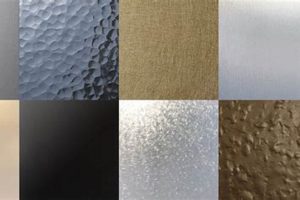
Surface treatment processes applied to metallic components to alter their properties are essential for enhancing durability, aesthetics, and functionality. These processes can involve applying coatings, modifying surface texture, or altering the chemical composition of the outer layer. A common example includes applying a chromium layer to steel components to improve corrosion resistance and achieve a polished appearance.
The application of such treatments extends the lifespan of manufactured goods, reduces the need for frequent replacements, and improves performance in demanding environments. Historically, these treatments were developed to address issues like rust and wear, and over time, have evolved to meet the increasingly complex demands of modern industries. These enhancements are integral across various sectors, from automotive and aerospace to electronics and construction.
The subsequent sections will explore specific techniques employed, including plating, anodizing, and powder coating, and delve into the factors to consider when selecting the most suitable treatment for a given application.
Key Considerations for Effective Surface Treatments
Achieving optimal results from the application of surface treatments requires careful planning and execution. The following points outline critical areas to address throughout the selection and implementation process.
Tip 1: Material Compatibility: Before initiating any process, verify that the chosen treatment is chemically compatible with the base metal. Dissimilar metals can lead to galvanic corrosion or adhesion failures.
Tip 2: Surface Preparation: Proper cleaning and pre-treatment of the substrate are paramount. Remove any oils, oxides, or contaminants to ensure adequate adhesion and prevent defects in the final layer.
Tip 3: Thickness Control: Precisely control the thickness of the applied layer to meet functional requirements without compromising mechanical properties or increasing costs unnecessarily. Use calibrated measurement tools to confirm adherence to specified tolerances.
Tip 4: Environmental Considerations: Select treatment processes that minimize environmental impact. Opt for alternatives with reduced volatile organic compound (VOC) emissions and implement waste management strategies to minimize hazardous byproducts.
Tip 5: Adherence to Industry Standards: Comply with relevant industry standards (e.g., ASTM, ISO) to ensure consistent quality and performance. Document all procedures and testing results for traceability and compliance.
Tip 6: Quality Control Procedures: Implement robust quality control measures at each stage of the process. Conduct regular inspections, adhesion tests, and corrosion resistance tests to identify and address any deviations from specified requirements.
Adhering to these guidelines will help optimize the performance, longevity, and overall value of treated metallic components. This careful attention ensures that the final product meets the required specifications and delivers lasting performance.
With these essential considerations in mind, the subsequent sections will explore case studies and real-world applications, highlighting the versatility and importance of properly selected and executed treatments.
1. Corrosion Resistance
Corrosion resistance stands as a primary driver in the application of surface treatments to metallic components. The degradation of metals due to environmental interaction necessitates strategies to mitigate or prevent such deterioration. Therefore, surface modification techniques are extensively employed to enhance a material’s ability to withstand corrosive environments.
- Protective Coatings
The application of coatings, such as paint, powder coating, or metallic plating (e.g., zinc, chromium, nickel), creates a physical barrier between the metal substrate and the corrosive environment. This barrier prevents direct contact with moisture, salts, and other corrosive agents. For example, galvanizing steel structures provides long-term protection against atmospheric corrosion, extending their service life in outdoor applications.
- Passivation
Passivation involves forming a thin, adherent oxide layer on the metal surface, which acts as a protective barrier. This layer significantly reduces the metal’s reactivity, thereby inhibiting corrosion. Stainless steel achieves its corrosion resistance through the spontaneous formation of a chromium oxide layer on its surface, making it suitable for use in corrosive environments like chemical processing plants and marine applications.
- Sacrificial Coatings
Sacrificial coatings, such as zinc or aluminum, are applied to a metal substrate. These coatings corrode preferentially, protecting the underlying metal from corrosion. When exposed to a corrosive environment, the sacrificial coating corrodes instead of the base metal. An example is the use of zinc coatings on steel ships; the zinc corrodes before the steel, thus preserving the structural integrity of the vessel.
- Inhibitive Primers
Inhibitive primers contain chemical compounds that inhibit the corrosion process. These compounds migrate to the metal surface and interfere with the electrochemical reactions that cause corrosion. For example, primers containing chromates are often used on aluminum alloys in the aerospace industry to provide corrosion protection and improve paint adhesion.
These methods, encompassing protective barriers, induced passivation, sacrificial protection, and chemical inhibition, underscore the critical role surface modification plays in ensuring the longevity and reliability of metallic structures and components in corrosive environments. The selection of a specific technique depends on the metal being protected, the severity of the corrosive environment, and the desired service life of the component. Without such surface treatments, the structural integrity and functionality of metallic components would be significantly compromised, leading to premature failure and increased maintenance costs.
2. Wear Reduction

The mitigation of wear is a critical objective in numerous engineering applications, and surface treatments represent a primary method for achieving this goal. Wear, defined as the progressive loss of material from a surface due to relative motion, can severely compromise the functionality and lifespan of components. Surface treatments, therefore, are integral to extending the operational life of parts subjected to friction, abrasion, or erosion. Hard coatings, such as those applied through electroplating (e.g., hard chrome) or thermal spraying, serve as barriers against material loss. For instance, piston rings in internal combustion engines undergo surface treatments to reduce friction and resist wear from continuous sliding contact with cylinder walls. Similarly, cutting tools are often coated with materials like titanium nitride to enhance their hardness and abrasive wear resistance, enabling them to maintain sharpness and precision over extended periods.
The selection of a suitable surface treatment for wear reduction depends on factors such as the type of wear mechanism (adhesive, abrasive, erosive, or corrosive), the materials involved, the operating temperature, and the applied load. Case hardening processes, like carburizing or nitriding, alter the surface microstructure of steel components, creating a hard outer layer with a softer, more ductile core. This combination provides resistance to both wear and impact loading. Furthermore, some surface treatments involve the introduction of lubricants or solid film lubricants into the surface structure, reducing friction and wear under sliding conditions. Examples include molybdenum disulfide coatings used on bearings and gears to minimize friction and prevent seizure.
In conclusion, the deliberate application of surface treatments aimed at wear reduction is a key strategy for improving the durability and reliability of mechanical components. The understanding and appropriate selection of these treatments are essential for optimizing performance and minimizing maintenance costs in a wide range of industries, from automotive and aerospace to manufacturing and energy production. Overcoming the challenges of wear requires a holistic approach, considering not only the surface treatment itself but also the operating environment and the properties of the underlying material.
3. Enhanced Aesthetics

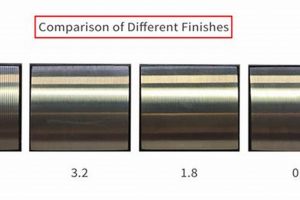
Aesthetic improvements represent a significant driver in the application of surface treatments, reflecting the importance of visual appeal in product design and market acceptance. Surface finishing techniques enable manufacturers to impart a variety of textures, colors, and finishes to metallic components, thereby enhancing their visual characteristics.
- Decorative Plating
Processes like chromium, nickel, or gold plating are used to deposit a thin layer of a visually appealing metal onto a substrate. This not only provides a lustrous finish but also improves corrosion resistance. Examples include chrome plating on automotive trim, adding a decorative element while protecting against rust. Jewelry often utilizes gold or rhodium plating to enhance visual appeal and prevent tarnishing.
- Anodizing
Anodizing, particularly of aluminum, creates a durable, corrosion-resistant oxide layer that can be dyed in a range of colors. This process enhances the aesthetic value of aluminum products, from architectural components to consumer electronics. Colored anodized aluminum is commonly found in smartphones and laptops, offering both protection and visual customization.
- Powder Coating
Powder coating involves applying a dry, free-flowing powder electrostatically to a surface and then curing it with heat to form a hard, durable finish. This method provides a wide range of colors, textures, and gloss levels, allowing for significant design flexibility. Powder-coated surfaces are used extensively in appliances, furniture, and automotive parts, providing both aesthetic appeal and functional protection.
- Polishing and Buffing
These mechanical surface finishing techniques are used to create a smooth, reflective surface. Polishing removes imperfections and enhances the luster of metal components, while buffing provides a high-gloss finish. Polished stainless steel is commonly used in kitchen appliances and architectural elements to create a clean and modern aesthetic. Musical instruments, such as brass instruments, often undergo extensive polishing and buffing to achieve a visually stunning appearance.
These aesthetic enhancements, achieved through various surface modification techniques, contribute significantly to the perceived value and marketability of products. The ability to tailor the visual appearance of metal components allows manufacturers to meet consumer preferences, differentiate their products, and create a lasting impression. The choice of surface treatment is, therefore, a critical decision that balances both functional and aesthetic requirements.
4. Improved Adhesion

Surface preparation techniques are often essential precursors to subsequent finishing processes. Ensuring robust adhesion of applied coatings or finishes is paramount to the overall performance and longevity of the treated component. Without adequate adhesion, even the most sophisticated coating will fail to provide the intended protection or aesthetic enhancement.
- Chemical Etching
Chemical etching involves using specific chemical solutions to alter the surface of a metal, creating micro-scale roughness that promotes mechanical interlocking with subsequent coatings. For instance, etching aluminum prior to painting increases the surface area available for adhesion, resulting in a stronger bond. This technique is commonly used in aerospace applications where the reliability of coatings is critical.
- Mechanical Abrasion
Mechanical abrasion techniques, such as grit blasting or sanding, remove surface contaminants and create a roughened surface profile. This roughened surface increases the contact area and provides mechanical keying for coatings. For example, preparing steel surfaces via abrasive blasting prior to powder coating enhances the coating’s adhesion, preventing chipping or peeling. Such preparation is standard practice in the automotive industry.
- Surface Activation
Surface activation treatments modify the surface energy of the metal, making it more receptive to coatings. Plasma treatments, for instance, can increase the surface energy of plastics and metals, improving the wettability and adhesion of subsequently applied adhesives or coatings. This is particularly important in electronics manufacturing, where conformal coatings must adhere reliably to circuit boards.
- Applying an appropriate primer
Primers can provide a chemical link and barrier that improves the adhesion of paint to the metal surface. For example, self-etching primers have phosphoric acid to etch the metal surface. The primer helps to bite into the metal surface, which promotes adhesion.
These surface preparation methods are integral to achieving durable and reliable surface treatments. Improved adhesion translates directly to enhanced corrosion resistance, increased wear resistance, and prolonged lifespan of the finished component. Proper surface preparation is not merely a preliminary step but a critical determinant of the overall success of any surface finishing process.
5. Controlled Conductivity
The ability to manipulate electrical conductivity is a critical aspect in numerous technological applications, and surface treatments play a crucial role in achieving this control. Surface treatments alter the conductive properties of a metal component, either enhancing or inhibiting electrical flow, depending on the specific requirements of the application. This control is not merely an optional feature but a fundamental requirement in electronics, telecommunications, and aerospace industries, where consistent and predictable electrical performance is paramount.
Electroplating, for instance, can be used to deposit highly conductive materials such as gold or silver onto a less conductive base metal. This improves the surface conductivity for applications like electrical contacts and connectors, minimizing signal loss and enhancing overall system efficiency. Conversely, anodization can create an insulating oxide layer on aluminum, inhibiting electrical conductivity and preventing short circuits in electronic devices. Selective plating techniques allow for precise control over where conductive or insulating surfaces are located on a component, enabling the creation of complex circuit patterns on printed circuit boards. In microelectronics, thin film deposition processes are used to create highly controlled layers with specific electrical properties, essential for fabricating transistors and other semiconductor devices.
Maintaining precise control over surface conductivity is essential for ensuring the reliability and performance of electronic systems. Surface treatments offer a versatile toolkit for achieving these objectives, enabling engineers to tailor the electrical properties of metal components to meet the stringent requirements of modern technology. Challenges remain in achieving consistent and uniform surface properties, especially in complex geometries or high-volume manufacturing processes. Understanding the relationship between surface treatment processes and electrical conductivity is fundamental to advancing innovation in various technological domains.
6. Surface Hardness

The ability of a material’s surface to resist indentation or scratching is a critical performance factor addressed by surface modification techniques. The relationship between treatment processes and the resulting surface resilience is pivotal in determining the suitability of a component for demanding applications.
- Hard Chrome Plating
Electrolytic deposition of chromium creates a hard, wear-resistant surface. This process is commonly employed to enhance the durability of hydraulic cylinders, piston rings, and molds. Hard chrome plating significantly extends the lifespan of these components by minimizing wear and preventing surface deformation under load. The resulting surface hardness, often exceeding 60 HRC (Rockwell C scale), is a direct consequence of the chromium’s inherent properties and the controlled plating parameters.
- Nitriding
Nitriding involves diffusing nitrogen into the surface of steel components at elevated temperatures. This process forms a hard, nitrogen-rich layer that improves wear resistance and fatigue strength. Gears, camshafts, and dies often undergo nitriding to enhance their performance in high-stress environments. The surface hardness achieved through nitriding depends on the steel alloy composition, nitriding temperature, and process duration.
- Case Hardening
Case hardening techniques, such as carburizing and induction hardening, create a hard outer layer (the case) on steel components while maintaining a softer, more ductile core. This combination provides both wear resistance and impact toughness. Gears and bearings are commonly case hardened to withstand high loads and abrasive conditions. The depth and hardness of the case are carefully controlled to meet specific performance requirements.
- Thermal Spray Coatings
Thermal spray processes deposit a coating of molten or semi-molten material onto a substrate, forming a dense, adherent layer. These coatings can be tailored to provide specific surface properties, including high hardness and wear resistance. Tungsten carbide coatings, applied via thermal spraying, are used to protect components from abrasive wear in mining, oil and gas, and other demanding industries. The hardness of thermal spray coatings depends on the composition of the coating material and the spray parameters.
The selection of a surface treatment to enhance hardness depends on factors such as the base material, the operating environment, the type of wear encountered, and the desired lifespan of the component. The resulting increase in surface resilience achieved through these treatments directly contributes to improved performance, reduced maintenance costs, and extended product life.
7. Dimensional Accuracy
Maintaining dimensional accuracy during surface treatments is crucial, given that these processes inherently alter a component’s size and shape, if only minimally. The very nature of these modifications, whether through the addition of coatings or the removal of material, can impact the final dimensions of the treated part. Deviations from specified dimensions can lead to functional impairments or complete failure, particularly in precision-engineered components. Thus, carefully controlling the applied thickness of coatings, as in electroplating, and accounting for material loss during processes like etching, are vital to achieving desired dimensional tolerances. A prime example is in the aerospace industry, where turbine blades undergo specialized treatments to enhance their wear resistance. These treatments must not compromise the blade’s aerodynamic profile, necessitating precise control over coating thickness to maintain optimal engine performance. Similarly, semiconductor manufacturing relies heavily on thin film deposition techniques, where deviations in layer thickness at the nanometer scale can significantly impact device functionality.
The selection of an appropriate surface treatment process must consider its potential effect on dimensional tolerances. Certain processes, such as thick film coatings or processes that require aggressive etching, may be unsuitable for applications where tight dimensional control is essential. In contrast, techniques like vapor deposition can deposit extremely thin and uniform coatings, minimizing any dimensional impact. Furthermore, pre-treatment steps, such as cleaning and descaling, must be carefully controlled to avoid unintentional material removal that could affect the component’s final dimensions. Post-treatment operations, such as grinding or polishing, can be employed to fine-tune dimensions after surface treatment, but these add complexity and cost. Therefore, a thorough understanding of the dimensional implications of each surface treatment option is paramount in the design and manufacturing process.
The interplay between surface treatments and dimensional accuracy presents ongoing challenges, particularly as industries demand increasingly precise components. Careful process monitoring, advanced measurement techniques, and sophisticated modeling tools are essential to mitigating these challenges. The ultimate goal is to achieve the desired surface properties without compromising the integrity of the component’s dimensions, enabling the creation of reliable and high-performance products across various sectors. Without adequate control, surface finishing can be detrimental, rather than beneficial, to the intended application.
Frequently Asked Questions About What is Metal Finishing
The subsequent questions and answers address common concerns and misconceptions regarding surface modification techniques for metallic components.
Question 1: What constitutes as an example of metal finishing?
Anodizing aluminum components serves as an example. This process enhances corrosion resistance and aesthetic appeal through controlled oxidation of the metal surface.
Question 2: Why is surface roughness important in metal finishing?
Surface roughness influences coating adhesion and aesthetic qualities. Controlled roughness promotes mechanical interlocking between the substrate and applied coatings.
Question 3: What criteria determine the optimal metal finishing technique for a given application?
Material compatibility, environmental conditions, required performance characteristics (corrosion resistance, wear resistance), and cost considerations are critical factors.
Question 4: Does metal finishing impact the dimensional accuracy of a component?
Surface treatments can alter dimensions through material addition or removal. Careful process control and post-treatment operations are necessary to maintain specified tolerances.
Question 5: Are there environmental regulations governing metal finishing processes?
Environmental regulations pertaining to waste disposal, air emissions, and the use of hazardous materials impact the selection and implementation of surface modification techniques.
Question 6: What is the primary purpose for performing the process?
The goal of surface treatments is to enhance the durability, aesthetics, and functionality of metallic components by modifying their surface properties.
This FAQ section provides a concise overview of key considerations related to surface treatments. Understanding these factors is essential for selecting and implementing appropriate surface finishing techniques.
The following sections will delve into specific applications and case studies demonstrating the versatility and importance of metal finishing in various industries.
What is Metal Finishing
The preceding discussion clarifies that surface treatments constitute a critical element in modern manufacturing. Various methods enhance material properties, extend component lifespan, and improve performance across diverse applications. Factors governing surface treatment selection include material compatibility, environmental considerations, and intended functionality, all of which demand careful evaluation.
The capacity to tailor material surfaces addresses specific needs, whether corrosion resistance, wear reduction, or aesthetic enhancement, thereby underpinning technological advancements. Further research and development in surface treatments hold the potential to drive innovation, optimize resource utilization, and ensure sustainable manufacturing practices. As such, a comprehensive understanding of surface modification processes is essential for engineers, designers, and manufacturers alike.