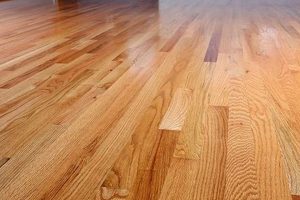
The optimal surface treatment for wood flooring hinges on a variety of factors, including durability requirements, aesthetic preferences, and environmental considerations. This choice significantly impacts the floor’s longevity and its ability to withstand daily wear and tear. For example, a polyurethane finish offers robust protection against scratches and moisture, making it suitable for high-traffic areas.
Selecting an appropriate sealant enhances the floor’s visual appeal and safeguards its structural integrity. Historically, oil-based varnishes were favored for their rich color and penetration. However, advancements in water-based technologies have led to finishes with comparable aesthetics and improved environmental profiles. The right sealant can significantly extend the lifespan of the floor, reducing the need for frequent repairs or replacements.
The subsequent sections will delve into specific finish types, examining their properties, application methods, and suitability for diverse environments. This detailed analysis will provide a comprehensive understanding of the options available and guide informed decision-making regarding floor surface treatments.
Surface Treatment Recommendations
Effective protection of hardwood flooring requires careful selection and application of appropriate sealants. The following recommendations provide guidance on achieving optimal results.
Tip 1: Assess Traffic Levels. Evaluate the anticipated foot traffic in each area. High-traffic zones necessitate more durable finishes, such as polyurethane, whereas low-traffic areas may benefit from less robust options.
Tip 2: Consider Wood Species. Different wood species react differently to various treatments. For instance, open-grained woods like oak absorb more finish than denser species like maple. Adjust application techniques accordingly.
Tip 3: Evaluate Moisture Exposure. Areas prone to moisture, such as kitchens and bathrooms, require water-resistant finishes. Options like oil-modified polyurethane or specialized water-based formulations provide enhanced protection.
Tip 4: Prepare the Substrate Thoroughly. Proper sanding and cleaning are essential for optimal adhesion. Remove all traces of previous finishes and contaminants before applying the new sealant.
Tip 5: Apply Multiple Thin Coats. Multiple thin coats are preferable to a single thick coat. This technique promotes even drying, reduces the risk of bubbles or drips, and enhances overall durability.
Tip 6: Follow Manufacturer Instructions. Adhere strictly to the manufacturer’s guidelines regarding application rates, drying times, and environmental conditions. Deviations may compromise the finish’s performance.
Tip 7: Maintain Consistent Temperature and Humidity. Controlled environmental conditions are crucial for proper curing. Avoid applying finishes in excessively hot, cold, or humid environments.
These recommendations emphasize the importance of careful planning and execution in selecting and applying hardwood floor sealants. By considering these factors, individuals can achieve long-lasting protection and enhance the aesthetic appeal of their wood flooring.
The subsequent conclusion will synthesize the key aspects discussed, providing a final perspective on hardwood floor finishing.
1. Durability

Durability constitutes a primary determinant in evaluating floor sealants. The capacity of a sealant to withstand abrasion, impact, and chemical exposure directly influences the floor’s longevity and aesthetic preservation.
- Abrasion Resistance
Abrasion resistance defines the sealant’s ability to resist wear from foot traffic, furniture movement, and other physical contact. Polyurethane finishes, particularly those with aluminum oxide additives, exhibit superior abrasion resistance compared to traditional wax or oil-based sealants. High abrasion resistance is critical for maintaining the floor’s appearance in heavily used areas, such as hallways and living rooms.
- Impact Resistance
Impact resistance quantifies the sealant’s ability to withstand sudden forces or impacts from dropped objects. Harder finishes, such as acrylic-modified urethanes, generally offer better impact resistance. This property is particularly relevant in kitchens or play areas where the risk of dropped items is higher. Insufficient impact resistance can result in chipping or cracking of the finish, necessitating repairs.
- Chemical Resistance
Chemical resistance pertains to the sealant’s ability to withstand exposure to household chemicals, spills, and cleaning agents. Polyurethane and epoxy-based finishes demonstrate superior chemical resistance compared to softer sealants. Exposure to harsh chemicals can cause discoloration, staining, or degradation of the finish, impacting the floor’s appearance and structural integrity.
- Moisture Resistance
Moisture resistance characterizes the sealant’s ability to prevent water and other liquids from penetrating the wood. Finishes with high moisture resistance, such as oil-modified polyurethane, are recommended for areas prone to spills or high humidity, like bathrooms and kitchens. Water damage can lead to warping, swelling, or rot, compromising the floor’s structural integrity and requiring costly repairs.
The selection of a floor sealant with appropriate durability characteristics is essential for maximizing the floor’s lifespan and minimizing maintenance requirements. Considerations must extend beyond initial cost to encompass long-term performance and resilience to environmental factors and usage patterns. Durable sealants represent a judicious investment in preserving the floor’s value and visual appeal.
2. Aesthetics

The aesthetic dimension of floor sealants exerts a significant influence on the overall ambiance and perceived value of a space. The selected finish dictates the visual characteristics of the floor, impacting elements such as color, sheen, and texture. Consequently, aligning the finish with the intended design aesthetic is crucial.
- Sheen Level
Sheen refers to the amount of light reflected from the floor’s surface. Options range from matte, which minimizes reflection and provides a natural appearance, to high-gloss, which maximizes reflectivity and imparts a polished look. The appropriate sheen level depends on the desired ambiance and the level of maintenance deemed acceptable. High-gloss finishes, while visually striking, tend to highlight imperfections and require more frequent cleaning to maintain their luster. Matte finishes, conversely, conceal minor imperfections and offer a more understated aesthetic.
- Color Enhancement
Certain sealants enhance the natural color and grain of the wood, while others impart a distinct color tone. Oil-based finishes, for example, typically deepen the wood’s natural hues, creating a warmer and richer appearance. Water-based finishes tend to maintain the wood’s original color, providing a more neutral aesthetic. Tinted sealants can be used to alter the wood’s color, allowing for customization and coordination with other design elements.
- Texture and Grain Definition
The chosen finish can accentuate or subdue the wood’s natural texture and grain patterns. Film-forming finishes, such as polyurethane, create a smooth, uniform surface that minimizes the prominence of the grain. Penetrating oil finishes, on the other hand, enhance the grain’s depth and texture, creating a more tactile and organic appearance. The selection depends on the desired level of visual interest and the overall design concept.
- Clarity and Transparency
The clarity and transparency of a finish influence the visibility of the wood’s underlying characteristics. Finishes with high clarity allow the wood’s natural color and grain patterns to be fully visible, while those with lower clarity may obscure the wood’s details. The choice depends on the desire to showcase the wood’s natural beauty versus creating a more uniform or stylized appearance.
Ultimately, the aesthetic considerations surrounding floor sealants are subjective and depend on individual preferences and design objectives. However, a thorough understanding of the available options and their impact on the floor’s visual characteristics is essential for achieving the desired aesthetic outcome. Aligning the finish with the intended design aesthetic ensures that the floor contributes harmoniously to the overall ambiance and perceived value of the space. The subsequent discussion will explore the maintenance implications of various floor sealants.
3. Maintenance

The selection of a floor sealant is inextricably linked to its required maintenance regimen. Different finish types necessitate varying degrees of upkeep, influencing long-term costs and the sustained aesthetic appeal of the flooring. Choosing an unsuitable sealant can lead to increased maintenance demands, premature wear, and ultimately, the need for costly refinishing. For example, waxed floors, while offering a traditional aesthetic, require frequent polishing and waxing to maintain their protective layer and sheen. This contrasts sharply with polyurethane finishes, which generally necessitate only routine sweeping and occasional damp mopping.
The level of traffic within a space further dictates maintenance requirements. High-traffic areas, such as hallways and commercial spaces, benefit from more durable and easily maintained finishes like polyurethane. Conversely, low-traffic areas might accommodate more delicate finishes, provided regular cleaning and care are implemented. An oil-based finish in a busy household, for instance, would demand vigilant spot cleaning and protection from spills to prevent staining and water damage, whereas a polyurethane coating would offer greater resilience with minimal intervention. The compatibility of cleaning products with the sealant is equally important. Harsh chemicals can degrade certain finishes, leading to discoloration, loss of sheen, or even complete failure of the protective layer.
Therefore, evaluating maintenance demands is a crucial aspect of determining an optimal floor sealant. The long-term investment extends beyond the initial cost of the finish to encompass the recurring expense of cleaning supplies, specialized equipment, and potentially professional maintenance services. A comprehensive assessment of lifestyle, usage patterns, and tolerance for upkeep is essential to align the chosen sealant with practical needs, ultimately ensuring the sustained beauty and longevity of the hardwood flooring.
4. Cost

The cost associated with different surface treatments for hardwood floors is a multifaceted consideration encompassing initial material expenses, application labor, and long-term maintenance outlays. The selection of a specific finish frequently represents a trade-off between upfront investment and subsequent operational expenditures. For instance, while penetrating oil finishes may exhibit a lower initial purchase price, their relatively demanding maintenance requirements including frequent reapplication can result in a higher cumulative cost over the floor’s lifespan. Conversely, polyurethane finishes typically entail a greater initial investment due to material costs and the potential need for professional application, but their enhanced durability and resistance to wear often translate to reduced maintenance and extended replacement intervals. This dynamic underscores the importance of a comprehensive cost-benefit analysis prior to selecting a floor finish.
An additional factor influencing the overall cost is the necessary preparation of the subfloor. Floors requiring extensive repairs or leveling prior to finish application will incur additional expenses. The selection of a compatible underlayment can also affect both the initial and ongoing costs. Furthermore, specialized application techniques, such as multiple coats or intricate designs, will inherently increase labor costs. Real-world examples illustrate these principles: a homeowner opting for a water-based polyurethane finish in a high-traffic area may face higher initial costs compared to a basic varnish, but the reduced frequency of refinishing and cleaning translates to long-term savings and reduced inconvenience. A commercial establishment, prioritizing durability and ease of maintenance, may choose an epoxy-based finish despite its higher upfront cost, knowing that its resistance to wear and chemical exposure will minimize downtime and replacement expenses.
In conclusion, the “best” finish is, in part, dictated by a thorough understanding of the cost implications. The optimal choice involves a balanced assessment of initial material and labor costs, anticipated maintenance expenses, and the long-term durability offered by each option. Ignoring any one of these components can lead to unanticipated expenditures and potentially compromise the longevity and aesthetic appeal of the hardwood floor. Therefore, an informed decision necessitates a comprehensive cost analysis aligned with budgetary constraints and performance expectations.
5. Environmental Impact
The environmental implications of floor sealants represent a critical consideration in determining the optimal treatment for hardwood surfaces. These implications encompass the release of volatile organic compounds (VOCs), resource utilization, and waste generation, all of which contribute to broader ecological concerns.
- Volatile Organic Compounds (VOCs)
VOCs are emitted during the application and curing phases of certain finishes, contributing to indoor air pollution and potentially posing health risks. Traditional solvent-based finishes are primary contributors of VOCs, whereas water-based and low-VOC alternatives offer reduced emissions. The selection of finishes with minimized VOC content aligns with sustainable building practices and promotes healthier indoor environments. For instance, opting for a water-based polyurethane finish over a solvent-based counterpart can significantly reduce VOC emissions, thereby mitigating potential respiratory irritation and contributing to improved air quality.
- Resource Depletion
The production of floor sealants involves the extraction and processing of raw materials, contributing to resource depletion. Finishes derived from renewable resources, such as plant-based oils and waxes, offer a more sustainable alternative to those relying on petroleum-based ingredients. Additionally, the sourcing of raw materials can impact biodiversity and ecosystem health. Selecting finishes with certified sustainable sourcing practices supports responsible resource management. An example is the use of finishes derived from sustainably harvested trees, ensuring minimal disruption to forest ecosystems.
- Waste Generation
The disposal of used finish containers and application materials contributes to waste generation and potential environmental contamination. Finishes with extended lifespans reduce the frequency of replacement, thereby minimizing waste. Additionally, the proper disposal and recycling of finish containers can mitigate environmental impacts. Choosing finishes that come in recyclable packaging or are eligible for manufacturer take-back programs promotes responsible waste management. A comparative example includes solvent-based finishes requiring special disposal protocols due to their hazardous nature versus water-based finishes that can be disposed of more readily.
- Life Cycle Assessment
A comprehensive assessment of a finish’s environmental impact requires considering its entire life cycle, from raw material extraction to disposal. This assessment includes evaluating energy consumption, water usage, and greenhouse gas emissions associated with each stage. Finishes with lower life cycle impacts represent more environmentally responsible choices. Employing life cycle assessment tools can inform the selection of finishes that minimize ecological burdens. For example, a study comparing the life cycle impacts of different floor finishes might reveal that a sustainably sourced, low-VOC finish has a significantly smaller environmental footprint than a traditional solvent-based finish.
These environmental considerations underscore the importance of informed decision-making when selecting floor sealants. Opting for finishes with reduced VOC emissions, sustainable sourcing practices, minimized waste generation, and favorable life cycle assessments contributes to more environmentally responsible building practices and promotes healthier living environments. Integrating these factors into the selection process ultimately aligns with broader sustainability goals.
Frequently Asked Questions
The following addresses common inquiries regarding the selection and application of surface treatments for hardwood flooring. The information presented aims to clarify prevailing misconceptions and provide informed guidance.
Question 1: What finish type offers optimal durability for high-traffic areas?
Polyurethane-based finishes, particularly those incorporating aluminum oxide particles, exhibit superior abrasion resistance and are recommended for areas subject to heavy foot traffic. These finishes provide a robust protective layer against scratches and wear.
Question 2: Does sheen level affect the perceived cleanliness of a hardwood floor?
Yes. High-gloss finishes tend to accentuate dust and imperfections, requiring more frequent cleaning to maintain a pristine appearance. Matte finishes, conversely, conceal minor blemishes and offer a more forgiving aesthetic.
Question 3: Is it necessary to hire a professional for hardwood floor finishing?
While DIY application is feasible, professional installation is often recommended to ensure proper surface preparation, uniform application, and optimal curing. Improper application can compromise the finish’s performance and longevity.
Question 4: Are water-based finishes as durable as oil-based finishes?
Modern water-based finishes have undergone significant advancements and now offer comparable, and in some cases superior, durability to oil-based counterparts. Furthermore, water-based finishes typically exhibit lower VOC emissions, contributing to improved indoor air quality.
Question 5: How does wood species influence the choice of floor finish?
Porous wood species, such as oak, tend to absorb more finish compared to denser species like maple. The application technique and the number of coats may need to be adjusted accordingly to achieve a uniform and durable finish.
Question 6: What is the recommended maintenance protocol for hardwood floors with a polyurethane finish?
Regular sweeping or vacuuming to remove debris is essential. Damp mopping with a pH-neutral cleaning solution is recommended periodically. Avoid harsh chemicals and abrasive cleaning tools, as they can damage the finish.
In summary, selecting a surface treatment for hardwood flooring requires careful consideration of durability requirements, aesthetic preferences, and maintenance capabilities. The information presented serves as a preliminary guide for informed decision-making.
The subsequent section will synthesize the key aspects discussed, providing a conclusive perspective on hardwood floor surface treatments.
Conclusion
Determining “what is the best finish for hardwood floors” necessitates a comprehensive evaluation of several key factors. Durability requirements, aesthetic preferences, maintenance capabilities, cost constraints, and environmental considerations all contribute to the selection process. The analysis presented herein underscores the importance of aligning the chosen finish with specific usage patterns and environmental conditions to maximize long-term performance and minimize lifecycle costs. No single solution universally applies; the optimal choice hinges on a nuanced understanding of individual needs and priorities.
Selecting a surface treatment represents a significant investment in the longevity and aesthetic value of hardwood flooring. Continued advancements in finish technology promise further improvements in durability, sustainability, and ease of maintenance. It is, therefore, incumbent upon individuals and professionals alike to remain informed of emerging trends and best practices to ensure informed decision-making and maximize the return on investment.