![Best Paint: What Paint Finish for Interior Doors? [Guide]](data:image/svg+xml;base64,PHN2ZyB4bWxucz0iaHR0cDovL3d3dy53My5vcmcvMjAwMC9zdmciIHdpZHRoPSI0NzQiIGhlaWdodD0iMTM0IiB2aWV3Qm94PSIwIDAgNDc0IDEzNCI+PHJlY3Qgd2lkdGg9IjEwMCUiIGhlaWdodD0iMTAwJSIgc3R5bGU9ImZpbGw6I2NmZDRkYjtmaWxsLW9wYWNpdHk6IDAuMTsiLz48L3N2Zz4= "Best Paint: What Paint Finish for Interior Doors? [Guide] Best Final Touch: Elevate Your Projects with Professional Finishing")
Selecting the appropriate coating for interior doors significantly impacts both their aesthetic appeal and durability. The finish acts as a protective layer, guarding against everyday wear and tear, such as scratches, scuffs, and moisture. Gloss, semi-gloss, satin, eggshell, and matte are common options, each possessing unique characteristics that influence light reflection, cleanability, and overall appearance. For example, a high-gloss enamel provides a durable, easy-to-clean surface ideal for doors frequently exposed to moisture or handling.
The choice of coating affects the perceived value and longevity of the doors and the overall interior design. Historically, higher gloss levels were favored for their resilience in high-traffic areas. However, contemporary design trends have broadened preferences to include flatter, more subdued sheens that offer a sophisticated and modern aesthetic. The appropriate selection also contributes to ease of maintenance, reducing the need for frequent repainting or repairs. Durability is a primary benefit, ensuring that the doors withstand daily use and maintain their appearance over time.
Therefore, a detailed examination of these varying coating properties, including their benefits and drawbacks, becomes essential for homeowners and professionals alike. This detailed consideration involves evaluating durability, sheen level, application techniques, and suitability for different door materials, ensuring a well-informed decision that aligns with both functional needs and desired aesthetic outcomes.
Tips on Coating Interior Doors
Employing appropriate techniques and material selection ensures a professional and lasting result when coating interior doors.
Tip 1: Surface Preparation is Paramount: Prior to application, thoroughly clean the door surface to remove dirt, grease, and loose paint. Light sanding ensures proper adhesion, especially when recoating previously painted doors.
Tip 2: Priming for Optimal Adhesion: Applying a primer coat is crucial, particularly on bare wood or previously stained doors. Primer seals the surface, promoting uniform color and preventing the absorption of the topcoat into the door material.
Tip 3: Consider Door Material: The ideal coating varies based on the door’s composition. Solid wood doors benefit from coatings that allow for expansion and contraction, while hollow-core doors may require less flexible options.
Tip 4: Select the Appropriate Application Tools: Achieve a smooth, even finish by using high-quality brushes, rollers, or spray equipment. The choice depends on the coating type and desired texture.
Tip 5: Apply Thin, Even Coats: Multiple thin coats yield a more durable and aesthetically pleasing outcome compared to a single thick coat, which can lead to drips, sags, and uneven drying.
Tip 6: Allow Adequate Drying Time: Adhere to the manufacturer’s recommended drying times between coats and before handling the door. Premature handling can compromise the integrity of the finish.
Tip 7: Ensure Proper Ventilation: Work in a well-ventilated area to facilitate drying and minimize exposure to fumes. If ventilation is limited, consider using a respirator.
Adhering to these guidelines significantly contributes to a professional-quality result, enhancing the longevity and appearance of interior doors.
The subsequent sections will delve into specific coating options and their suitability for various applications.
1. Durability

The selection of a coating directly correlates with the lifespan and resistance to damage exhibited by interior doors. Higher durability indicates a greater ability to withstand everyday wear, including impacts, abrasions, and cleaning agents. Consequently, coatings formulated for enhanced durability typically incorporate resins and additives designed to create a robust and resilient surface. For instance, polyurethane-based coatings are often favored in high-traffic areas due to their superior impact resistance compared to traditional latex options. The practical significance lies in the reduced frequency of repainting and maintenance, representing a long-term cost saving.
The environment in which the door is situated also influences the required degree of durability. Doors located in bathrooms or kitchens, exposed to higher levels of moisture and frequent cleaning, necessitate coatings with superior moisture resistance and washability. Epoxy-based coatings or high-gloss enamels are examples that provide a protective barrier against water damage and are easily cleaned without compromising the finish. Conversely, doors in low-traffic areas, such as bedrooms, may not require the same level of robust protection, allowing for the consideration of more aesthetically focused, less durable options.
In conclusion, the interplay between the desired coating and durability is fundamental to achieving a long-lasting and visually appealing result. Understanding the specific demands of the environment and selecting a coating with appropriate protective qualities is paramount. While high durability coatings may present a higher initial cost, the long-term benefits in terms of reduced maintenance and prolonged lifespan often outweigh the upfront investment. The choice should therefore reflect a careful consideration of both functional requirements and aesthetic preferences, ensuring that the finish not only enhances the door’s appearance but also safeguards its structural integrity for years to come.
2. Cleanability

The ease with which a surface can be cleaned is a crucial factor when determining appropriate coating for interior doors. The coating’s inherent properties directly influence its resistance to stains, dirt, and the effects of cleaning agents. Surfaces with a smooth, non-porous nature generally exhibit superior cleanability, preventing the absorption of contaminants and allowing for effortless removal with common cleaning solutions. Consequently, coatings with higher gloss levels, such as semi-gloss and gloss enamels, are often favored in areas prone to frequent soiling or exposure to moisture, such as kitchens and bathrooms. The causation is clear: a smoother surface translates to reduced effort and improved efficacy in maintaining a hygienic and aesthetically pleasing appearance.
Conversely, coatings with a matte or flat sheen possess a more textured, porous surface that can trap dirt and stains. While these coatings may offer a more subtle aesthetic, they often require more rigorous cleaning methods and may be less resistant to persistent stains. The selection process, therefore, necessitates a careful evaluation of the anticipated usage and potential exposure to contaminants. For instance, doors in a child’s bedroom may benefit from a highly cleanable semi-gloss coating to withstand crayon marks and spills, whereas a door in a formal dining room might prioritize the aesthetic appeal of a matte coating, acknowledging the reduced risk of frequent soiling. Application-specific considerations are paramount in balancing aesthetic desires with practical maintenance requirements.
In summary, cleanability is an integral component in selecting coating for interior doors, directly impacting maintenance efforts and long-term appearance. Higher gloss coatings offer superior cleanability due to their smooth, non-porous surfaces, while matte coatings require more diligent maintenance. The practical significance lies in choosing a coating that aligns with the door’s intended use and the environment in which it is situated, ensuring a balance between aesthetic appeal and ease of upkeep. Failure to adequately consider cleanability may result in increased maintenance efforts, premature deterioration of the finish, and ultimately, a diminished aesthetic quality of the interior space.
3. Sheen Level

The sheen level of a coating for interior doors significantly influences the perceived aesthetic, durability, and cleanability of the surface. Sheen refers to the amount of light reflected from a surface, ranging from matte (minimal reflection) to high gloss (high reflection). The selection of an appropriate sheen level directly impacts the visual characteristics of the door and the surrounding space. For instance, a high-gloss enamel is often chosen for trim and doors in high-traffic areas due to its durability and ease of cleaning, whereas a matte or eggshell finish might be preferred for doors in less frequently used rooms where a softer, less reflective appearance is desired. The specified sheen acts as a determiner for the long-term appearance and maintenance requirements of the door.
The practical significance of understanding sheen levels lies in their ability to either accentuate or conceal imperfections on the door’s surface. High-gloss coatings highlight any inconsistencies, such as dents, scratches, or uneven application. Conversely, flatter sheens, like matte or eggshell, tend to minimize the appearance of such flaws, providing a more uniform and forgiving finish. The choice of sheen should therefore be carefully considered in relation to the existing condition of the door and the desired level of visual impact. For example, on older doors with minor imperfections, a lower sheen will provide a more visually appealing outcome. This determination dictates material selection as it relates to the door’s use and aesthetic profile.
In conclusion, the sheen level represents a critical component in selecting coating. Its influence extends beyond mere aesthetics, encompassing durability, cleanability, and the degree to which surface imperfections are revealed or concealed. Challenges arise when balancing aesthetic preferences with functional requirements, particularly in high-traffic areas where a durable, easy-to-clean coating is paramount, yet a softer, less reflective finish may be desired. The selection process should involve a thorough assessment of the door’s condition, the intended use of the space, and the desired aesthetic outcome, ensuring a harmonious blend of visual appeal and practical performance. The correct choice improves longevity and reduces maintenance.
4. Application Method
The method by which coating is applied to interior doors exerts a significant influence on the final appearance, durability, and overall performance of the chosen finish. Varied application techniques necessitate different product characteristics and yield disparate results, requiring careful consideration to align with both the coating type and desired outcome.
- Brushing
Brushing involves the use of a brush to apply the coating. This method offers precision and control, particularly useful for intricate details and smaller areas. However, brush strokes can be visible if not executed properly, potentially detracting from the aesthetic appeal. Brush application often requires coatings with self-leveling properties to minimize brush marks. Examples include applying enamel to paneled doors, where careful brushwork is necessary to achieve smooth, even coverage in recessed areas. This contrasts with spray application, which aims for a uniform, stroke-free finish.
- Rolling
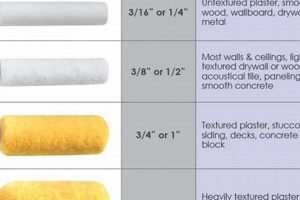
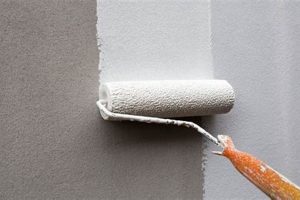
Rolling utilizes a roller to spread the coating over larger, flat surfaces. This technique is generally faster and more efficient than brushing for expansive areas. However, rollers can leave a textured effect, which may not be desirable for all coatings or aesthetic preferences. High-density foam rollers are often preferred for smoother finishes. For example, applying a satin coating to a flush interior door benefits from rolling for efficient coverage, but careful attention must be paid to avoid stipple marks. The selection of roller nap affects the ultimate texture.
- Spraying
Spraying, whether with an airless sprayer or HVLP (High Volume Low Pressure) system, provides the most uniform and smooth finish. This method is particularly well-suited for achieving a professional, factory-like appearance. However, spraying requires careful masking and ventilation to prevent overspray and ensure safety. Coatings intended for spraying must be formulated to achieve the correct viscosity and atomization. An example is applying a lacquer or varnish to achieve a flawless, furniture-grade finish on solid wood doors. This contrasts with brushing or rolling, which may leave subtle imperfections.
- Electrostatic
Electrostatic painting involves applying an electric charge to the coating particles, which are then attracted to the grounded door surface. This method offers excellent coverage and reduces overspray, making it efficient and environmentally friendly. It’s particularly effective for complex shapes and intricate designs. An example is applying powder coating to metal doors, where the electrostatic charge ensures even coverage in hard-to-reach areas. The finish offers superier resistant properties due to process.
In conclusion, the selected application method critically influences the characteristics and final quality of coating on interior doors. Brushing, rolling, and spraying each offer distinct advantages and disadvantages, necessitating careful matching to the specific coating type and desired aesthetic outcome. The ultimate selection must balance efficiency, skill level, and the pursuit of a durable and visually appealing result, all while considering environmental and safety factors.
5. Material Compatibility

The selection of a suitable coating for interior doors hinges critically on the principle of material compatibility. The interaction between the coating and the substratethe door’s construction materialdictates adhesion, durability, and overall aesthetic success. Incompatibility can manifest as peeling, cracking, blistering, or inadequate curing, compromising both the appearance and protective function of the finish.
- Wood Porosity and Primer Selection
Wood, a common door material, exhibits varying degrees of porosity depending on the species and cut. Softwoods like pine tend to absorb coatings more readily than hardwoods like oak. Consequently, the selection of primer is paramount. A suitable primer seals the wood surface, preventing excessive coating absorption, ensuring uniform color, and promoting adhesion. The implications of mismatch include uneven sheen, color inconsistencies, and potential coating failure. For instance, using an oil-based coating directly on untreated pine may lead to excessive absorption and a blotchy finish, necessitating a primer specifically designed for porous wood.
- Metal Door Coatings and Corrosion Resistance
Metal doors, often constructed from steel or aluminum, present unique challenges regarding corrosion resistance. Coatings designed for metal must provide a protective barrier against moisture and environmental factors that can cause rust or oxidation. Direct application of latex coating on untreated steel, for example, can accelerate corrosion. A zinc-rich primer or a specialized metal primer is essential to inhibit rust formation and ensure long-term adhesion. Incompatibility results in compromised structural integrity and a degraded aesthetic appearance.
- Composite Door Composition and Coating Adhesion
Composite doors, composed of various materials like wood fibers, resins, and polymers, exhibit diverse surface properties. Coating adhesion can be problematic if the coating formulation is not compatible with the specific composite blend. Testing a small, inconspicuous area is crucial to assess adhesion before full application. Certain coatings may require a bonding primer to promote adhesion to the composite surface. Ignoring this step can lead to peeling or flaking, particularly in areas subject to frequent handling or temperature fluctuations.
- Previously Finished Surfaces and Recoating Procedures
Recoating previously finished doors necessitates careful consideration of the existing coating type and condition. Applying an incompatible coating over an existing finish can result in poor adhesion or chemical reactions. For instance, applying a latex coating over an oil-based coating without proper preparation can cause the latex to peel or crack. Sanding and priming are often necessary to create a suitable surface for the new coating. Compatibility charts and manufacturer recommendations should be consulted to ensure proper recoating procedures and prevent potential coating failures.
These facets underscore the critical role of material compatibility in achieving a durable and aesthetically pleasing finish on interior doors. Addressing the specific properties of wood, metal, composite materials, and previously finished surfaces with appropriate coatings and preparation techniques is paramount. Failure to do so compromises both the long-term performance and visual appeal of the doors.
Frequently Asked Questions
The following addresses common inquiries regarding the selection of coating for interior doors. Clear and concise information aims to guide informed decision-making.
Question 1: What factors primarily influence the selection of the proper interior door coating?
The selection hinges upon durability requirements, cleanability expectations, sheen preferences, application feasibility, and material compatibility. A balanced consideration of these factors ensures both aesthetic appeal and functional longevity.
Question 2: How does sheen level impact the appearance and maintenance of interior doors?
Sheen affects light reflectivity, perceived texture, and ease of cleaning. Higher gloss levels offer enhanced cleanability but accentuate imperfections. Lower sheen levels provide a softer appearance and conceal flaws but require more diligent maintenance.
Question 3: Why is priming essential before applying coating to interior doors?
Priming seals the door surface, promotes uniform color, enhances coating adhesion, and prevents excessive absorption of the coating into the door material. Proper priming significantly improves the final finish quality and durability.
Question 4: What are the advantages and disadvantages of different coating application methods?
Brushing provides precision and control, while rolling offers efficiency for larger surfaces. Spraying yields the smoothest, most uniform finish but requires specialized equipment and ventilation. Each method necessitates specific skill and material considerations.
Question 5: How does material compatibility influence the selection of coating for interior doors?
Material compatibility ensures proper adhesion, prevents adverse chemical reactions, and optimizes coating performance. Different materials, such as wood, metal, and composites, require coatings formulated to suit their specific properties.
Question 6: What steps should be taken when recoating previously finished interior doors?
Proper preparation, including cleaning, sanding, and priming, is crucial. Compatibility between the existing and new coatings must be verified to prevent peeling, cracking, or adhesion failures. Manufacturer guidelines should be consulted for specific recommendations.
In summary, the selection of coating for interior doors involves a multi-faceted evaluation. Careful consideration of factors such as durability, sheen, material compatibility, and application method is essential for achieving a long-lasting and aesthetically pleasing result.
The subsequent section will explore advanced techniques and considerations for enhancing interior door finishes.
Conclusion
The foregoing examination underscores the multifaceted considerations inherent in determining the optimal coating for interior doors. Key factors encompassing durability, cleanability, sheen level, application method, and material compatibility necessitate careful evaluation. The appropriate selection directly influences not only the aesthetic appeal but also the longevity and maintenance requirements of the doors, impacting the overall value and functionality of the interior space. Mastery of these considerations will yield a refined interior.
Therefore, the informed application of these principles is essential for homeowners and professionals alike. By prioritizing a comprehensive understanding of material properties and application techniques, stakeholders can ensure that the selected coating not only enhances the visual character of the doors but also provides lasting protection and ease of maintenance, resulting in a harmonious and enduring interior design. Continuous advancements promise refined techniques; proactive engagement ensures premium results.