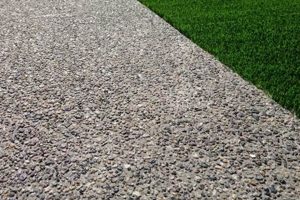
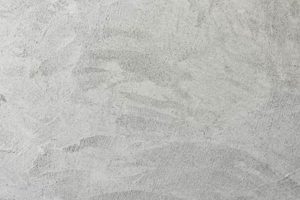
A textured surface treatment for hardened cement, this technique involves embedding coarse salt crystals into the concrete before it fully sets. The salt is later washed away, leaving behind small, pitted indentations that create a distinctive, rough aesthetic. This method is commonly employed on patios, walkways, and driveways to enhance visual appeal and provide a non-slip surface.
This particular finishing method offers several advantages. Its textured surface inherently improves traction, making it a safer option for areas prone to moisture. Furthermore, the resulting appearance adds a rustic or natural element to landscapes and architectural designs. Historically, such techniques were employed to mimic the look of natural stone, offering a cost-effective alternative with customizable textures and colors.
The following sections will delve into the specific application process, detailing best practices for achieving optimal results. Subsequent discussions will cover maintenance requirements, cost considerations, and a comparison with alternative texturing methods, providing a holistic understanding of this concrete finishing option.
Essential Application Considerations
Achieving a durable and aesthetically pleasing surface requires careful attention to detail throughout the process. The following recommendations outline key steps for successful implementation.
Tip 1: Proper Concrete Mix Design: A suitable concrete mix is fundamental. A mix that is too wet can lead to excessive salt absorption and potential surface weakening. A mix that is too dry can prevent proper salt embedment. A slump test is advised to ensure consistency.
Tip 2: Uniform Salt Distribution: Even distribution of salt crystals across the surface is crucial. Uneven distribution results in inconsistent texturing and potential aesthetic flaws. Utilize a salt spreader or carefully broadcast by hand, ensuring overlap to avoid gaps.
Tip 3: Timely Salt Application: The optimal time for salt application is after the concrete has initially set but is still pliable. Applying the salt too early will result in the crystals sinking too deep, while applying it too late will prevent proper embedment. The “thumbprint test” can gauge readiness.
Tip 4: Appropriate Salt Size Selection: The size of the salt crystals dictates the coarseness of the final texture. Finer salt will create a subtler texture, while coarser salt will produce a more pronounced, rugged finish. Conduct test patches with varying salt sizes to determine the desired aesthetic.
Tip 5: Thorough Washing and Curing: Complete removal of the salt crystals is essential to prevent surface degradation. Use a high-pressure washer to thoroughly rinse the surface after the concrete has cured sufficiently. Proper curing ensures maximum strength and durability.
Tip 6: Sealing for Longevity: Applying a concrete sealer after curing enhances the surface’s resistance to staining, weathering, and freeze-thaw damage. Choose a sealer appropriate for exterior concrete surfaces and follow the manufacturer’s instructions for application.
Adhering to these guidelines will contribute significantly to the quality and longevity of the finished surface, resulting in a visually appealing and functional concrete installation.
The following sections will address potential issues and troubleshooting techniques, providing further insights into achieving consistently excellent results.
1. Aggregate Size in Relation to the Salt Rock Finish

The aggregate size in concrete directly influences the aesthetic and functional characteristics of a textured surface. The interplay between the aggregate and the indentations left by the salt creates the final visual effect. Larger aggregates, when exposed by the washing away of the salt, contribute to a more rugged and uneven surface. This is because the larger stones become more prominent features, accentuating the depth and irregularity of the texture. Conversely, smaller aggregates result in a more subtle and uniform finish, where the indentations are the primary visual element, and the aggregate’s presence is less pronounced. The selection of aggregate size is therefore a critical design consideration, directly impacting the desired appearance and tactile feel of the concrete surface.
In practical terms, the aggregate size also affects the slip resistance of the finished concrete. Larger, more exposed aggregates offer enhanced traction, making them suitable for areas where slip hazards are a concern, such as pool decks or inclined walkways. Smaller aggregates, while providing a smoother surface, may require additional texturing techniques to achieve adequate slip resistance. Furthermore, the aggregate’s composition (e.g., granite, quartz, limestone) influences the color and overall aesthetic. For example, using a darker aggregate in conjunction with coarse salt creates a dramatic contrast, while lighter aggregates provide a more subtle and natural look.
In summary, the aggregate size is not merely a structural component but a key determinant of the texture’s visual impact and functional performance. Its careful selection, in conjunction with salt crystal size, placement, and washing, defines the final product. Understanding this relationship is essential for achieving the desired aesthetic and ensuring the durability and safety of the concrete surface.
2. Salt Embedment

Salt embedment is a critical process in the creation of a specific textured cement. The depth and consistency to which salt crystals are pressed into the concrete’s surface directly determine the final texture’s aesthetic and functional characteristics. Insufficient embedment results in shallow indentations that may not provide adequate slip resistance or visual impact. Conversely, excessive embedment can weaken the concrete’s surface integrity, potentially leading to premature deterioration or an inconsistent texture. Achieving the appropriate balance is, therefore, paramount to producing a high-quality finish.
The timing of salt application is inextricably linked to the success of embedment. The concrete must be firm enough to support the weight of the salt without collapsing, yet pliable enough to allow the crystals to be pressed into the surface. This crucial window of opportunity is often identified using the “thumbprint test,” where slight indentation indicates the ideal state. Uniformity in salt distribution further contributes to embedment consistency; uneven distribution leads to areas with concentrated pitting and others with minimal texturing. Real-world examples demonstrate that properly executed embedment yields a durable, visually appealing surface that enhances both safety and aesthetic value.
In summary, proper salt embedment represents a crucial element in achieving the desired qualities of this concrete finish. Challenges arise from variations in concrete mix, ambient temperature, and worker skill. Recognizing and addressing these challenges through careful monitoring and precise execution ensures a consistently high-quality final product, benefiting both the aesthetic appeal and the long-term durability of the surface. The method, when correctly executed, represents an efficient strategy for texturing exterior concrete surfaces.
3. Washing timing

The timing of the washing process is a critical determinant in the creation of a durable and aesthetically pleasing textured cement surface. The washing process removes the salt crystals embedded in the concrete, revealing the textured finish. Deviation from optimal timing can compromise the integrity and visual appeal of the final product.
- Premature Washing
Washing the surface too early, before the concrete has sufficiently hardened, can disrupt the cement matrix. This can lead to aggregate dislodgement, indistinct texturing, and a weakened surface susceptible to premature wear. Examples include situations where heavy rain occurs shortly after salt application but before the concrete has cured adequately, resulting in a washed-out appearance and reduced durability.
- Delayed Washing
Conversely, delaying the washing process allows the salt crystals to absorb moisture from the air, potentially causing them to fuse with the surrounding concrete. This makes removal difficult, resulting in residual salt that can lead to efflorescence (a white, powdery deposit) and surface degradation over time. In coastal environments, where humidity is high, delayed washing is particularly problematic.
- Water Pressure and Volume
The force and quantity of water used during washing must be carefully controlled. Excessive pressure can erode the surface, while insufficient volume may not effectively remove all the salt. A balance must be struck to ensure complete salt removal without damaging the surrounding concrete. The type of nozzle and distance from the surface are critical variables in achieving this balance.
- Environmental Factors
Environmental conditions, such as temperature and humidity, influence the rate at which concrete cures and the solubility of salt. In hot, dry conditions, the concrete may cure rapidly, requiring earlier washing. Conversely, in cold, humid conditions, curing may be slower, necessitating a delayed washing schedule. Awareness of these factors and adjustments to the washing timing are essential for optimal results.
In conclusion, the timing of the washing process directly impacts the success of creating a specific textured cement surface. Optimal timing, controlled water pressure, and awareness of environmental factors are essential for achieving a durable and aesthetically pleasing final product. Deviation from these parameters can compromise the integrity and longevity of the surface.
4. Curing duration

Curing duration exerts a profound influence on the structural integrity and surface characteristics of cement with a specific textured method. The hydration process, during which cement particles bind together, is time-dependent and directly affected by environmental factors. Optimal curing promotes complete hydration, maximizing concrete strength and durability, which are crucial for the longevity of the finish.
- Hydration Rate and Strength Development
The rate of hydration is directly proportional to temperature and moisture availability. Insufficient curing, such as allowing the concrete to dry out too quickly, leads to incomplete hydration and reduced strength. This, in turn, weakens the bond between the aggregate and the cement paste, potentially leading to surface cracking and aggregate dislodgement under stress. Conversely, prolonged moist curing ensures maximum hydration, resulting in a denser, stronger concrete matrix. For example, in hot, arid climates, extended curing periods or the use of curing compounds are essential to mitigate rapid moisture loss.
- Surface Hardness and Abrasion Resistance
The surface hardness of cement is directly related to its curing duration. Proper curing promotes the formation of calcium silicate hydrate (C-S-H), the primary strength-giving component of hardened cement paste, at the surface. This increases resistance to abrasion and wear, which is particularly important for high-traffic areas such as walkways and driveways. Insufficiently cured surfaces are more susceptible to scratching, chipping, and dusting, compromising both their appearance and functionality. The application of curing compounds can create a protective layer that maintains moisture and promotes proper surface hardening.
- Dimensional Stability and Cracking
Curing duration impacts the dimensional stability of the finished cement. As cement hydrates, it undergoes volumetric changes. Proper curing minimizes these changes, reducing the risk of shrinkage cracking. Rapid drying, on the other hand, can cause significant shrinkage stresses, leading to surface cracks that detract from the aesthetic appeal and can compromise the structural integrity of the surface. Maintaining consistent moisture levels during curing helps to reduce these stresses and promote a more dimensionally stable surface. For instance, covering the cement with plastic sheeting or burlap during curing helps retain moisture and minimize shrinkage.
- Salt Crystal Removal and Surface Integrity
The curing duration directly impacts the ease and effectiveness of salt crystal removal during the washing process. If the concrete is not sufficiently cured, the cement matrix may be too weak to withstand the force of the washing, potentially leading to surface damage. Conversely, if the concrete is over-cured and too hard, the salt crystals may become more difficult to remove, leaving behind residual salt that can cause efflorescence or surface degradation. Proper timing of the washing process, in conjunction with adequate curing, is essential for preserving the integrity of the surface while achieving the desired textured effect.
In conclusion, curing duration is not merely a passive element but an active determinant of the quality and longevity of cement. Its influence extends from the macroscopic level of structural strength to the microscopic level of cement hydration, ultimately shaping the performance and aesthetic characteristics of the final product. Careful attention to curing protocols is, therefore, essential for achieving a durable and visually appealing textured finish.
5. Sealer application

Sealer application represents a crucial post-installation step for cement. The porous nature of cement, particularly when textured using methods that create surface indentations, renders it susceptible to the ingress of water, salts, oils, and other contaminants. A quality sealer forms a protective barrier, mitigating these threats and extending the lifespan of the finish. Neglecting sealer application invariably leads to accelerated deterioration, staining, and potential structural damage from freeze-thaw cycles. For instance, unsealed surfaces in regions with de-icing salt usage exhibit rapid scaling and cracking compared to those properly sealed.
The choice of sealer directly impacts the effectiveness of this protective measure. Penetrating sealers, which permeate the cement matrix, offer excellent resistance to water and salt intrusion while maintaining a natural appearance. Film-forming sealers, while providing a glossy sheen, may be more prone to scratching and peeling. The selection should align with the intended use and environmental conditions. Proper surface preparation is also paramount; the surface must be clean, dry, and free of any loose debris before sealer application. Multiple thin coats are generally preferred over a single thick coat to ensure uniform coverage and penetration.
In summary, sealer application is not an optional add-on but an integral component of a specific cement application. It safeguards against environmental damage, preserves the aesthetic appeal, and enhances the long-term durability of the surface. Understanding the importance of sealer selection, proper application techniques, and regular maintenance is essential for maximizing the benefits of this protective measure and ensuring the longevity of cement. Failing to apply a sealer after the creation can undo all other preparation done.
6. Freeze-thaw resistance

The freeze-thaw resistance of concrete, particularly in the context of a textured surface, is paramount for its longevity and structural integrity. Water penetration into the porous structure of concrete is a primary cause of freeze-thaw damage. When water freezes, it expands, exerting internal pressure that can lead to cracking and surface degradation. The textured finish, with its inherent indentations and increased surface area, creates more opportunities for water to penetrate the concrete matrix, thereby potentially exacerbating the risk of freeze-thaw damage. Therefore, ensuring adequate freeze-thaw resistance becomes an even more critical consideration in the application of this method.
Achieving adequate freeze-thaw resistance involves several key strategies. The use of air-entrained concrete, which introduces microscopic air bubbles throughout the mix, provides internal relief for the pressure generated by freezing water. Proper curing techniques, which promote complete hydration and reduce permeability, also play a significant role. Additionally, the application of a high-quality penetrating sealer can effectively reduce water absorption and further enhance resistance to freeze-thaw cycles. For example, in regions with harsh winter climates, the failure to employ these strategies routinely results in rapid surface deterioration, scaling, and cracking within a few years of installation.
In conclusion, freeze-thaw resistance is an indispensable component for a specific surface in cold climates. The textured finish, while aesthetically pleasing, inherently increases vulnerability to freeze-thaw damage. Employing air-entrained concrete, proper curing practices, and protective sealers is essential to mitigate this risk and ensure the long-term durability of these concrete surfaces. Understanding this critical relationship is vital for specifiers, contractors, and homeowners seeking to create durable and aesthetically pleasing concrete installations in regions subject to freezing temperatures.
Frequently Asked Questions
The following section addresses common inquiries and misconceptions regarding concrete with a specific textured application. Information presented is intended to provide clarity and assist in informed decision-making.
Question 1: Is cement with a certain method suitable for all climates?
Concrete surfaces created with this method exhibit varying performance depending on climatic conditions. While durable in moderate climates, freeze-thaw cycles can significantly impact longevity in colder regions. Proper sealing and air-entrainment are crucial mitigating factors.
Question 2: What is the typical lifespan of cement with a certain method?
Lifespan is contingent on several variables, including concrete mix design, application technique, environmental exposure, and maintenance practices. Under optimal conditions, a properly installed surface can last for several decades. However, neglect or harsh conditions can shorten its lifespan considerably.
Question 3: Does cement with a certain method require special cleaning procedures?
Routine maintenance involves regular sweeping and occasional pressure washing. Avoid harsh chemicals or abrasive cleaners, as these can damage the surface and accelerate wear. Promptly address spills to prevent staining.
Question 4: Can cement with a certain method be repaired if damaged?
Minor repairs, such as patching small cracks, are often feasible. However, extensive damage may necessitate complete replacement. Color matching can be challenging, potentially resulting in visible repairs.
Question 5: What are the primary benefits of cement with a certain method compared to other finishes?
The primary benefits include enhanced slip resistance, a unique aesthetic appeal, and relatively low installation cost. However, it may not be as smooth or uniform as some other finishing options.
Question 6: Is cement with a certain method environmentally friendly?
The environmental impact is comparable to that of standard concrete. Utilizing recycled aggregates and minimizing cement content can reduce its carbon footprint. Proper disposal of waste materials during installation is also essential.
In summary, while cement with a certain textured method offers several advantages, careful consideration must be given to environmental factors, maintenance requirements, and potential repair challenges.
The following section will provide a comprehensive cost analysis, examining the various factors that influence the overall expense of a cement surface with a specific textured application.
Conclusion
This exploration of salt rock finish concrete has illuminated essential aspects of its application, performance, and maintenance. Key considerations include proper mix design, meticulous salt application and removal, adequate curing, and appropriate sealing. These factors collectively determine the longevity and aesthetic appeal of this textured concrete surface. Recognizing the nuanced interplay between these elements is crucial for successful implementation.
The informed application of salt rock finish concrete can create durable, slip-resistant, and visually distinctive surfaces. Further research and adherence to best practices are encouraged to optimize its performance and expand its applications in diverse environments. Thoughtful planning ensures both aesthetic appeal and long-term functionality, making it a valuable option in construction and landscaping.