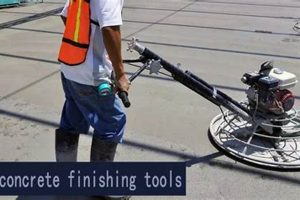
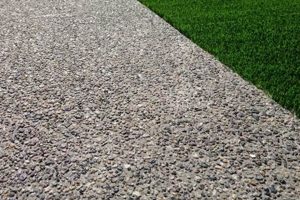
This specialized equipment is designed to smooth and refine the surface of freshly poured concrete slabs. Examples include power floats, walk-behind trowels, and ride-on machines, each utilized to achieve different levels of finish, from a rough, non-slip surface to a highly polished, reflective sheen. The choice of equipment depends on the size of the area, the desired texture, and the project’s specific requirements.
The employment of such devices significantly improves the durability and aesthetics of concrete surfaces. It reduces imperfections, enhances resistance to wear and tear, and creates a more uniform and visually appealing result. The use of mechanical methods represents a considerable advancement over manual techniques, increasing efficiency and ensuring consistency in large-scale construction projects. Its evolution has mirrored the increasing demands for precision and speed in the building industry.
The subsequent sections will delve into the various types available, their operational principles, factors influencing equipment selection, maintenance requirements for optimal performance, and emerging trends in the field of concrete surface refinement technology.
Operational Tips for Enhanced Concrete Surface Finishing
Effective operation of the equipment is crucial for achieving desired concrete surface quality, minimizing rework, and ensuring longevity of the device.
Tip 1: Surface Preparation is Paramount. Before initiating the finishing process, ensure the concrete surface has reached the appropriate level of firmness. Premature operation can lead to surface tearing and unevenness. The “thumbprint” test is a reliable indicator; a slight indentation should remain when pressure is applied.
Tip 2: Blade Selection Directly Impacts the Outcome. Different blade types are designed for specific stages and finishes. Float blades are typically used initially to level the surface, followed by finish blades to achieve a smoother texture. Using the wrong blade can result in surface imperfections or damage.
Tip 3: Overlap Passes for Uniformity. A consistent overlap of approximately 25-30% between each pass is essential to prevent lines and ensure a uniform surface. This minimizes variations in texture and color across the finished area.
Tip 4: Maintain a Consistent Speed and Pressure. Avoid sudden changes in speed or applied pressure, as these can create inconsistencies in the surface finish. A slow, steady pace is generally recommended, particularly during the final finishing stages.
Tip 5: Clean Blades Regularly. Concrete buildup on the blades can affect their performance and lead to surface imperfections. Regularly cleaning the blades with a scraper or solvent will maintain their effectiveness and prevent damage to the concrete surface.
Tip 6: Regularly Inspect and Maintain the Equipment. Proper maintenance is crucial for optimal performance and longevity. Regularly inspect the engine, belts, and other components, and address any issues promptly. Refer to the manufacturer’s instructions for specific maintenance procedures.
Tip 7: Consider Ambient Conditions. Environmental factors such as temperature, humidity, and wind can affect the concrete curing process and, consequently, the finishing process. Adjust operational techniques accordingly, such as using evaporation retardants in hot, dry conditions.
Mastering operational techniques coupled with consistent preventative maintenance promotes durable, aesthetically pleasing results. Attention to these details maximizes the investment in the equipment and the quality of the final concrete surface.
The following section will provide insights into troubleshooting common issues encountered during its use.
1. Power Trowel

The power trowel is a critical component within the broader category of concrete finishing equipment. Its primary function is to refine and smooth concrete surfaces after the initial pour and leveling stages. The power trowel directly impacts the final aesthetics and durability of the concrete slab.
- Surface Smoothing and Flattening
The power trowel utilizes rotating blades to eliminate surface imperfections, creating a level and uniform plane. This is crucial for applications where a smooth, flat surface is required, such as in warehouses, retail spaces, or residential flooring. The effectiveness of this operation hinges on the operator’s skill and the timing of the process, which must coincide with the concrete’s curing stage.
- Blade Types and Functionality
Power trowels employ various blade types, each designed for a specific stage of the finishing process. Float blades, for instance, are used for initial leveling, while finish blades are employed to achieve a smoother, more polished surface. The correct selection and application of blade types are essential for obtaining the desired finish quality.
- Walk-Behind vs. Ride-On Models
Power trowels are available in both walk-behind and ride-on configurations. Walk-behind models are suitable for smaller areas or confined spaces, while ride-on models are preferred for large-scale projects where efficiency is paramount. The choice between these models depends on the project’s scope and the available workspace.
- Impact on Concrete Density and Durability
The troweling action compacts the surface of the concrete, increasing its density and resistance to wear and tear. This is particularly important in high-traffic areas where the concrete surface is subjected to significant abrasion. A properly troweled surface will exhibit improved durability and longevity compared to one that has not been adequately finished.
In summary, the power trowel represents a key technology within concrete finishing, enabling the creation of smooth, durable, and aesthetically pleasing surfaces. Its proper use necessitates a thorough understanding of concrete properties, blade selection, and operational techniques to achieve optimal results.
2. Surface Leveling

Surface leveling is a critical precursor to the effective deployment of concrete finishing machinery. Achieving a level surface prior to finishing operations is essential for ensuring uniform thickness, proper drainage, and optimal performance of the finishing equipment. Inadequate initial leveling can lead to inconsistent finishes, increased material usage, and compromised structural integrity.
- Importance of Initial Screeding
Screeding establishes the initial plane of the concrete surface. It involves using a straightedge, often a purpose-built screed board or laser-guided system, to strike off excess concrete and create a level surface. Effective screeding minimizes the workload for the concrete finish machine, allowing it to focus on refining the surface rather than correcting significant elevation discrepancies. Examples include using a vibrating screed for large slabs or a hand screed for smaller, intricate areas. Neglecting proper screeding can result in uneven distribution of aggregates and increased likelihood of surface cracking.
- Impact on Finishing Equipment Efficiency
A level starting point enhances the efficiency of concrete finish machines. When the surface is already reasonably level, the machine can operate more smoothly and consistently, reducing the risk of blade wear, motor strain, and uneven finishes. This also translates to faster completion times and lower labor costs. Conversely, attempting to finish an unlevel surface requires the machine to work harder, potentially leading to equipment malfunction and a less desirable outcome.
- Influence on Final Surface Quality
Surface leveling directly affects the final quality of the concrete finish. Even the most advanced finishing machine cannot fully compensate for significant variations in the initial surface. A level surface ensures uniform application of finishing techniques, resulting in a consistent texture, color, and density. This is particularly crucial for applications requiring specific tolerances or aesthetic requirements, such as polished concrete floors or industrial surfaces. The quality of the level will be improved, because of the efficiency of the machine.
- Use of Laser Leveling Technology
Laser leveling systems offer precise control over the initial surface elevation. These systems project a laser beam onto the concrete, guiding the screeding process and ensuring a highly accurate and level surface. The use of laser leveling is particularly beneficial for large-scale projects or applications requiring tight tolerances. This technology minimizes the need for manual adjustments and reduces the potential for human error, resulting in a more efficient and consistent leveling process and a good base for a machine-finished concrete.
These facets highlight the indispensable relationship between surface leveling and the subsequent use of concrete finishing machinery. Prioritizing effective leveling techniques and technologies ultimately leads to superior concrete finishes, improved project efficiency, and enhanced long-term performance of the concrete structure.
3. Blade Maintenance

Effective blade maintenance is inextricably linked to the performance and longevity of any concrete finish machine. The blades are the primary point of contact with the concrete surface, and their condition directly influences the quality of the final finish. Dull, damaged, or improperly adjusted blades can result in surface imperfections such as gouges, unevenness, and aggregate exposure. Regular maintenance, including cleaning, sharpening, and replacement, is therefore essential for achieving optimal results. For example, in large warehouse projects where a perfectly smooth surface is required for automated guided vehicles, poorly maintained blades can create deviations that impede vehicle operation, highlighting the critical role of blade upkeep.
Different blade types necessitate specific maintenance procedures. Float blades, designed for initial leveling, require periodic cleaning to remove accumulated concrete residue. Finish blades, used for achieving a smooth surface, benefit from regular sharpening to maintain a clean cutting edge. The frequency of maintenance depends on factors such as concrete hardness, aggregate type, and the machine’s operating conditions. In situations where abrasive aggregates are present in the concrete mix, more frequent blade inspections and replacements are necessary. Furthermore, ensuring proper blade alignment and attachment is critical for preventing premature wear and ensuring uniform pressure distribution across the concrete surface.
Neglecting blade maintenance can lead to decreased efficiency, increased operating costs, and compromised finish quality. Damaged blades place undue stress on the machine’s motor, potentially shortening its lifespan. Furthermore, the need for rework due to surface imperfections increases labor costs and delays project completion. Prioritizing blade maintenance is, therefore, a sound investment that yields significant returns in terms of enhanced productivity, improved finish quality, and extended equipment lifespan. Over time, this simple measure reduces material waste and maintains the project at optimal performance level.
4. Concrete Hardness

The hardness of concrete exerts a substantial influence on the operation and effectiveness of concrete finishing equipment. Concrete hardness, a measure of its resistance to indentation and abrasion, is determined by factors such as the cement-to-water ratio, aggregate type, curing conditions, and age. This material property dictates the timing and techniques required for achieving a desired finish. For instance, attempting to operate a power trowel on concrete that is too soft results in surface tearing and an uneven finish, while operating on concrete that is too hard proves inefficient and may damage the equipment. Therefore, assessing concrete hardness is a prerequisite for selecting appropriate finishing methods and equipment settings. A common example is the application of a surface hardener. In these cases, a concrete finish machine may be necessary to properly burnish the hardener into the floor or surface.
The selection of blades used in power trowels and other finishing machines is directly linked to the concrete’s hardness. Softer concrete necessitates the use of wider, less aggressive blades to prevent digging into the surface. Conversely, harder concrete requires more abrasive blades to effectively smooth and refine the surface. Failure to match blade type to concrete hardness leads to suboptimal finishes, increased blade wear, and potential damage to the equipment. Understanding concrete hardness also informs decisions regarding the timing of finishing operations. Experienced finishers monitor the concrete’s set rate and hardness development to determine the precise moment when finishing should commence. This ensures that the concrete is workable but firm enough to withstand the finishing process.
In summary, the hardness of concrete is a pivotal factor in the successful deployment of concrete finishing machinery. Accurate assessment of concrete hardness, coupled with informed decisions regarding equipment selection, blade type, and operational timing, are essential for achieving durable, aesthetically pleasing concrete surfaces. Failure to consider concrete hardness can result in compromised finish quality, increased costs, and reduced equipment lifespan. Concrete Finish machine is not a machine you can apply to any type of surface without understand the nature of concrete hardness.
5. Operational Safety

The utilization of a concrete finish machine introduces inherent safety risks that demand stringent adherence to established protocols. The high-speed rotating components, potential for electrical hazards (in electric-powered models), and physical demands of operating the equipment necessitate comprehensive safety measures to mitigate potential injuries. Failure to prioritize safety can result in severe consequences, including lacerations, fractures, electrical shock, and musculoskeletal disorders. For example, neglecting to properly guard rotating blades creates an immediate risk of serious injury to the operator or bystanders. Similarly, inadequate training on machine operation can lead to loss of control, resulting in collisions and potential harm. Concrete finishing often occurs in environments with other construction activities which raises the probability of injury from other trades.
A multifaceted approach to operational safety encompasses several critical elements. Comprehensive training programs are paramount, ensuring that operators are thoroughly familiar with the machine’s controls, safety features, and emergency shutdown procedures. Regular equipment inspections are essential for identifying and rectifying potential hazards, such as damaged guards, frayed electrical cords, or malfunctioning safety switches. Personal protective equipment (PPE), including safety glasses, hearing protection, steel-toed boots, and appropriate gloves, must be consistently worn to minimize the risk of injury. The work area should be well-ventilated to prevent the accumulation of hazardous dust and fumes, and proper housekeeping practices should be maintained to eliminate slip and trip hazards. Strict adherence to lock-out/tag-out procedures during maintenance and repair operations is also crucial for preventing accidental start-up of the machine.
Integrating robust safety protocols into every aspect of concrete finishing operations is not merely a regulatory obligation but a fundamental responsibility. By prioritizing operator training, equipment maintenance, and the consistent use of PPE, construction companies can significantly reduce the risk of accidents and create a safer working environment. A proactive approach to safety not only protects workers from harm but also enhances productivity, reduces downtime, and minimizes potential liabilities. Continuous monitoring, review, and improvement of safety procedures are essential for adapting to evolving workplace conditions and ensuring the ongoing well-being of all personnel involved in concrete finishing activities. This commitment ensures high-quality output and a high standard of care for the personnel involved in the operations.
Frequently Asked Questions
This section addresses common inquiries regarding the application, maintenance, and selection of equipment designed for concrete surface finishing. The information provided aims to clarify technical aspects and promote informed decision-making.
Question 1: What are the primary types of concrete finishing equipment available?
The spectrum of concrete finishing equipment encompasses walk-behind power trowels, ride-on power trowels, hand floats, and various specialized tools designed for specific surface treatments. Each type caters to differing project scales and desired finish characteristics.
Question 2: How does concrete hardness influence the selection of finishing equipment?
The hardness of the concrete directly dictates the type of blades and pressure settings required for effective finishing. Softer concrete necessitates wider blades and reduced pressure to prevent tearing, while harder concrete demands more aggressive blades and increased pressure to achieve optimal smoothness.
Question 3: What safety precautions are essential when operating concrete finishing machinery?
Operational safety mandates the use of appropriate personal protective equipment (PPE), including safety glasses, hearing protection, and steel-toed boots. Regular equipment inspections, adherence to lock-out/tag-out procedures during maintenance, and comprehensive operator training are also critical for mitigating potential hazards.
Question 4: What is the significance of surface leveling prior to using finishing equipment?
Surface leveling, achieved through screeding, establishes a consistent plane, thereby maximizing the efficiency and effectiveness of the finishing equipment. A level surface minimizes the workload required for the machine, resulting in a more uniform and aesthetically pleasing finish.
Question 5: How frequently should blades be inspected and maintained on a concrete finish machine?
Blade inspection and maintenance frequency depends on factors such as concrete composition, aggregate type, and the intensity of equipment usage. Regular cleaning to remove concrete buildup and periodic sharpening are essential for maintaining optimal performance and preventing surface imperfections.
Question 6: What are the long-term cost implications of neglecting proper maintenance on concrete finishing equipment?
Neglecting routine maintenance can lead to decreased equipment lifespan, increased repair costs, reduced operational efficiency, and compromised finish quality. The cumulative impact of these factors can significantly elevate overall project expenses and negatively affect the durability of the concrete surface.
The information provided underscores the importance of informed equipment selection, diligent maintenance, and strict adherence to safety protocols in the context of concrete surface finishing. These practices are crucial for achieving durable, aesthetically pleasing, and cost-effective results.
The subsequent section will provide a comparison between manual and machine-driven concrete finishing methods.
Conclusion
The preceding discussion has elucidated the multifaceted role of the concrete finish machine in modern construction. From enhancing surface durability and aesthetics to improving operational efficiency, this technology has fundamentally transformed concrete finishing processes. Key considerations, including surface preparation, blade selection, operational techniques, and safety protocols, are paramount for maximizing the benefits derived from this equipment.
As construction methodologies continue to evolve, the importance of the concrete finish machine will only amplify. Industry stakeholders are encouraged to continually assess emerging technologies and best practices to optimize concrete finishing outcomes. The pursuit of innovation and excellence in this domain will undoubtedly yield more sustainable, resilient, and visually appealing infrastructure for future generations.