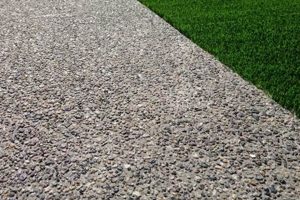
A surfacing technique involving the exposure of coarse particles within a hardened cementitious matrix. This is achieved through the removal of the outer cement paste layer, revealing the underlying particulate material. For example, a driveway can be constructed with this method, showcasing pebbles of varying colors and sizes for an aesthetic appeal.
The process offers several advantages. It enhances slip resistance, providing a safer surface for pedestrians and vehicles. Durability is also improved, as the exposed particles are more resistant to wear and tear than the plain cement paste. Furthermore, this approach allows for customization in terms of color, texture, and aggregate type, enabling integration with various design schemes. Historically, it has been utilized as a cost-effective and visually interesting option for large-scale paving projects.
The selection of appropriate materials and application methods is crucial to achieving the desired outcome. Factors such as aggregate size, shape, and color, as well as the timing and technique of the exposure process, significantly impact the final appearance and performance of the finished surface. Subsequent sections will delve into these aspects in greater detail, providing a comprehensive guide to the effective implementation of this surfacing solution.
Application Considerations
The successful implementation of this surfacing requires careful attention to detail and adherence to best practices. The following guidelines provide essential considerations for achieving optimal results.
Tip 1: Aggregate Selection: The choice of particulate material significantly influences the final aesthetic and performance. Consider factors such as size gradation, color consistency, and resistance to weathering. Local availability and cost should also be evaluated. For example, granite provides excellent durability and a range of color options, while recycled glass offers an environmentally friendly alternative with unique visual appeal.
Tip 2: Mix Design: The cementitious mixture must be formulated to provide adequate workability, strength, and durability. The water-cement ratio should be carefully controlled to minimize shrinkage and cracking. Admixtures, such as air-entraining agents, can enhance freeze-thaw resistance. Proper consolidation of the mixture is essential to eliminate air voids and ensure uniform distribution of the particulate material.
Tip 3: Placement Techniques: The method of placement should ensure consistent distribution of the aggregate throughout the slab. Over-vibration can lead to segregation, where the larger particulates settle to the bottom. Proper screeding and leveling are essential for achieving a flat, uniform surface.
Tip 4: Timing of Exposure: The timing of the surface exposure is critical. Premature removal of the cement paste can damage the particles and weaken the surface. Conversely, delayed exposure can make removal difficult and result in an uneven finish. Trial areas are recommended to determine the optimal exposure timing for specific mix designs and environmental conditions.
Tip 5: Exposure Methods: Various methods can be employed to expose the aggregate, including brushing, water blasting, and chemical retarders. The choice of method depends on the desired degree of exposure and the type of mixture used. Brush exposure is suitable for lightly exposing fine particles, while water blasting is more effective for deeply exposing larger particles.
Tip 6: Sealing and Protection: Applying a sealer after exposure can enhance the durability and appearance of the surface. Sealers protect against staining, abrasion, and chemical attack. The type of sealer should be selected based on the intended use and environmental conditions. Regular cleaning and maintenance are essential for preserving the long-term integrity of the surface.
Adherence to these guidelines ensures a durable, aesthetically pleasing, and functional surface. Careful planning and execution are paramount to maximizing the benefits and minimizing potential issues.
The subsequent sections will address common challenges and troubleshooting techniques associated with this specialized finishing process.
1. Exposed Particle Matrix

The exposed particle matrix is the defining characteristic of the method under discussion. It directly refers to the arrangement and visibility of the coarse materials within the hardened cement. The relationship is not merely correlational but foundational; the deliberate exposure of these particles is the concrete finishing technique. The desired visual and tactile texture is achieved by removing the outer layer of cement paste, revealing the particles below. This process directly affects the appearance and the surface properties of the finished product.
The nature of the matrix significantly influences the functional properties of the final surface. For instance, a matrix composed of closely packed, durable stones provides high resistance to abrasion and weathering, making it suitable for high-traffic areas like sidewalks or driveways. Conversely, a matrix with loosely spaced, decorative particles may prioritize aesthetics over pure durability, perhaps being used for decorative patios or wall facings. The choice of aggregate type, size distribution, and exposure technique directly dictates the final performance and visual appeal.
Therefore, an understanding of the exposed particle matrix is paramount. The composition and configuration of this matrix dictate the overall characteristics of the finished surface. This understanding aids in predicting the behavior of the finished concrete as well as the longevity of the structure under various environmental stressors. Challenges exist in consistently achieving the desired matrix, often relating to uniform aggregate distribution during the mixing and pouring phases and the precise timing of cement paste removal. Successful execution relies on meticulous planning, skilled craftsmanship, and a thorough understanding of material properties.
2. Slip Resistance Enhancement

The inherent texture created through this finishing method directly contributes to improved traction. By exposing the particulate matter, a micro-rough surface is produced, increasing the coefficient of friction. This is a functional element; the absence of such texturing would yield a considerably smoother, and therefore more hazardous, surface when wet or otherwise compromised. This attribute is not merely desirable but often mandated by safety regulations in public spaces and commercial properties. Consider a sloped walkway; a smooth finish could create a significant fall risk, while the texturing from this approach provides a substantial measure of safety.
The degree of slip resistance can be tailored by selecting specific types of aggregate and by varying the depth of exposure. For instance, the use of angular, fractured stone results in a sharper, more abrasive surface compared to rounded pebbles. Similarly, deeper exposure reveals more of the aggregate, resulting in a more pronounced texture and greater slip resistance. The design phase must consider intended use, factoring in environmental conditions such as expected rainfall, potential for ice formation, and the typical footwear used in the area. Proper implementation enhances safety and mitigates liability concerns. The benefits of which provide traction to any concrete surfaces.
In summary, the surfacing approach offers a practical and effective means of enhancing slip resistance. The deliberate exposure of aggregate creates a textured surface that improves traction, making it a valuable consideration for applications where safety is paramount. While design considerations are crucial to maximize the benefits, its essential to weigh against aesthetic preferences. The implementation of the technique is a strategic design choice that positively affects risk mitigation in public and private spaces.
3. Customizable Aesthetics

The method allows significant aesthetic variation, enabling integration with diverse architectural styles and design preferences. This adaptability stems from the ability to manipulate several key variables, resulting in a broad spectrum of visual outcomes.
- Aggregate Type and Color
The selection of particulate material exerts a dominant influence on the final appearance. Aggregates range from naturally occurring stones like granite, quartz, and river rock to manufactured options such as recycled glass or colored ceramics. The inherent color, size, and shape of the chosen aggregate contribute significantly to the overall aesthetic. For instance, using dark basalt creates a modern, dramatic effect, while incorporating light-colored quartz provides a bright, natural look. Furthermore, mixing different aggregate types allows for unique patterns and textures.
- Exposure Level and Texture
The degree to which the aggregate is exposed directly impacts the surface texture and visual depth. Light exposure reveals only the uppermost layer of the particulate material, resulting in a subtle, understated aesthetic. Conversely, deep exposure creates a more pronounced texture with greater visual interest. Various techniques, such as abrasive blasting or chemical retarders, can be employed to achieve the desired exposure level. The texture can range from smooth and polished to rough and highly textured.
- Matrix Color and Contrast
The color of the cementitious matrix provides an opportunity to create contrast or harmony with the aggregate. A contrasting matrix color can accentuate the aggregate, making it stand out prominently. Conversely, a matrix color that closely matches the aggregate creates a more unified and subtle appearance. Pigments can be added to the mixture to achieve a wide range of colors, allowing for precise customization. For example, a dark gray matrix can enhance the vibrant colors of recycled glass aggregate.
- Patterning and Detailing
The ability to incorporate patterns and detailing further enhances the aesthetic possibilities. Decorative forms can be cast into the fresh concrete, creating intricate designs and visual interest. Additionally, different aggregate types can be strategically placed to create patterns or borders. Techniques such as stenciling and staining can also be used to add color and detail to the surface. The flexibility to incorporate these design elements allows for the creation of truly unique and personalized surfaces.
The inherent versatility of this surfacing approach provides architects and designers with a powerful tool for achieving specific aesthetic goals. From subtle textural nuances to bold visual statements, the method offers unparalleled customization options. The skillful manipulation of aggregate type, exposure level, matrix color, and patterning allows for the creation of concrete surfaces that are both functional and visually compelling.
4. Durability Improvement

The implementation of exposed particle surfaces has a direct and measurable effect on the longevity and structural integrity of concrete structures. The method’s impact extends beyond mere aesthetics, contributing significantly to the enhanced resistance of the material against various forms of degradation. Understanding the specific mechanisms through which this durability improvement is achieved is crucial for informed decision-making in construction and design.
- Enhanced Abrasion Resistance
The exposure of durable particles creates a surface that is significantly more resistant to wear and tear from foot traffic, vehicular traffic, and other abrasive forces. The exposed material, often a hard stone such as granite or quartz, provides a sacrificial layer that protects the underlying cementitious matrix from direct impact and abrasion. For example, sidewalks finished with this technique demonstrate a prolonged lifespan compared to plain cement surfaces in high-traffic urban environments. The reduced wear rate translates into lower maintenance costs and extended structural service life.
- Reduced Surface Cracking
The presence of coarse particulate matter within the cement matrix helps to mitigate the formation and propagation of surface cracks. The aggregate acts as a crack arrestor, impeding the growth of micro-cracks and preventing them from coalescing into larger, more detrimental fractures. This mechanism is particularly important in environments subject to freeze-thaw cycles, where the expansion and contraction of water within the cement paste can induce cracking. The technique provides a more robust and resilient surface that is less susceptible to environmental damage.
- Improved Resistance to Chemical Attack
Certain types of aggregate can enhance the resistance of concrete to chemical degradation. For example, using silica-rich aggregates can improve the material’s resistance to alkali-silica reaction (ASR), a process that can cause expansion and cracking in concrete structures. The proper selection of aggregate type based on the anticipated exposure environment is crucial for maximizing the benefits of this surfacing approach. Furthermore, the density and impermeability of the exposed particles can help to reduce the penetration of corrosive substances into the cement matrix, further enhancing the material’s resistance to chemical attack.
- Increased Freeze-Thaw Durability
Surfaces finished with this method display superior resistance to damage caused by repeated cycles of freezing and thawing. Air entrainment, often incorporated during the mixture design, creates microscopic air bubbles within the cement paste, providing space for water to expand upon freezing. The presence of durable aggregate further enhances this resistance by providing a strong, stable framework that is less susceptible to cracking and spalling caused by ice formation. In regions with harsh winter climates, the technique offers a practical and effective means of extending the service life of concrete pavements and structures.
The factors described directly and positively affect the structural integrity and longevity of concrete elements. These improvements result from the physical properties of the exposed particle layer. This technique also assists with limiting future degradation issues when the right selection of materials are paired with expert application. Therefore, this method is a pragmatic choice that is aesthetically pleasing and has economic benefits.
5. Cost-Effective Application

The utilization of exposed particle surfaces presents a viable alternative to other decorative surface treatments, balancing aesthetic appeal with budgetary considerations. The economic advantages of this method stem from several factors inherent in the material properties, installation processes, and long-term maintenance requirements.
- Reduced Material Costs
This surfacing technique allows for the use of locally sourced aggregate materials, diminishing transportation expenses and supporting regional economies. Utilizing readily available gravel, crushed stone, or recycled materials as the particulate matter can significantly lower the overall cost compared to importing specialized paving stones or tiles. For example, a rural construction project may leverage river rock abundant in the area, achieving a unique aesthetic while minimizing material procurement expenses. This adaptability contributes directly to the economic feasibility of the approach.
- Simplified Installation Process
The application process is generally less labor-intensive than installing individual pavers or applying complex overlay systems. The particulate material is integrated directly into the cement mixture, eliminating the need for precise placement of individual units. While skilled labor is required for proper mixing, pouring, and exposure techniques, the overall time investment is often lower compared to other decorative surfacing methods. This simplified installation translates to reduced labor costs and faster project completion times.
- Lower Maintenance Requirements
Exposed aggregate surfaces demonstrate inherent durability and resistance to wear, leading to reduced maintenance expenses over the lifespan of the pavement. The robust nature of the exposed particles minimizes the need for frequent repairs, resurfacing, or sealing. Routine cleaning, such as pressure washing, is typically sufficient to maintain the appearance and functionality of the surface. This long-term cost savings enhances the economic attractiveness of the method, particularly for high-traffic areas or large-scale paving projects.
- Life-Cycle Cost Advantages
A comprehensive analysis of life-cycle costs often favors exposed aggregate finishes compared to other decorative options. While the initial investment may be comparable, the reduced maintenance requirements and extended service life contribute to a lower overall cost over the long term. For example, a municipal park may choose exposed particle surfacing for walkways and plazas, recognizing the durability and low maintenance needs as a cost-effective solution for a public space. This holistic perspective on cost-effectiveness is crucial for making informed decisions regarding decorative surfacing treatments.
These facets highlight the economic benefits inherent in utilizing this particular concrete finishing approach. From decreasing material expenses to the decrease of maintenance, the long-term benefits are a significant advantage over more expensive methods of surfacing and texturizing the ground. The cost-effectiveness of this method, coupled with its aesthetic versatility and durability, positions it as a practical and economically sound choice for a wide range of construction projects.
6. Material Selection Critical

The success and longevity of any application involving this finishing method are inextricably linked to the selection of appropriate materials. This process is not a mere formality but a fundamental determinant of the final product’s aesthetic appeal, structural integrity, and resistance to environmental stressors. Inadequate material selection can lead to premature failure, discoloration, cracking, and a host of other undesirable outcomes, negating any potential cost savings gained during initial construction. The coarse particles, cement type, and any admixtures used each play a crucial role in achieving the desired result. This interdependency underscores the importance of informed and deliberate material choices.
For instance, the use of a non-durable aggregate, such as certain types of limestone, in a freeze-thaw environment will inevitably lead to surface deterioration and spalling. Conversely, the careful selection of a hard, weather-resistant aggregate, such as granite or basalt, significantly enhances the surface’s ability to withstand these conditions. Similarly, the choice of cement type impacts the finished product’s color and resistance to chemical attack. A light-colored cement will accentuate the aggregate’s natural hues, while a sulfate-resistant cement is essential in environments exposed to high concentrations of sulfates. The use of chemical admixtures, such as water reducers or air-entraining agents, can further enhance the mixture’s workability, durability, and resistance to cracking. These are the factors to consider in any given concrete finish. Therefore, the overall success of the finishing method depends on the specification, selection, and handling of these concrete aggregate finish.
In conclusion, the material selection process is a critical determinant of the performance of any concrete aggregate surface. Proper considerations of aggregate durability, cement type, and admixture compatibility are imperative for achieving long-lasting and aesthetically pleasing results. Disregarding these considerations can lead to costly repairs, premature failure, and ultimately, a less desirable outcome. Therefore, material selection should be viewed as a strategic investment in the long-term success and durability of the finished product.
7. Application Techniques Matter

The ultimate success of a concrete aggregate surface hinges not solely on material selection, but critically on the application methods employed. The precision and skill involved in each stage of the process, from mixing to exposure, directly influence the aesthetic appeal, durability, and overall performance of the finished product. Improper application techniques can negate the benefits of even the most carefully chosen materials, leading to structural weaknesses, visual imperfections, and premature failure.
- Mixing Consistency and Uniformity
Achieving a homogenous mixture is paramount. Uneven distribution of aggregate within the cement matrix results in inconsistencies in the final surface texture and strength. Over-mixing can lead to segregation of the aggregate, while under-mixing results in cement clumps and weak bonding. Proper mixing techniques involve careful measurement of materials, controlled mixing times, and consistent monitoring of the mixture’s consistency. Real-world examples include driveways with patchy aggregate distribution due to inadequate mixing, leading to uneven wear and tear. Such inconsistencies can undermine the aesthetic appeal and compromise the structural integrity of the surface.
- Placement and Consolidation Methods
The manner in which the concrete is placed and consolidated directly affects the density and uniformity of the surface. Improper placement can lead to air voids and segregation of the aggregate, resulting in weak spots and surface imperfections. Proper consolidation techniques, such as vibration, help to eliminate air pockets and ensure a dense, well-bonded surface. A poorly consolidated concrete surface, for instance, is susceptible to scaling and cracking, particularly in freeze-thaw environments. Proper placement and consolidation are therefore essential for maximizing the durability and longevity of the finished product.
- Exposure Timing and Technique
The timing and method of exposing the aggregate are critical for achieving the desired aesthetic and functional properties. Premature exposure can damage the aggregate and weaken the surface bond, while delayed exposure can make removal of the cement paste difficult and result in an uneven finish. The choice of exposure technique, such as water blasting, brushing, or chemical retarders, depends on the desired level of exposure and the type of aggregate used. Inconsistencies in exposure depth or technique can lead to an uneven and aesthetically unappealing surface. Precise control over the exposure process is therefore essential for achieving a consistent and high-quality finish.
- Curing Practices and Environmental Control
Proper curing is essential for ensuring the full hydration of the cement and maximizing the strength and durability of the concrete. Insufficient curing can lead to surface cracking, reduced strength, and increased permeability. Proper curing techniques involve maintaining a moist environment and protecting the surface from extreme temperatures and rapid drying. Inadequate curing practices, for example, can result in a brittle surface that is susceptible to scaling and cracking. Adequate practices need to be followed during the concrete aggregate finish.
These are the core components to ensuring quality in concrete aggregate finish. The various application methods and techniques ensure a reliable structure with a high-quality finish. Each facet is interconnected and affect one another in a system. The proper execution of these application techniques is crucial for maximizing the potential of the material in construction projects. This creates an aesthetically pleasing, durable, and long lasting result that can withstand environmental stressors.
Frequently Asked Questions About Concrete Aggregate Finish
This section addresses prevalent inquiries regarding concrete aggregate finish, providing clarity on its properties, applications, and maintenance requirements.
Question 1: What are the primary advantages of utilizing concrete aggregate finish compared to conventional concrete surfaces?
The implementation of this technique enhances slip resistance, improves durability against abrasion, and offers a wide range of aesthetic customization options. Conventional concrete surfaces typically lack these combined benefits.
Question 2: How does the selection of particulate matter affect the final appearance and performance of a concrete aggregate surface?
The type, size, color, and shape of the particulate matter significantly influence the texture, visual appeal, and durability of the finished surface. Selecting durable and aesthetically appropriate material is crucial for achieving the desired outcome.
Question 3: What specific maintenance procedures are recommended for preserving the integrity and appearance of a concrete aggregate finish?
Regular cleaning with water and a mild detergent is generally sufficient. Periodic sealing may be necessary to protect against staining and enhance long-term durability. Avoid harsh chemicals or abrasive cleaning methods that could damage the surface.
Question 4: Is concrete aggregate finish suitable for all climates and environmental conditions?
While generally durable, this finish may require specific considerations in extreme climates. In freeze-thaw environments, air entrainment is essential to prevent cracking. Proper sealing is also recommended to protect against moisture penetration and chemical attack.
Question 5: How does the cost of concrete aggregate finish compare to other decorative concrete options, such as stamped concrete or staining?
The cost varies depending on the complexity of the design, the type of particulate matter used, and the labor required. However, this finish is often a cost-effective alternative, offering a balance of aesthetic appeal and long-term durability.
Question 6: What are the potential drawbacks or challenges associated with implementing concrete aggregate finish?
Inconsistent aggregate distribution, improper exposure timing, and inadequate curing can lead to surface imperfections and reduced durability. Skilled craftsmanship and attention to detail are essential to mitigate these challenges.
In summary, concrete aggregate finish offers numerous advantages, but careful planning, material selection, and application techniques are crucial for achieving optimal results. Proper maintenance is also essential for preserving the long-term integrity and appearance of the finished surface.
The subsequent section will explore case studies of successful concrete aggregate finish applications, showcasing the versatility and aesthetic potential of this surfacing technique.
Conclusion
This article has provided a detailed examination of concrete aggregate finish, covering its definition, benefits, application considerations, and frequently asked questions. The importance of material selection, proper mixing, placement techniques, exposure timing, and appropriate curing practices have been emphasized. The cost-effectiveness and aesthetic versatility of this surfacing technique have also been explored.
Concrete aggregate finish represents a durable and customizable solution for a wide range of construction projects. Its successful implementation, however, demands careful planning, skilled craftsmanship, and a thorough understanding of the material properties and application techniques involved. Further research and development in this area will continue to refine best practices and expand the possibilities for utilizing this versatile surfacing method.