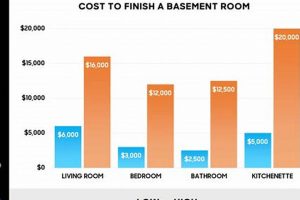
The process of completing a basement space on a limited budget involves selecting cost-effective materials and construction methods. This approach emphasizes functionality and practicality over high-end design, prioritizing essential elements such as moisture control, insulation, and basic finishing. For example, opting for drywall instead of wood paneling, or using pre-owned fixtures, can significantly reduce overall expenses.
Budget-conscious basement finishing offers homeowners the opportunity to increase livable square footage without incurring substantial debt. This expanded space can serve various purposes, enhancing a home’s value and improving quality of life. Historically, affordable techniques have allowed homeowners to transform previously unused spaces into functional areas, adapting them to evolving family needs and lifestyles.
The subsequent discussion will explore specific methods and strategies for accomplishing basement finishing while minimizing financial outlay. Key areas of focus will include cost-effective framing, affordable flooring options, and strategies for efficient lighting and electrical work. Furthermore, the importance of proper planning and DIY labor will be addressed.
Strategies for Economical Basement Finishing
The following tips provide guidance on completing a basement space in a cost-effective manner, focusing on practicality and value maximization.
Tip 1: Prioritize Moisture Control. Addressing potential water issues is paramount. Applying sealant to walls and considering a dehumidifier will protect investment and prevent future costly repairs.
Tip 2: Opt for Simplified Framing. Using metal studs instead of traditional lumber can reduce material costs and simplify the framing process. Ensure proper spacing and secure attachment.
Tip 3: Select Budget-Friendly Flooring. Concrete staining or durable, inexpensive laminate flooring provides an aesthetically pleasing and functional surface without significant expense.
Tip 4: Maximize Natural Light. Enlarging existing windows or adding window wells can reduce the need for artificial lighting, lowering energy consumption and enhancing the space.
Tip 5: Consider DIY Electrical Work (with caution). If experienced, performing basic electrical tasks such as outlet installation can save money. However, prioritize safety and adhere to all local building codes. Consult a qualified electrician for complex wiring or when unsure.
Tip 6: Source Materials Economically. Explore options such as salvage yards, online marketplaces, and closeout sales for discounted materials. Planning and preparation are key to effective sourcing.
Tip 7: Simplify the Ceiling. An exposed ceiling painted in a neutral color can be a surprisingly modern and affordable alternative to drop ceilings. Ensure all wiring and ductwork are neatly organized and securely fastened.
Tip 8: Plan for Phased Construction. Completing the basement in stages allows for better budget management and prioritizes essential areas first. Tackle one section at a time.
Implementing these cost-saving strategies can significantly reduce the financial burden of basement finishing while still achieving a functional and aesthetically pleasing result. Careful planning and informed decision-making are crucial for success.
The next section will discuss common pitfalls to avoid when completing a basement finishing project on a tight budget.
1. DIY labor

The direct involvement of the homeowner, commonly referred to as DIY labor, presents a significant opportunity to curtail expenses during basement finishing. By undertaking tasks such as framing, drywall installation, painting, and flooring, costs associated with professional contractors can be substantially reduced. This hands-on approach necessitates a balance between skill level, time commitment, and project complexity. An example includes a homeowner with carpentry experience who self-performs the framing, thereby avoiding the single largest labor cost in a basement finishing project. The cause-and-effect relationship is clear: increased DIY labor directly correlates with decreased overall project expenditure.
However, the effective integration of DIY labor into a basement finishing project requires thorough planning and accurate assessment of personal capabilities. Attempting tasks beyond one’s skill set can lead to errors, rework, and potentially, increased expenses due to material waste or the need for professional remediation. A practical application involves separating the project into phases and allocating tasks based on individual expertise. For example, a homeowner comfortable with painting but unfamiliar with electrical work might complete the painting tasks while hiring a licensed electrician for all electrical installations. The key is to leverage DIY capabilities strategically, ensuring tasks are executed correctly and safely.
In summary, DIY labor is a cornerstone of economical basement finishing, offering the potential for substantial cost savings. The success of this strategy hinges on realistic self-assessment, meticulous planning, and adherence to safety regulations. While the allure of reduced expenses is strong, it is imperative to acknowledge personal limitations and engage professional assistance when required, thereby mitigating the risks associated with unqualified labor and ensuring a satisfactory and code-compliant finished basement.
2. Salvaged Materials

The utilization of salvaged materials represents a key strategy in achieving basement finishing at a reduced cost. Integrating reclaimed items offers not only financial savings but also an environmentally conscious approach to construction.
- Cost Reduction Through Reclaimed Items
Acquiring materials from demolition sites, architectural salvage yards, or online marketplaces significantly lowers material expenses compared to purchasing new items. Examples include reclaimed lumber for framing or accent walls, used brick for decorative elements, or repurposed doors and windows. The financial implications are direct: a decrease in the overall material budget, thus contributing to a financially conservative basement finishing project.
- Unique Aesthetic and Character
Salvaged materials often possess distinct characteristics and patinas absent in newly manufactured items. This can add unique aesthetic value and historical context to a finished basement space. For instance, using antique lighting fixtures or reclaimed wood flooring creates a sense of character not easily replicated with modern materials. The result is a distinctive and personalized space that stands apart from conventionally finished basements.
- Environmental Sustainability
Employing salvaged materials minimizes the demand for newly produced resources, thereby reducing environmental impact. Diverting usable items from landfills contributes to waste reduction and resource conservation. The incorporation of salvaged materials aligns with sustainable building practices, offering an eco-friendly approach to basement finishing.
- Potential Challenges and Mitigation
Using salvaged materials presents certain challenges, including potential variations in size, quantity, and condition. Careful inspection and preparation are necessary to ensure the usability and safety of reclaimed items. Thorough cleaning, repair, and modification might be required before integration into the project. Mitigating these challenges involves meticulous planning and skilled craftsmanship to adapt and incorporate salvaged materials effectively.
The strategic integration of salvaged materials into basement finishing projects presents a viable method for reducing expenses while enhancing aesthetic appeal and promoting environmental responsibility. Proper planning, meticulous preparation, and creative adaptation are crucial for successfully leveraging the benefits of salvaged materials.
3. Efficient layout

Optimal space planning, referred to as an efficient layout, directly correlates with reduced costs in basement finishing. Strategic design minimizes material waste, streamlines construction, and can reduce long-term operational expenses. An intelligently planned basement is inherently more economical to complete.
- Reduced Material Consumption
An efficient layout prioritizes simple, rectangular spaces over complex shapes. This minimizes the need for custom cuts of materials such as drywall, flooring, and framing lumber, leading to less waste and lower material costs. For instance, a rectangular recreation room requires fewer cuts of drywall than an irregularly shaped one, translating to direct savings.
- Simplified Construction
A well-planned layout simplifies the construction process. Straight walls, standard-sized rooms, and clear traffic patterns reduce the complexity of framing, electrical wiring, and plumbing. This streamlined process can shorten the construction timeline, lowering labor costs for projects completed by professionals and reducing the overall effort for DIY endeavors.
- Optimal Use of Existing Infrastructure
Effective space planning incorporates existing structural elements, plumbing access points, and electrical panels. Minimizing relocation of these utilities can significantly reduce plumbing and electrical costs. A layout that positions a new bathroom near existing plumbing lines, for example, can save substantially on plumbing labor and materials.
- Minimized Long-Term Operational Expenses
An efficient layout considers lighting and heating requirements. Strategic window placement maximizes natural light, reducing reliance on artificial lighting. Proper insulation and optimized heating/cooling zones minimize energy consumption. These considerations lead to lower utility bills over the lifespan of the finished basement.
The integration of an efficient layout is a fundamental component of cost-conscious basement finishing. By minimizing material waste, simplifying construction, optimizing existing infrastructure, and reducing long-term operational costs, thoughtful space planning contributes significantly to a more affordable and sustainable basement finishing project.
4. Strategic lighting

Strategic lighting design plays a pivotal role in economical basement finishing. It directly impacts both initial investment and long-term operational costs. Careful consideration of lighting needs, fixture selection, and placement enables significant cost reductions without compromising functionality or aesthetics.
The selection of energy-efficient lighting solutions, such as LED fixtures, is paramount. While initial costs may be slightly higher than incandescent or fluorescent alternatives, the extended lifespan and reduced energy consumption of LEDs result in substantial savings over time. For example, replacing traditional recessed lighting with LED equivalents can lower energy bills and minimize the frequency of bulb replacements. Furthermore, utilizing natural light, where possible, reduces reliance on artificial illumination. The integration of window wells or the enlargement of existing windows can provide ample daylight, reducing the need for artificial lights during daytime hours. The placement of light fixtures is equally crucial. Instead of uniformly distributing lights across the ceiling, focusing illumination on task areasworkspaces, reading nooks, or entertainment centersreduces the number of required fixtures and minimizes energy usage. Using dimmer switches allows for adjustable light levels, optimizing energy consumption and creating different ambiance as needed. Sensor-activated lights for hallways and storage areas ensure lights are only on when needed, further conserving energy. Utilizing a combination of ambient, task, and accent lighting, carefully chosen and strategically placed, creates a visually appealing and functional space while minimizing the number of fixtures and overall energy consumption.
In conclusion, strategic lighting is an integral component of finishing a basement economically. Prioritizing energy-efficient solutions, maximizing natural light, and optimizing fixture placement allows for both immediate cost savings and reduced long-term energy expenses. This careful approach ensures a well-lit, functional, and aesthetically pleasing basement without exceeding budgetary constraints.
5. Moisture mitigation

Effective moisture mitigation is a fundamental prerequisite for achieving a durable and cost-effective basement finishing project. Neglecting moisture control can lead to structural damage, health hazards, and ultimately, increased costs, negating any initial savings from utilizing low-cost materials or techniques.
- Foundation Sealing and Waterproofing
Application of waterproof coatings or membranes to exterior or interior foundation walls prevents water penetration. This proactive measure avoids costly repairs associated with water damage. For example, applying a sealant to interior walls and joints reduces water intrusion, minimizing the likelihood of mold growth and structural deterioration, both of which can lead to significant remediation expenses.
- Subfloor Moisture Barriers
Installation of a moisture-resistant subfloor or a vapor barrier beneath the flooring system prevents moisture migration from the concrete slab. This barrier protects flooring materials from warping, buckling, or developing mold. Using a polyethylene vapor barrier under laminate flooring protects the flooring, preventing premature replacement, thus avoiding future expenses.
- Proper Ventilation
Adequate ventilation reduces humidity levels and prevents condensation. Installing exhaust fans in bathrooms and laundry areas, and ensuring sufficient airflow, minimizes the potential for mold growth. Running a dehumidifier regularly further helps control humidity, preventing damage to finished surfaces and reducing the risk of respiratory problems caused by mold.
- Grading and Drainage
Correcting the slope of the landscape surrounding the foundation to direct water away from the building minimizes water accumulation near the foundation walls. Installing or maintaining proper drainage systems, such as French drains, channels water away from the foundation, reducing the risk of water infiltration. Addressing grading and drainage issues early can prevent hydrostatic pressure buildup against the foundation, a primary cause of basement leaks and related damage.
By addressing moisture issues comprehensively through these mitigation strategies, homeowners can ensure the longevity and integrity of the finished basement, preventing costly repairs and maintaining a healthy living environment. Prioritizing moisture mitigation is essential for any basement finishing project seeking to balance cost-effectiveness and long-term value.
6. Budget flooring
The selection of appropriate flooring materials constitutes a significant element in cost-effective basement finishing. The decision directly influences the overall project expenditure and the long-term maintenance costs. For instance, opting for polished concrete instead of engineered hardwood dramatically reduces upfront expenses. This substitution provides a durable and aesthetically acceptable surface without incurring the higher material and installation costs associated with more premium options. The causal link between flooring selection and project budget is thus readily apparent.
Budget flooring options encompass various materials, each offering a unique combination of cost, durability, and aesthetic appeal. Vinyl flooring, particularly in plank or tile format, represents a versatile and affordable choice. Installation can often be accomplished by the homeowner, further reducing costs. Laminate flooring presents another cost-effective alternative, providing a wood-like appearance at a fraction of the price of solid hardwood. Practical applications include utilizing vinyl plank flooring in high-traffic areas, such as hallways and playrooms, due to its water resistance and durability, and employing laminate in living areas where aesthetic appeal is prioritized.
In summary, the strategic selection and installation of budget flooring alternatives are essential for achieving an economically viable basement finishing project. While aesthetic considerations remain important, prioritizing cost-effectiveness and durability ensures a functional and attractive space without exceeding budgetary constraints. Understanding the material properties and installation requirements of each flooring option is critical for informed decision-making and project success.
Frequently Asked Questions
The following questions address common inquiries and misconceptions regarding completing a basement on a limited budget, focusing on practical considerations and cost-effective strategies.
Question 1: Is it possible to finish a basement inexpensively without compromising safety or code compliance?
Adherence to building codes and prioritizing safety are non-negotiable aspects of any basement finishing project, regardless of budget constraints. Employing cost-effective materials and DIY labor should not compromise structural integrity, electrical safety, or fire resistance. Consult local building codes to ensure compliance, and engage licensed professionals for tasks outside of one’s skillset.
Question 2: What are the most significant cost drivers in a basement finishing project, and how can they be minimized?
Labor costs, material selection, and changes to the existing infrastructure represent major cost drivers. Minimizing these expenses involves undertaking DIY labor where qualified, sourcing materials economically, and designing the layout to utilize existing plumbing and electrical access points, thereby reducing the need for extensive modifications.
Question 3: Is it advisable to skip permits to save money on a basement finishing project?
Operating without proper permits exposes homeowners to potential fines, legal liabilities, and difficulties during future property sales. Permits ensure code compliance and safety standards are met, safeguarding the investment and protecting occupants. Obtaining necessary permits is an essential, albeit sometimes perceived as costly, step in the basement finishing process.
Question 4: How can potential moisture problems be addressed affordably in a basement environment?
Implementing preventative measures such as proper exterior grading, sealing foundation walls, and installing interior moisture barriers can mitigate potential water intrusion. Addressing these issues preemptively reduces the risk of mold growth, structural damage, and related remediation expenses.
Question 5: What flooring options offer the best balance of cost-effectiveness and durability for basements?
Vinyl flooring, concrete staining, and laminate flooring represent practical and budget-friendly choices for basement floors. These materials offer varying degrees of water resistance, durability, and aesthetic appeal, allowing homeowners to select the option that best suits their needs and budget.
Question 6: Are there any tasks that should never be attempted as a DIY project in a basement finishing project, even to save money?
Complex electrical work, plumbing modifications requiring code compliance, and structural alterations involving load-bearing walls should be entrusted to licensed professionals. Attempting these tasks without proper training or expertise can result in safety hazards, code violations, and potentially, significant property damage.
Prudent planning, realistic expectations, and a focus on essential elements will allow for the economical transformation of the basement into a valuable living space.
The subsequent section provides a comprehensive checklist for cost-effective basement finishing.
Conclusion
This exploration has detailed various strategies for basement finishing within budgetary constraints. Key areas of focus include utilizing DIY labor strategically, sourcing salvaged materials, optimizing layout efficiency, employing strategic lighting, implementing moisture mitigation techniques, and selecting cost-effective flooring options. Adherence to building codes and safety regulations remains paramount throughout the project.
Successful implementation of these approaches can transform an unfinished basement into a functional living space without incurring excessive expenses. The information provided serves as a foundation for informed decision-making, enabling homeowners to create valuable additional square footage within their residences. Future success depends on a clear understanding of project scope, realistic assessment of skills, and careful management of resources.

![Top-Rated Basement Finishing Contractor Near You: [City] Pros | Best Final Touch: Elevate Your Projects with Professional Finishing](https://bestfinaltouch.com/wp-content/uploads/2026/04/th-65-300x200.jpg "Top-Rated Basement Finishing Contractor Near You: [City] Pros Best Final Touch: Elevate Your Projects with Professional Finishing")