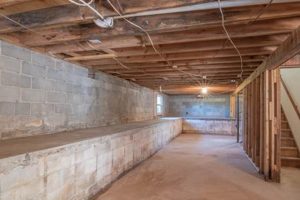
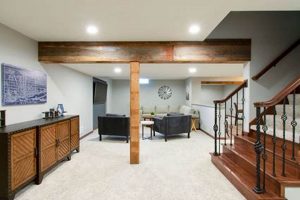
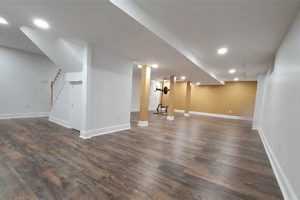
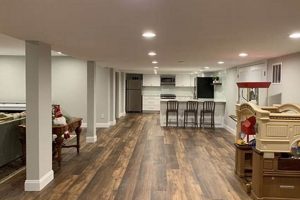
The completion of a staircase leading to a lower level of a building, typically a residence, involves covering the structural components with aesthetically pleasing and durable materials. This process encompasses tasks such as installing treads, risers, handrails, and balusters to create a safe and visually integrated transition between floors. A common example includes replacing unfinished wooden steps with carpeted or hardwood surfaces and adding a painted or stained banister.
An effectively completed lower-level stairway significantly enhances both the functionality and value of the property. It transforms a potentially hazardous and unattractive access point into a safe, inviting, and code-compliant feature of the home. Historically, this area was often overlooked, but modern building practices recognize the importance of integrating all levels of a residence seamlessly, contributing to improved living standards and increased property resale value.
The subsequent sections will delve into crucial aspects of the project, from initial planning and material selection to detailed installation techniques and essential safety considerations. This comprehensive guide aims to provide the necessary information for achieving a professionally completed and code-compliant transition to the lower level.
Essential Considerations for Lower-Level Stairway Completion
Proper planning and execution are paramount for a safe and visually appealing lower-level stairway. The following guidelines offer crucial considerations for successful project completion.
Tip 1: Code Compliance Adherence: Local building codes stipulate specific requirements for stair dimensions, headroom, and handrail placement. Ensure strict adherence to these regulations to guarantee safety and avoid potential legal complications.
Tip 2: Precise Measurement and Planning: Accurately measure the stairway dimensions before commencing any work. Develop a detailed plan outlining material quantities, cutting lists, and the sequence of installation. This minimizes material waste and ensures a smooth workflow.
Tip 3: Prioritize Safety During Construction: When working on the stairway, implement appropriate safety measures. These include wearing safety glasses, using dust masks, and employing stable scaffolding or ladders. Ensure adequate lighting to prevent accidents.
Tip 4: Material Selection for Durability: Choose durable and suitable materials for treads, risers, and handrails. Options include hardwood, engineered wood, and composite materials, each offering varying levels of resistance to wear and moisture. Select materials appropriate for the expected traffic and environmental conditions.
Tip 5: Secure Attachment and Support: Employ high-quality fasteners and adhesives to ensure the secure attachment of all stairway components. Adequate support is crucial for preventing squeaks, instability, and potential structural failures. Consider reinforcing the stringers if necessary.
Tip 6: Handrail and Baluster Installation: Install handrails and balusters according to code requirements and manufacturer instructions. Ensure proper spacing between balusters to prevent falls, particularly for children. A sturdy and well-placed handrail provides essential support and safety.
Tip 7: Professional Finishing Touches: Apply a high-quality finish to all exposed surfaces to protect the materials and enhance the aesthetic appeal. This may involve staining, painting, or applying a clear coat. Proper preparation, including sanding and priming, is essential for a smooth and durable finish.
Effective planning, adherence to safety protocols, and careful material selection are essential for a durable, code-compliant, and visually appealing access point to the lower level.
The following sections will address common challenges and provide practical solutions for specific installation scenarios.
1. Material Durability

Material durability constitutes a fundamental consideration in the completion of basement stairways. The selection of appropriate materials directly impacts the longevity, safety, and overall cost-effectiveness of the finished staircase. Compromising on material quality can lead to premature wear, structural instability, and ultimately, the need for costly repairs or replacements.
- Resistance to Moisture
Basements are often subject to higher levels of humidity and potential water intrusion. Materials used for treads, risers, and stringers must exhibit resistance to moisture damage, including rot, swelling, and mold growth. Treated lumber, composite materials, and certain hardwoods like cedar or redwood offer superior moisture resistance compared to untreated wood or less durable alternatives. The choice of water-resistant adhesives and sealants is equally critical in preventing moisture-related degradation.
- Abrasion Resistance
Stairways endure significant foot traffic, resulting in abrasion and wear. Tread materials should possess sufficient abrasion resistance to withstand repeated use without showing signs of degradation, such as scratches, dents, or worn surfaces. Hardwoods like oak, maple, or hickory are known for their durability and abrasion resistance, making them suitable choices for high-traffic stairways. The application of a durable finish, such as polyurethane, further enhances abrasion resistance and protects the underlying material.
- Impact Resistance
Stairways are susceptible to impact from dropped objects, furniture being moved, or accidental bumps. Materials used in the construction of the staircase, particularly treads and handrails, should exhibit sufficient impact resistance to prevent cracking, splintering, or other forms of damage. Solid wood construction, reinforced composite materials, and the use of impact-resistant fasteners can enhance the overall durability and structural integrity of the stairway.
- Resistance to Temperature Fluctuations
Basements often experience temperature fluctuations, which can affect the stability and integrity of building materials. Materials used for the stairs should be able to withstand these temperature changes without warping, cracking, or expanding excessively. Engineered wood products and certain types of composite materials are designed to resist temperature fluctuations and maintain their dimensional stability over time. Proper acclimatization of materials before installation is also crucial in minimizing the effects of temperature changes.
The selection of durable materials specifically suited to the basement environment is not merely an aesthetic consideration but a critical factor in ensuring the long-term performance and safety of the finished stairs. Careful consideration of moisture resistance, abrasion resistance, impact resistance, and resistance to temperature fluctuations will contribute to a robust and lasting structure, minimizing maintenance costs and maximizing the value of the finished basement.
2. Code Compliance

Adherence to established building codes is a mandatory aspect of any project involving the completion of basement stairways. These codes are designed to ensure the safety and structural integrity of the construction, protecting occupants from potential hazards and ensuring accessibility. Failure to comply with applicable codes can result in costly rework, legal liabilities, and, most importantly, compromised safety.
- Stairway Dimensions and Geometry
Building codes prescribe specific requirements for stair rise, tread depth, and overall stairway width. These dimensional constraints are intended to create a comfortable and safe climbing experience, reducing the risk of trips and falls. For example, many jurisdictions require a minimum tread depth of 10 inches and a maximum riser height of 7.75 inches. Variations from these standards can lead to non-compliance and potential safety hazards.
- Headroom Requirements
Adequate headroom clearance is crucial for preventing head injuries during stairway ascent and descent. Building codes typically mandate a minimum headroom height of 6 feet 8 inches, measured vertically from the tread nosing to the overhead obstruction. Insufficient headroom can create a dangerous condition and may necessitate structural modifications to the basement or upper floor.
- Handrail Specifications
Handrails are essential safety features that provide support and stability during stairway use. Codes dictate specific requirements for handrail height, grip size, and continuity. For instance, handrails typically must be between 34 and 38 inches above the stair nosing and provide a graspable surface for users of all ages and abilities. The absence of compliant handrails represents a significant safety risk and a code violation.
- Guardrail Requirements
Guardrails are required on open sides of stairways to prevent falls. Building codes specify the minimum height of guardrails and the maximum spacing between balusters or other infill components. A common requirement is a guardrail height of 42 inches and baluster spacing that prevents the passage of a 4-inch diameter sphere. These regulations are designed to protect children and prevent accidental falls from elevated stairways.
The integration of code compliance into the planning and execution of lower-level stairway is not simply a bureaucratic formality but a critical investment in the safety and longevity of the dwelling. Compliance protects residents, avoids legal issues, and ensures the structural integrity of an essential access point. A thorough understanding of relevant local codes is, therefore, essential for all involved.
3. Safety Railings

The integration of safety railings within a completed basement stairway is paramount for mitigating fall risks and ensuring occupant well-being. A finished lower-level stairway without properly installed railings presents a significant hazard, particularly for children, the elderly, and individuals with mobility limitations. The absence of adequate safety railings can transform a functional transition point into a potential source of severe injury, underlining the causal relationship between railing implementation and fall prevention.
The construction of secure safety railings on basement stairs mandates adherence to local building codes and best practices. These regulations stipulate precise requirements for railing height, baluster spacing, and structural integrity. Real-world examples underscore the critical importance of compliant railings: a stairway with excessively spaced balusters allows a small child to pass through, increasing the risk of a fall, while an improperly secured railing offers inadequate support, potentially collapsing under pressure. Practical application necessitates a rigorous inspection of railing construction to verify conformity with established standards.
In summary, safety railings are not merely an optional add-on to completed basement stairs but an integral component that directly impacts safety and code compliance. Challenges in installation, such as irregular stair dimensions or limited space, necessitate meticulous planning and skilled execution. The understanding of the connection between secure railings and a secure stairway is vital for responsible home improvement and the safeguarding of residents, connecting directly to the broader theme of creating a safe and habitable living environment.
4. Proper Lighting
Adequate illumination is inextricably linked to the safe and functional completion of basement stairways. Insufficient lighting on stairs, particularly in basements where natural light is often limited, directly elevates the risk of falls. Poor visibility obscures potential hazards such as uneven treads, misplaced objects, or changes in elevation, transforming a finished stairway into a dangerous obstacle course. Real-world examples consistently demonstrate that falls on stairways are more frequent and severe in poorly lit environments. The integration of effective lighting is, therefore, not merely an aesthetic choice but a critical safety measure for a completed lower-level stairway.
Practical application involves the strategic placement of lighting fixtures to ensure uniform illumination across all steps. This may include ceiling-mounted fixtures, wall sconces, or even integrated stair lighting, such as LED strips embedded within the treads or risers. The selection of appropriate light sources is also crucial. High-lumen LED bulbs provide ample brightness while minimizing energy consumption and heat generation. Furthermore, the installation of light switches at both the top and bottom of the stairway allows for convenient and safe operation, preventing users from navigating the stairs in darkness. Motion-activated lighting systems offer an additional layer of safety and energy efficiency by automatically illuminating the stairs when movement is detected.
In summary, proper lighting is an indispensable component of a safely and effectively finished basement stairway. It mitigates the risk of falls, enhances visibility, and contributes to the overall usability of the lower level. While challenges may arise in retrofitting lighting into existing stairways or coordinating fixture placement with architectural features, the benefits of adequate illumination far outweigh the difficulties. A well-lit stairway is not just visually appealing; it is a fundamentally safer access point, reinforcing the importance of thorough planning and execution in all aspects of the project.
5. Tread Stability

Tread stability is a non-negotiable aspect of finishing basement stairs. Unstable treads introduce a significant safety hazard, increasing the likelihood of falls and injuries. The absence of firm footing undermines the intended function of the staircase, which is to provide safe and reliable passage between levels. A finished basement stairway with unstable treads is, by definition, an incompletely executed project. For example, if treads are not properly secured to the stringers, they may flex or shift under weight, creating a tripping hazard. Similarly, inadequate support beneath the treads can lead to sagging and eventual collapse. The practical significance lies in ensuring that each step provides a solid and secure platform for users of all ages and abilities.
Several factors contribute to tread stability. These include the material used for the treads, the method of attachment to the stringers, and the presence of adequate support structures. Solid wood treads, properly kiln-dried, offer greater stability than thinner, less rigid materials. Using construction adhesive in conjunction with screws or nails provides a more secure bond between the treads and stringers. Center stringers or additional support blocks beneath the treads can prevent sagging and deflection. Regularly inspecting the stairs for loose treads or signs of deterioration is crucial for maintaining long-term stability. Addressing any issues promptly can prevent minor problems from escalating into more significant safety concerns.
In conclusion, tread stability is a core requirement for a properly finished basement stairway. It directly impacts the safety and usability of the staircase and contributes to the overall value of the finished basement. Neglecting tread stability not only compromises the structural integrity of the stairs but also creates a potentially dangerous environment for residents and visitors. Therefore, careful attention to material selection, attachment methods, and support structures is essential for ensuring a safe and durable stairway.
6. Headroom Clearance

Adequate headroom clearance is an indispensable element in the proper completion of basement stairways. The relationship is causal: insufficient headroom directly increases the risk of head injuries, while compliant headroom provides safe and unimpeded passage. Its importance as a component stems from fundamental human anthropometry; stairways must accommodate the average human height with room to spare. An example of inadequate planning might involve a finished basement where the staircase impinges on a support beam, resulting in a restricted vertical space that poses a risk of collision. This issue is critical for all inhabitants, regardless of height, as unexpected distractions can lead to accidental impacts. The practical significance lies in preventative design and adherence to building codes, ensuring the stairs are safe and functional.
Beyond the immediate risk of injury, inadequate headroom impacts usability and property value. Carrying objects up or down stairs becomes significantly more challenging when headroom is limited. Moreover, non-compliant headroom can be a barrier to obtaining permits or selling the property, as it represents a safety violation. Practical application requires careful measurement and planning during the design phase, potentially involving adjustments to the floor plan or structural modifications to achieve the required vertical space. Inspectors routinely check headroom during building inspections, highlighting its critical role in safety and code compliance. In the event of non-compliance, modifications such as lowering the basement floor or altering the staircase design may be necessary.
In summary, headroom clearance is not merely a technical specification but a fundamental safety requirement for finished basement stairways. Addressing challenges early in the planning process can prevent costly and potentially dangerous rework later on. This consideration connects directly to the broader theme of responsible construction and the creation of a safe and habitable living environment. Proper adherence to headroom requirements ensures that the finished stairs are not only aesthetically pleasing but also safe and functional for all occupants.
7. Aesthetic Integration

The concept of aesthetic integration, when applied to the completion of basement stairways, extends beyond mere visual appeal. It encompasses the harmonious blending of the stairway with the existing architectural style and interior design of the home, ensuring a cohesive and unified living space. The finished stairway should not appear as an afterthought but rather as an intentional and well-considered element of the overall design.
- Material Consistency
The selection of materials for the treads, risers, and handrails should align with the existing flooring, trim, and architectural details of the home. For instance, if the main floor features hardwood flooring, utilizing matching hardwood for the stairway treads creates a seamless transition between levels. Conversely, incongruent material choices can disrupt the visual flow and detract from the overall aesthetic appeal.
- Color Palette Harmony
The color scheme employed on the stairway should complement the existing color palette of the home. This includes the colors of the walls, ceilings, and surrounding furniture. Utilizing similar tones or complementary colors creates a sense of visual harmony and prevents the stairway from appearing disjointed. Contrasting colors can be employed strategically to create visual interest, but they should be used sparingly and with careful consideration.
- Architectural Style Alignment
The architectural style of the stairway should be consistent with the overall architectural style of the home. A modern home would benefit from a sleek, minimalist stairway design, while a traditional home would be better suited to a more ornate and detailed stairway design. Incorporating architectural details, such as decorative moldings or carved balusters, can further enhance the aesthetic integration of the stairway.
- Lighting Integration
The lighting fixtures selected for the stairway should not only provide adequate illumination but also complement the overall aesthetic design. Modern recessed lighting can be used to create a clean and contemporary look, while traditional sconces can add a touch of elegance. The color temperature of the lighting should also be considered, as warm lighting can create a cozy and inviting atmosphere, while cool lighting can provide a more modern and sophisticated ambiance.
In conclusion, aesthetic integration is a multifaceted process that requires careful consideration of materials, colors, architectural styles, and lighting. When executed effectively, aesthetic integration transforms the basement stairway from a purely functional element into a seamless and visually appealing component of the home, enhancing its overall value and livability. The ultimate goal is to create a space that feels cohesive, intentional, and inviting, seamlessly blending the basement with the rest of the home.
Frequently Asked Questions
This section addresses common inquiries regarding the completion of lower-level stairways, providing concise and authoritative answers to ensure a clear understanding of the process.
Question 1: What are the primary code requirements governing finished basement stairs?
Building codes typically dictate specific dimensions for stair rise, tread depth, and overall width. Headroom clearance is also regulated, typically requiring a minimum height of 6 feet 8 inches. Handrail height and guardrail specifications are also mandated for safety.
Question 2: What materials are most suitable for basement stair treads?
Durable materials such as hardwood (oak, maple), engineered wood, and composite materials are recommended. Moisture resistance is crucial, especially in basements prone to dampness. Consider treated lumber or materials specifically designed for humid environments.
Question 3: How can squeaky basement stairs be effectively silenced?
Squeaks often result from movement between treads and stringers. Securely fastening the treads to the stringers with construction adhesive and screws is recommended. Adding shims to fill gaps can also reduce movement and eliminate squeaks.
Question 4: What are the key considerations for proper lighting on basement stairs?
Adequate lighting is essential for safety. Light fixtures should be positioned to illuminate all steps evenly, minimizing shadows and potential hazards. Light switches at both the top and bottom of the stairs are advisable for convenient operation.
Question 5: What is the recommended spacing between balusters on a basement stairway?
Building codes typically specify a maximum spacing between balusters to prevent falls, particularly for children. A common requirement is that the spacing should not allow the passage of a 4-inch diameter sphere.
Question 6: How can the finished basement stairs be aesthetically integrated with the rest of the home?
Maintaining consistency in materials, colors, and architectural style is crucial. Select treads, risers, and handrails that complement the existing flooring, trim, and design elements of the upper levels. A cohesive aesthetic enhances the overall value and appeal of the finished basement.
Proper planning and execution are crucial for a safe, code-compliant, and aesthetically pleasing access to the lower level.
The following section will summarize key takeaways and provide a concluding perspective.
Conclusion
The foregoing exploration of completing basement stairways has emphasized several critical aspects, from adherence to stringent building codes and the selection of durable materials to the paramount importance of safety railings, adequate lighting, and sound tread stability. Furthermore, the necessity of sufficient headroom clearance and aesthetic integration has been underscored, highlighting the comprehensive approach required for a successful project.
The completion of lower-level stairways demands meticulous planning and execution, reflecting a commitment to safety, functionality, and structural integrity. A failure to prioritize these considerations not only compromises the value of the finished basement but also poses significant risks to the occupants. Therefore, those undertaking such projects must prioritize adherence to codes, invest in quality materials, and exercise the utmost diligence in all phases of the process, ensuring a safe and valuable addition to the property.