



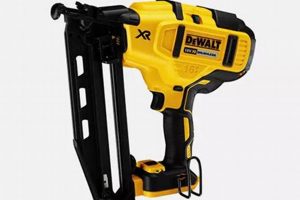
A self-powered fastening tool, commonly utilizing a combination of battery and fuel cell, drives finish nails into wood surfaces. These tools are designed for trim work, cabinetry, and other applications requiring a refined, nearly invisible finish. These devices offer portability and maneuverability that traditional pneumatic nailers lack, as they are not tethered to an air compressor.
The advent of self-powered nailing devices has significantly increased efficiency on job sites. Freed from the constraints of hoses and compressors, workers experience enhanced mobility, allowing for faster completion of tasks in various locations. This freedom from external power sources also makes these tools well-suited for remote sites or locations with limited access to electricity.
The subsequent sections will delve into the specific features, operational considerations, maintenance procedures, and safety guidelines associated with these self-powered fastening tools, providing a comprehensive understanding for both novice and experienced users.
Operational Best Practices
The following guidance aims to optimize performance and longevity, ensuring accurate and reliable results while utilizing self-powered finish nailers.
Tip 1: Battery Management: Always ensure batteries are fully charged prior to commencing work. Depleted batteries can lead to inconsistent nail depth and potential tool damage. Store batteries in a cool, dry environment to maximize lifespan.
Tip 2: Fuel Cell Storage: Store fuel cells in accordance with manufacturer specifications, typically in a cool, dry place away from direct sunlight and heat sources. Improper storage can lead to reduced fuel cell life or performance degradation.
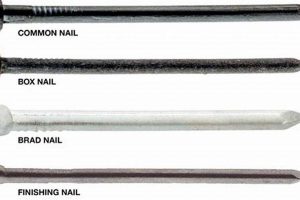
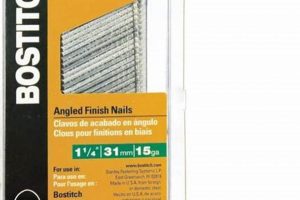
Tip 3: Consistent Nail Selection: Utilize only the nail types and sizes recommended by the manufacturer. Deviating from specified nail parameters can cause jamming, misfires, or damage to the tool’s internal mechanisms.
Tip 4: Proper Tool Maintenance: Regularly clean the tool’s nosepiece and magazine to remove debris. Lubricate moving parts with the recommended lubricant, following the manufacturer’s maintenance schedule. Neglecting maintenance can reduce performance and tool lifespan.
Tip 5: Consistent Pressure Application: Apply firm, consistent pressure to the tool against the workpiece during operation. Insufficient pressure can result in nail misfires or improper setting depth.
Tip 6: Environmental Considerations: Avoid operating the tool in excessively dusty or humid environments. These conditions can accelerate wear and tear on internal components and reduce overall performance.
Tip 7: Regular Inspection: Before each use, thoroughly inspect the tool for any signs of damage or wear. Pay particular attention to the nosepiece, magazine, and battery connections. Do not operate the tool if any damage is detected.
Adherence to these practices will contribute to improved performance, reduced downtime, and extended operational life of the power tool.
The concluding section will summarize key considerations for safe and effective use of self-powered finish nailers.
1. Portability
The inherent design of a self-powered finish nailer fundamentally relies on portability as a core attribute. Unlike pneumatic alternatives, which necessitate connection to an air compressor via a hose, this class of tools integrates the power source directly within the device. This integration eliminates the physical tether, permitting unrestricted movement and operation across a work site. The effect of this portability is a significant increase in efficiency and a reduction in setup time, especially in situations where maneuvering with a compressor and hose would be cumbersome or impossible. Consider, for example, trim work in attics or on roofs, where the weight and bulk of traditional pneumatic systems present significant challenges.
Portability directly translates into increased job site productivity. A craftsman can move freely from one task to another without the constraints of air hoses, streamlining workflow. For instance, installing baseboards in multiple rooms can be accomplished more quickly and efficiently when the operator is not hindered by the need to reposition a compressor or manage hose entanglement. Furthermore, the reduced setup and takedown time associated with these tools allows for more time focused on the actual finishing tasks, positively impacting overall project timelines. This characteristic is also of significant importance in remote locations or on jobs where power access is limited, removing the dependence on external power generation.
In summation, the importance of portability within the context of a self-powered finish nailer cannot be overstated. It is a defining characteristic that drives efficiency, reduces physical strain on the user, and expands the range of applications for finishing work. While battery life and fuel cell capacity present potential limitations, the advantages in mobility and ease of use make these tools a staple for many professionals. The development and refinement of this portable design continue to shape the landscape of finish carpentry and construction practices.
2. Fuel Cell Technology
The function of self-powered finish nailers relies substantially on fuel cell technology. This technology serves as the primary power source, enabling the driving of nails without the need for external air compressors or electrical cords. A fuel cell converts chemical energy from a fuel, typically a hydrocarbon gas, into electrical energy through an electrochemical reaction. This electrical energy then powers a motor or solenoid that actuates the nail firing mechanism.
The importance of fuel cell technology within this context is multi-faceted. It provides a compact and relatively lightweight power source, contributing to the tool’s overall portability and maneuverability. Furthermore, fuel cells offer a consistent power output until the fuel is depleted, ensuring reliable performance throughout a work session. For example, a carpenter installing crown molding can expect consistent nail depth and placement without the power fluctuations associated with battery-powered tools nearing depletion. The proper functioning of the fuel cell directly impacts the reliability and efficiency of the overall nailing operation.
In summary, fuel cell technology is an integral component of self-powered finish nailers, delivering the necessary power for operation while maintaining portability and consistent performance. While fuel cell cartridges require periodic replacement, the benefits of this technology in terms of convenience and operational efficiency outweigh the logistical considerations for many users. The continual refinement of fuel cell technology promises further enhancements in power density, fuel efficiency, and overall tool performance within the construction and finishing trades.
3. Nail Capacity

Nail capacity, referring to the maximum number of nails the tool’s magazine can hold, is a critical specification directly impacting the operational efficiency of self-powered finish nailers. A higher nail capacity reduces the frequency of reloading, thus minimizing downtime during tasks such as installing baseboards or crown molding. The size and design of the nail magazine are engineered to accommodate specific nail gauges and lengths; therefore, compatibility is essential. For example, a finish nailer designed for 16-gauge nails cannot accept 15-gauge nails, and attempting to do so can cause jamming or damage.
The relationship between nail capacity and productivity is directly proportional, within practical limits. Consider a trim carpenter installing window casings; a nailer with a capacity of 100 nails will require fewer interruptions for reloading compared to a nailer with a capacity of 50 nails. However, excessively large magazines can add weight and bulk to the tool, potentially compromising maneuverability and increasing user fatigue, especially during prolonged use. Therefore, manufacturers strive for a balance between nail capacity and ergonomic design. The practical significance of understanding nail capacity extends to selecting the appropriate tool for a given task; projects requiring a high volume of fastening benefit from higher capacity, while smaller projects may prioritize a lighter, more compact tool with lower capacity.
In summary, nail capacity is a key factor influencing the overall efficiency and usability of self-powered finish nailers. While a higher capacity can reduce downtime, the trade-offs with tool weight and maneuverability must be considered. Selecting a tool with a nail capacity that aligns with the demands of the intended application is essential for optimizing productivity and minimizing user fatigue. Future developments may focus on innovative magazine designs or nail loading mechanisms to further enhance both nail capacity and ease of use.
4. Depth Adjustment

Precise nail depth control is a pivotal feature in self-powered finish nailers, impacting the quality and integrity of finished work. The ability to consistently drive nails to a predetermined depth without damaging the surface material is essential for achieving professional results.
- Dial Adjustment Mechanism
Many models incorporate a dial-based mechanism allowing users to incrementally adjust nail depth. This system permits fine-tuning for various wood densities and trim thicknesses. For instance, when working with softwoods like pine, a shallower depth setting is necessary to prevent nail heads from sinking too far. Conversely, hardwoods such as oak require a deeper setting to ensure secure fastening. The dial’s precision is critical for consistent results and minimizes the need for manual nail setting or patching.
- Tool-Free Adjustment
Some self-powered finish nailers offer tool-free depth adjustment, enabling quick modifications in the field. This feature enhances efficiency by eliminating the need for wrenches or other tools to change the nail depth. This is particularly advantageous when transitioning between different materials or thicknesses during a single project. For example, a carpenter installing window trim may need to switch between fastening into the window jamb and the surrounding wall framing; a tool-free system allows for rapid adjustments without interrupting workflow.
- Impact on Surface Finish
The accuracy of the depth adjustment directly influences the final appearance of the finished surface. Overdriving nails results in unsightly depressions that require filling and sanding, adding time and cost to the project. Conversely, underdriving nails leaves the nail heads protruding, posing a safety hazard and detracting from the aesthetic appeal. Precise depth control minimizes these issues, resulting in a clean, professional finish. For example, when installing decorative molding, proper depth adjustment ensures that the nail heads are flush with the surface, creating a seamless and visually appealing result.
- Material Compatibility
Different materials exhibit varying densities and resistances to nail penetration. Depth adjustment allows the user to compensate for these differences, ensuring optimal fastening performance across a range of materials. This is especially important when working with composite materials or engineered wood products, which may have different fastening characteristics than natural wood. Proper depth adjustment prevents splitting, cracking, or other damage to the material, ensuring a secure and aesthetically pleasing result. For instance, when fastening trim to MDF (Medium-Density Fiberboard), a shallower depth setting is typically required to prevent the nail from blowing through the material.
The sophistication of depth adjustment mechanisms in self-powered finish nailers demonstrates a commitment to precision and efficiency in finish carpentry. The ability to quickly and accurately control nail depth is essential for achieving professional results, minimizing rework, and ensuring customer satisfaction. Ongoing advancements in depth adjustment technology continue to improve the usability and performance of these tools.
5. Cordless Operation

Cordless operation defines a fundamental characteristic of a specific category of finish nailers, directly influencing their utility and application across various construction and woodworking tasks. The absence of external power cords or air hoses provides enhanced maneuverability and operational flexibility.
- Elimination of Air Compressor Dependence
Cordless models negate the requirement for a separate air compressor unit. This independence offers significant advantages on job sites where compressor transport or electrical power access is limited. For example, trim work in remote locations or punch-list tasks after the primary power supply has been disconnected benefit significantly from this self-contained functionality.
- Enhanced Mobility and Maneuverability
Freed from the constraints of hoses and cords, users experience greater mobility, enabling access to confined spaces and elevated areas with relative ease. Installation of crown molding in high-ceiling rooms or intricate trim work within cabinets becomes less cumbersome due to the unrestricted movement. This mobility translates directly to increased efficiency and reduced physical strain on the operator.
- Reduced Setup and Takedown Time
The elimination of air compressor setup, hose connections, and subsequent disassembly reduces the overall time spent preparing for and concluding tasks. This streamlined workflow allows for more productive work hours, especially on projects involving frequent movement between different work areas. The time saved can be particularly significant on smaller projects or in environments where minimizing disruption is a priority.
- Noise Reduction
Cordless operation inherently reduces noise pollution associated with traditional air compressors. This can be a critical advantage in noise-sensitive environments, such as occupied buildings or residential areas with noise restrictions. The quieter operation improves the working environment for both the operator and those nearby, minimizing distractions and potential disturbances.
These facets of cordless operation converge to define a class of finish nailers suited for applications where portability, convenience, and reduced noise are paramount. While battery life and fuel cell capacity present operational considerations, the advantages in mobility and ease of use contribute to increased efficiency and versatility across a range of finishing tasks.
Frequently Asked Questions
This section addresses common inquiries regarding the operation, maintenance, and safety of self-powered finish nailers. The information provided aims to clarify practical considerations and ensure informed usage.
Question 1: What is the expected lifespan of the fuel cells used in these tools?
The lifespan of fuel cells varies depending on usage frequency and storage conditions. However, an unopened fuel cell typically maintains functionality for approximately two years from the date of manufacture. Once opened, the fuel cell should be used within a reasonable timeframe, as specified by the manufacturer, to prevent degradation of the fuel mixture.
Question 2: How should these tools be stored when not in use for extended periods?
Proper storage is crucial for maintaining tool performance. Remove the battery and fuel cell before storing the tool. Clean the nailer and magazine to remove any debris. Store the tool in a dry, temperature-controlled environment, away from direct sunlight and extreme temperature fluctuations.
Question 3: What causes a self-powered finish nailer to misfire, and how can this be prevented?
Misfires can result from several factors, including a depleted battery, an empty fuel cell, incorrect nail type, or a dirty firing mechanism. Ensure the battery is fully charged and the fuel cell is not empty. Use only the nail types specified by the manufacturer. Regularly clean and lubricate the tool to prevent jamming and ensure smooth operation.
Question 4: What safety precautions should be observed when operating this type of nailer?
Always wear appropriate personal protective equipment, including eye protection and hearing protection. Never point the tool at oneself or others. Disconnect the battery and fuel cell before performing any maintenance or adjustments. Familiarize oneself with the tool’s operating manual and safety guidelines.
Question 5: Are self-powered finish nailers suitable for all types of wood?
While these nailers are versatile, certain dense hardwoods may require greater driving force. Ensure the tool is set to the appropriate depth setting for the specific wood being used. Pre-drilling pilot holes may be necessary when working with particularly hard or brittle woods to prevent splitting.
Question 6: How frequently should the internal components of the tool be cleaned and lubricated?
The frequency of cleaning and lubrication depends on the tool’s usage. For professional use, it is recommended to clean and lubricate the tool at least once a week. For occasional use, cleaning and lubrication should be performed after each use or at least once a month. Refer to the manufacturer’s maintenance schedule for specific recommendations.
These answers provide a foundational understanding of the key aspects of this technology. Adhering to recommended practices will contribute to safe and effective utilization of the device.
The next section will provide a checklist for best use practices.
Concluding Remarks
This exploration of the paslode cordless finish nailer has illuminated key aspects including portability, power source considerations, nail capacity implications, depth adjustment significance, and the benefits of cordless operation. These factors collectively define its functionality and suitability for various applications. It is evident that proper maintenance, adherence to safety guidelines, and informed operational practices are paramount for optimal performance and longevity.
The information presented is intended to provide a comprehensive understanding, enabling informed decisions regarding tool selection and utilization. Continued advancements in self-powered fastening technology will undoubtedly further refine performance and expand application possibilities. Responsible and knowledgeable use remains crucial for maximizing the benefits and minimizing potential risks associated with this class of power tools.
![Nailing It: What Size Finish Nails for Baseboard? [Guide] | Best Final Touch: Elevate Your Projects with Professional Finishing](https://bestfinaltouch.com/wp-content/uploads/2026/04/th-510-300x200.jpg "Nailing It: What Size Finish Nails for Baseboard? [Guide] Best Final Touch: Elevate Your Projects with Professional Finishing")