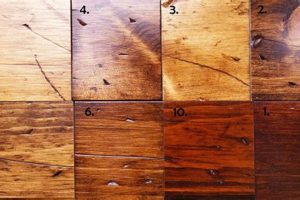
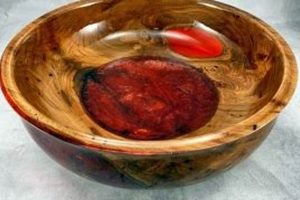
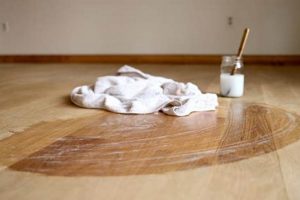
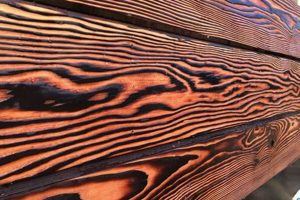
A surface treatment yielding a reflective, mirror-like sheen when applied to timber products is a common method for enhancing the aesthetic appeal and durability of wooden items. This type of coating creates a smooth, lustrous surface that can showcase the wood’s natural grain while providing a protective layer against scratches, moisture, and other environmental factors. Examples of its use include furniture, cabinetry, and decorative wooden objects.
The application of a highly reflective topcoat offers several advantages, including heightened resistance to wear and tear, ease of cleaning, and an enhanced visual impact. Historically, achieving this level of sheen required laborious processes involving multiple coats of varnish or lacquer meticulously polished over time. The resultant effect not only protects the underlying wood but also adds a touch of elegance and sophistication to the finished product, making it a desirable option for both functional and ornamental applications.
The subsequent sections will delve into the specific types of materials used to create this effect, the application techniques necessary to achieve a flawless surface, considerations for preparation and safety, and methods for maintaining the appearance over the long term. Further discussion will encompass troubleshooting common issues and providing advice for selecting the appropriate treatment based on the desired outcome and the type of wood being used.
Achieving Optimal Results
The creation of a durable and visually striking surface on wood requires careful attention to detail throughout the finishing process. These tips will assist in maximizing the potential of high gloss applications, ensuring a professional and long-lasting result.
Tip 1: Surface Preparation is Paramount. Prior to any coating, meticulous sanding is essential. Progress through increasingly finer grits of sandpaper (e.g., 120, 180, 220, 320) to eliminate imperfections and create a uniformly smooth substrate. Any residual dust or contaminants must be thoroughly removed using a tack cloth or vacuum system to ensure proper adhesion.
Tip 2: Primer Application Enhances Adhesion and Uniformity. A quality primer, specifically formulated for wood and compatible with the intended topcoat, serves as a foundation. This step promotes optimal adhesion of the subsequent layers and minimizes the potential for uneven color absorption. Multiple thin coats of primer are preferable to a single thick coat, allowing for better drying and reduced risk of drips or runs.
Tip 3: Select the Appropriate Coating. Different formulations, such as lacquers, polyurethanes, and varnishes, offer varying levels of durability, gloss retention, and ease of application. Careful consideration should be given to the specific requirements of the project, taking into account factors such as intended use, environmental exposure, and desired aesthetic characteristics. Researching product data sheets is critical.
Tip 4: Application Technique Impacts the Final Finish. Employ consistent and controlled application techniques, whether using a brush, spray gun, or roller. Avoid applying excessively thick coats, which can lead to sagging, wrinkling, or prolonged drying times. Multiple thin coats, allowing sufficient drying time between each, will yield a more uniform and durable surface.
Tip 5: Control the Environment. The ambient temperature and humidity levels during application and drying significantly influence the outcome. Ideally, maintain a dust-free environment with moderate temperatures (e.g., 65-75F) and relative humidity levels below 60%. Excessive humidity can impede drying and affect the gloss level.
Tip 6: Between-Coat Sanding Refines the Surface. Lightly sanding between coats with very fine-grit sandpaper (e.g., 400 grit or higher) removes imperfections and creates a smoother surface for subsequent layers. This process is particularly important when applying multiple coats of a coating, as it ensures a flawless finish.
Tip 7: Curing Time is Crucial for Durability. Allow adequate curing time, as specified by the manufacturer, before putting the finished item into service. Premature use can compromise the coating’s integrity and reduce its resistance to scratches, impacts, and other forms of wear.
Consistent adherence to these guidelines facilitates the creation of a visually appealing and long-lasting, highly reflective surface on wooden objects. Through methodical preparation, informed product selection, and careful execution, superior results are attainable.
The following section will cover best practices for maintaining the surface, including suitable cleaning methods and strategies for preventing damage.
1. Durability

The durability of a reflective coating on wood is intrinsically linked to its capacity to withstand physical abrasion, chemical exposure, and environmental fluctuations. A compromised coating, evidenced by scratches, chips, or discoloration, diminishes its visual appeal and compromises the underlying wood’s protection against moisture ingress and potential decay. For example, a kitchen table treated with a low-durability coating will likely exhibit wear marks from routine use and cleaning, contrasting sharply with a professionally applied, durable coating capable of withstanding frequent contact and spills.
The selection of a coating appropriate for the intended application is paramount in determining its long-term resilience. Polyurethane-based finishes, renowned for their hardness and resistance to chemicals, are frequently specified for high-traffic surfaces such as flooring and countertops. Conversely, a nitrocellulose lacquer, while achieving a high level of reflectivity, may prove less durable in demanding environments. The preparation of the wooden substrate also contributes significantly to coating longevity; proper sanding and the use of a compatible primer promote optimal adhesion, minimizing the risk of chipping or peeling under stress.
Ultimately, a reflective coating’s durability dictates its capacity to maintain both aesthetic integrity and protective functionality over time. While achieving a desirable sheen is a primary goal, prioritizing robustness through informed product selection, meticulous application, and appropriate maintenance strategies is essential for maximizing the investment and preserving the underlying wooden material. Failing to consider these aspects results in a surface prone to premature degradation, necessitating costly repairs or complete refinishing.
2. Reflectivity

The degree of light reflection from a treated wooden surface is the defining characteristic of a high gloss aesthetic. This reflectivity is not merely a surface attribute; it represents a complex interaction of material properties, application techniques, and environmental factors that ultimately determine the visual impact and perceived quality of the finished product.
- Surface Smoothness
Microscopic irregularities on the surface scatter light in multiple directions, reducing specular reflection and diminishing the overall gloss. A perfectly smooth surface, achieved through meticulous sanding and leveling, minimizes this scattering and allows for a more direct and intense reflection of light. This is why achieving an impeccable substrate is a prerequisite for achieving high reflectivity.
- Refractive Index of the Coating
The refractive index of the coating material dictates how light bends as it passes through the finish. Higher refractive indices generally correlate with greater potential for reflectivity, provided the surface is smooth. Different coating materials, such as lacquers, polyurethanes, and epoxies, possess varying refractive indices, influencing the final gloss level attainable.
- Number of Applied Coats
Each layer of coating, when properly applied and cured, contributes to the overall film thickness and smoothness. Multiple thin coats are preferable to a single thick coat, as they allow for better leveling, reduced risk of imperfections, and a gradual build-up of reflectivity. The cumulative effect of these layers ultimately determines the depth and clarity of the reflected image.
- Clarity and Transparency of the Coating
The presence of pigments, additives, or imperfections within the coating material can impede light transmission and reduce reflectivity. Clear and transparent coatings, free from contaminants and air bubbles, allow for maximum light penetration and reflection from the underlying wood surface, enhancing the depth and brilliance of the finish.
The pursuit of high reflectivity in wood finishing requires a holistic approach, encompassing careful selection of coating materials, rigorous surface preparation, and meticulous application techniques. Achieving a mirror-like surface is not simply about applying a “high gloss” product; it’s about manipulating the interaction of light with the coated surface to maximize specular reflection and minimize diffusion. The interplay of these factors determines the final aesthetic and the perceived value of the finished piece.
3. Application Method

The attainment of a mirror-like surface on wood is heavily contingent upon the technique employed to apply the coating. The chosen method directly influences the uniformity, thickness, and smoothness of the resulting film, thereby impacting the overall level of reflected light. Improper application can lead to imperfections such as brush strokes, orange peel texture, or inconsistent coverage, each of which diminishes the surface’s reflective properties. For example, using a low-quality brush or applying excessive pressure during brushing can introduce visible striations, scattering light and reducing the perceived gloss. Similarly, improper spray gun settings or insufficient thinning of the coating can result in an uneven, textured surface that impairs reflectivity.
The practical application of this understanding lies in the careful selection and mastery of appropriate techniques. Spray application, utilizing high-volume low-pressure (HVLP) or airless spray systems, is generally favored for achieving the most uniform and defect-free finish, as it atomizes the coating into fine particles that coalesce into a smooth, even layer. However, spray application necessitates a controlled environment to prevent dust contamination and requires skilled technique to avoid runs or sags. Alternatively, brush application, while requiring greater manual dexterity, can be suitable for smaller or more intricate surfaces. In such cases, employing high-quality brushes designed for fine finishing, coupled with proper thinning and leveling techniques, becomes critical to minimize brush marks and achieve a satisfactory level of gloss. The choice of method should therefore be dictated by the size and complexity of the workpiece, the properties of the coating being used, and the skill level of the applicator.
In summary, the application method is an inseparable component of a reflective surface on wood. Selecting the appropriate technique and executing it with precision is paramount to minimizing surface imperfections and maximizing light reflection. While advanced techniques like spray application may offer superior results in certain contexts, careful execution with appropriate tools and materials can also yield satisfactory results. The key is a thorough understanding of the cause-and-effect relationship between application technique and the ultimate appearance of the finished surface. Addressing application-related challenges proactively ensures that the final product achieves the desired level of reflectivity, enhancing the aesthetic appeal and value of the treated wood.
4. Surface Preparation

Surface preparation represents a critical stage in achieving a highly reflective coating on wood. The degree to which the substrate is properly prepared directly dictates the final aesthetic and functional qualities of the finish. Inadequate preparation invariably leads to imperfections that compromise the coating’s integrity and reduce its reflective properties.
- Sanding and Smoothing
Sanding removes existing imperfections, such as scratches, dents, and unevenness, creating a uniformly smooth canvas for the coating. Progressing through progressively finer grits of sandpaper eliminates larger defects and refines the surface to a level suitable for accepting a reflective topcoat. Failure to adequately sand results in a finish that mirrors the underlying surface irregularities, diminishing its ability to reflect light evenly. An example is the presence of swirl marks from aggressive sanding, which become amplified under a high-gloss topcoat.
- Cleaning and Decontamination
The removal of dust, debris, oils, and other contaminants is essential for proper adhesion of the coating. Residual contaminants can impede bonding, leading to peeling, blistering, or uneven gloss levels. Solvent wiping, vacuuming, and the use of tack cloths are common methods for achieving a clean surface. Silicone-based products, in particular, are problematic, as they can prevent the coating from adhering properly. A single fingerprint can cause fish-eye defects in the finished surface.
- Pore Filling (Optional)
For open-grained woods like oak or ash, pore filling may be necessary to create a perfectly smooth surface. Pore fillers level the surface by filling the natural pores of the wood, preventing the coating from sinking into these areas and creating an uneven texture. This step is particularly important for achieving a glass-like coating, as any remaining open pores will diffract light and reduce reflectivity. Unfilled pores on oak furniture can result in a dimpled finish that lacks depth and clarity.
- Priming and Sealing
The application of a primer or sealer creates a uniform base for the coating, promoting adhesion and preventing the absorption of the coating into the wood. Primers also enhance color uniformity and can improve the overall durability of the finish. A properly applied primer provides a consistent foundation that minimizes variations in gloss level across the surface.
The successful execution of each of these aspects contributes to a final coating characterized by exceptional clarity and reflectivity. Omission of even one step can result in a compromised aesthetic and reduced durability, emphasizing the critical role of meticulous surface preparation in achieving the desired outcome of a high gloss surface on wood.
5. Maintenance

The longevity and aesthetic appeal of a highly reflective coating on wood are directly proportional to the diligence and appropriateness of ongoing care. Maintenance protocols are not merely cosmetic; they are crucial interventions that preserve the protective and visual qualities of the applied surface treatment.
- Regular Cleaning Procedures
Consistent removal of dust, dirt, and other surface contaminants prevents the accumulation of abrasive particles that can induce micro-scratches, thereby dulling the finish over time. The utilization of soft, lint-free cloths and pH-neutral cleaning solutions is paramount. Abrasive cleaners or scouring pads invariably compromise the coating’s integrity, leading to a reduction in reflectivity. For instance, a high-gloss dining table subjected to daily cleaning with an abrasive sponge will exhibit a progressive decline in its sheen compared to one cleaned with a microfiber cloth and mild detergent.
- Protection Against Physical Damage
Shielding the coated surface from impacts, scratches, and excessive pressure minimizes the risk of irreversible damage. The implementation of protective measures, such as felt pads beneath furniture legs and placemats on tabletops, serves as a preventative strategy. Sharp objects or heavy items dragged across the surface can inflict deep scratches that penetrate the coating, necessitating costly repairs or refinishing. A coffee table inadvertently scratched by a belt buckle will require professional intervention to restore its original appearance.
- Environmental Control
Maintaining stable environmental conditions, particularly regarding humidity and temperature, minimizes the potential for expansion and contraction of the underlying wood, which can induce stress cracks in the coating. Excessive humidity can also promote the growth of mold or mildew on the surface, leading to discoloration and degradation. Placement of wooden items away from direct sunlight mitigates the risk of fading or yellowing of the coating over time. A cabinet exposed to direct sunlight near a window may exhibit localized discoloration compared to the rest of the unit.
- Periodic Reapplication of Protective Coatings
The strategic reapplication of wax or specialized coating rejuvenators can enhance the coating’s protective properties and restore its original sheen. These products create a sacrificial layer that shields the underlying finish from minor abrasions and environmental exposure. The frequency of reapplication depends on the level of use and environmental conditions, but generally, a periodic treatment every few months can significantly extend the lifespan of the reflective surface. A desk treated annually with a furniture wax will maintain its glossy appearance longer than one left untreated.
The effectiveness of a reflective coating on wood is thus intrinsically linked to ongoing maintenance efforts. Consistent adherence to appropriate cleaning protocols, proactive protection against physical damage, and careful environmental management collectively contribute to preserving both the aesthetic brilliance and the protective functionality of the surface treatment. Neglecting these aspects invariably accelerates the degradation process, necessitating costly repairs or complete restoration to regain the desired level of sheen.
6. Product Selection

The attainment of a highly reflective surface on wood hinges significantly on the judicious selection of appropriate finishing products. The inherent properties of various coatings directly influence the achievable gloss level, durability, and overall aesthetic outcome. An inappropriate product choice can undermine even the most meticulous surface preparation and application techniques, resulting in a finish that fails to meet desired expectations. For example, utilizing a water-based polyurethane designed for low-traffic areas on a frequently used kitchen countertop will likely lead to premature wear and a compromised sheen, irrespective of the application’s precision. Conversely, opting for a catalyzed lacquer, known for its durability and gloss retention, in a low-wear environment may represent an unnecessary expense without yielding a commensurate increase in performance.
The selection process necessitates a thorough evaluation of several factors, including the type of wood being finished, the intended use of the object, and the desired level of reflectivity. Open-grained woods, such as oak or ash, often require a grain filler prior to coating application to achieve a uniformly smooth surface conducive to high gloss. In contrast, closed-grained woods like maple or cherry may not require this additional step. The intended use dictates the required level of durability; surfaces subjected to heavy wear demand coatings with superior scratch resistance and chemical inertness. Furthermore, understanding the inherent characteristics of different coating types including lacquers, polyurethanes, varnishes, and epoxies is crucial for making an informed decision. Each offers a unique balance of properties, influencing the final appearance, application requirements, and long-term performance. Choosing a product with inadequate UV protection for outdoor applications, for instance, will lead to discoloration and degradation over time, nullifying the initial investment in achieving a reflective finish.
In summary, the relationship between product selection and a successful high-gloss surface on wood is causative and critical. An informed decision, based on a comprehensive understanding of wood properties, intended use, and coating characteristics, is paramount for achieving the desired level of reflectivity, durability, and aesthetic appeal. While meticulous preparation and application are essential, they cannot compensate for the inherent limitations of an improperly chosen product. Thus, a well-informed product selection process is a non-negotiable prerequisite for realizing the full potential of a highly reflective surface on wood.
7. Wood Type
The selection of wood substrate exerts a significant influence on the final outcome of a highly reflective coating. The inherent characteristics of different wood species interact uniquely with finishing products, impacting factors such as surface preparation requirements, coating adhesion, and the overall aesthetic presentation.
- Pore Structure and Grain Pattern
Open-grained woods, such as oak and ash, possess prominent pores that necessitate filling to achieve a uniformly smooth surface suitable for gloss application. Conversely, closed-grained woods, including maple and cherry, present a naturally smoother surface, potentially reducing the need for extensive pore filling. The visibility and prominence of the wood grain also influence the final aesthetic. A strong grain pattern may be accentuated or subdued depending on the type of coating and application technique employed, impacting the overall perceived depth and clarity of the reflective surface.
- Wood Density and Hardness
The density and hardness of the wood affect its ability to withstand sanding and polishing during surface preparation. Softer woods may be more susceptible to scratching or denting, requiring greater care during sanding and potentially influencing the choice of coating. Harder woods, while more durable, may require more aggressive sanding techniques to achieve the desired level of smoothness. Furthermore, the wood’s density impacts the rate of coating absorption, potentially leading to uneven gloss levels if not properly addressed.
- Natural Color and Extractives
The inherent color of the wood and the presence of natural extractives can influence the final color and clarity of the high gloss coating. Darker woods may require tinted coatings to prevent the natural wood color from showing through, potentially affecting the overall reflectivity. Wood extractives, such as tannins, can react with certain coatings, leading to discoloration or adhesion problems. Proper sealing and priming are essential to mitigate these effects and ensure a uniform and stable finish.
- Dimensional Stability
The dimensional stability of the wood, its ability to resist shrinking or swelling with changes in humidity, impacts the long-term integrity of the coating. Woods prone to significant dimensional changes can induce stress cracks in the coating, compromising its reflective properties and overall durability. Proper acclimatization of the wood before finishing and the selection of coatings with good flexibility are crucial for mitigating these risks.
These considerations underscore the importance of selecting a wood type compatible with the desired high gloss finish. Understanding the interplay between wood characteristics and coating properties is essential for achieving a durable and visually appealing outcome. Failing to account for these factors can result in a compromised finish that detracts from the inherent beauty of the wood.
Frequently Asked Questions
The following questions address common inquiries and misconceptions regarding highly reflective surface treatments on wooden substrates. The information provided aims to clarify key aspects and guide informed decision-making.
Question 1: Is a high gloss surface suitable for all types of wood?
Not necessarily. Open-grained woods, such as oak or ash, typically require pore filling to achieve a uniformly smooth surface conducive to a high level of reflectivity. Closed-grained woods, like maple or cherry, generally present a smoother surface naturally, potentially reducing the need for extensive pore filling. The selection of wood should align with the desired finish aesthetic and the intended application.
Question 2: What is the primary difference between lacquer and polyurethane coatings for achieving a highly reflective surface?
Lacquers are known for their fast drying times and ease of application, often yielding a very smooth, mirror-like surface. However, they tend to be less durable and more susceptible to scratches and chemical damage compared to polyurethanes. Polyurethanes offer greater durability and resistance to wear, but can be more challenging to apply evenly and may require specialized equipment.
Question 3: Can a high gloss coating be applied to an existing wood finish?
Potentially, but careful preparation is essential. The existing finish must be thoroughly cleaned, sanded, and assessed for compatibility with the new coating. Incompatible finishes may result in adhesion problems, peeling, or an uneven surface. A test area is recommended to ensure satisfactory results before proceeding with the entire project.
Question 4: What factors contribute to “orange peel” texture in a coating?
Orange peel texture, characterized by a dimpled surface, can result from various factors, including improper spray gun settings, insufficient thinning of the coating, inadequate surface preparation, or environmental conditions (e.g., high humidity or temperature extremes). Adjusting application techniques and controlling the environment are crucial for minimizing this defect.
Question 5: How can scratches be removed from a surface?
Minor surface scratches can often be removed through gentle polishing with specialized compounds designed for coatings. Deeper scratches may require sanding and reapplication of the coating in the affected area. The severity of the scratch dictates the appropriate repair method.
Question 6: Is a high gloss surface more difficult to maintain than a matte finish?
Generally, yes. A surface tends to show scratches, fingerprints, and dust more readily than a matte finish. Regular cleaning with non-abrasive materials and gentle cleaning solutions is essential to preserve its appearance. The trade-off is increased aesthetic impact for heightened maintenance requirements.
Achieving and maintaining a highly reflective coating on wood requires meticulous attention to detail throughout the entire process, from wood selection to ongoing maintenance. Informed decision-making is paramount.
The subsequent section will explore common troubleshooting scenarios encountered during the finishing process and provide actionable solutions.
Conclusion
The preceding discussion has elucidated the multifaceted considerations inherent in achieving a durable and visually compelling outcome. A process demanding meticulous attention to detail, it involves careful evaluation of wood properties, appropriate product selection, rigorous surface preparation, precise application techniques, and consistent maintenance protocols. Each stage contributes significantly to the ultimate reflectivity, longevity, and overall aesthetic impact. A compromised approach in any area can detract from the final result, underscoring the importance of a comprehensive understanding.
Therefore, achieving a surface characterized by exceptional clarity and luster requires a commitment to informed decision-making and diligent execution. As advancements in coating technology continue to evolve, further refinements in application techniques and maintenance strategies will undoubtedly emerge. However, the fundamental principles outlined herein will remain foundational for those seeking to maximize the inherent potential of treated wooden surfaces.