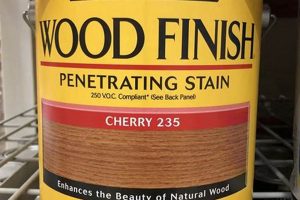
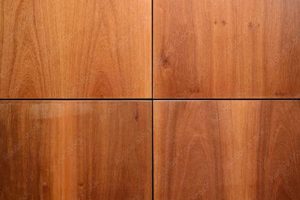
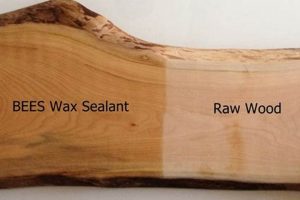
A coating that imparts a low-luster sheen to wooden surfaces is commonly desired for both aesthetic and practical reasons. This type of coating strikes a balance between high-gloss and matte finishes, resulting in a smooth, subtle appearance. For example, it can enhance the natural grain of furniture without producing an overly reflective surface.
This level of sheen offers several advantages. It effectively conceals minor imperfections such as scratches or dust, proving more forgiving than higher gloss options. Historically, it has been favored in residential settings for its understated elegance and ability to complement a variety of interior design styles. The reduced glare also contributes to a more comfortable visual environment.
The subsequent sections will delve into the specific characteristics of this finish, including its durability, application techniques, and suitability for different wood types. A comparison with alternative sheens will further elucidate its unique properties and help inform appropriate selection for specific projects.
Application and Maintenance Recommendations
The following guidelines are presented to optimize the application and longevity of a low-luster wood coating.
Tip 1: Surface Preparation is Paramount. Prior to application, ensure the wood surface is clean, dry, and free from contaminants such as grease, wax, or existing finishes. Sanding to the appropriate grit level is crucial for adhesion.
Tip 2: Utilize a Quality Applicator. The choice of brush, roller, or spray equipment significantly impacts the final result. Opt for applicators designed for the specific coating being used to minimize brush marks or orange peel texture.
Tip 3: Apply Thin, Even Coats. Multiple thin coats are preferable to a single thick coat. This technique reduces the risk of runs, sags, and uneven drying, resulting in a smoother, more durable finish.
Tip 4: Allow Adequate Drying Time. Adhere strictly to the manufacturer’s recommended drying times between coats. Insufficient drying can lead to adhesion problems and compromised durability.
Tip 5: Lightly Sand Between Coats. After each coat has fully dried, lightly sand with a fine-grit sandpaper (e.g., 320-grit) to remove any imperfections and improve adhesion of the subsequent coat.
Tip 6: Maintain a Consistent Environment. Apply the coating in a well-ventilated area with a stable temperature and humidity level. Extreme temperatures or humidity can negatively affect the curing process.
Tip 7: Proper Cleaning Practices: Routinely clean surfaces with a mild soap and water solution. Avoid harsh chemicals or abrasive cleaners, as they can damage the finish. Dry the surface thoroughly after cleaning.
Following these recommendations will contribute to a professional-looking, long-lasting protective layer on the wood surface, enhancing its aesthetic appeal and durability.
The succeeding sections will discuss potential issues and troubleshooting methods to address problems encountered during the application process.
1. Subtle sheen level

The “subtle sheen level” is a defining characteristic of this coating, directly influencing its visual impact and suitability for various applications. It represents a deliberate design choice, balancing light reflection and surface texture.
- Reduced Glare
A primary consequence of this sheen level is reduced glare compared to glossier finishes. This characteristic minimizes distracting reflections, making it suitable for spaces with abundant natural or artificial light. For example, a tabletop coated with this finish will not produce blinding glare, improving user comfort.
- Enhanced Grain Visibility
The subtle sheen allows the natural grain patterns of the wood to remain visible and prominent. Unlike high-gloss finishes that can obscure the wood’s texture, this coating enhances the beauty of the material. This is particularly desirable for hardwoods with intricate grain patterns.
- Concealment of Imperfections
A critical advantage of this sheen is its ability to minimize the appearance of minor imperfections such as scratches, dust, and surface irregularities. Higher gloss finishes tend to accentuate these flaws, while a matte finish can appear dull. This offers a practical benefit, making the surface more forgiving in everyday use.
- Versatility in Design
The understated elegance provided by this coating contributes to its versatility across diverse design styles. It complements both traditional and contemporary aesthetics, making it a flexible choice for a wide range of furniture and interior elements. This adaptability enhances its appeal for various applications and customer preferences.
The interplay between reduced glare, enhanced grain visibility, concealment of imperfections, and design versatility underscores the significant role of subtle sheen level in defining the aesthetic and functional attributes of surfaces. This balance contributes to its enduring popularity across multiple applications.
2. Durability considerations

The longevity and resistance to wear exhibited by a wood coating are paramount factors influencing its suitability for a given application. The intrinsic characteristics of the finish, in conjunction with external environmental stressors, determine its capacity to maintain structural integrity and aesthetic appeal over time.
- Abrasion Resistance
The ability to withstand surface damage from friction, impact, and contact with abrasive materials is crucial. A finish lacking adequate abrasion resistance will exhibit scratches, scuffs, and worn areas, compromising both its appearance and protective function. For example, a tabletop subject to frequent use requires a coating with high abrasion resistance to prevent premature degradation.
- Chemical Resistance
Exposure to household chemicals, solvents, and cleaning agents can degrade or discolor a wood coating. Chemical resistance dictates the finish’s ability to withstand these substances without undergoing detrimental changes. Kitchen cabinets, for instance, necessitate a finish resistant to common spills and cleaning solutions.
- Water Resistance
Prolonged exposure to moisture can cause swelling, warping, and delamination of wood. A finish with high water resistance forms a barrier against moisture penetration, preventing these issues. Bathroom vanities and outdoor furniture require a coating that effectively repels water.
- UV Resistance
Ultraviolet (UV) radiation from sunlight can cause fading, discoloration, and degradation of a wood coating over time. UV resistance ensures that the finish maintains its color and structural integrity even when exposed to sunlight. Exterior wood surfaces, such as doors and siding, demand a coating with robust UV resistance.
These durability considerations are integrally linked to the overall performance of the protective coating. Each factor contributes to the finish’s ability to withstand environmental stressors and maintain its appearance and protective function over the lifespan of the coated product. Failing to account for these elements when selecting the finish results in premature failure and increased maintenance requirements.
3. Application ease

The attribute of “application ease” represents a significant consideration when evaluating the practical utility of wood coatings. A products complexity in application directly impacts the time investment, skill requirements, and potential for errors during the finishing process. A smoother application benefits both professional finishers and DIY enthusiasts, and this often translates to the end product looking and behaving as it should. Coatings that present application challenges, such as rapid drying times or the need for highly specialized equipment, invariably increase project costs and the likelihood of suboptimal results.
This coating often exhibits favorable application characteristics compared to high-gloss or more specialized finishes. Its viscosity and leveling properties typically allow for even distribution using standard brushes, rollers, or spray equipment. This reduces the occurrence of brush marks, streaks, or orange-peel textures that are frequently encountered with more demanding finishes. In practice, a less skilled individual can achieve an acceptable result with this product, widening its accessibility and reducing the barrier to entry for wood finishing projects. It is especially relevant for large-scale projects, where the time saved and reduced error rate directly translate into economic benefits. The reduction in the need for specialized tools and complex techniques also contributes to its widespread popularity.
In summary, application ease is not merely a convenience but a critical performance aspect of this coating. It directly influences project efficiency, cost-effectiveness, and the final quality of the finished wood surface. The relative simplicity of application is a contributing factor to its ubiquitous presence in both residential and commercial settings. Recognizing the practical significance of application ease is key for effective project planning and selecting the appropriate wood coating for a specific application.
4. Surface preparation

Effective surface preparation constitutes a foundational element for achieving a satisfactory and durable application of this coating. The characteristics of the underlying substrate directly influence the adhesion, appearance, and longevity of the final finish. Without proper preparation, even the highest quality coatings are prone to failure, manifesting as peeling, cracking, or inconsistent sheen. For instance, applying the coating over a surface contaminated with grease or wax inhibits proper bonding, leading to premature deterioration. Similarly, a rough or uneven surface will result in an unsatisfactory aesthetic outcome, negating the subtle elegance sought with this specific type of finish. Therefore, thorough surface preparation is not merely a preliminary step but an integral component of the entire finishing process, directly impacting the overall success of the project.
Practical application necessitates a multi-stage approach. Initial assessment of the wood’s condition is crucial to identify existing finishes, damage, or contaminants. Removal of prior coatings, through sanding or chemical stripping, is often required to create a clean and uniform substrate. Sanding, typically progressing through multiple grits, smooths the surface and provides mechanical keying for the new finish. Filling imperfections, such as cracks or dents, ensures a level surface conducive to an even coating. Finally, thorough cleaning to remove dust and debris prevents contamination that could compromise adhesion. Each stage must be executed meticulously to create the ideal conditions for the subsequent application of the finish.
In summary, the correlation between surface preparation and the final outcome is undeniable. While the coating itself contributes to protection and aesthetic appeal, its effectiveness is contingent upon the quality of the underlying surface. Neglecting proper preparation invariably leads to compromised results, negating the benefits of even the finest coating. Understanding and adhering to appropriate preparation techniques ensures optimal adhesion, durability, and aesthetic appeal, resulting in a long-lasting and visually pleasing finish on the wood surface.
5. Maintenance requirements

The longevity and aesthetic preservation of a wood coating are intrinsically linked to diligent adherence to specific maintenance protocols. A finish exhibiting optimal characteristics upon initial application can degrade prematurely if proper upkeep is neglected. The inherent properties of this coating, while offering advantages such as reduced glare and concealment of minor imperfections, necessitate particular maintenance strategies to sustain these benefits over time. Failure to implement appropriate cleaning and preventative measures results in the accumulation of dirt, scratches, and potential damage to the underlying wood substrate. This, in turn, diminishes the coating’s protective capacity and compromises the desired aesthetic outcome. The relationship, therefore, is causal: inadequate maintenance directly leads to reduced performance and lifespan of the finish.
Practical maintenance involves several key actions. Regular cleaning with a mild, non-abrasive cleaner is essential to remove surface contaminants. Avoidance of harsh chemicals or abrasive implements prevents scratching or dulling the finish. Prompt removal of spills minimizes the potential for staining or water damage. Periodic application of a specialized wood cleaner or polish can replenish the coating’s protective layer and enhance its sheen. For example, furniture in high-traffic areas requires more frequent cleaning and polishing compared to items in less frequently used spaces. Outdoor applications necessitate additional measures to mitigate the effects of UV radiation and moisture, often requiring periodic reapplication of a protective topcoat. The specific maintenance regimen varies based on the application environment and the level of use, but consistent attention is invariably required to preserve the coating’s integrity.
In conclusion, diligent maintenance is an indispensable component of ensuring the long-term performance and aesthetic appeal of this finish. While the initial application establishes a protective barrier and enhances the wood’s appearance, consistent upkeep is essential for preventing premature degradation and maximizing the coating’s lifespan. The challenges lie in balancing the need for effective cleaning with the avoidance of damaging practices. Understanding the specific maintenance requirements and adhering to a consistent cleaning schedule ensures the ongoing protection and aesthetic enhancement of wood surfaces finished with this coating.
Frequently Asked Questions
The following questions address common inquiries regarding the selection, application, and maintenance of wood surfaces finished with a particular sheen level.
Question 1: Is a finish with a subtle sheen suitable for high-traffic areas?
The appropriateness depends on the specific formula and protective qualities of the finish. While the sheen itself does not inherently dictate durability, products specifically designed for high-traffic areas will possess enhanced abrasion and scratch resistance regardless of the sheen level. Verify the product specifications for intended use.
Question 2: How does a subtle sheen compare to gloss or matte finishes in terms of maintenance?
It generally offers a middle ground. Gloss finishes tend to highlight imperfections and require more frequent cleaning to maintain their shine. Matte finishes, while concealing imperfections, can be more prone to staining and require careful cleaning to avoid altering their texture. This specific sheen strikes a balance, requiring less frequent and intensive maintenance than gloss while exhibiting better stain resistance than matte finishes.
Question 3: Can a high-gloss finish be converted to a subtle sheen?
Yes, a glossier surface can be altered with appropriate techniques. Lightly abrading the existing finish with fine-grit sandpaper, followed by the application of a specialized topcoat with the desired level of sheen, can reduce the gloss level. However, careful surface preparation is crucial to ensure proper adhesion and a uniform appearance.
Question 4: What is the best method for cleaning surfaces finished with a particular sheen level?
A mild, non-abrasive cleaner diluted in water is generally recommended. Avoid harsh chemicals, solvents, or abrasive cleaning implements, as these can damage the finish and alter its sheen. Always test any cleaning product in an inconspicuous area prior to widespread use.
Question 5: Does UV exposure affect a finish with a subtle sheen differently than other sheens?
The impact of UV radiation is primarily determined by the UV resistance of the finish itself, not the sheen level. Finishes formulated with UV inhibitors will exhibit greater resistance to fading and discoloration, regardless of whether they possess a gloss, satin, or matte appearance.
Question 6: Can a finish with a subtle sheen be used on all types of wood?
It is generally suitable for most wood types, but the specific properties of the wood and the intended use should be considered. Oily woods, such as teak or rosewood, may require specialized preparation to ensure proper adhesion. Consult the product specifications for compatibility with different wood species.
The choice of any finish, including one with a subdued gloss, necessitates careful consideration of application, maintenance, and intended use. Addressing these frequently asked questions provides a foundation for informed decision-making.
The following section will explore case studies showcasing the practical application of this finish in diverse scenarios.
Conclusion
This exploration of wood finish satin has elucidated its defining characteristics, application parameters, maintenance requirements, and suitability for various applications. The analysis underscored the importance of surface preparation, proper application techniques, and consistent maintenance to achieve optimal results. Understanding the nuanced interplay between sheen level, durability, and environmental factors is paramount for informed decision-making.
The informed application of wood finish satin extends the lifespan and enhances the aesthetic value of wooden surfaces. Further investigation into advanced formulations and application methodologies will likely refine its performance capabilities and expand its utility across diverse industrial and residential contexts. Continued adherence to best practices remains crucial for realizing the full potential of this wood finishing option.