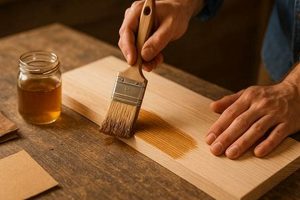
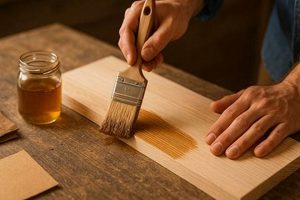
A natural coating derived from the secretions of honeybees, applied to timber surfaces, offers a protective and aesthetic enhancement. This treatment, often composed of beeswax blended with oils, creates a lustrous and tactile surface on furniture, cabinetry, and smaller wooden objects. Its application typically involves warming the mixture, applying a thin layer to the wood, allowing it to set, and then buffing to achieve the desired sheen.
The appeal of this method lies in its non-toxic nature and the depth of character it imparts to the material. It accentuates the wood’s grain and provides a soft, low-luster sheen. Historically, this method served as a primary protectant for wood, favored for its simplicity and the availability of its key ingredient. It remains a popular choice for those seeking environmentally conscious and aesthetically pleasing wood finishing solutions.
The subsequent sections will delve into the preparation of the surface, application techniques, maintenance practices, and various formulations used to achieve different visual and protective characteristics. Further discussion will cover safety considerations, potential drawbacks, and a comparison with alternative wood finishing products.
Application and Maintenance Guidelines
Optimal results from this treatment depend on careful application and regular upkeep. The following guidelines aim to maximize the protective and aesthetic qualities achievable.
Tip 1: Surface Preparation: Ensure the wood is clean, dry, and free of any existing finishes. Sanding to a fine grit is recommended to achieve a smooth and even surface for optimal adherence.
Tip 2: Warming the Mixture: Gentle warming of the mixture, typically in a double boiler or microwave at low power, facilitates easier and more even application. Avoid overheating, which can alter its properties.
Tip 3: Thin Application: Apply the mixture in thin, even coats. Over-application can result in a sticky or uneven finish that requires extensive buffing.
Tip 4: Proper Buffing: Thorough buffing with a soft cloth after the wax has set is essential for achieving the desired luster and removing any excess residue. Multiple buffing sessions may be required.
Tip 5: Regular Maintenance: Periodically reapply a thin coat to maintain the protective barrier and enhance the finish. The frequency depends on the usage and environmental conditions.
Tip 6: Addressing Scratches: Minor scratches can often be remedied by gently warming the affected area with a hair dryer and then buffing with a soft cloth.
Tip 7: Avoid Harsh Cleaners: Refrain from using harsh chemical cleaners, as these can strip away the finish and damage the wood. Opt for gentle, pH-neutral cleaning solutions.
Adherence to these guidelines ensures a durable, aesthetically pleasing finish that enhances the natural beauty of the wood while providing a degree of protection against everyday wear and tear.
The concluding sections will explore the long-term care of treated surfaces and address common issues that may arise over time.
1. Natural Composition

The term “natural composition,” when applied to timber treatments, signifies the origin and inherent properties of the materials used. In the context of a coating derived from bees, this characteristic dictates its performance, safety profile, and environmental impact. A finish of natural origin presents distinct advantages and limitations that must be considered for optimal utilization.
- Source and Purity
The source and purity of the secretion significantly impact the resultant qualities. Pure, unadulterated substances from bees contribute to a more durable and aesthetically pleasing outcome. Conversely, the presence of additives or contaminants can compromise the finish’s integrity and longevity. For instance, finishes containing paraffin or synthetic resins detract from the natural advantages.
- Chemical Profile
This is characterized by a complex mixture of esters, fatty acids, and hydrocarbons. This specific chemical makeup contributes to its water-repellent properties and ability to impart a soft sheen to the wood surface. Unlike synthetic coatings that rely on volatile organic compounds (VOCs), a natural composition minimizes the release of harmful fumes into the environment.
- Biodegradability and Sustainability
As a naturally derived product, it exhibits a higher degree of biodegradability compared to synthetic alternatives. This characteristic aligns with sustainable practices, reducing the environmental footprint associated with wood finishing. The renewability of honey production further enhances its sustainability profile.
- Compatibility with Wood
The chemical properties of the secretion allow it to penetrate the wood’s surface, creating a bond that enhances the natural grain and provides a protective layer. This compatibility minimizes the risk of adverse reactions or damage to the timber substrate, unlike some synthetic finishes that may contain harsh chemicals. However, penetration depends on both the wood type and the application method.
The factors above directly influence the performance and appeal. Choosing products with well-defined origins ensures a finish that aligns with environmental principles and provides a safer and more aesthetically pleasing result. The inherent properties, stemming from its natural source, dictate its behavior and overall impact.
2. Surface Protection

A primary function of any wood finish is to provide a protective barrier against environmental factors and physical wear. In the context of beeswax treatments, the level of protection afforded is directly related to the characteristics of the material and the application method employed. The finish forms a hydrophobic layer on the wood surface, impeding the penetration of water and moisture. This is crucial in preventing warping, cracking, and the growth of mold or mildew, particularly in environments with fluctuating humidity. Furthermore, the wax layer provides a degree of resistance against scratches and minor abrasions, preserving the aesthetic integrity of the timber. However, it is important to recognize that this type of coating offers less robust protection compared to synthetic finishes such as polyurethane or lacquer. Its efficacy is limited against strong solvents, heat, and significant impacts. The level of protection can be enhanced by using multiple coats or combining it with other treatments like oil.
The practical significance of understanding the surface protection capabilities becomes evident when selecting appropriate finishes for different applications. For instance, a piece of furniture subjected to heavy use, such as a dining table, may require a more durable finish to withstand spills, heat from dishes, and potential scratches. In such cases, a beeswax finish may be better suited as a topcoat over a more resilient base coat, or as a primary finish for items experiencing lighter wear, like decorative objects or low-use shelving. An example would be applying a base coat of linseed oil, letting it cure, and then applying several thin layers of coating for a degree of resistance.
In summary, surface protection is an integral aspect of coating wood. This natural approach offers a certain degree of protection against moisture and minor abrasions but is less durable than synthetic alternatives. An understanding of these limitations allows for informed decision-making, ensuring the appropriate application and prolonging the lifespan of treated items. Further investigation into the chemical properties and long-term performance will yield a more comprehensive appreciation of its suitability for various wood finishing applications.
3. Aesthetic Enhancement
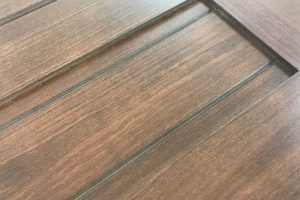
The application of a natural secretion from bees as a finish on timber directly influences its visual appeal. The treatment accentuates the wood’s inherent grain and texture, imbuing the surface with a subtle sheen that enhances its natural beauty. This effect arises from the way the material interacts with light, creating a warm, inviting appearance. For example, on hardwoods like cherry or walnut, the coating highlights the depth and complexity of the grain patterns, resulting in a richer visual experience. This characteristic is particularly valued in furniture making, where the finish contributes significantly to the overall aesthetic impact.
The level of sheen achieved depends on the formulation of the substance and the buffing technique employed. Blending the secretion with other natural oils, such as linseed or carnauba wax, can modify the final appearance, ranging from a matte finish to a high-gloss polish. The buffing process further refines the surface, removing excess product and creating a smooth, even luster. Craftsmen often tailor these parameters to achieve a specific visual effect, complementing the wood species and the intended design aesthetic. The effect is further defined by the woods original color; it is meant to protect and expose the wood and its texture, which is why it is valued by craftsmen.
In summary, aesthetic enhancement is an intrinsic component of the treatment. The coating not only protects the wood but also amplifies its natural beauty, creating a visually appealing and tactile surface. The specific visual effect can be controlled through formulation and application techniques, allowing for a wide range of aesthetic outcomes. This is significant because furniture crafted with this coating results in an aesthetically pleasing and long-lasting product.
4. Application Technique

The efficacy of any wood finish is inherently tied to its application technique. In the context of a beeswax coating, the method employed directly influences the finish’s protective qualities, aesthetic outcome, and longevity. Suboptimal application can negate the inherent benefits of the material itself, leading to a compromised result. For example, applying the product unevenly can result in areas of insufficient protection against moisture penetration, while excessive buildup can lead to a sticky or cloudy appearance. The application technique includes surface preparation, method of product delivery, ambient conditions, and post-application buffing; these factors contribute to success.
Surface preparation is paramount. The wood must be clean, dry, and sanded to an appropriate grit to ensure proper adhesion. The coating is typically applied in thin, even coats using a brush, cloth, or spray applicator. Warming the material facilitates easier spreading and penetration. Ambient conditions, such as temperature and humidity, can affect drying time and the final appearance. Post-application buffing is crucial for removing excess residue and achieving the desired sheen. An example is to work the product when it is warm. It helps to have the wood at room temperature or warmer to better penetrate the wood’s pores.
In summary, the application technique is an inseparable component. Careful attention to detail, from surface preparation to final buffing, is essential for realizing the full potential. Neglecting these considerations can compromise the finish’s protective properties and aesthetic appeal. Mastery of application is therefore key to achieving a lasting and visually pleasing coating on wood surfaces. The better the technique, the more likely the wood will maintain its beauty.
5. Maintenance Requirements

The durability and aesthetic appeal of a coating derived from beeswax on timber are intrinsically linked to ongoing maintenance. The relative softness of the wax necessitates a regimen designed to preserve its protective qualities and visual characteristics. Neglecting these requirements will inevitably lead to diminished protection against moisture, wear, and environmental factors, resulting in premature degradation of the coating and the underlying wood. For example, a table left untreated will have watermarks, scratches, and dulled texture versus one with upkeep.
Specific maintenance practices include periodic reapplication of the wax to replenish the protective layer, gentle cleaning with non-abrasive materials to remove surface contaminants, and prompt attention to scratches or blemishes. Reapplication frequency depends on usage and environmental conditions, with high-traffic areas requiring more frequent attention. The choice of cleaning agents is crucial; harsh chemicals can strip away the wax, negating its protective properties. Minor scratches can often be addressed by gently warming the area and buffing with a soft cloth. Failure to promptly address these issues can lead to deeper scratches or stains that require more extensive repairs. The care is similar to leather or other organic materials.
In summary, consistent and appropriate maintenance is not merely an optional addendum but an integral component of ensuring the long-term performance. The relatively soft nature of the material demands a proactive approach to preservation. Regular attention to these maintenance requirements translates into a prolonged lifespan, sustained aesthetic appeal, and continued protection of the underlying timber. Its success or failure depends on the owner’s attention.
Frequently Asked Questions
This section addresses common inquiries regarding the application, performance, and maintenance of timber treated with a coating derived from bees. The information provided aims to clarify misconceptions and offer practical guidance.
Question 1: What is the typical lifespan of a wax coating on wood?
The longevity varies depending on usage intensity, environmental conditions, and the quality of the application. High-traffic surfaces may require reapplication every few months, while low-use items can last significantly longer. Regular inspection is recommended.
Question 2: Is a natural wax coating water-resistant?
The coating provides a degree of water repellency but is not entirely waterproof. Prolonged exposure to moisture can damage the finish and the underlying wood. Promptly wipe away spills.
Question 3: Can a beeswax coating be applied over existing finishes?
Application over existing finishes is generally not recommended, as adhesion may be compromised. Removal of the previous coating is advisable for optimal results. Test a small, inconspicuous area first.
Question 4: How should a bees wax finish be cleaned?
Gentle cleaning with a soft cloth and a pH-neutral cleaner is recommended. Avoid harsh chemicals or abrasive materials, as these can damage or remove the coating.
Question 5: Is a wax coating food-safe?
When using pure, food-grade substances, the finish is generally considered safe for contact with food. Verify the purity of the product. This is important for items like cutting boards or wooden utensils.
Question 6: Can a beeswax coating be used on exterior wood surfaces?
The application on exterior wood surfaces is not recommended due to its limited resistance to UV exposure and extreme weather conditions. Exterior applications necessitate more durable finishes.
These answers provide a general understanding. Specific applications may require further research or consultation with a professional wood finisher.
The subsequent sections will delve into comparative analyses of alternative wood finishing products.
Conclusion
This exploration has illuminated the characteristics, application, and maintenance of a natural coating from bees on timber. The analysis emphasized its natural composition, surface protection capabilities, aesthetic enhancement qualities, application techniques, and maintenance requirements. The information highlights a balance between aesthetic appeal, environmental consciousness, and protective capabilities. The coating offers a viable solution for individuals seeking a non-toxic, visually pleasing finish that accentuates the wood’s inherent beauty.
However, the inherent limitations warrant careful consideration regarding its suitability for specific applications. Users are encouraged to evaluate the demands of their project, considering factors such as wear resistance, exposure to moisture, and the desired aesthetic outcome. Informed application and consistent maintenance remain crucial for maximizing the benefits. Future advancements in formulation may further enhance the protective properties and durability, solidifying its position in the market.