The process of applying protective and aesthetic treatments to the natural edge of a wood plank is crucial for its preservation and enhanced appearance. This involves techniques such as sanding, sealing, and the application of topcoats to protect the wood from moisture, UV damage, and general wear, while also accentuating its unique characteristics. For example, a walnut slab might be treated with multiple coats of oil-based polyurethane to highlight its grain and provide a durable, water-resistant surface.
Properly completing this process significantly extends the lifespan of the wood, preventing decay, warping, and cracking. It elevates the visual appeal of the piece, transforming it from a raw material into a refined and durable furnishing. Historically, woodworkers have sought methods to preserve and enhance wood’s natural beauty, leading to the development of various techniques, from simple oil applications to complex multi-layer coating systems. The benefits are enhanced aesthetic, protection, and extending the lifespan.
This article will delve into the specific methods, materials, and considerations involved, covering surface preparation, stabilization techniques, and the selection of appropriate coatings. Furthermore, it will address common challenges and troubleshooting tips to ensure a successful outcome.
Essential Tips
The following guidance will assist in achieving optimal results when completing the edge treatment process, ensuring longevity and aesthetic appeal.
Tip 1: Surface Preparation is Paramount. Thoroughly sand the surface, starting with a coarse grit and progressing to finer grits, to create a smooth and uniform substrate. Improper sanding will result in visible imperfections in the final finish.
Tip 2: Stabilize the Wood. Address any existing cracks or voids with epoxy resin, color-matched to the wood. This prevents further cracking and provides a stable base for subsequent coatings.
Tip 3: Choose the Appropriate Finish. Select a finish that complements the wood species and intended use. Oil-based finishes enhance the natural grain, while water-based finishes offer increased durability and lower VOC content. For example, for a dining table, a durable polyurethane would be preferable to a simple oil.
Tip 4: Apply Thin, Even Coats. Multiple thin coats are superior to a single thick coat. This prevents runs, drips, and uneven drying, resulting in a smoother and more durable surface. Allow each coat to dry completely before applying the next.
Tip 5: Sand Between Coats. Lightly sand between coats with a fine-grit sandpaper (e.g., 320-grit) to remove any imperfections and ensure proper adhesion of subsequent layers. Clean the surface thoroughly after sanding to remove dust.
Tip 6: Consider Edge Detailing. Carefully consider the desired edge profile. Options include leaving the edge completely natural, lightly sanding to remove sharp edges, or applying a subtle chamfer. The choice should complement the overall design.
Tip 7: Monitor Humidity Levels. Environmental conditions affect the drying and curing process. Maintain consistent humidity levels during the application and drying phases to prevent issues such as clouding or cracking.
These recommendations, when implemented diligently, will yield a professionally completed and visually appealing result. Adherence to these principles ensures both aesthetic excellence and long-term durability.
The subsequent sections will explore advanced techniques and specialized applications to further refine the edge finishing process.
1. Surface preparation

Surface preparation constitutes the foundational stage in finishing a live edge slab, influencing the adhesion, appearance, and longevity of the applied finish. Neglecting thorough preparation invariably leads to compromised results, necessitating rework or resulting in premature failure of the protective coating.
- Sanding for Smoothness
Sanding removes imperfections, such as mill marks, scratches, and raised grain, creating a uniform substrate. Progressing through increasingly finer grits, typically from 80 to 220, refines the surface. Inadequate sanding results in a textured surface, visible through the finish. For instance, applying a glossy finish to an inadequately sanded slab highlights imperfections, diminishing the aesthetic quality and requiring additional sanding and refinishing.
- Cleaning to Remove Contaminants
Removing dust, oil, and other contaminants is essential for proper finish adhesion. Dust particles trapped under the finish create a textured surface and impede bonding. A tack cloth or vacuum is used to remove particulate matter. Oil or grease, often from handling, must be removed with a solvent. Failure to properly clean before finishing may result in the finish peeling, flaking, or showing signs of poor adhesion shortly after application. For a live edge slab used for a table, this means potential damage from spilled liquids seeping under a compromised finish.
- Addressing Wood Defects
Surface preparation also includes addressing any defects in the slab, such as cracks, voids, or knots. These imperfections must be filled with epoxy resin or wood filler before applying the finish to ensure a smooth, uniform surface. Ignoring these defects can lead to moisture penetration, wood rot, or structural instability. For example, a crack in the slab near the live edge could widen over time if not properly stabilized and filled.
- Moisture Content Considerations
Ensuring the wood reaches an appropriate and stable moisture content is also a critical part of surface preparation. Wood that is too wet or too dry will cause problems with the finish, such as cracking, peeling, or bubbling. Use a moisture meter to test the wood and allow it to acclimatize to the environment where it will be used. This is vital because wood expands and contracts with moisture changes; therefore, an unstable moisture content at finishing will result in movement and compromise the finish.
The facets of surface preparation, from meticulous sanding to contaminant removal and stabilization of wood defects, converge to establish an optimal surface for the finish. By addressing each component comprehensively, it guarantees a durable, aesthetically pleasing finish, augmenting the inherent allure and value of the live edge slab.
2. Edge stabilization

Edge stabilization in live edge slabs is a critical step that directly influences the success and longevity of the finishing process. The natural irregularities and inherent vulnerabilities of a live edge necessitate specific interventions to ensure structural integrity and prevent future degradation of the applied finish.
- Epoxy Resin Application
The application of epoxy resin is a common method for stabilizing cracks, voids, and loose bark along the live edge. Epoxy fills these imperfections, preventing moisture ingress and subsequent decay. For instance, a crack left untreated can expand and contract with humidity changes, eventually causing the finish to crack or peel. The epoxy resin creates a stable substrate that supports the finish, ensuring a smooth, durable surface. Color-matched epoxy can maintain the wood’s natural aesthetic, while clear epoxy can create a contrasting, modern look.
- Bark Adhesion and Preservation
If the live edge includes bark, ensuring its secure adhesion is paramount. Loose bark poses a risk of detachment, which would compromise the finish applied over it. Cyanoacrylate adhesives or specialized wood glues are often used to reattach and reinforce the bark. The finishing process can then encapsulate the bark, providing additional protection against abrasion and moisture. Without proper bark stabilization, the finish can separate along the bark line, leading to aesthetic imperfections and potential damage to the wood.
- Dealing with Voids and Inclusions
Live edge slabs often contain natural voids or inclusions, such as insect galleries or decayed wood. These areas must be addressed before finishing to prevent structural weaknesses and ensure a uniform surface. Filling these voids with epoxy or other appropriate materials provides a solid foundation for the finish, preventing it from sinking or cracking over time. Leaving such voids untreated can result in an uneven finish and potential points of failure.
- Reinforcement Techniques
In some instances, reinforcement techniques beyond epoxy may be required, particularly for larger or more structurally compromised slabs. These techniques can include the use of butterfly joints, metal inlays, or other structural supports to stabilize the wood and prevent further movement. Reinforcement ensures the slab can withstand the stresses of daily use without compromising the finish or the overall integrity of the piece. The goal is to provide long-term stability, preventing warping or cracking that would damage the applied finish.
These facets of edge stabilizationepoxy application, bark adhesion, void filling, and reinforcementare inextricably linked to the finishing process. Proper stabilization ensures the finish adheres correctly, provides a durable protective layer, and enhances the overall aesthetic of the live edge slab. Addressing these elements proactively is crucial for creating a finished piece that is both beautiful and structurally sound, ensuring its longevity and value.
3. Finish selection

Finish selection represents a pivotal decision point in completing a live edge slab project. The choice of finish directly impacts the aesthetic, durability, and long-term maintenance requirements of the piece. Selecting an inappropriate finish can undermine the structural integrity of the wood, detract from its natural beauty, and ultimately necessitate costly repairs or refinishing. For instance, a water-based finish applied to a slab intended for outdoor use may offer inadequate protection against moisture and UV damage, leading to premature deterioration. Conversely, an excessively glossy finish applied to a rustic slab may clash with its inherent character, resulting in an aesthetically displeasing outcome.
The properties of different finishes vary widely, requiring careful consideration of the slab’s intended use and environment. Oil-based finishes, such as tung oil or linseed oil, penetrate the wood fibers, enhancing the grain and providing a natural, low-luster appearance. However, they offer limited protection against scratches and moisture. Polyurethane finishes, available in both water-based and oil-based formulations, provide a more durable, protective barrier against wear and tear. Water-based polyurethanes are generally lower in volatile organic compounds (VOCs) and offer excellent clarity, while oil-based polyurethanes impart a warmer tone and greater water resistance. The selection must consider potential exposure to liquids, temperature fluctuations, and abrasion. A live edge slab used as a dining table, for example, benefits from a durable, water-resistant finish like polyurethane to withstand spills and regular use. Conversely, a slab used as a decorative shelf might benefit from an oil-based finish that highlights the wood’s natural grain.
Ultimately, the selection constitutes a trade-off between aesthetic preferences, performance requirements, and environmental considerations. Thorough research and testing are recommended to ensure the chosen finish aligns with the specific characteristics of the live edge slab and the anticipated usage conditions. The understanding of finish characteristics as they relate to species characteristics is important for success. The result ensures protection from damage during use of the piece, highlights its unique nature, and keeps it beautiful for a long time.
4. Application technique

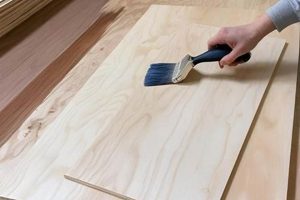
The method by which a finish is applied to a live edge slab exerts a significant influence on the final result. Improper application can negate the benefits of even the highest-quality finish, leading to aesthetic defects, compromised protection, and ultimately, reduced lifespan of the piece. Application technique encompasses factors such as the type of applicator used, the number and thickness of coats, and the consistency of coverage. For example, applying a polyurethane finish with a low-quality brush can result in brush marks and an uneven surface texture. Similarly, applying a finish too thickly can lead to runs, drips, and prolonged drying times, increasing the likelihood of dust contamination and other imperfections. A meticulous application technique, conversely, ensures a smooth, uniform, and durable finish that enhances the wood’s natural beauty and protects it from wear and tear.
Specific application techniques vary depending on the type of finish being used. Oil-based finishes are often applied with a lint-free cloth, allowing the finish to penetrate the wood fibers and create a deep, rich luster. Multiple thin coats are typically required, with excess finish wiped away after each application. Polyurethane finishes, on the other hand, are often applied with a brush or sprayer. When brushing, it is crucial to use a high-quality brush and to apply the finish in long, even strokes, following the direction of the wood grain. Spraying provides a more consistent and even application, reducing the risk of brush marks. Regardless of the application method, proper surface preparation is essential. The surface must be clean, dry, and free of any contaminants that could interfere with the finish’s adhesion. Sanding between coats is also recommended to remove any imperfections and ensure proper bonding.
In summary, the application technique is an indispensable component of successfully finishing a live edge slab. Precise execution and mindfulness of the product’s specific needs are vital in achieving optimal outcomes. A robust understanding of these principles, coupled with careful and deliberate application, contributes significantly to the aesthetic appeal and long-term durability of the finished slab. The choice of application is also a question of personal preference and experience to create a beautiful slab for years to come.
5. Curing environment

The environment in which a finished live edge slab cures plays a crucial role in determining the final quality and durability of the finish. Proper curing allows the finish to fully harden and bond with the wood, resulting in a surface that is both aesthetically pleasing and resistant to wear and tear. The factors within that environment must be carefully controlled for optimal results.
- Temperature Control
Temperature significantly affects the curing rate and final hardness of many finishes. Most finishes have an ideal temperature range specified by the manufacturer, typically between 65F and 75F. Curing at temperatures outside this range can lead to a slower curing time, incomplete hardening, or even cracking of the finish. For example, curing a polyurethane finish in a cold environment can result in a soft, tacky surface that is prone to scratches. Maintaining a consistent temperature within the recommended range ensures the finish cures properly and achieves its maximum hardness and durability. A heated or cooled space is important to maintaining consistent temperatures.
- Humidity Levels
Humidity levels influence the drying and curing process, particularly for water-based finishes. High humidity can slow the evaporation of water from the finish, extending the curing time and potentially leading to clouding or blistering. Conversely, low humidity can cause the finish to dry too quickly, resulting in cracking or poor adhesion. Maintaining a relative humidity level between 40% and 60% is generally recommended for most finishes. A dehumidifier or humidifier can be used to regulate humidity levels in the curing environment. Proper humidity control ensures the finish dries at the optimal rate, resulting in a smooth, clear, and durable surface.
- Air Circulation
Adequate air circulation promotes even drying and curing of the finish. Stagnant air can trap moisture and solvents, hindering the curing process and leading to uneven drying or surface imperfections. Air circulation helps to remove these trapped substances, allowing the finish to cure uniformly. A simple fan can be used to provide gentle air movement in the curing environment. Proper air circulation also minimizes the risk of dust settling on the finish during the curing process. This creates a consistent finish.
- Protection from Contaminants
The curing environment must be kept free from dust, dirt, and other contaminants that can settle on the finish and create imperfections. Dust particles can become embedded in the finish, resulting in a rough or uneven surface. A clean, enclosed space is ideal for curing a live edge slab. Covering the slab with plastic sheeting can also help to protect it from airborne contaminants. Regular cleaning of the curing area is essential to minimize the risk of dust contamination. Taking these precautions ensures the finish cures properly, resulting in a smooth, flawless surface.
Controlling temperature, humidity, air circulation, and cleanliness within the curing environment is essential for achieving a high-quality finish on a live edge slab. By carefully managing these factors, the woodworker can ensure that the finish cures properly, resulting in a durable, aesthetically pleasing surface that enhances the natural beauty of the wood. Deviation from these principles can have substantial and lasting effects on the finished product.
Frequently Asked Questions
This section addresses common inquiries regarding the methods and considerations involved in correctly completing the treatment process, ensuring optimal results and longevity.
Question 1: What is the importance of sanding a live edge slab before applying a finish?
Sanding a live edge slab prior to applying a finish is crucial for creating a smooth and uniform surface. This process removes imperfections such as mill marks, scratches, and raised grain, promoting proper adhesion of the finish and enhancing its overall appearance. Failure to sand adequately can result in a finish that appears uneven and unprofessional.
Question 2: How does moisture content affect the finishing process?
The moisture content of a live edge slab significantly affects the finishing process. Wood that is too wet or too dry can cause finishes to crack, peel, or bubble. It is essential to ensure that the wood has reached an appropriate and stable moisture content before applying any finish, typically achieved by acclimating the slab to its intended environment.
Question 3: What type of epoxy resin is best for filling voids in a live edge slab?
The most suitable epoxy resin for filling voids in a live edge slab is typically a clear or tinted casting resin. These resins are designed to be poured in thick layers without overheating, providing a durable and transparent or colored filler that enhances the aesthetic appeal of the slab. Select an epoxy with low VOC and UV resistance qualities.
Question 4: Should bark be removed from a live edge slab before finishing?
The decision to remove or retain bark on a live edge slab before finishing is largely a matter of personal preference. If the bark is securely attached and stable, it can be preserved and finished along with the wood. However, loose or unstable bark should be removed to prevent future detachment and potential damage to the finish.
Question 5: What are the advantages and disadvantages of oil-based vs. water-based finishes for live edge slabs?
Oil-based finishes offer advantages such as enhanced wood grain appearance and greater water resistance, but they typically have higher VOC content and longer drying times. Water-based finishes are lower in VOCs and dry more quickly, but may not provide the same level of grain enhancement or water resistance as oil-based options. The choice depends on specific project requirements and desired aesthetic.
Question 6: How can one ensure even coverage when applying a finish to a live edge slab?
Achieving even coverage when applying a finish to a live edge slab requires using appropriate application techniques, such as employing a high-quality brush, sprayer, or lint-free cloth. Applying multiple thin coats, rather than one thick coat, also helps to prevent runs, drips, and uneven drying. Sanding between coats can further refine the surface and ensure proper adhesion.
These answers offer important insights into some of the key considerations to ensure a good process, durable results, and aesthetically beautiful product.
The next section will provide a conclusion summarizing the key points of the article.
Conclusion
This exposition has detailed the critical aspects of finishing a live edge slab, underscoring the importance of surface preparation, edge stabilization, finish selection, application technique, and environmental control during curing. Each element contributes significantly to the final aesthetic and longevity of the finished piece. Deviation from established best practices can compromise the integrity of the wood and the durability of the protective coating.
The successful completion of a live edge slab project demands a comprehensive understanding of materials and methods. Woodworkers are encouraged to approach each stage with diligence and attention to detail. By adhering to the principles outlined, it is possible to produce enduring pieces that highlight the inherent beauty of the wood and provide lasting value.