A refined wall or ceiling surface achieved through the application and meticulous leveling of a gypsum-based or lime-based mixture, resulting in a seamless and even texture. This type of treatment eliminates visible imperfections and provides an ideal substrate for paint or other decorative coatings. As an example, consider the interior walls of a modern art gallery, where the pristine surfaces are crucial for showcasing artwork without distraction.
The application of such a technique offers numerous advantages, including enhanced aesthetic appeal, increased light reflectivity, and improved durability compared to more textured alternatives. Historically, this method has been employed in both residential and commercial settings to create visually appealing and long-lasting interior spaces. Its usage signifies quality craftsmanship and attention to detail, elevating the overall perceived value of the structure.
The subsequent sections will delve into the materials commonly utilized in achieving this surface, the specific application techniques employed by skilled tradespeople, and the preparatory steps necessary to ensure a successful outcome. Furthermore, a discussion of common problems encountered during the process and strategies for their mitigation will be presented. Finally, the maintenance and long-term care of such surfaces will be addressed.
Achieving Optimal Results
The creation of a refined surface requires careful planning and meticulous execution. The following guidelines provide essential insights into ensuring a high-quality outcome.
Tip 1: Surface Preparation is Paramount. Ensure the substrate is clean, dry, and free from loose debris. Any existing imperfections, such as cracks or holes, should be properly filled and leveled prior to application. Failure to adequately prepare the surface will compromise the adhesion and aesthetic quality of the finished layer. For example, if applying over previously painted walls, ensure the old paint is properly bonded; loose or flaking paint must be removed.
Tip 2: Material Selection Matters. Choose a product specifically formulated for achieving a sleek, even texture. Consider factors such as drying time, workability, and compatibility with the intended decorative finish. Pre-mixed compounds offer convenience, while dry powders allow for customization of consistency. Evaluate the specific requirements of the project before selecting a material.
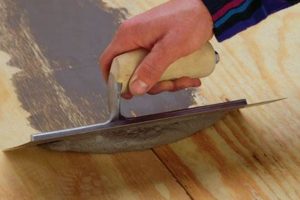
Tip 3: Application Technique is Critical. Employ a consistent application method, using appropriate tools such as a hawk and trowel. Apply thin, even coats, allowing each layer to dry completely before proceeding. Avoid overworking the material, which can lead to surface irregularities. Overlapping strokes are necessary to create a perfect surface, but these should be carried out with a light touch to avoid ridges or inconsistencies.
Tip 4: Sanding for Refinement. Once the final layer is dry, lightly sand the surface with fine-grit sandpaper to eliminate any remaining imperfections. Use a sanding block or pole sander to ensure even pressure and prevent gouging. Vacuum thoroughly to remove dust before applying primer or paint.
Tip 5: Priming is Essential. Apply a high-quality primer designed for use with gypsum-based or lime-based surfaces. Primer promotes adhesion of the topcoat and ensures a uniform color. Allow the primer to dry completely before proceeding with painting or other decorative treatments. Certain specialty decorative products may require a specific type of primer for optimal results.
Tip 6: Environmental Conditions Influence Outcome. Maintain consistent temperature and humidity levels during application and drying. Extreme temperatures or high humidity can affect the drying time and lead to cracking or other defects. Ensure adequate ventilation to promote proper curing.
Tip 7: Invest in Quality Tools. Using high-quality trowels, hawks, and sanding equipment can significantly improve the final result. Sharp, clean tools are essential for achieving a sleek, even surface. Clean the tools immediately after use to prevent the build-up of material.
Adhering to these guidelines will contribute to a professionally executed project, resulting in a durable and visually appealing interior surface. The benefits extend beyond aesthetics, creating an environment suitable for a wide range of decorative finishes and contributing to the overall value of the space.
The subsequent sections will explore advanced techniques and troubleshooting methods, providing a more in-depth understanding of the process.
1. Material Rheology

Material rheology, the study of the flow and deformation of matter, plays a critical role in achieving a desired surface. The rheological properties of the gypsum-based or lime-based mixture directly influence its workability, spreadability, and leveling characteristics. A compound with optimal rheological behavior will flow smoothly under the trowel, allowing for effortless application and the elimination of imperfections. Conversely, a mixture that is too viscous may be difficult to spread evenly, leading to surface irregularities and requiring excessive effort to achieve a uniform texture. In contrast, a material with exceedingly low viscosity might run or sag, resulting in uneven thickness and a lack of consistent finish. The ability of a material to retain its shape after application is also a rheological property and is key to minimizing the appearance of trowel marks.
The practical significance of understanding rheology is exemplified in the selection and modification of plaster materials. For instance, manufacturers often incorporate additives to modify the rheological properties of pre-mixed compounds. These additives may include thickeners to increase viscosity, dispersants to improve flow, or plasticizers to enhance workability. Similarly, skilled tradespeople may adjust the water content of dry powder mixes to fine-tune the rheological properties to suit their specific application techniques and environmental conditions. The desired outcome is a material that exhibits both adequate yield strength to resist sagging and sufficient flowability to allow for seamless blending of subsequent layers.
In summary, material rheology is an essential, though often unseen, component of achieving the highest surface quality. Understanding and manipulating these properties, whether through material selection or modification, is fundamental to realizing the smooth, defect-free finish that defines a professionally executed surface. While challenges remain in precisely predicting the behavior of complex plaster formulations, a solid grasp of rheological principles remains indispensable for achieving optimal outcomes.
2. Application Technique
Application technique is paramount in the pursuit of achieving a refined surface. The skills and methods employed during the application process directly influence the final texture, uniformity, and overall quality of the surface. Inadequate technique can lead to imperfections that compromise the aesthetic appeal and longevity of the finish.
- Trowel Proficiency
The manipulation of the trowel is central to achieving a seamless texture. Consistent pressure, angle, and speed are essential for uniformly distributing the plaster and eliminating surface irregularities. Skilled tradespeople develop a sensitivity to the material, adjusting their technique based on the plaster’s consistency and drying rate. Inconsistent trowel work leads to visible ridges, trowel marks, and an uneven surface, detracting from the desired level of smoothness. The use of properly sized and maintained trowels is equally important; a damaged or improperly chosen trowel will invariably result in imperfections.
- Layering Strategy
The application of plaster typically involves multiple thin layers, each contributing to the final surface. A deliberate layering strategy is crucial for minimizing imperfections and building up a uniform thickness. Applying excessively thick layers can lead to cracking and uneven drying, while insufficient layering results in a lack of depth and an inability to conceal substrate imperfections. Each layer must be allowed to dry appropriately before the application of the subsequent coat, to minimize shrinking and inconsistencies.
- Edge Management
Seamless integration of edges and corners is a hallmark of a quality installation. Proper technique involves feathering the plaster at the edges to blend smoothly with adjacent surfaces. Abrupt transitions or poorly defined edges detract from the overall appearance, creating visual discontinuities. Experienced tradespeople employ specialized tools and techniques, such as corner trowels and edging tools, to achieve clean, crisp lines and seamless transitions.
- Timing and Environmental Awareness
The timing of each application step is crucial in ensuring a smooth outcome. Working with the material within its optimal workability window is key to preventing issues such as rapid drying or slumping. External environmental factors, such as humidity and temperature, also impact the material’s setting characteristics and affect the ease of manipulation. Professional contractors are able to adapt the work rate and mixing ratios to compensate for such outside conditions.
The confluence of these elements of application technique directly determines the success in achieving a refined surface. Consistent, proficient trowel work, a well-planned layering strategy, careful edge management, and a sensitivity to environmental conditions are all indispensable for creating a aesthetically appealing and long-lasting finish. A lack of attention to even one of these factors can result in a final surface that fails to meet expectations, underscoring the critical importance of technique in the execution of such treatment.
3. Surface Preparation

The attainment of a smooth surface depends critically upon meticulous surface preparation. This stage precedes any plaster application, establishing a foundational quality that directly influences the final aesthetic and structural integrity. Inadequate preparation acts as a direct impediment to a seamless, unblemished surface, irrespective of the skill employed in the subsequent plastering phases. The cause-and-effect relationship is straightforward: a compromised substrate invariably leads to a compromised finish. The significance of proper preparation cannot be overstated; it is an indispensable component of a durable, visually appealing application.
Consider the example of applying plaster over a previously painted wall. If the existing paint is flaking or poorly adhered, the new plaster will not bond correctly, leading to cracking, peeling, and an uneven texture. Similarly, if the underlying surface contains dust, grease, or other contaminants, the plaster’s adhesion will be compromised, resulting in similar defects. Therefore, rigorous cleaning, scraping, and the application of a suitable primer are essential steps. Another instance involves plastering over drywall with improperly treated joints. If the joints are not adequately taped and mudded, they will remain visible beneath the new plaster, creating unsightly lines and imperfections. These practical examples underscore the importance of thorough preparation in achieving the desired smooth texture. Proper surface preparation can add considerable time to the project, but this is an investment that will deliver return for years to come.
In conclusion, surface preparation is not merely a preliminary step but an integral and decisive factor in the successful creation of a surface. Challenges such as time constraints or budgetary pressures may tempt compromises in preparation, but such compromises inevitably diminish the quality and longevity of the finished product. The understanding of this crucial connection is paramount for both skilled tradespeople and homeowners seeking to achieve a lasting and visually impressive surface, integral to the broader theme of quality interior design and construction practices.
4. Curing Conditions

The term “curing conditions” denotes the environmental parameters, primarily temperature and humidity, present during the drying and hardening process of a plaster application. These conditions exert a considerable influence on the physical and chemical transformations occurring within the plaster matrix, ultimately determining the texture and structural integrity of the final surface. Deviation from optimal conditions can lead to defects that compromise the desired sleekness and uniformity.
- Temperature Influence
Elevated temperatures accelerate the rate of water evaporation from the plaster mixture. While seemingly beneficial in reducing drying time, this rapid evaporation can induce stresses within the plaster, resulting in cracking and surface crazing. Conversely, depressed temperatures retard the evaporation process, prolonging the curing time and increasing the risk of mold growth and efflorescence. Maintaining a stable temperature within the recommended range, typically between 10C and 30C, is crucial for ensuring even and controlled drying. For instance, application during the winter months necessitates the use of supplemental heating to prevent excessively slow curing times and associated problems.
- Humidity Levels
Relative humidity exerts a similar influence on the curing process. High humidity slows the evaporation rate, potentially leading to extended drying times and an increased susceptibility to microbial growth. Low humidity, conversely, accelerates evaporation, increasing the risk of cracking and uneven curing. Maintaining a relative humidity level within the range of 50% to 70% is generally recommended. In humid climates, dehumidifiers may be necessary to mitigate the adverse effects of excessive moisture. An example includes coastal regions where specialized additives are mixed into the plaster to compensate for humidity that can cause the plaster to remain soft.
- Ventilation Considerations
Adequate ventilation plays a pivotal role in regulating both temperature and humidity during the curing process. Proper air circulation facilitates the removal of moisture evaporating from the plaster, preventing the buildup of localized humidity and promoting uniform drying. Insufficient ventilation can lead to localized variations in humidity and temperature, resulting in uneven curing and the formation of surface defects. For example, enclosed spaces with limited airflow require mechanical ventilation to ensure consistent drying. It is important to note that increased ventilation in extremely dry climates can also lead to excessive and rapid evaporation.
In summary, the attainment of a smooth surface is inextricably linked to the precise control of the curing environment. Maintaining stable temperature and humidity levels, coupled with adequate ventilation, are essential for ensuring uniform drying, minimizing stress within the plaster matrix, and preventing the formation of surface defects. A failure to address these factors can negate the benefits of meticulous application techniques and high-quality materials, resulting in a final surface that falls short of the desired standard of quality and finish.
5. Sanding Refinement

Sanding refinement is an indispensable stage in achieving a surface, acting as the bridge between plaster application and a seamless final result. Its purpose is to eliminate minor imperfections that inevitably arise during the plastering process. These imperfections, though often subtle, can detract significantly from the aesthetic quality of the final product. Examples include slight trowel marks, minor bumps, or variations in texture that are imperceptible to the naked eye during application but become apparent under lighting or upon close inspection. Sanding removes these subtle irregularities, creating a uniform plane that is essential for a truly texture.
The connection between sanding and the desired outcome lies in cause and effect. Imperfect plaster application leads to surface variations; sanding, when executed correctly, directly mitigates these variations. The importance of sanding is underlined by considering alternatives. Without sanding, the imperfections remain, compromising the finish. Sanding provides the opportunity for further smoothing and surface preparation. Real-life examples abound: in high-end residential construction, sanding is standard practice, ensuring flawless walls and ceilings. In commercial spaces, such as art galleries or museums, sanding creates a surface that minimizes distraction from the exhibited artwork. The practical significance of understanding this connection lies in recognizing that even the most skilled plasterers require sanding to achieve a truly texture. A skilled plasterer, however, will require less sanding to create the surface texture.
In summary, sanding refinement represents a critical step in the pursuit of smoothness. It addresses the inherent imperfections that arise during plaster application, transforming an uneven surface into a seamless plane. The understanding of this connection empowers informed decision-making, ensuring that sanding is not viewed as an optional step but rather as an integral component of achieving a professionally executed texture. Challenges may include dust control and the potential for over-sanding, but these can be mitigated through proper techniques and equipment. The consistent application of sanding refinement ultimately elevates the quality of the final product, contributing to a lasting and visually appealing interior space and a surface.
6. Protective Sealer

The application of a protective sealer over a refined surface constitutes a critical step in preserving its integrity and extending its lifespan. The connection between the sealer and the finish is fundamentally causal: the sealer mitigates the impact of environmental factors that would otherwise degrade the underlying material. These factors include moisture penetration, abrasion, staining, and the effects of ultraviolet (UV) radiation. Without a protective barrier, a surface is vulnerable to damage that can compromise its aesthetic appeal and structural soundness. This is particularly relevant in high-traffic areas or environments prone to moisture exposure. The importance of the protective sealer lies in its ability to shield the susceptible plaster from these damaging agents, maintaining its smooth texture and preventing premature deterioration. For instance, in bathrooms or kitchens, sealers prevent water absorption, which can lead to mold growth and plaster degradation. In living rooms, sealers protect the finish from scuffs and stains. This demonstrates the practical significance of understanding that a surface is not complete without a properly selected and applied sealer.
Further analysis reveals that the type of sealer chosen must be compatible with the plaster composition and the intended use of the space. Acrylic sealers, for example, offer good water resistance and are suitable for general interior applications. Polyurethane sealers provide enhanced durability and are often used in high-traffic areas or where resistance to abrasion is paramount. Siloxane-based sealers offer excellent breathability, allowing moisture vapor to escape from the plaster while preventing liquid water from penetrating. The correct selection of sealer is a critical element for preserving the smooth finish. In practical applications, museums often employ specialized sealers to protect delicate plaster surfaces from dust and handling, while hospitals utilize antimicrobial sealers to inhibit the growth of bacteria. These tailored solutions highlight the need for a nuanced understanding of sealer properties and their compatibility with different environments and functional requirements.
In conclusion, the application of a protective sealer is integral to realizing the long-term benefits of the application. It provides a vital barrier against environmental damage, preserving the smoothness and integrity of the plaster over time. Challenges associated with sealer application, such as ensuring proper ventilation and avoiding uneven application, can be mitigated through adherence to manufacturer instructions and the employment of skilled tradespeople. By recognizing the protective sealer as an indispensable component of the process, both professionals and homeowners can ensure the enduring beauty and durability of interior spaces. This consideration links to broader themes of sustainable building practices, which prioritize the use of materials and methods that minimize maintenance requirements and extend the lifespan of interior finishes.
Frequently Asked Questions About Smooth Plaster Finishes
The following addresses common inquiries and clarifies prevalent misconceptions regarding refined surfaces, providing insight into achieving and maintaining optimal results.
Question 1: What distinguishes a surface from other wall treatments?
A distinctive characteristic lies in the absence of visible texture or imperfections. Unlike textured coatings or standard drywall, a texture provides a seamless, uniform plane, offering a refined aesthetic.
Question 2: What are the primary advantages of opting for this surface?
Significant benefits include enhanced light reflectivity, a sophisticated appearance, and a durable base for paint or decorative finishes. Its timeless quality elevates interior spaces.
Question 3: What are the most common challenges encountered during the application process?
Typical difficulties involve achieving consistent material application, preventing cracking, and ensuring proper adhesion to the substrate. Meticulous technique and adequate preparation are vital.
Question 4: How does one maintain the appearance of a texture over time?
Regular cleaning with gentle, non-abrasive products is recommended. Prompt attention to minor damages, such as hairline cracks, prevents further deterioration. Avoid prolonged exposure to moisture.
Question 5: Is this surface a suitable option for all types of walls and ceilings?
While adaptable, certain substrates may necessitate specialized preparation or application techniques. Consulting with a qualified plastering professional is advisable to assess site-specific conditions.
Question 6: What is the approximate cost compared to alternative wall finishing methods?
The expense tends to be higher than that of standard drywall finishing due to the skill and labor required. However, the enhanced aesthetic and durability often justify the increased investment.
In summary, surface represents a sophisticated interior design choice, offering distinct advantages when executed and maintained correctly. A thorough understanding of the application process and maintenance requirements is paramount for achieving lasting results.
The subsequent section will delve into the specific tools and equipment essential for the successful execution of a texture, providing a comprehensive overview of the required resources.
Conclusion
The preceding discussion has provided a comprehensive overview of surface, encompassing its characteristics, application techniques, and maintenance requirements. Key aspects include meticulous surface preparation, the selection of appropriate materials, proficient application methods, controlled curing conditions, sanding refinement, and the application of a protective sealer. Each of these elements contributes significantly to the final aesthetic and longevity of the finish. Understanding these principles is essential for achieving a high-quality outcome. This article is not a substitute for professional service.
The pursuit of an impeccably textured surface represents a commitment to quality craftsmanship and enduring design. While challenges may arise during the application process, adherence to established best practices will yield a visually stunning and structurally sound interior space. The informed application of surface stands as a testament to the enduring value of skilled trades and meticulous attention to detail. Consider consulting a qualified professional to ensure the successful execution of the finish in any project.