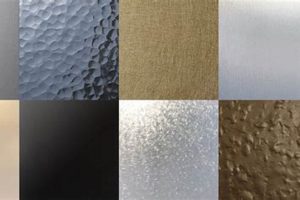
The application of surface treatments to metallic components, often involving processes that enhance their resistance to corrosion, abrasion, and wear, is a critical stage in manufacturing. These techniques can significantly alter the physical and chemical properties of a metal’s surface, providing a protective layer or improving its aesthetic appeal. Examples include electroplating, anodizing, and powder coating.
The employment of these methods is vital for industries ranging from aerospace and automotive to electronics and construction. Enhanced durability translates to extended product lifespans, reduced maintenance costs, and improved performance in demanding environments. Historically, such surface treatments have evolved alongside material science, with continuous innovation leading to more effective and environmentally conscious approaches.
Subsequent discussion will elaborate on specific treatment methodologies, quality control measures, and considerations for selecting appropriate surface treatments based on material type and application requirements. Further details on environmental compliance and sustainability within this field will also be explored.
Essential Considerations for Metal Surface Treatment
Achieving optimal results in metal surface treatment requires careful attention to several key factors. The following provides essential guidelines for ensuring quality and longevity in finished metal products.
Tip 1: Material Compatibility: Prior to commencing any surface treatment, verify complete compatibility between the base metal and the chosen coating or process. Galvanic corrosion may occur if dissimilar metals are improperly paired.
Tip 2: Surface Preparation: Thorough surface preparation is paramount. This includes degreasing, cleaning, and, in some cases, etching or blasting to remove contaminants and create an optimal bonding surface.
Tip 3: Process Control: Maintain strict control over process parameters such as temperature, current density (for electroplating), and coating thickness. Deviations can significantly impact the quality and uniformity of the finish.
Tip 4: Coating Thickness: Select appropriate coating thicknesses based on the intended application and environmental exposure. Insufficient thickness can compromise protection, while excessive thickness may lead to cracking or adhesion issues.
Tip 5: Quality Assurance: Implement robust quality assurance procedures throughout the process. This includes visual inspections, adhesion tests, and corrosion resistance testing to ensure adherence to specifications.
Tip 6: Environmental Considerations: Adhere to all applicable environmental regulations regarding waste disposal and emissions control. Explore environmentally friendly alternatives such as trivalent chromium plating or powder coating.
Tip 7: Documentation: Maintain detailed records of all processes, materials, and inspections performed. This documentation is crucial for traceability and troubleshooting.
Adhering to these guidelines enhances the likelihood of achieving durable, corrosion-resistant, and aesthetically pleasing metal finishes, ultimately contributing to the longevity and performance of the finished product.
The subsequent sections will delve deeper into specific techniques and case studies, providing a more comprehensive understanding of best practices within the field of metal surface treatment.
1. Corrosion Resistance

Corrosion resistance is a primary function in many applications of metal surface treatments. Without adequate surface protection, metallic components are susceptible to degradation caused by environmental factors, leading to structural weakening and eventual failure. Therefore, the application of appropriate metal finishing techniques is often a necessary measure to ensure the longevity and reliability of metal products. Examples where corrosion resistance is paramount include infrastructure projects like bridges (requiring galvanization) and marine equipment (often utilizing specialized coatings). The selection of the correct surface treatment process is determined by the specific operational environment and the base metal’s inherent susceptibility to corrosion.
Effective corrosion resistance is achieved through various surface treatment methods, each providing a unique mechanism of protection. Electroplating, for example, deposits a layer of a more corrosion-resistant metal (such as chromium or nickel) onto the substrate. Anodizing creates a controlled oxide layer on aluminum, enhancing its natural corrosion resistance. Powder coating forms a durable polymeric barrier. The effectiveness of each method is dependent on proper surface preparation, precise control of process parameters, and adherence to quality control procedures. Furthermore, routine maintenance and inspections are crucial to identify and address any localized corrosion before it spreads, thereby extending the lifespan of the treated component.
In conclusion, the relationship between corrosion resistance and metal finishing is one of direct cause and effect: proper metal finishing mitigates corrosion, extending the lifespan and enhancing the reliability of metallic components. The challenges lie in selecting the optimal treatment method for a given application and environment, and in ensuring consistent quality throughout the finishing process. Understanding the specific corrosion mechanisms at play and the protective capabilities of different surface treatments is essential for achieving optimal corrosion resistance and maximizing the value of metal products.
2. Surface Hardness

Surface hardness, defined as a material’s resistance to localized plastic deformation, is a critical property often enhanced through specialized metal finishing processes. The selection and application of appropriate metal finishing techniques directly influences the operational lifespan and performance characteristics of metallic components subjected to wear, abrasion, or impact. The following facets explore this relationship in greater detail.
- Increased Wear Resistance
Surface hardening treatments are frequently employed to improve resistance to abrasive wear, adhesive wear, and fretting. Carburizing, nitriding, and hard chrome plating are examples of techniques used to create a hardened outer layer, protecting the underlying substrate from damage. In automotive applications, components like gears and crankshafts are treated to extend their service life under high stress and friction conditions.
- Enhanced Fatigue Life
The surface condition of a metal part directly impacts its fatigue resistance. Surface hardening processes can introduce compressive residual stresses, which inhibit crack initiation and propagation. Shot peening, a mechanical surface treatment, is used to impart these compressive stresses, effectively increasing the component’s ability to withstand cyclic loading. This is particularly relevant in aerospace applications where components are subjected to repeated stress cycles.
- Improved Corrosion Resistance
Certain surface hardening treatments can simultaneously improve both surface hardness and corrosion resistance. Processes such as nickel-phosphorus plating create a hard, chemically resistant layer, protecting the base metal from corrosive attack. This is advantageous in environments where components are exposed to both abrasive wear and corrosive substances, such as in the oil and gas industry.
- Considerations for Material Selection and Process Control
Achieving optimal surface hardness requires careful consideration of the base metal’s composition and the selected finishing process. Proper surface preparation, precise control of process parameters (e.g., temperature, time, chemical concentrations), and rigorous quality control measures are essential to ensure consistent and predictable results. Inconsistent process control can lead to variations in surface hardness and compromise the component’s performance.
In summary, the relationship between surface hardness and metal finishing is intricate and multifaceted. Selecting the appropriate technique requires a comprehensive understanding of the operational environment, the base metal’s properties, and the desired performance characteristics. The application of these techniques, performed with precision and attention to detail, yields enhanced performance and prolonged operational life of metal components.
3. Adhesion Strength

Adhesion strength, the measure of the bond between a coating and the substrate material, represents a fundamental property governing the performance and longevity of metal finishes. Surface treatments applied through various methods rely upon a robust adhesive bond to withstand operational stresses and environmental factors. Insufficient adhesion results in premature coating failure, negating the intended protective or functional benefits. Consequently, assessing and ensuring adequate adhesion strength is an integral component of any comprehensive metal finishing protocol.
The correlation between adhesion strength and the efficacy of metal finishing is demonstrably causal. Strong adhesion directly translates to increased resistance to corrosion, wear, and impact. For instance, in the automotive industry, components exposed to harsh weather conditions and abrasive elements require coatings with high adhesion strength to maintain their protective barrier. Similarly, in aerospace applications, where coatings must endure extreme temperature fluctuations and mechanical stresses, the adhesive bond is crucial for preventing delamination and ensuring structural integrity. Without sufficient adhesion, the metal finishing process proves ineffective, leading to accelerated degradation of the underlying material.
Therefore, rigorous testing of adhesion strength forms a critical aspect of quality control in metal finishing. Techniques such as pull-off testing, scratch testing, and bend testing are routinely employed to evaluate the integrity of the coating-substrate interface. The results of these tests inform process adjustments and material selection, ensuring the finished product meets required performance standards. Ultimately, a thorough understanding of the factors influencing adhesion strength, coupled with stringent testing protocols, is essential for achieving durable and reliable metal finishes in diverse industrial applications.
4. Aesthetic Improvement

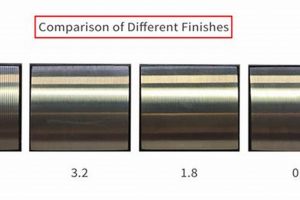
Aesthetic improvement represents a significant consideration within surface treatment. While functionality and protection are paramount, the visual appeal of finished metal products often plays a crucial role in their marketability and perceived value. Surface treatments not only enhance durability but also provide a means to control color, texture, and reflectivity, directly impacting the aesthetic qualities of the final product. The attainment of the desired visual characteristics relies on precise execution of surface treatments, with careful selection of coating materials and controlled application techniques to meet pre-defined aesthetic specifications. For example, in the production of consumer electronics, surface treatments must consistently deliver a uniform, visually appealing finish to align with brand identity and consumer expectations. Any deviation from established aesthetic standards can lead to product rejection or diminished market acceptance.
Several metal surface treatment processes are specifically employed to achieve aesthetic improvements. Powder coating offers a wide range of colors and textures, providing a durable and visually appealing finish for automotive parts, appliances, and architectural components. Anodizing, particularly for aluminum, allows for the creation of vibrant, color-stable surfaces, enhancing the aesthetic value of products ranging from smartphone casings to building facades. Electroplating can be used to deposit decorative finishes like gold, silver, or chrome, adding a touch of luxury to items such as jewelry and decorative hardware. The selection of the appropriate surface treatment process is contingent upon the desired aesthetic outcome, the base metal’s properties, and the intended application.
In conclusion, aesthetic improvement is an integral component of surface treatment. The ability to manipulate the visual characteristics of metal surfaces through precise and controlled processes enables manufacturers to create products that are not only durable and functional but also visually appealing. Successfully integrating aesthetic considerations into surface treatment protocols requires a deep understanding of available techniques, material properties, and the intended application environment. Consequently, aesthetic enhancement contributes significantly to product value and market success.
5. Material Compatibility

Material compatibility constitutes a fundamental consideration within metal finishing operations. The successful application of any surface treatment is contingent upon a demonstrable compatibility between the substrate metal and the applied coating. Galvanic corrosion, a particularly insidious form of electrochemical degradation, occurs when dissimilar metals are placed in electrical contact in the presence of an electrolyte. This phenomenon accelerates the corrosion of the more anodic metal, compromising the structural integrity and functional performance of the finished component. Therefore, the selection of compatible materials is paramount to ensure the longevity and reliability of metal finished products. For example, plating steel fasteners with aluminum is generally avoided due to the potential for galvanic corrosion in humid or wet environments.
The implications of material incompatibility extend beyond simple corrosion. In certain instances, the application of an incompatible coating can induce embrittlement of the substrate metal, particularly in high-strength steels. Hydrogen embrittlement, for instance, is a concern during electroplating processes where hydrogen atoms can diffuse into the steel’s microstructure, leading to a reduction in ductility and increased susceptibility to fracture. Consequently, specialized pre-treatment and post-treatment processes, such as baking, are often required to mitigate the risk of hydrogen embrittlement. Furthermore, the thermal expansion coefficients of the substrate metal and the coating must be carefully considered. Significant differences in thermal expansion can lead to stress build-up during temperature fluctuations, resulting in coating cracking or delamination. Therefore, metal finishing processes must be carefully selected to ensure both chemical and physical compatibility.
In summary, material compatibility represents a critical constraint in metal finishing. Careful selection of compatible substrate and coating materials, coupled with a thorough understanding of potential electrochemical and metallurgical interactions, is essential to prevent premature failure and ensure the long-term performance of metal finished products. Ignoring these considerations can lead to costly rework, reduced product lifespan, and, in some cases, catastrophic failure. Therefore, comprehensive materials analysis and process validation are indispensable components of robust metal finishing operations.
Frequently Asked Questions about Metal Finishing
The following addresses common queries regarding metal finishing processes and their applications, providing clarity and informative insights.
Question 1: What factors determine the selection of the optimal metal finishing process for a specific application?
The selection of a specific process hinges on a multitude of factors, including the substrate material, the intended service environment, required corrosion resistance, hardness specifications, aesthetic considerations, and budgetary constraints. A comprehensive evaluation of these factors is crucial.
Question 2: How is corrosion resistance assessed in metal finished components?
Corrosion resistance is evaluated through various standardized testing methods, including salt spray testing (ASTM B117), electrochemical impedance spectroscopy (EIS), and immersion testing in specific corrosive media. These tests provide quantitative data on the corrosion performance of the finished product.
Question 3: What are the environmental considerations associated with metal finishing?
Metal finishing processes often involve the use of hazardous chemicals and generate waste products that require careful management. Environmental compliance necessitates adherence to stringent regulations regarding wastewater treatment, air emissions, and hazardous waste disposal. Sustainable alternatives are continually being developed.
Question 4: How does surface preparation impact the quality of a metal finish?
Surface preparation is paramount to achieving a durable and aesthetically pleasing metal finish. Proper cleaning, degreasing, and surface activation are essential to ensure adequate adhesion of the applied coating. Improper surface preparation can lead to premature coating failure.
Question 5: What are the common causes of coating defects in metal finishing?
Coating defects can arise from a variety of sources, including inadequate surface preparation, improper process control (e.g., temperature, current density), contamination of plating baths, and the use of incompatible materials. Rigorous quality control measures are essential to minimize defects.
Question 6: How can the adhesion strength of a metal finish be quantified?
Adhesion strength is typically quantified using standardized testing methods such as pull-off testing (ASTM D4541), scratch testing (ASTM D7027), and tape testing (ASTM D3359). These tests provide a measure of the force required to separate the coating from the substrate.
Metal finishing requires a multifaceted approach integrating material science, process engineering, and environmental stewardship to consistently deliver high-quality and durable results.
Subsequent sections will provide detailed analyses of emerging technologies in metal finishing and explore future trends shaping the industry.
Conclusion
This exposition has provided an overview of considerations relevant to the specialized field. Topics addressed encompassed corrosion resistance, surface hardness, adhesion strength, aesthetic improvement, and the crucial importance of material compatibility. Further, frequently asked questions pertinent to the process and its challenges were addressed to provide a well-rounded understanding of the core tenets.
Continued vigilance and adherence to best practices in these areas are necessary to ensure the long-term performance and reliability of surface-treated metal components. Advancements in materials science and process control demand continuous evaluation and adaptation to maintain optimal results and meet evolving industry standards.