The practice involves refining metallic surfaces at a microscopic level to achieve specific functional or aesthetic properties. Examples include processes that reduce surface roughness to enhance tribological performance, create precisely textured surfaces for improved adhesion, or generate reflective coatings for optical applications.
Achieving superior surface quality and dimensional accuracy is crucial across various industries. This practice offers improved product performance, extended lifespan, and enhanced visual appeal. Its historical development reflects advancements in materials science, precision machining, and surface engineering.
The following sections will delve into specific techniques employed, materials commonly processed, and the diverse applications where the precise control of metallic surfaces offers significant advantages.
Considerations for Effective Metallic Surface Refinement at Microscopic Scales
The subsequent points offer insights to optimize processes that manipulate metallic surfaces with extreme precision.
Tip 1: Material Selection Matters: The inherent properties of the metal being processed dictate the appropriate refinement technique. Alloys, for example, may exhibit differential etching rates, impacting final surface uniformity. Consider the composition and microstructure of the metallic substrate.
Tip 2: Process Parameter Optimization is Critical: Variables such as voltage, current density, chemical concentration, temperature, and processing time exert a significant influence on the outcome. Empirical testing, employing Design of Experiments (DOE) methodologies, is essential for establishing optimal parameters.
Tip 3: Surface Preparation is Paramount: Prior to the primary refinement step, thorough cleaning and degreasing procedures are imperative. Residual contaminants can impede uniform material removal or deposition, leading to inconsistent results and potential defects.
Tip 4: Tooling and Fixturing Precision is Non-Negotiable: For techniques involving mechanical action, such as abrasive flow machining, the precision of tooling and fixturing directly impacts the achievable dimensional accuracy and surface finish. Vibration dampening is also crucial.
Tip 5: Metrology and Inspection are Essential: Post-process metrology employing techniques such as atomic force microscopy (AFM), white light interferometry, or scanning electron microscopy (SEM) is necessary to quantify the achieved surface characteristics and confirm adherence to specifications. Establish robust quality control protocols.
Tip 6: Environmental Control Mitigates Risks: Maintaining a controlled environment, particularly regarding temperature, humidity, and particulate contamination, is critical for certain methods. Fluctuations can adversely affect process stability and repeatability.
By carefully considering these aspects, operators can enhance the effectiveness and consistency of procedures that alter metallic surfaces at the microscale.
The next stage of this discussion addresses prevalent challenges and emerging trends observed within the specified field.
1. Surface Roughness Control

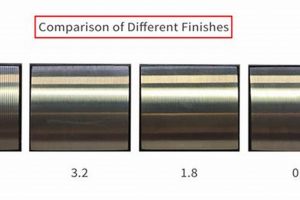
Surface roughness control is an inherent and critical aspect of micro metal finishing. The ultimate goal of many micro metal finishing techniques is, in fact, to manipulate and refine surface roughness parameters to achieve specific functional properties. Surface roughness, defined as the deviations in height of a real surface from an ideal flat plane, directly influences a material’s tribological behavior, corrosion resistance, adhesion characteristics, and optical reflectivity. For example, reducing surface roughness in micro-bearings diminishes friction and wear, while increasing it slightly on orthopedic implants promotes osseointegration. Techniques such as electropolishing, micro-abrasive blasting, and focused ion beam milling are employed to precisely control these surface irregularities at the micro- and nanoscale.
The relationship between the finishing process and surface roughness can be understood through cause and effect. The selected finishing technique acts as the cause, imparting a specific type of energy or material removal mechanism to the metal surface. The resulting surface roughness is the effect, measurable through parameters like Ra (average roughness), Rq (root mean square roughness), and Rz (maximum height of the profile). Effective implementation requires precise monitoring and adjustment of process parameters like voltage, current density, pressure, and processing time, all aimed at creating the desired surface texture. In applications like microfluidic devices, precise control of surface roughness ensures proper fluid flow, preventing turbulent eddies and maintaining laminar flow characteristics.
In summary, surface roughness control is not merely a byproduct of micro metal finishing; it is often the primary objective. Understanding this connection is essential for achieving desired material properties and functionality at the microscale. Challenges remain in accurately predicting and controlling surface roughness during complex finishing processes, driving ongoing research into process optimization, advanced metrology techniques, and the development of novel finishing methodologies. The continuous evolution of surface roughness control techniques directly enhances the performance and reliability of micro-engineered components across diverse industries.
2. Dimensional Accuracy Attainment

Dimensional accuracy attainment, the achievement of specified dimensions within defined tolerances, represents a critical facet of micro metal finishing. This process goes beyond merely achieving a smooth surface; it involves ensuring that the finished part conforms precisely to its intended design, with deviations minimized to the micrometer or sub-micrometer level. The connection lies in the understanding that many finishing techniques inherently involve material removal or deposition, which can significantly alter the initial dimensions of a workpiece. In instances requiring close-fitting components or precise alignment, dimensional accuracy becomes paramount for functionality.
As a component of micro metal finishing, dimensional accuracy depends heavily on the selection of the appropriate finishing method. For example, processes like electropolishing and chemical etching remove material uniformly, which, if uncontrolled, can lead to unacceptable deviations from target dimensions. Conversely, techniques like micro-electroplating, while adding material, can still compromise accuracy if the deposition is uneven or lacks sufficient precision. Real-life applications underscore this. Consider the fabrication of microfluidic channels, where the channel’s dimensions directly influence fluid flow rates. Variations in channel width or depth, even at the micrometer scale, can significantly impact device performance. Similarly, in the manufacture of precision gears for micro-robots, deviations from specified tooth profiles or spacing can lead to backlash and reduced efficiency.
In summary, dimensional accuracy attainment is inextricably linked to micro metal finishing. Selecting, controlling, and monitoring finishing processes to minimize dimensional deviations is essential for producing functional micro-scale metallic components. Challenges include mitigating the effects of process parameters, accounting for material properties, and accurately measuring dimensions at such small scales. However, advancements in precision instrumentation and process control are continuously enhancing the ability to achieve and maintain dimensional accuracy in micro metal finishing, thereby broadening its application across diverse industries.
3. Material Property Enhancement
Material property enhancement constitutes a core objective within micro metal finishing, wherein surface treatments are applied to improve specific characteristics of metallic components. These enhancements directly impact the functionality, durability, and performance of micro-scale devices and systems.
- Hardness Improvement
Micro metal finishing techniques such as surface hardening through micro-peening or carburization can significantly increase the hardness of a metallic surface. This enhancement is crucial in applications where wear resistance is paramount, such as in micro-gears or micro-cutting tools. The resulting increase in hardness prolongs the lifespan of these components, particularly under demanding operational conditions.
- Fatigue Resistance Enhancement
The introduction of compressive residual stresses via techniques like shot peening at a micro-scale can improve the fatigue life of metallic components. By mitigating crack initiation and propagation, this enhancement becomes critical in applications experiencing cyclic loading, such as micro-springs or MEMS devices subjected to vibration. This targeted treatment increases the reliability of these systems under dynamic stress.
- Corrosion Resistance Augmentation
Micro metal finishing provides opportunities to enhance the corrosion resistance of metallic surfaces through the formation of protective layers. Methods such as micro-passivation or the application of micro-scale coatings create barriers that inhibit corrosion processes. This enhancement is especially vital in applications operating in corrosive environments, extending the service life of micro-sensors and implants.
- Tribological Property Modification
Surface texturing at a micro- or nano-scale through techniques like laser surface texturing can modify the tribological properties of metallic components. Controlling the surface roughness and morphology allows for optimization of friction and wear characteristics. This enhancement is relevant in applications such as micro-bearings or sliding contact components, improving efficiency and reducing energy loss.
The interplay between micro metal finishing and material property enhancement leads to improved performance and extended lifespan of metallic micro-components. By strategically applying surface treatments, engineers can tailor the material properties of components to meet the requirements of specific applications. Ongoing research continues to develop novel techniques to further exploit this relationship, pushing the boundaries of micro-manufacturing and material science.
4. Corrosion Resistance Improvement

Corrosion resistance improvement achieved through micro metal finishing is a critical consideration in the design and manufacturing of metallic components exposed to aggressive environments. The ability to inhibit or prevent corrosion at the microscale directly influences the longevity and reliability of devices across numerous industries.
- Passivation Layer Formation
Many micro metal finishing processes promote the formation of a stable, passive oxide layer on the metal surface. This layer acts as a barrier, preventing further oxidation and corrosion. For example, electropolishing of stainless steel enhances the chromium oxide layer, significantly improving its resistance to pitting and crevice corrosion in chloride-containing environments. This is crucial in medical implants where biocompatibility and long-term resistance to bodily fluids are paramount.
- Micro-Coating Application
Micro metal finishing techniques enable the precise application of protective coatings at the microscale. These coatings, such as thin films of noble metals or ceramic materials, provide a physical barrier against corrosive agents. Applications include corrosion protection for micro-sensors used in industrial process monitoring, where exposure to harsh chemicals is unavoidable.
- Surface Defect Reduction
Micro metal finishing can remove surface defects like micro-cracks and scratches, which serve as initiation sites for corrosion. Polishing and buffing operations at the microscale eliminate these imperfections, creating a more homogenous and corrosion-resistant surface. This is particularly relevant in the aerospace industry, where even minor corrosion can lead to structural failure in critical components.
- Grain Boundary Modification
Certain micro metal finishing processes can modify the grain boundary structure of metallic materials, improving their resistance to intergranular corrosion. Techniques like surface nanocrystallization can refine the grain size and create a more uniform distribution of alloying elements, enhancing corrosion resistance. This is especially important in preventing stress corrosion cracking in components used in high-temperature, high-stress environments.
The facets of corrosion resistance improvement are intrinsically linked within micro metal finishing. Employing a combination of these strategies allows for the development of metallic components with enhanced durability and reliability in challenging environments. Continuous advancements in finishing techniques and materials science are further expanding the capabilities of micro metal finishing to combat corrosion in increasingly demanding applications.
5. Aesthetic Quality Augmentation
Aesthetic quality augmentation, as it relates to micro metal finishing, centers on enhancing the visual appeal of metallic surfaces through precisely controlled processes. The manipulation of surface characteristics at the micro- and nanoscale allows for the creation of specific optical effects, improved surface uniformity, and the elimination of visual defects, thereby elevating the perceived value and attractiveness of the finished product.
- Surface Reflectivity Enhancement
Micro metal finishing techniques, such as electropolishing and vapor deposition, can significantly increase the reflectivity of metallic surfaces. This is crucial in applications where a highly reflective finish is desired, such as in decorative trim, reflectors for lighting systems, and mirrors in optical instruments. Enhanced reflectivity results in a brighter, more visually appealing surface.
- Surface Texture Control for Visual Effects
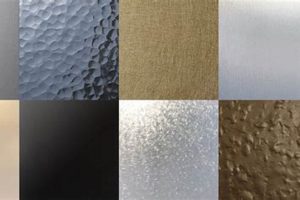
Controlled surface texturing, achieved through methods like laser etching or micro-abrasive blasting, allows for the creation of specific visual effects. Matte finishes, directional brushing patterns, or even complex holographic designs can be imparted onto metallic surfaces. These textures can enhance the tactile feel of the object and create unique visual signatures, differentiating the product in the marketplace. Examples include textured watch casings or patterned control panels.
- Colorization and Decorative Coating Application
Micro metal finishing facilitates the application of thin films for colorization or the creation of decorative patterns. Techniques such as anodizing or physical vapor deposition (PVD) allow for the precise deposition of colored coatings with excellent adhesion and durability. These coatings not only enhance the aesthetic appeal but can also provide additional functional properties, such as improved wear resistance. Common applications include colored jewelry, decorative hardware, and branded product accents.
- Defect Removal and Surface Uniformity Improvement
Micro metal finishing processes like chemical etching and abrasive flow machining are effective in removing surface defects, such as scratches, pits, and burrs, resulting in a more uniform and visually appealing surface. This is particularly important in high-end consumer products where even minor imperfections are unacceptable. Improved surface uniformity translates to a smoother, more visually consistent finish that enhances the overall product perception.
These facets of aesthetic quality augmentation highlight the critical role of micro metal finishing in creating visually appealing metallic products. The ability to precisely control surface characteristics at the microscale allows for the creation of unique and desirable aesthetic effects, contributing to the perceived value and market success of finished products across various industries.
Frequently Asked Questions Regarding Micro Metal Finishing
The following questions address common inquiries concerning the principles, processes, and applications of refining metallic surfaces at the microscale.
Question 1: What distinguishes micro metal finishing from conventional metal finishing?
The primary distinction lies in the scale of operation. Micro metal finishing focuses on achieving surface modifications and dimensional control at the micrometer or sub-micrometer level, whereas conventional techniques typically operate at coarser scales. This necessitates the use of specialized equipment, processes, and metrology techniques.
Question 2: What are the primary applications of micro metal finishing?
Applications span diverse industries, including microelectronics, medical device manufacturing, aerospace, and precision engineering. Specific examples include surface preparation for micro-soldering, polishing of orthopedic implants, surface texturing of microfluidic devices, and deburring of miniature gears.
Question 3: Which materials are amenable to micro metal finishing techniques?
A wide range of metallic materials can be processed using these methods, including stainless steels, titanium alloys, aluminum alloys, copper alloys, nickel alloys, and precious metals. The suitability of a specific technique depends on the material’s properties and the desired surface characteristics.
Question 4: What are some common micro metal finishing processes?
Common processes include electropolishing, micro-abrasive blasting, chemical etching, focused ion beam milling, laser surface texturing, micro-electroplating, and atomic layer deposition. The selection of the appropriate process depends on the desired outcome and the material being processed.
Question 5: What factors influence the selection of a specific micro metal finishing technique?
Several factors influence this decision, including the desired surface finish, dimensional accuracy requirements, material properties, production volume, cost considerations, and environmental impact.
Question 6: How is the success of a micro metal finishing process evaluated?
Success is typically evaluated using advanced metrology techniques such as atomic force microscopy (AFM), scanning electron microscopy (SEM), white light interferometry, and profilometry. These techniques allow for precise characterization of surface roughness, topography, and dimensional accuracy.
In summary, meticulous planning and precise execution are essential for successful metallic surface manipulation at the microscale.
The following discussion will explore the future trends and emerging technologies observed within the field.
Conclusion
This exploration has highlighted the crucial role of micro metal finishing in achieving specific functional and aesthetic properties on metallic surfaces at a microscopic level. Precise control over surface roughness, dimensional accuracy, material properties, corrosion resistance, and aesthetic quality is achievable through a diverse range of specialized techniques. These methods are essential for the performance and reliability of components across a broad spectrum of industries.
Continued advancements in process control, materials science, and metrology are poised to further expand the capabilities and applications of micro metal finishing. A commitment to research and development in this field will drive innovation and enable the creation of increasingly sophisticated micro-engineered devices and systems, ultimately impacting technological progress across numerous sectors.