The treatment of exposed borders on manufactured wood sheets involves processes designed to enhance aesthetics, durability, and safety. This frequently entails concealing the layered construction of the core material. For instance, applying veneer tape to the perimeter of a shelf creates a seamless appearance and protects against moisture intrusion.
Properly executed border treatment is critical for several reasons. It mitigates the risk of splintering, which poses a safety hazard. Furthermore, it increases resistance to impacts and abrasions, extending the lifespan of the item. Historically, these techniques were developed to address the inherent vulnerabilities of engineered lumber, transforming it into a more reliable and visually appealing product.
The subsequent sections will explore various methods of achieving a refined look. This includes detailing options for material selection, application techniques, and considerations for different project requirements. The selection of appropriate strategies is essential to achieving desired functional and visual results.
Pointers for Superior Border Treatment
Achieving a professional and lasting result when addressing the sides of manufactured wood products requires careful planning and execution. The following guidelines are intended to improve outcomes and enhance the overall quality of projects.
Tip 1: Material Selection is Paramount: Choose border materials compatible with the core sheet in terms of expansion and contraction rates. Dissimilar materials can lead to delamination or cracking over time. Consider solid wood, veneer edging, or specialized edge banding products based on the project requirements.
Tip 2: Surface Preparation is Critical: Ensure the sides are clean, smooth, and free of any imperfections before applying any treatment. Sanding with progressively finer grits of sandpaper will remove any irregularities and provide a suitable surface for adhesion.
Tip 3: Precise Application of Adhesives is Essential: When using adhesives, apply a consistent and even layer to both the material and the core. Follow the manufacturer’s instructions regarding open time and clamping pressure to ensure a strong and lasting bond.
Tip 4: Utilize Appropriate Clamping Techniques: Proper clamping is vital to maintaining consistent pressure during the bonding process. Use clamps, cauls, or specialized banding tools to achieve uniform adhesion along the entire length of the perimeter.
Tip 5: Trim Excess Material with Precision: After the adhesive has cured, carefully trim any overhanging material with a sharp blade or router. A flush trim router bit with a bearing can provide a clean, consistent edge.
Tip 6: Sand Edges for a Smooth Transition: After trimming, sand the edges to create a smooth, seamless transition between the border material and the core. Start with a medium-grit sandpaper and gradually move to finer grits to achieve a polished surface.
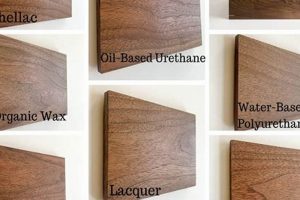
Tip 7: Apply a Protective Finish: Once the desired surface quality is achieved, apply a protective finish to seal the border material and enhance its durability. Consider varnish, lacquer, or oil-based finishes depending on the intended use and aesthetic preferences.
Implementing these considerations will result in improved aesthetics, enhanced durability, and increased longevity of the finished product. Attention to detail in each step is critical to achieving optimal outcomes.
The subsequent sections will delve into specific treatment methods and their application in diverse projects. This will further enhance the readers understanding of best practices in border finishing.
1. Material Compatibility

Material compatibility is a fundamental consideration within the scope of manufactured wood sheet border treatment. The selection of materials that exhibit congruent physical properties is paramount to the longevity and aesthetic integrity of the finished product. Disparities in expansion coefficients, adhesion characteristics, and chemical interactions can lead to premature failure of the treatment.
- Expansion and Contraction Rates
Different materials expand and contract at varying rates in response to changes in temperature and humidity. When the border material’s expansion rate differs significantly from the core sheet, stresses develop at the adhesive interface. This can manifest as cracking, delamination, or warping. Matching materials with similar expansion coefficients minimizes these risks. For example, using solid wood edging from the same species as the face veneer can help ensure consistent movement.
- Adhesion Properties
The ability of an adhesive to form a strong and lasting bond between the core sheet and the border material is crucial. Certain materials may be inherently difficult to bond to due to their surface characteristics or chemical composition. Selecting adhesives specifically formulated for the materials being joined is essential. Furthermore, proper surface preparation, such as sanding or priming, can enhance adhesion. For instance, some plastics require specialized primers to achieve adequate bond strength with wood adhesives.
- Moisture Resistance
In environments with high humidity or potential exposure to water, the moisture resistance of both the core sheet and the border material must be considered. Materials that readily absorb moisture can swell, leading to dimensional changes and potential delamination. Using water-resistant adhesives and applying a protective finish can mitigate these risks. Example: marine-grade lumber with epoxy resin border finish
- Chemical Compatibility
Chemical interactions between the core sheet, the border material, and the adhesive can compromise the integrity of the joint. Certain adhesives may react negatively with specific wood species or finishes, leading to discoloration, weakening of the bond, or even complete failure. Consulting material compatibility charts and conducting small-scale tests can help identify potential issues. Using a PH neutral glue to secure the surface to reduce the risk of discoloration.
The interplay of these facets underscores the importance of a holistic approach to material selection. By carefully considering expansion rates, adhesion properties, moisture resistance, and chemical compatibility, it is possible to create a durable and aesthetically pleasing border treatment that withstands the test of time. The long-term performance of any border treatment is inextricably linked to the judicious selection of compatible materials. When choosing a specific border finishing consider environmental condition and type of environment.
2. Surface Preparation

The efficacy of any border treatment is directly predicated upon meticulous surface preparation. This foundational step dictates the adhesive bond strength, the smoothness of the final surface, and the overall longevity of the implemented solution. Without proper attention to the state of the underlying substrate, even the most sophisticated materials and application techniques will yield suboptimal results. Failures in surface preparation manifest as adhesion failures, visible imperfections, and premature degradation of the border.
The process typically involves several critical actions. Cleaning removes dirt, grease, and loose particles that interfere with adhesion. Sanding levels imperfections, creates a mechanical key for adhesives, and smooths rough surfaces. Filling defects, such as voids or cracks, provides a uniform base for the applied treatment. The specific methods and materials employed vary based on the material used, but the underlying principle remains constant: a clean, sound, and uniform surface is essential for a successful outcome. For example, applying edge banding to an unsanded border will likely result in poor adhesion and a visible seam, whereas a properly prepared border will provide a seamless and durable bond.
In summary, surface preparation is an indispensable precursor to any border finishing endeavor. Investing time and effort in this initial stage yields significant returns in terms of improved aesthetics, enhanced durability, and reduced long-term maintenance requirements. It is not merely a preliminary step but rather an integral component of a comprehensive approach to border treatment. The neglect of surface preparation inevitably compromises the overall quality and longevity of the finished product.
3. Adhesive selection

The selection of an appropriate adhesive is a critical determinant in the success of border finishing on manufactured wood sheets. The adhesive acts as the primary interface between the core material and the border treatment, and its properties directly influence the strength, durability, and aesthetic integrity of the finished edge. Improper adhesive selection can lead to premature failure, delamination, and unsightly gaps, negating the benefits of meticulous surface preparation and careful material selection. For instance, using a brittle adhesive on a border subject to impact can result in chipping and cracking along the joint line. Similarly, an adhesive with poor moisture resistance can fail in humid environments, causing the border to separate from the core. Therefore, the choice of adhesive must be carefully aligned with the specific demands of the application.
Several factors must be considered when selecting an adhesive for border finishing. These include the materials being bonded, the environmental conditions to which the border will be exposed, and the desired appearance of the finished edge. Common adhesive types used in border finishing include polyvinyl acetate (PVA) adhesives, contact cements, epoxy resins, and hot-melt adhesives. PVA adhesives are well-suited for bonding wood to wood in interior applications, while contact cements offer a fast and easy application method for veneer edging. Epoxy resins provide superior strength and water resistance for demanding applications, and hot-melt adhesives are often used in automated edge banding machines for high-volume production. The selection process should involve evaluating the adhesive’s bond strength, flexibility, water resistance, temperature resistance, and cure time, as well as its suitability for the specific materials and application methods being used. Failure to consider these factors can have significant ramifications for the long-term performance of the finished edge.
In conclusion, adhesive selection is not a trivial decision but rather a critical component of the border finishing process. The proper selection ensures a durable, aesthetically pleasing, and long-lasting edge. In contrast, an inadequate choice leads to premature failures and increased maintenance costs. The selection should be based on a careful assessment of the application requirements, material properties, and adhesive characteristics. By prioritizing adhesive selection, one can significantly enhance the quality and longevity of the final product, thereby maximizing the value of the border finishing investment. The appropriate adhesive will also help to ensure a smooth transition from surface to border material.
4. Application Technique

The success of border finishing on manufactured wood sheets is inextricably linked to the application technique employed. A meticulously chosen material and adhesive can be rendered ineffective by improper application, leading to premature failure and aesthetic deficiencies. Application technique encompasses the methods and procedures used to apply the border material to the edge of the lumber, encompassing aspects such as adhesive spreading, alignment, pressure application, and trimming. Each step must be executed with precision to ensure a durable and visually appealing result. For instance, inconsistent adhesive spreading can result in weak bonds and air pockets, while misalignment can create unsightly overhangs or gaps. Inadequate pressure during curing can compromise adhesion strength, and improper trimming can damage the border material or leave rough edges. The selection of the appropriate application technique depends on factors such as the type of border material, the adhesive being used, and the desired finish quality. Techniques range from manual application with hand tools to automated processes using specialized machinery, each with its own advantages and disadvantages.
Consider the application of veneer edge banding as an example. A common technique involves applying contact cement to both the edge of the lumber and the veneer strip, allowing the cement to dry, and then carefully aligning the veneer before pressing it firmly into place. The success of this technique hinges on several factors: even spreading of the contact cement to ensure a consistent bond, accurate alignment of the veneer to prevent overhangs, and uniform pressure applied using a roller or hand pressure to eliminate air pockets and maximize adhesion. Alternatively, hot-melt edge banding utilizes specialized machines that automatically apply adhesive, feed the border material, and trim the edges in a single pass. While this automated approach offers efficiency and precision, it requires significant capital investment and is best suited for high-volume production. Regardless of the specific technique employed, adherence to best practices and attention to detail are paramount for achieving optimal results. This includes proper surface preparation, precise adhesive application, careful alignment, adequate pressure, and clean trimming.
In summary, the application technique is a critical component of border finishing, directly impacting the durability, aesthetics, and overall quality of the finished product. Improper application can negate the benefits of carefully selected materials and adhesives, while skillful execution can transform a simple border into a seamless and elegant feature. Therefore, a thorough understanding of the principles and best practices of border finishing is essential for anyone seeking to achieve professional results. Challenges, such as achieving a consistent bond on curved edges or selecting the appropriate trimming method for delicate materials, require careful consideration and specialized techniques. By prioritizing proper application techniques, one can ensure that the border treatments not only enhance the appearance but also extend the lifespan of the manufactured wood sheets.
5. Protective coatings
Protective coatings play a vital role in enhancing the longevity and performance of border treatments on manufactured wood sheets. These coatings act as a barrier against environmental factors, physical damage, and aesthetic degradation, thereby safeguarding the integrity of the underlying materials and ensuring the long-term viability of the finished edge. The selection and application of an appropriate protective coating are critical steps in the border finishing process, influencing not only the appearance but also the durability and maintenance requirements of the treated edge.
- Moisture Resistance
Protective coatings provide a barrier against moisture intrusion, preventing swelling, warping, and delamination of the border material and core sheet. Water-based acrylics and solvent-based polyurethanes are commonly used to impart moisture resistance. For instance, applying a marine-grade varnish to the edges of plywood used in boat building effectively seals the wood against water damage. The degree of moisture resistance required depends on the intended application and environmental conditions. Exposure to high humidity or direct water contact necessitates more robust coatings.
- UV Protection
Exposure to ultraviolet (UV) radiation can cause fading, discoloration, and degradation of both the border material and the adhesive used to bond it to the core sheet. Protective coatings containing UV inhibitors absorb or reflect UV radiation, preventing damage and preserving the appearance of the finished edge. Clear coats with UV absorbers are often applied to furniture exposed to sunlight, maintaining the color and integrity of the wood and finish. Without UV protection, a border may fade or yellow over time, detracting from the overall aesthetic.
- Scratch and Abrasion Resistance
Borders are susceptible to scratches and abrasions from handling and use. Protective coatings provide a hard, durable surface that resists scratching and abrasion, maintaining the appearance and structural integrity of the treated edge. Two-part epoxy coatings and conversion varnishes offer excellent scratch and abrasion resistance. For example, applying a durable polyurethane coating to the edges of a worktable ensures that it can withstand daily wear and tear without showing signs of damage. The level of scratch and abrasion resistance needed depends on the intensity of use.
- Chemical Resistance
Borders may be exposed to a variety of chemicals, such as cleaning agents, solvents, and acids, which can damage or discolor the finish. Protective coatings provide a barrier against chemical attack, preventing staining, etching, and other forms of chemical damage. Chemical-resistant coatings, such as catalyzed lacquers and pre-catalyzed urethanes, are commonly used in laboratory and healthcare settings. A finish on a laboratory workbench needs to be resistant to chemicals.
In summary, the application of appropriate protective coatings is an essential step in border finishing, extending the life and enhancing the appearance of the product. These coatings protect against moisture, UV radiation, scratches, abrasion, and chemical exposure, ensuring that the border remains intact and aesthetically pleasing. By selecting the right protective coating for the application, one can significantly improve the long-term performance and value of manufactured wood sheet products. This selection should take into account the intended use, the anticipated environmental conditions, and the desired aesthetic qualities of the finished edge. Choosing the correct coating will drastically improve the result of the border finishing.
Frequently Asked Questions
This section addresses common inquiries regarding the treatment of exposed borders on engineered wood sheets. The information presented aims to clarify best practices and common misconceptions surrounding this process.
Question 1: What is the primary purpose of border treatment?
Border treatment serves multiple functions, including enhancing aesthetic appeal by concealing the core layers, improving durability by protecting against impact and moisture, and increasing safety by eliminating sharp edges and splinters. The specific objectives depend on the application and desired performance characteristics.
Question 2: What materials are commonly used for border treatment?
Common border materials include solid wood edging, veneer tape, edge banding (PVC, ABS, or wood veneer), and paint or finish coatings. The selection depends on factors such as cost, desired appearance, durability requirements, and ease of application.
Question 3: How critical is surface preparation before applying the border?
Surface preparation is paramount. A clean, smooth, and properly prepared surface ensures optimal adhesion and a seamless finish. Steps typically include sanding, cleaning, and filling any voids or imperfections.
Question 4: What types of adhesives are suitable for edge banding?
Adhesive selection depends on the materials being bonded and the intended use. Common choices include PVA (polyvinyl acetate) adhesives, contact cement, and hot-melt adhesives. Each adhesive type possesses unique properties regarding bond strength, drying time, and environmental resistance.
Question 5: Is border treatment necessary for all engineered wood projects?
While not always mandatory, border treatment is generally recommended to improve the longevity and aesthetic appeal of projects. It is especially important in applications where the edges are exposed to moisture, impact, or frequent handling.
Question 6: How does moisture affect untreated engineered wood borders?
Untreated borders are susceptible to moisture absorption, which can lead to swelling, warping, delamination, and ultimately, structural failure. Border treatment with moisture-resistant materials and coatings provides a protective barrier against these effects.
The information presented here should provide a clearer understanding of key considerations in edge finishing.
The subsequent section explores various methods of achieving a refined finish.
Conclusion
This discussion has explored various facets of plywood edge finishing, emphasizing its critical role in enhancing the durability, aesthetics, and safety of engineered wood products. Proper material selection, surface preparation, adhesive application, technique, and protective coatings have been outlined as essential elements for achieving a successful and long-lasting result. The absence of adequate attention to these details can lead to premature failure and compromised performance.
Therefore, meticulous planning and execution in plywood edge finishing are paramount. Continued adherence to established best practices, coupled with ongoing exploration of innovative materials and techniques, will ensure the continued advancement of this crucial aspect of wood product manufacturing and construction. The investment in proper finishing techniques yields significant returns in terms of product longevity, enhanced aesthetic appeal, and, ultimately, customer satisfaction. In other words, investing now is better than repairing later.


![Get Finisher's Journal 3.0 PDF Free Download? [Guide] | Best Final Touch: Elevate Your Projects with Professional Finishing](https://bestfinaltouch.com/wp-content/uploads/2026/04/th-248-300x200.jpg "Get Finisher's Journal 3.0 PDF Free Download? [Guide] Best Final Touch: Elevate Your Projects with Professional Finishing")