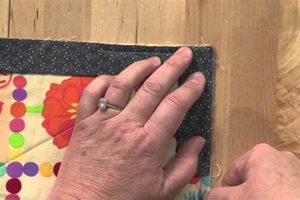
Securing the thread at the end of a seam prevents unraveling and ensures the longevity of a sewn item. This crucial step, often referred to as backstitching or knotting, locks the stitches in place. For instance, without proper completion, the seams of a garment may come undone with wear and washing.
Properly securing a seam contributes significantly to the durability and professional appearance of finished projects. In the past, hand-sewing methods often relied on meticulous knotting techniques to achieve similar results. The current methods provide both speed and a robust hold, fundamental for both mass production and bespoke tailoring.
Several effective techniques exist for guaranteeing a secure and lasting finish. The subsequent sections will explore backstitching, hand-knotting, and other methods in detail, providing step-by-step instructions for each approach.
Essential Considerations for Securing Seams
Effective techniques for completing a seam are paramount for crafting durable and professional-quality sewn items. Applying these considerations can prevent common issues and enhance the overall integrity of a project.
Tip 1: Consistent Backstitching Length: Maintain a uniform backstitch length, typically between 1/4 and 1/2 inch, for consistent security and aesthetic appeal.
Tip 2: Thread Selection Matters: Utilize a thread type appropriate for the fabric being used. A mismatch in thread strength can lead to seam failure despite proper completion techniques.
Tip 3: Tension Adjustment is Key: Ensure correct thread tension on the sewing machine. Improper tension can weaken the stitch, regardless of securing efforts.
Tip 4: Consider Fabric Type: On delicate fabrics, avoid excessive backstitching, which can cause puckering. Opt for a more subtle knotting technique instead.
Tip 5: Directional Backstitching: When working with fabrics prone to stretching, backstitch in the direction of the fabric’s grain to minimize distortion.
Tip 6: Regular Machine Maintenance: A well-maintained sewing machine produces more consistent stitches, which directly impacts the efficacy of seam-securing methods. Clean and oil the machine regularly.
Adhering to these guidelines will bolster the strength and appearance of any sewn item, mitigating the risk of seam unraveling and improving the overall craftsmanship.
The subsequent section will cover advanced methods and specialized tools for specialized sewing projects, enhancing overall capabilities and knowledge.
1. Securing the thread

Securing the thread stands as a critical component in the seam completion process, directly influencing the structural integrity and longevity of any sewn item. A failure to properly secure the thread allows stitches to unravel, ultimately compromising the seam’s effectiveness. Effective seam completion is not merely about joining fabric pieces; it also necessitates a method that actively prevents the spontaneous loosening of the thread structure. Backstitching serves as one practical approach, effectively layering additional stitches over existing ones at the seam’s end to provide a robust anchoring effect. The unsecured seams on a mass-produced garment will unravel much sooner than a hand-sewn piece where attention was given to knotting each thread at the end of each line of stitching.
Several techniques are implemented to secure threads. These include backstitching, knotting by hand, or using specialized tools or machine settings. Each technique aims to lock the final stitch in place. For example, the use of a serger machine often incorporates a chain stitch at the end of a seam; a subsequent loop is created through the final stitch, so when tension is applied, the seam is secured. The application of seam sealant, while less traditional, represents another means of binding thread ends together, particularly useful in applications involving synthetic materials where natural fibers inherent binding properties are absent.
In summary, securing the thread is not merely a concluding step; it is fundamental to quality. Neglecting this aspect undermines the effort invested in the sewing process. Therefore, a comprehensive understanding of effective securing techniques is essential for anyone engaged in sewing projects, irrespective of scale or complexity. These techniques ensure seams remain intact under stress, promoting the durability and value of the finished product.
2. Preventing seam unraveling

Seam unraveling compromises the integrity of sewn items. Consequently, methods employed to complete a seam must prioritize preventing this outcome. Effective techniques secure the thread ends, thereby locking the stitches and maintaining the seam’s structural stability.
- Backstitching as a Primary Defense
Backstitching involves sewing backward over the last few stitches of a seam. This technique creates a dense, reinforced section that physically prevents the thread from pulling out. Backstitching is frequently employed in machine sewing and serves as a reliable method for securing seams in garments, home dcor items, and various textile projects. Its simplicity and effectiveness make it a cornerstone in preventing seam unraveling.
- Knotting for Hand-Sewn Seams
In hand sewing, knotting the thread at the seam’s end provides a similar security measure to backstitching. A well-executed knot creates a physical barrier, preventing the thread from slipping through the fabric. This technique is particularly vital for delicate fabrics or intricate designs where machine backstitching might be too bulky or disruptive. The precision of hand-sewn knots contributes significantly to preventing unraveling in these cases.
- Seam Finishes and Edge Treatments
Beyond securing the thread, seam finishes further prevent unraveling by encasing or binding the raw edges of the fabric. Techniques such as serging, zigzag stitching, or using bias tape protect the fabric edges from fraying, thereby reinforcing the seam’s overall structure. Seam finishes are especially important for fabrics prone to raveling, such as linen or loosely woven textiles. The selected finish directly contributes to the seam’s long-term stability.
- Reinforcing Stress Points
Areas subjected to significant stress, such as corners, crotches, or zipper insertions, require additional reinforcement to prevent seam unraveling. Techniques like adding extra stitching, using interfacing, or employing specialized seam finishes strengthen these vulnerable areas. Failure to reinforce these points can lead to premature seam failure and unraveling under normal wear and tear. Targeted reinforcement is, therefore, crucial for ensuring the longevity of the sewn item.
The interconnectedness of these methods highlights the multifaceted approach required to effectively prevent seam unraveling. Each technique complements the others, contributing to a robust defense against fabric degradation. Understanding and implementing these strategies are integral to crafting durable, professionally finished sewn items.
3. Consistent backstitching
Consistent backstitching forms a cornerstone of secure seam finishing. Its execution directly impacts the seam’s integrity and resistance to unraveling. Irregular or improperly executed backstitching diminishes its effectiveness, potentially leading to premature seam failure.
- Uniform Stitch Length
Maintaining a uniform stitch length within the backstitched area is critical. Variations in stitch length introduce weak points within the backstitched reinforcement. For instance, inconsistent stitch length in backstitching on a garment hem can lead to localized stress points that accelerate wear. Consistency ensures that the force is distributed evenly, strengthening the overall seam finish.
- Proper Overlap
The backstitched area must sufficiently overlap the existing seam stitches. Insufficient overlap renders the backstitch ineffective, as the reinforcement is not adequately anchored. Inadequate overlap when securing the seams of a heavily used bag, for example, will allow the original stitches to pull out, negating the backstitch’s purpose. Overlap ensures that the backstitch integrates fully with the preceding stitches, creating a cohesive and secure finish.
- Thread Tension Harmony
The thread tension during backstitching must align with that used throughout the seam. Disparate tension can distort the fabric and weaken the seam finish. If backstitching is done with tighter tension than the primary seam, puckering may result, compromising both aesthetics and seam strength. Maintaining harmony in thread tension preserves the fabric’s integrity and strengthens the seam finish.
- Appropriate Stitch Density
Stitch density within the backstitched area must be appropriate for the fabric and seam type. Excessive density can stress the fabric, while insufficient density may not provide adequate reinforcement. Backstitching with excessive density on lightweight fabrics, like chiffon, can cause tearing, whereas lower density on denim seams might not adequately prevent unraveling. Optimal stitch density balances security with fabric preservation.
These facets illustrate the nuanced relationship between consistent backstitching and seam completion. The effectiveness of this securing method is intrinsically tied to the precision and care with which it is executed. When these principles are applied, this guarantees a durable, high-quality sewn product with seams designed to resist the rigors of everyday use.
4. Reinforcing stress points

The act of finishing a sewing stitch is intrinsically linked to the reinforcement of stress points within a sewn item. Points of stress, such as corners, zipper junctions, belt loops, and areas subjected to frequent movement or tension, are inherently susceptible to failure. How these areas are finished directly dictates the overall durability and longevity of the item. An inadequately secured stitch at a stress point serves as a catalyst for unraveling, tearing, or seam separation. A button attachment that is not strongly reinforced, will likely tear away with repeated use. Reinforcement, therefore, is not merely an optional addendum but an integral component of a thorough seam completion process.
Effective stress point reinforcement strategies range from simple to complex, dependent on the material and intended use. Backstitching, a fundamental technique, involves stitching backward over the last few stitches of a seam to secure the thread. This is often complemented by using specialized threads designed for high-stress applications. In other cases, reinforcing tapes or interfacings are applied to the fabric before sewing to provide additional structural support. For instance, the corners of pockets on workwear are frequently reinforced with bar tacks or rivets, demonstrating the practical application of stress point reinforcement in functional garments. The selection of an appropriate reinforcement method must reflect both the fabric properties and the anticipated stress levels.
In summary, the connection between finishing a sewing stitch and reinforcing stress points is causal and critical. Neglecting reinforcement undermines the entire sewing process, irrespective of other meticulous efforts. A comprehensive understanding of appropriate reinforcement techniques, matched to specific stress points and material properties, is therefore essential for creating durable and reliable sewn goods. Failure to address these considerations leads to premature wear and reduced product lifespan, highlighting the practical significance of this interconnected skill set.
5. Knot security
Knot security represents a paramount aspect of securing a seam, particularly when hand-sewing or employing techniques where backstitching is impractical. The reliability of a finished stitch directly correlates with the integrity of the knot used to secure the thread ends. A poorly executed knot invites unraveling, irrespective of other diligent sewing efforts.
- Knot Placement and Proximity
The strategic placement of a knot influences its effectiveness. Ideally, the knot should reside close to the fabric’s surface, concealed within the layers to prevent snagging or abrasion. A knot positioned too far from the fabric’s surface is susceptible to loosening through external forces. In applications such as quilting, where multiple fabric layers intersect, careful knot placement ensures that the thread ends remain hidden and secure within the quilt’s structure, reducing the likelihood of separation over time.
- Knot Type and Material Compatibility
Different knot types offer varying levels of security depending on the thread material and fabric texture. A simple overhand knot, while easy to execute, may not suffice for slippery threads or fabrics prone to abrasion. More complex knots, such as surgeon’s knots or square knots, provide enhanced security by increasing friction and resistance to slippage. Selecting a knot appropriate for the materials used is critical. For example, a surgeon’s knot might be preferred when using silk thread on delicate fabrics due to its superior holding power.
- Tension and Knot Tightness
The tension applied during knot formation directly impacts its holding strength. A loosely tied knot is prone to unraveling, whereas an overly tight knot can weaken the thread, leading to breakage. The correct tension achieves a balance, creating a secure knot without compromising thread integrity. Balancing the tension is important when securing embroidery floss so as not to break the thread.
- Securing the Knot Tail
The “tail,” or excess thread extending beyond the knot, can potentially work its way loose over time, compromising the knot’s security. Trimming the tail too close to the knot risks the knot untying, while leaving it too long increases the chance of entanglement or snagging. Securing the tail by burying it within the fabric layers, using a needle to thread it through a portion of the seam, significantly enhances knot security and prevents unraveling.
These elements, when carefully considered and executed, underscore the relationship between knot security and the overall quality of a completed seam. A well-executed knot complements other securing techniques, such as backstitching or seam finishing, contributing to the creation of durable and long-lasting sewn items.
Frequently Asked Questions
The following questions address common concerns and misconceptions related to securing seams and finishing stitches effectively.
Question 1: Is backstitching always necessary at the end of a seam?
Backstitching is generally recommended for most seams, particularly those subject to stress or frequent use. However, specialized techniques like serging or certain hand-sewing methods may provide adequate security without backstitching. The necessity depends on fabric type, seam construction, and intended garment use.
Question 2: How much overlap should be used when backstitching?
A typical overlap length for backstitching ranges from approximately 1/4 to 1/2 inch. This overlap provides sufficient reinforcement to prevent unraveling without creating excessive bulk or distortion in the seam.
Question 3: Can knotting be used instead of backstitching?
Knotting serves as a viable alternative to backstitching, especially in hand-sewing applications or when working with delicate fabrics. However, knot security depends on the technique used and the thread material. A properly executed knot can provide comparable security to backstitching in many situations.
Question 4: What type of thread is best for secure seam finishing?
The ideal thread for seam finishing is one that matches the fabric type in terms of weight and fiber content. High-quality polyester or cotton-wrapped polyester threads offer good strength and durability for most applications. Specialized threads, such as those designed for upholstery or heavy-duty projects, may be necessary for increased security.
Question 5: How can seam unraveling be prevented in areas of high stress?
Areas of high stress, such as crotches, corners, and zipper junctures, benefit from additional reinforcement. Techniques such as backstitching, using reinforcing tapes or interfacings, or employing specialized seam finishes (e.g., bar tacks) can significantly improve seam durability in these areas.
Question 6: Does machine maintenance affect seam security?
Proper machine maintenance directly impacts seam security. A well-maintained machine produces consistent stitch tension and reliable stitch formation, both of which are essential for effective seam finishing. Regular cleaning, oiling, and tension adjustments are crucial for ensuring optimal sewing performance and seam integrity.
In summary, securing a seam involves careful selection of techniques and materials, mindful execution, and attention to detail. Prioritizing these aspects enhances the durability and longevity of sewn items.
The subsequent section will explore advanced methods and troubleshooting techniques for challenging seam-finishing scenarios.
Concluding Remarks
The preceding exploration has detailed various methods to finish a sewing stitch. From backstitching to knotting, the emphasis remains on securing the seam to prevent unraveling. Consistent application of appropriate techniques, tailored to the fabric and project demands, ultimately determines the durability and aesthetic quality of the finished product. Proper attention to these fundamental processes elevates the standard of craftsmanship and extends the lifespan of sewn items.
Mastery of these securing techniques is crucial for both novice and experienced sewers. The commitment to excellence in the completion of each stitch reflects a dedication to quality and longevity. As new materials and methods evolve, a thorough understanding of these core principles remains essential for achieving superior results in any sewing endeavor.