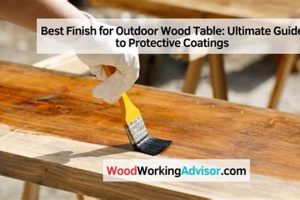
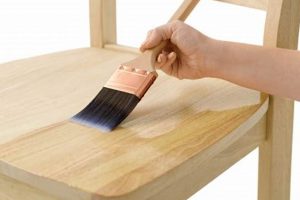
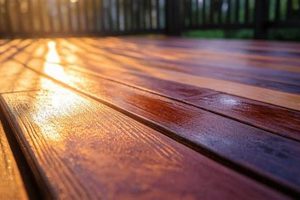
A transparent coating designed to protect wooden surfaces from the elements, specifically when used outdoors, represents a crucial element in wood preservation. These coatings safeguard against moisture, ultraviolet radiation, and temperature fluctuations, thereby preventing warping, cracking, and discoloration. Common examples include spar varnish, polyurethane formulations engineered for exterior use, and penetrating epoxy sealers, each possessing unique properties suited for different applications and environments.
The use of such protective barriers extends the lifespan of wooden structures and objects, reducing the need for frequent repairs or replacements. Historically, natural oils and resins were employed for this purpose; however, modern chemistry has yielded more durable and effective alternatives. The selection of an appropriate coating is influenced by factors such as the type of wood, the degree of exposure to the elements, and the desired aesthetic appearance.
The subsequent discussion will delve into the characteristics of various coating types, explore methods for application, and address common challenges encountered during the finishing process. This analysis will provide a comprehensive understanding of how to effectively protect exterior wood surfaces.
Application Guidelines
Effective application of a protective transparent coating to exterior wood requires meticulous attention to detail and adherence to best practices. Proper preparation and application significantly impact the longevity and performance of the finish.
Tip 1: Surface Preparation is Paramount: Ensure the wood surface is clean, dry, and free from any existing coatings, dirt, or mildew. Sanding to a smooth, uniform surface is critical for optimal adhesion. Consider using a wood cleaner or brightener to remove discoloration and open the wood pores.
Tip 2: Select the Appropriate Product: Evaluate the specific environmental conditions and the type of wood being treated. Consider factors such as UV exposure, moisture levels, and potential for abrasion. Choose a product specifically formulated for exterior use that aligns with these requirements.
Tip 3: Apply Thin, Even Coats: Multiple thin coats are preferable to a single thick coat. Thin coats promote proper drying and curing, minimizing the risk of runs, drips, and premature cracking. Allow each coat to dry completely according to the manufacturer’s instructions before applying the next.
Tip 4: Proper Application Technique: Use high-quality brushes, rollers, or spray equipment designed for the specific coating being applied. Maintain a wet edge to avoid lap marks and ensure a seamless finish. For brush application, use smooth, even strokes in the direction of the wood grain.
Tip 5: Environmental Conditions Matter: Avoid application in direct sunlight, high humidity, or extreme temperatures. These conditions can negatively impact the drying and curing process, leading to defects in the finish. Aim for moderate temperatures and low humidity.
Tip 6: Sanding Between Coats: Lightly sand between coats with fine-grit sandpaper (e.g., 220-grit or higher) to remove any imperfections and create a smooth surface for the subsequent coat. This step enhances adhesion and improves the overall appearance of the finish.
Adherence to these guidelines will maximize the protective qualities and aesthetic appeal of the chosen clear coating, ensuring the long-term preservation of exterior wood surfaces.
The subsequent section will address troubleshooting common issues and providing maintenance recommendations for preserving the integrity of the exterior finish.
1. Durability

Durability, in the context of exterior clear finishes for wood, signifies the coating’s capacity to withstand environmental stressors and physical impacts over extended periods. It is a primary determinant of the finish’s lifespan and its ability to protect the underlying wood substrate.
- Abrasion Resistance
Abrasion resistance refers to the finish’s ability to resist scratching, scuffing, and wear from physical contact. Finishes with high abrasion resistance maintain their protective qualities and aesthetic appearance longer, especially in high-traffic areas or environments with airborne particles. Polyurethane-based finishes are often formulated to provide superior abrasion resistance compared to traditional varnishes.
- Weathering Resistance
Weathering resistance encompasses the finish’s ability to withstand the effects of moisture, temperature fluctuations, and ultraviolet radiation. Finishes that exhibit good weathering resistance prevent the underlying wood from absorbing moisture, which can lead to rot, warping, and cracking. Additionally, they resist degradation from UV exposure, which causes fading, chalking, and loss of gloss. Spar varnishes, traditionally used on boats, are formulated for high weathering resistance.
- Impact Resistance
Impact resistance refers to the finish’s ability to withstand sudden forces or impacts without cracking, chipping, or delaminating. Finishes with good impact resistance protect the wood from damage caused by falling objects, hail, or other forms of physical stress. Two-part epoxy finishes often provide superior impact resistance compared to single-component finishes.
- Flexibility
Flexibility is the ability of the finish to expand and contract with the wood substrate as it responds to changes in temperature and humidity. A flexible finish prevents cracking and peeling, maintaining its protective barrier over time. Oil-based finishes and some acrylic formulations offer good flexibility, accommodating the natural movement of the wood.
The inherent durability of an exterior clear finish is a composite of these factors, each contributing to its overall performance and longevity. Selecting a finish that addresses these aspects appropriately for the intended application ensures effective and long-lasting protection for exterior wood surfaces.
2. UV Resistance
Ultraviolet (UV) radiation from sunlight represents a significant threat to exterior wood finishes. Prolonged exposure to UV rays degrades the finish at a molecular level, leading to a cascade of detrimental effects. The initial consequence is often discoloration, where the finish yellows or fades, altering the aesthetic appearance of the wood. Further degradation manifests as chalking, a powdery residue on the surface, indicative of the finish breaking down. Ultimately, UV damage can compromise the finish’s integrity, causing it to crack, peel, or lose its protective properties, thereby exposing the wood to moisture and decay. The inclusion of UV absorbers or stabilizers within a clear coating is therefore paramount for effective performance. These additives function by either absorbing the harmful UV radiation and dissipating it as heat or by neutralizing the free radicals generated by UV exposure, thus slowing down the degradation process. Without adequate UV resistance, any exterior clear finish, regardless of its other qualities, will experience premature failure.
Consider, for example, a wooden deck treated with a clear finish lacking UV inhibitors. Within a single summer season, the finish may exhibit noticeable yellowing and a loss of gloss, particularly on surfaces exposed to direct sunlight. This degradation necessitates more frequent refinishing, increasing maintenance costs and potentially shortening the lifespan of the deck itself. In contrast, a similar deck treated with a high-quality exterior clear finish containing UV absorbers can maintain its appearance and protective properties for several years, reducing the need for frequent maintenance and preserving the woods structural integrity. The effectiveness of UV resistance is directly proportional to the type and concentration of UV inhibitors used in the formulation. Some clear finishes incorporate micronized pigments, which, while appearing transparent to the naked eye, provide a physical barrier against UV radiation. These formulations often offer superior protection compared to those relying solely on chemical additives.
In summary, UV resistance is an indispensable characteristic of any transparent coating intended for exterior wood applications. Failure to address this critical factor compromises the finish’s long-term performance and protective capabilities. The selection of a finish with robust UV inhibitors is a prudent investment, minimizing maintenance requirements and maximizing the lifespan of wooden structures and objects exposed to sunlight. Understanding the mechanisms of UV degradation and the role of UV absorbers is crucial for making informed decisions regarding wood preservation strategies.
3. Water Repellency

Water repellency is a critical attribute of transparent exterior wood finishes, directly influencing the protective capabilities and longevity of both the coating and the underlying wood substrate. The capacity of a finish to resist water penetration mitigates a range of moisture-related issues that can compromise the integrity and appearance of wooden structures.
- Prevention of Wood Rot and Decay
Water penetration into wood creates an environment conducive to fungal growth, leading to rot and decay. A water-repellent finish acts as a barrier, preventing moisture absorption and thereby inhibiting the development of these destructive organisms. Examples include the use of hydrophobic polymers in the finish formulation that repel water molecules, keeping the wood dry. This is particularly important in humid climates or locations exposed to frequent precipitation.
- Minimization of Dimensional Instability
Wood is hygroscopic, meaning it absorbs and releases moisture from the surrounding environment. This moisture exchange causes the wood to swell and shrink, leading to dimensional instability and potentially resulting in warping, cracking, or joint failure. A water-repellent finish reduces moisture absorption, minimizing these dimensional changes and preserving the structural integrity of the wood. Film-forming finishes like polyurethane create a physical barrier, reducing the rate of moisture exchange.
- Reduction of Staining and Discoloration
Water can carry dirt, pollutants, and other staining agents that can penetrate the wood and cause discoloration. A water-repellent finish prevents these substances from being absorbed, maintaining the wood’s natural appearance and minimizing the need for frequent cleaning or refinishing. The inclusion of water-resistant additives, such as waxes or silicones, in the finish composition further enhances its ability to repel staining agents.
- Enhancement of Finish Adhesion
Excessive moisture in wood can compromise the adhesion of the finish, leading to peeling, blistering, or premature failure. By preventing water absorption, a water-repellent finish promotes better adhesion between the coating and the wood substrate, extending the lifespan of the finish and reducing maintenance requirements. Proper surface preparation, including thorough drying of the wood before application, is crucial for maximizing finish adhesion.
In summary, water repellency is a non-negotiable property for any effective transparent coating intended for exterior wood applications. By minimizing moisture-related problems, a water-repellent finish safeguards the wood from rot, dimensional instability, staining, and adhesion failures, ultimately contributing to the long-term preservation and aesthetic appeal of wooden structures. The inclusion of hydrophobic components and careful application techniques are essential for maximizing the water-repellent properties of the finish.
4. Application Ease
The ease with which a transparent exterior wood finish can be applied directly influences the overall success and efficiency of the wood protection process. A finish that is difficult to apply can lead to inconsistent results, increased labor costs, and potentially compromise the protective qualities of the coating.
- Viscosity and Flow Characteristics
The viscosity of a finish determines its flow characteristics during application. A finish that is too viscous may be difficult to spread evenly, leading to brush marks, uneven coverage, and a prolonged drying time. Conversely, a finish that is too thin may run or drip, resulting in an uneven finish and potential waste. Ideal viscosity allows for smooth, even application with minimal effort. For example, self-leveling formulations are designed to minimize brush strokes and create a uniform surface.
- Drying and Curing Time
The drying and curing time of a finish affects the overall project timeline and the risk of environmental contamination during the process. Finishes with excessively long drying times can prolong the project and increase the likelihood of dust or debris settling on the surface, compromising the final appearance. Conversely, finishes that dry too quickly may not allow sufficient time for proper leveling and penetration. The “best” finish strikes a balance, offering a reasonable drying time without sacrificing application quality. Some fast-drying formulas have additives that speed up the evaporation of solvents.
- Surface Preparation Requirements
The extent of surface preparation required before applying a finish directly impacts the labor involved and the likelihood of successful adhesion. Finishes that require extensive sanding, stripping, or priming can be more time-consuming and demanding to apply. Formulations that are more forgiving and can adhere to a wider range of surfaces with minimal preparation are generally considered easier to apply. Self-priming finishes reduce the number of steps involved.
- Application Method Versatility
A finish that can be applied using various methods, such as brushing, rolling, or spraying, offers greater flexibility and adaptability to different project requirements and skill levels. Finishes that are specifically formulated for spray application may require specialized equipment and expertise, while those designed for brushing or rolling are typically more accessible to DIYers. A versatile finish that can be applied using multiple methods enhances its overall application ease. Some finishes have adjustable thinners that allows you to apply it based on environmental condition.
The “best” exterior clear finish for wood balances protective qualities with practical application considerations. A finish that excels in durability, UV resistance, and water repellency but is excessively difficult to apply may not be the optimal choice for all users. Therefore, application ease is an important factor in the selection process, influencing both the final result and the overall user experience.
5. Appearance Retention
Appearance retention, concerning exterior transparent coatings for wood, signifies the finish’s capacity to maintain its original aesthetic qualities over time, despite exposure to environmental factors. This attribute is integral to the overall performance and value of the finish, directly impacting the perceived quality and longevity of the protected wood.
- Gloss Level Stability
Gloss level stability refers to the finish’s ability to maintain its initial sheen or luster throughout its service life. Degradation of gloss often manifests as a dulling or flattening of the finish, diminishing its visual appeal. For instance, a high-gloss finish intended to enhance the richness of the wood grain may become matte and lackluster within a short period if the gloss level is not stable. Finishes with superior gloss level stability incorporate additives that resist oxidation and UV degradation, preserving the initial sheen for an extended duration.
- Colorfastness
Colorfastness is the resistance of the finish to changes in color due to exposure to sunlight, moisture, or other environmental elements. Fading, yellowing, or discoloration can significantly detract from the aesthetic value of the wood. An example is a clear finish applied to redwood siding, which may develop an undesirable orange tint over time if the finish lacks adequate colorfastness. Colorfast finishes incorporate UV absorbers and antioxidants that protect the coating from color changes caused by environmental stressors.
- Clarity and Transparency
The clarity and transparency of a finish dictate its ability to showcase the natural beauty of the underlying wood. Haziness, cloudiness, or the development of microscopic cracks can obscure the wood grain and diminish its visual appeal. A clear finish should remain transparent, allowing the wood’s natural color and texture to be fully visible. High-quality finishes utilize refined resins and solvents that minimize clouding and maintain clarity even after prolonged exposure to the elements.
- Resistance to Surface Defects
The ability of a finish to resist surface defects such as cracking, blistering, peeling, or checking is crucial for maintaining its appearance. These defects not only detract from the aesthetic value of the wood but also compromise the protective barrier, allowing moisture and other damaging elements to penetrate. Finishes formulated with flexible polymers and robust adhesion properties are better equipped to resist surface defects and maintain their appearance over time.
In conclusion, appearance retention is a multifaceted characteristic that encompasses gloss level stability, colorfastness, clarity, and resistance to surface defects. These attributes are all interconnected and contribute to the overall performance and longevity of an exterior transparent wood finish. Selecting a finish with superior appearance retention ensures that the protected wood maintains its aesthetic appeal and protective qualities for an extended period, reducing maintenance requirements and preserving the value of the wooden structure.
Frequently Asked Questions
This section addresses common inquiries regarding transparent protective coatings for exterior wood applications, providing objective and informative answers to guide selection and usage.
Question 1: What constitutes the “best” clear finish for exterior wood?
The “best” option is subjective and depends on the specific application and environmental conditions. Key factors include UV resistance, water repellency, durability, ease of application, and desired aesthetic. No single product universally excels in all categories. A thorough evaluation of requirements is essential.
Question 2: How frequently should an exterior clear wood finish be reapplied?
Reapplication frequency varies based on the finish type, exposure to the elements, and application quality. Generally, surfaces exposed to direct sunlight and harsh weather require more frequent maintenance, potentially every one to two years. Inspect the finish annually for signs of degradation, such as cracking, peeling, or discoloration, which indicate the need for reapplication.
Question 3: Is sanding necessary between coats of clear exterior wood finish?
Light sanding between coats is generally recommended to create a smoother surface and improve adhesion of subsequent layers. Use fine-grit sandpaper (220-grit or higher) to lightly abrade the surface, removing any imperfections and providing a better mechanical bond. Proper surface preparation enhances the overall quality and longevity of the finish.
Question 4: Can interior clear finishes be used on exterior wood surfaces?
Interior finishes are generally not suitable for exterior use. They lack the UV resistance, water repellency, and flexibility required to withstand outdoor conditions. Using an interior finish outdoors will likely result in premature failure, leading to cracking, peeling, and eventual wood damage. Select products specifically formulated for exterior applications.
Question 5: What are the common causes of clear finish failure on exterior wood?
Common causes include inadequate surface preparation, improper application techniques, selection of an inappropriate finish for the environment, and insufficient maintenance. Exposure to excessive moisture, sunlight, and temperature fluctuations can also accelerate degradation. Addressing these factors is crucial for maximizing the lifespan of the finish.
Question 6: Are there environmentally friendly clear finish options for exterior wood?
Yes, several environmentally friendly options are available, including water-based finishes with low VOC (volatile organic compound) content and finishes derived from renewable resources. While these options may offer reduced environmental impact, it’s important to evaluate their performance characteristics and ensure they meet the specific requirements of the application.
Selecting and applying the correct clear finish extends the life and maintains the aesthetic of wooden surfaces. Addressing the unique environmental factors and properly applying the finish leads to effective protection and preservation.
The subsequent section will delve into the different types of exterior wood and which clear finish would be the most effective for them.
Conclusion
The exploration of “best exterior clear finish for wood” has revealed a multifaceted landscape, demanding careful consideration of various factors. Durability, UV resistance, water repellency, application ease, and appearance retention emerge as critical attributes influencing long-term performance. The optimal choice hinges on the specific demands of the application, acknowledging that no single solution universally satisfies all requirements.
Effective wood preservation necessitates a proactive and informed approach. Continual advancements in coating technology promise enhanced protection and sustainability. A commitment to proper selection, application, and maintenance will ensure the enduring beauty and structural integrity of exterior wood surfaces, mitigating the detrimental effects of environmental exposure.