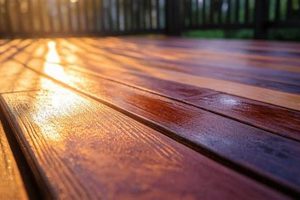
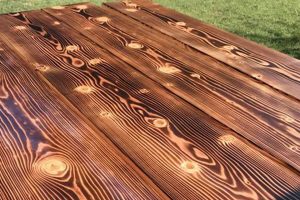
Transparent coatings designed for wooden surfaces preserve the material’s inherent aesthetic qualities while providing protection against environmental factors. These products, available in formulations such as varnishes, lacquers, polyurethanes, and water-based acrylics, form a durable layer that enhances the wood’s grain and color without obscuring it. An example would be applying a gloss polyurethane to a hardwood floor to protect it from wear and tear while highlighting the wood’s natural beauty.
The use of these coatings offers several advantages. They shield wood from moisture, scratches, and UV damage, extending the lifespan of wooden furniture, flooring, and other structures. Historically, natural oils and waxes were used for similar purposes, but modern formulations offer improved durability and resistance to chemical and physical damage. The choice of a specific type depends on the desired level of protection, the intended use of the wood, and aesthetic preferences regarding sheen and texture.
The subsequent sections will detail the different types of these coatings, their application techniques, and the factors to consider when selecting the appropriate product for a given project. Furthermore, we will explore surface preparation, application methods, and maintenance procedures to ensure optimal results and longevity of the treated surfaces.
Tips for Achieving Optimal Results with Transparent Wood Coatings
Applying transparent protective layers to wooden surfaces requires careful consideration and precise execution to ensure a durable and aesthetically pleasing result. The following tips offer guidance on best practices for achieving optimal outcomes.
Tip 1: Surface Preparation is Paramount: Thoroughly sand the wood surface to create a smooth and uniform substrate. Remove all traces of dust and contaminants before applying any coating. Uneven surfaces or residual debris will compromise the finish’s appearance and adhesion.
Tip 2: Select the Appropriate Product for the Application: Consider the intended use of the wood item and the desired level of protection. Polyurethane offers superior durability for high-traffic areas, while varnish provides enhanced UV resistance for outdoor applications. Water-based acrylics are suitable for low-odor environments.
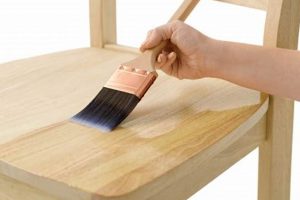
Tip 3: Employ Proper Application Techniques: Apply coatings in thin, even layers using a high-quality brush, sprayer, or applicator pad. Avoid applying excessively thick layers, which can lead to runs, drips, and prolonged drying times. Adhere to the manufacturer’s recommendations for application methods and drying times.
Tip 4: Sand Between Coats for Optimal Smoothness: Lightly sand between coats with fine-grit sandpaper (e.g., 320-grit or higher) to remove any imperfections or raised grain. This step enhances the smoothness and clarity of the final finish.
Tip 5: Maintain Consistent Environmental Conditions: Apply coatings in a well-ventilated area with a stable temperature and humidity level. Extreme temperature or humidity fluctuations can affect the drying time and the final appearance of the coating.
Tip 6: Test the Finish in an Inconspicuous Area: Before applying the coating to the entire surface, test it on a small, hidden area to ensure compatibility with the wood and the desired aesthetic outcome.
Tip 7: Allow Adequate Drying Time: Ensure sufficient drying time between coats and before putting the coated item into service. Premature use can damage the finish and compromise its protective properties.
Adhering to these guidelines will contribute to a professional-looking, durable, and long-lasting result, preserving the beauty and integrity of the wood.
The following sections will address common issues encountered during the application process and offer solutions to prevent or rectify these problems.
1. Protection

The primary function of transparent coatings on wooden surfaces is to provide a protective barrier against a range of environmental and mechanical stressors. These stressors include moisture ingress, ultraviolet (UV) radiation, abrasion, and chemical exposure. The effectiveness of a transparent coating in mitigating these threats directly correlates with the longevity and structural integrity of the underlying wood. For instance, a clear polyurethane applied to a wooden exterior door prevents water absorption, which can lead to warping, rot, and eventual failure of the door. Similarly, UV inhibitors incorporated into a clear finish can prevent the fading and discoloration of wooden furniture exposed to sunlight.
The selection of a specific transparent coating should be guided by the anticipated environmental conditions and the type of wood being protected. High-traffic areas, such as floors, require coatings with superior abrasion resistance, like two-part epoxy systems or certain polyurethane formulations. Outdoor applications necessitate finishes with excellent UV protection and resistance to moisture cycling. The effectiveness of protection is also dependent on proper surface preparation and application techniques. Contaminants on the wood surface or an unevenly applied coating can compromise the protective barrier, leading to premature failure of the finish.
Ultimately, the protective capabilities of transparent coatings represent a critical aspect of their functionality. Understanding the specific environmental threats and selecting a coating with appropriate resistance characteristics is essential for preserving the structural integrity and aesthetic appeal of wooden objects and structures. Ignoring this connection between the desired protection and the coating’s properties can lead to costly repairs or replacements, negating the initial investment in the wood itself.
2. Appearance

The appearance imparted by transparent coatings on wooden surfaces is a critical determinant of their aesthetic value and suitability for particular applications. The interaction between the wood’s natural characteristics and the properties of the finish significantly influences the final visual outcome. The choice of coating directly affects attributes such as sheen, clarity, and the degree to which the wood grain is emphasized or subdued. For example, a high-gloss varnish will accentuate the wood grain, providing a reflective surface that highlights the wood’s texture, while a matte finish will reduce reflection, creating a more subdued and natural look. The effect of a clear finish on appearance is so crucial that it often outweighs its functional and protective properties.
The practical significance of understanding this connection lies in the ability to tailor the final aesthetic to meet specific design requirements. Architectural woodwork in upscale interiors often employs multiple layers of clear lacquer to achieve a deep, lustrous appearance that conveys elegance and quality. Conversely, furniture intended for rustic settings might utilize penetrating oil finishes to preserve a natural, low-sheen aesthetic that aligns with the design theme. Incorrect selection can lead to outcomes that detract from the wood’s inherent beauty or clash with the surrounding environment. For example, a poorly applied polyurethane finish can result in an unnatural plastic-like appearance, diminishing the wood’s character. Careful consideration of the desired visual effect is therefore paramount in the selection process. Proper surface preparation plays a significant role, affecting smoothness, which is closely related to glossiness.
In conclusion, the appearance achieved through transparent coatings on wooden surfaces is inextricably linked to the aesthetic goals of a project. The challenges lie in selecting a finish that enhances the wood’s natural beauty while providing the desired level of visual impact and integration with the surrounding environment. An informed understanding of the interplay between coating properties and wood characteristics allows for the creation of visually appealing and harmonious designs. Understanding the influence of coatings on the appearance of wood helps achieve the aesthetic goals desired for the intended purpose.
3. Durability

The durability of transparent coatings on wood directly determines their longevity and protective capabilities under various environmental and mechanical stresses. It represents a critical attribute, affecting the long-term preservation of wooden structures and objects. The selection of a clear finish with inadequate durability leads to premature failure, requiring frequent reapplication or, in severe cases, compromising the underlying wood itself. For instance, a water-based acrylic lacquer used on a heavily trafficked hardwood floor will exhibit significantly lower abrasion resistance than a two-part polyurethane, resulting in scratches, wear patterns, and a diminished aesthetic appearance over time. Therefore, durability as a component of clear finishes for wood affects both maintenance demands and the overall lifespan of a wooden item.
The practical significance of understanding durability extends to cost-effectiveness. While a less durable finish might have a lower initial cost, the expenses associated with its frequent replacement, including labor and material costs, can quickly surpass the investment in a more robust and long-lasting coating. Moreover, certain applications, such as exterior marine woodwork, demand exceptional durability to withstand constant exposure to saltwater, sunlight, and extreme temperature fluctuations. In these cases, specialized epoxy or spar varnishes are often employed, engineered to provide superior resistance to environmental degradation. These more robust solutions often require a more precise application technique.
In summary, the durability of transparent coatings on wood is a fundamental consideration inextricably linked to their protective function and long-term value. Selecting a finish based solely on aesthetic considerations without regard to its durability can result in compromised protection, increased maintenance demands, and accelerated deterioration of the underlying wood. The challenges in this selection process lie in balancing desired appearance with necessary performance characteristics, often requiring a compromise to achieve optimal results.
4. Application

The process of applying transparent coatings to wood surfaces is a critical determinant of the final appearance, protective qualities, and longevity of the finish. Improper application techniques can compromise even the highest-quality coatings, leading to defects, reduced durability, and ultimately, a failure to achieve the desired outcome. Understanding the nuances of application is therefore essential for professionals and hobbyists alike.
- Surface Preparation
Adequate surface preparation is paramount. This involves sanding to achieve a smooth, uniform substrate, removing dust, dirt, and any contaminants that could interfere with adhesion. For example, residual sanding dust can create a cloudy or uneven finish, while oil or wax can prevent the coating from bonding properly. The choice of sanding grit depends on the wood type and the desired smoothness of the final surface. Thorough preparation directly impacts the coating’s ability to bond with the wood, influencing its durability and aesthetic appeal.
- Environmental Conditions
Ambient temperature, humidity, and ventilation significantly influence the drying and curing process of transparent coatings. High humidity can prolong drying times, increasing the risk of dust contamination and potentially leading to a cloudy or milky appearance in some finishes. Extreme temperatures can affect the viscosity of the coating, making it difficult to apply evenly. Proper ventilation is crucial for removing solvent vapors and ensuring a safe and healthy working environment. Manufacturers’ recommendations regarding environmental conditions should be strictly adhered to for optimal results.
- Application Methods
The method of application brushing, spraying, or wiping affects the final appearance and performance of the coating. Brushing is suitable for smaller projects and allows for precise control, but can leave brush marks if not executed properly. Spraying provides a smooth, even finish on larger surfaces but requires specialized equipment and careful masking. Wiping is often used for oil-based finishes, allowing for deep penetration and a natural look. The choice of method depends on the coating type, the size and complexity of the project, and the desired aesthetic outcome. Some methods are more adept at reaching corners.
- Layering and Drying Times
Applying transparent coatings in multiple thin layers is generally preferred over applying a single thick coat. Thin layers dry more evenly, reducing the risk of runs, drips, and solvent entrapment. Each layer should be allowed to dry completely before the next is applied, following the manufacturer’s recommended drying times. Insufficient drying time can lead to a soft, tacky finish that is susceptible to damage. Proper layering contributes to a more durable and visually appealing result.
In conclusion, the application of clear finishes for wood is a multifaceted process requiring meticulous attention to detail and a thorough understanding of the interplay between surface preparation, environmental conditions, application methods, and layering techniques. Mastering these aspects is essential for achieving professional-quality results and maximizing the longevity and aesthetic appeal of wooden surfaces.
5. Wood Type
The selection of a transparent coating for wood is inextricably linked to the specific characteristics of the wood species itself. Different wood types exhibit varying levels of density, porosity, oil content, and grain patterns, all of which influence the adhesion, penetration, and final appearance of the clear finish. A coating suitable for a dense hardwood like maple may perform poorly on a softwood such as pine due to the latter’s greater absorbency and tendency to raise grain. The inherent properties of the wood directly cause differences in how the finish interacts with the surface.
For instance, oily woods like teak or rosewood present challenges due to their natural oils interfering with the proper bonding of certain finishes. In such cases, specialized surface preparation techniques, such as degreasing, may be necessary to ensure adequate adhesion. Open-grained woods, such as oak or ash, often benefit from the application of a wood filler prior to finishing to create a smoother surface and prevent the finish from sinking into the pores. Understanding these nuances is of practical significance, as it enables informed decision-making regarding product selection and application methods. Without consideration for the wood type, the final finish may exhibit defects, reduced durability, or an undesirable appearance. A clear finish designed for soft woods must be chosen to ensure the best outcome.
In summary, the successful application of transparent coatings on wood necessitates a thorough understanding of the wood’s inherent properties and their interaction with the chosen finish. The selection process should consider the wood’s density, porosity, oil content, and grain pattern to ensure proper adhesion, penetration, and aesthetic appeal. Ignoring these factors can lead to compromised results and a failure to achieve the desired protective and decorative objectives. Ultimately, the wood itself and the finish must be viewed as a system, in which one component cannot function without the other.
Frequently Asked Questions
This section addresses common inquiries regarding transparent coatings for wooden surfaces, providing concise and informative answers to enhance understanding and guide decision-making.
Question 1: What is the difference between varnish, lacquer, and polyurethane?
Varnish typically offers good abrasion resistance and is often used on furniture and floors. Lacquer dries quickly and provides a smooth finish but may be less durable than polyurethane. Polyurethane offers excellent durability and resistance to chemicals and moisture, making it suitable for high-traffic areas and exterior applications. Each coating possesses distinct properties and is suited to varying applications.
Question 2: How does sheen affect the appearance of a transparent finish?
Sheen refers to the amount of light reflected by the finished surface. High-gloss sheens provide a reflective, shiny appearance, while matte sheens offer a non-reflective, subtle look. Semi-gloss and satin sheens fall in between, providing moderate reflectivity. The choice of sheen is a matter of personal preference and should be based on the desired aesthetic effect.
Question 3: Why is surface preparation so important before applying a transparent coating?
Proper surface preparation ensures that the coating adheres properly to the wood, creating a smooth and uniform finish. Removing dust, dirt, and imperfections allows the coating to bond directly to the wood, maximizing its durability and protective qualities. Failure to prepare the surface adequately can result in poor adhesion, unevenness, and premature failure of the coating.
Question 4: Can transparent coatings be applied over existing finishes?
Applying a new transparent coating over an existing finish is possible, but it requires careful preparation. The existing finish must be clean, sound, and compatible with the new coating. Sanding the existing finish to create a mechanical bond is often necessary. Compatibility should always be tested in an inconspicuous area before proceeding with the entire project.
Question 5: How can brush marks be avoided when applying transparent coatings?
Brush marks can be minimized by using a high-quality brush, applying the coating in thin, even layers, and avoiding excessive pressure. Self-leveling coatings can also help to reduce brush marks. Sanding lightly between coats can further smooth the surface. Applying the finish in the direction of the wood grain also aids in minimizing brush marks.
Question 6: What factors should be considered when selecting a transparent coating for outdoor use?
For outdoor applications, the coating must provide excellent resistance to UV radiation, moisture, and temperature fluctuations. Coatings containing UV inhibitors are essential for preventing fading and discoloration. Flexibility is also important to accommodate wood expansion and contraction due to changes in humidity. Marine-grade varnishes and spar urethanes are often used for exterior applications due to their superior durability and weather resistance.
Selecting and applying transparent coatings involves careful consideration of various factors, including the type of coating, sheen, surface preparation, and application techniques. Addressing these considerations contributes to a successful outcome, preserving the beauty and integrity of wooden surfaces.
The subsequent section will explore common issues encountered during the application process and offer solutions to prevent or rectify these problems.
Clear Finishes for Wood
This exploration has delineated the significance of transparent protective layers for wooden surfaces. From preserving the wood’s innate aesthetic to shielding it from environmental and mechanical stressors, the judicious selection and application of these finishes are paramount. Key factors, encompassing protection, appearance, durability, application techniques, and wood type, necessitate careful consideration to ensure optimal outcomes. The differentiation between various finish types, such as varnishes, lacquers, and polyurethanes, along with their respective properties and applications, has been elucidated. Furthermore, the importance of surface preparation and environmental conditions during application has been emphasized.
The long-term preservation of wooden structures and objects hinges on a comprehensive understanding of these principles. Continued research and development in coating technologies promise enhanced durability, sustainability, and aesthetic versatility. Those engaged in woodworking, construction, and restoration should prioritize informed decision-making based on these principles to safeguard the integrity and longevity of wooden assets. Such diligence translates to both economic and environmental benefits, warranting its serious consideration.