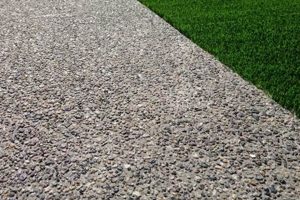
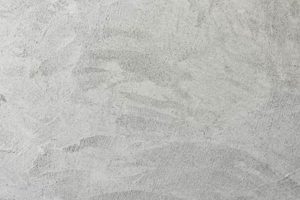
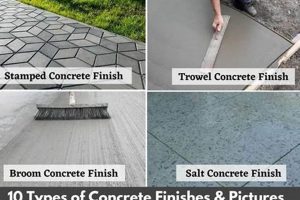
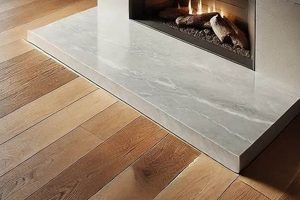
A textured surface achieved on concrete through the use of a broom during the curing process, often combined with integral pigments or topical colorants. This technique yields a slip-resistant and aesthetically varied pavement or flooring. For example, driveways, patios, and walkways can benefit from this treatment, providing both visual appeal and enhanced safety.
The application offers a practical and cost-effective method to enhance both the functionality and appearance of concrete surfaces. The textured finish provides improved traction, reducing the risk of slips and falls, particularly in wet conditions. Furthermore, the integration of color allows for customization and design flexibility, enabling surfaces to complement surrounding landscapes and architectural styles. The practice dates back several decades, gaining popularity for its durability and relatively simple implementation.
This combination of texture and color creates myriad possibilities for enhancing exterior and interior spaces. Subsequent sections will delve into specific applications, installation techniques, maintenance considerations, and design trends associated with this popular concrete finishing method.
Essential Considerations for Textured and Pigmented Concrete
Achieving optimal results requires careful planning and execution. The following guidelines address critical aspects of surface preparation, color selection, and finishing techniques.
Tip 1: Substrate Preparation: Proper cleaning and leveling of the underlying surface are paramount. Remove all debris, oil, and existing coatings to ensure adequate adhesion and a uniform base for the concrete mix.
Tip 2: Color Selection: Choose pigments specifically designed for concrete applications. Consider the UV resistance and long-term colorfastness of the selected colorant to mitigate fading or discoloration over time.
Tip 3: Mixing and Application: Adhere strictly to the manufacturer’s recommendations for mixing proportions of concrete, pigment, and water. Consistent batch mixing is crucial for achieving uniform color distribution throughout the concrete slab.
Tip 4: Timing of Brooming: The timing of the broom finish application is critical. Perform the brooming operation when the concrete has reached the appropriate level of plasticity, typically after excess bleed water has evaporated but before the surface becomes too hard.
Tip 5: Broom Selection and Technique: Select a broom with bristles appropriate for the desired texture. Apply consistent pressure and a uniform sweeping motion to create a consistent and aesthetically pleasing pattern. Experiment with different broom types and techniques on a test slab to determine the optimal approach.
Tip 6: Curing Process: Proper curing is essential for achieving maximum strength and durability. Implement a suitable curing method, such as wet curing or the application of a curing compound, to prevent rapid moisture loss and ensure proper hydration of the cement.
Tip 7: Sealing (Optional): Consider applying a concrete sealer to enhance the color and protect the surface from staining and abrasion. Choose a sealer compatible with the pigment used in the concrete mix.
Adherence to these considerations can significantly enhance the longevity and aesthetic appeal of the treated surface, providing a durable and visually attractive solution for various applications.
The following sections will further explore the maintenance, repair, and long-term performance characteristics of these specialized surfaces.
1. Durability
The durability of concrete surfaces finished with a broom texture and integral or topical colorants is a primary consideration in its selection for various applications. The inherent strength of concrete, coupled with the finishing process and color additives, contributes to its resistance to degradation over time.
- Abrasion Resistance
The textured surface created by brooming enhances abrasion resistance compared to smooth concrete. The ridges and grooves formed by the broom deflect direct impact, reducing surface wear from foot traffic or vehicular movement. For example, in high-traffic walkways or driveways, this textured surface maintains its integrity for a longer period, minimizing the need for frequent repairs or resurfacing.
- Resistance to Freeze-Thaw Cycles
Properly formulated and installed concrete exhibits inherent resistance to freeze-thaw cycles. However, the addition of integral color, when correctly proportioned and dispersed, does not typically compromise this resistance. A well-cured surface further enhances resistance to water penetration, which is crucial in preventing damage from expanding ice. In regions with significant temperature fluctuations, this characteristic is critical for the long-term performance of exterior concrete surfaces.
- Impact Resistance
The compressive strength of the concrete mix, coupled with the broom finish, contributes to impact resistance. While not impervious to damage from heavy impacts, the textured surface can help distribute the force, reducing the likelihood of localized cracking or spalling. For example, a patio constructed with this type of concrete can withstand moderate impacts from dropped objects or furniture movement.
- Resistance to UV Degradation
The selection of UV-stable pigments is crucial for maintaining the color integrity of finished concrete surfaces exposed to prolonged sunlight. High-quality pigments resist fading and discoloration, ensuring the long-term aesthetic appeal of the installation. In outdoor applications, such as pool decks or plazas, the use of UV-resistant pigments preserves the intended color for an extended period.
The overall durability of concrete surfaces finished with a broom texture and color additives is a function of material selection, installation practices, and environmental conditions. When these factors are carefully considered and managed, the resulting surface provides a long-lasting and aesthetically pleasing solution for a wide range of applications.
2. Aesthetics

The aesthetic appeal of textured and pigmented concrete stems from the interplay of surface texture and color, providing a versatile medium for design expression. The broom finish imparts a tactile quality and visual interest that plain concrete lacks. Furthermore, the integration of color allows for a wide range of customization options, enabling surfaces to complement surrounding architectural elements and landscapes. The cause and effect relationship is direct: the choice of broom type and coloring agent directly influences the final appearance. For instance, a coarse-bristled broom creates a more pronounced texture, while the selection of earth-toned pigments can create a natural, understated aesthetic. A contrasting example is the use of vibrant hues and a fine-bristled broom for a more contemporary and polished look. This capability to tailor both texture and color to specific design requirements underscores aesthetics as a crucial component.
Real-world examples highlight the practical significance of this aesthetic control. Commercial spaces, such as outdoor dining areas, often utilize this type of concrete to create inviting and visually appealing environments for patrons. Residential applications include patios, driveways, and walkways, where the ability to match or contrast with existing home exteriors enhances curb appeal and property value. In municipal projects, textured and pigmented concrete finds use in pedestrian plazas and public spaces, contributing to the overall urban design and creating visually stimulating environments for citizens. The absence of aesthetic consideration, by contrast, can result in surfaces that appear utilitarian and uninviting, detracting from the overall ambiance of the space.
In summary, the aesthetic dimension of textured and pigmented concrete is integral to its widespread adoption in diverse applications. The combination of texture and color provides designers with a flexible tool for creating visually appealing and functional surfaces. While durability and cost-effectiveness are important factors, the aesthetic impact often serves as a primary driver in the selection of this material, enabling the creation of spaces that are both practical and visually engaging. Challenges in achieving optimal aesthetics include ensuring consistent color distribution, maintaining uniformity in the brooming pattern, and selecting colors that withstand long-term exposure to environmental factors. Further research and innovation in pigment technology and application techniques can continue to enhance the aesthetic potential of this versatile material.
3. Slip Resistance
The textured surface imparted by a broom finish directly contributes to enhanced slip resistance in concrete pavements and floors. The bristles create a series of ridges and grooves, increasing the coefficient of friction and providing greater traction for pedestrian and vehicular traffic. The cause is clear: the increased surface area and irregularity resulting from the brooming process provide more points of contact, reducing the likelihood of slipping, particularly in wet or oily conditions. The magnitude of the brooms effect depends on bristle coarseness and the applied pressure, variables that should be carefully considered to achieve the necessary safety threshold.
Slip resistance is a critical performance characteristic, particularly in areas prone to moisture or where pedestrian safety is a paramount concern. Examples include pool decks, sidewalks, driveways, and commercial entrances. In these settings, the broom finish provides a practical and cost-effective means of minimizing slip-and-fall accidents. The practical significance lies in the reduction of liability and the creation of safer environments for users. Compliance with safety standards and regulations often necessitates the incorporation of slip-resistant surfaces, making this finishing technique a common and readily available solution. For example, many building codes require a minimum coefficient of friction for exterior walkways, easily met by broom-finished concrete.
In summary, the broom finish enhances safety by improving traction on concrete surfaces. Its widespread adoption in both residential and commercial settings reflects its proven effectiveness in mitigating slip hazards. While color additives may enhance aesthetics, they do not directly contribute to slip resistance, making the texture provided by the brooming process the primary factor in achieving this crucial safety feature. Challenges associated with maintaining slip resistance include wear and tear over time, necessitating periodic cleaning and potential reapplication of sealants to preserve the integrity of the textured surface.
4. Cost-Effectiveness
The economic advantages associated with textured and pigmented concrete contribute significantly to its widespread adoption in diverse construction and landscaping projects. An analysis of the material costs, installation expenses, and long-term maintenance requirements reveals its competitive positioning compared to alternative surfacing solutions.
- Initial Material Costs
The base materials required for this type of concrete cement, aggregate, and pigments are generally readily available and relatively inexpensive. While specialized pigments can increase the initial material expenditure, the overall cost remains competitive compared to materials like natural stone or pre-fabricated pavers. For example, the cost per square foot of concrete with integral color is often significantly less than that of installing a comparable area of flagstone.
- Installation Labor
The installation process, while requiring skilled labor, is relatively straightforward. The brooming technique is a simple and efficient method for creating a textured surface, minimizing the need for specialized equipment or extensive labor hours. Compared to more complex paving systems that require meticulous placement and alignment, the installation of textured and pigmented concrete can be completed more quickly and with lower labor costs. A crew can typically install a substantial area of broom-finished concrete in a single day, reducing overall project timelines and associated expenses.
- Reduced Maintenance Requirements
The inherent durability of concrete, coupled with the textured surface, translates to reduced maintenance requirements over the lifespan of the installation. The textured surface is less prone to showing scratches and blemishes compared to smooth surfaces, minimizing the need for frequent cleaning or resurfacing. While periodic sealing may be recommended to enhance color retention and protect against staining, the overall maintenance costs remain relatively low compared to alternative materials such as wood decking or asphalt paving, which require more frequent treatments and repairs.
- Longevity and Life Cycle Cost
The long lifespan of textured and pigmented concrete contributes to its overall cost-effectiveness. With proper installation and maintenance, these surfaces can last for decades, minimizing the need for replacement or major repairs. When considering the entire life cycle cost, including initial investment, maintenance expenses, and replacement costs, textured and pigmented concrete often proves to be a more economical option compared to materials with shorter lifespans or higher maintenance demands. For instance, a concrete driveway can provide reliable service for 20 to 30 years with minimal upkeep, while an asphalt driveway may require resurfacing every 10 to 15 years.
The cumulative effect of these factors positions textured and pigmented concrete as a cost-effective solution for a wide range of applications. From residential patios and walkways to commercial parking lots and public spaces, the combination of affordability, durability, and low maintenance requirements makes it an attractive choice for projects with budgetary constraints. A comparative cost analysis often reveals that this type of concrete offers a favorable balance between upfront investment and long-term performance, providing a sustainable and economical surfacing solution.
5. Installation Technique

The successful application of a broom finish to colored concrete relies heavily on precise installation techniques. These techniques govern the ultimate appearance, durability, and functionality of the finished surface. Deviations from established best practices can result in aesthetic flaws, structural weaknesses, and premature degradation.
- Subgrade Preparation and Concrete Placement
The foundation upon which the concrete is poured is paramount. A properly compacted and graded subgrade ensures uniform support and prevents settling, which can lead to cracking. The concrete mix itself must be carefully proportioned and thoroughly mixed to ensure consistent color distribution and workability. Improper subgrade preparation or poorly mixed concrete will negatively affect the final product. For example, inadequate compaction beneath a driveway will invariably lead to cracking under vehicular load, regardless of the surface finish.
- Timing of the Broom Finish Application
The timing of the brooming process is a critical determinant of the final texture. The concrete must have reached a specific level of plasticity, firm enough to retain the broom’s impression but not so hard that it resists texturing. Applying the broom too early results in a smeared or indistinct finish, while applying it too late makes it difficult to achieve a uniform texture. Experienced finishers understand this timing through tactile assessment, gauging the concrete’s responsiveness to the broom. This is unlike other surface treatments such as stamping or exposed aggregate, the brooming timing has a smaller window.
- Broom Selection and Technique
The choice of broom, bristle stiffness, and sweeping technique significantly influence the texture. A coarse-bristled broom creates a more pronounced texture, while a fine-bristled broom produces a smoother finish. The angle and pressure applied during sweeping determine the uniformity and directionality of the texture. Inconsistent pressure or an uneven sweeping motion will result in a visually flawed surface. It is necessary to consistently overlap each broom stroke.
- Curing Practices
Proper curing is essential for achieving maximum strength and durability. Controlled hydration of the cement is crucial, particularly during the initial curing stages. Inadequate curing leads to surface cracking, dusting, and reduced strength. Employing appropriate curing methods, such as wet curing or the application of a curing compound, is critical to preventing moisture loss and ensuring proper hydration. This practice ensures the longevity of the finished product and should not be overlooked.
These interconnected elements of the installation technique dictate the quality and longevity of broom finished colored concrete. While aesthetic considerations are important, the underlying structural integrity and durability are directly tied to adherence to established best practices during the installation process. Omission of any of these key facets compromises the integrity of the finished product. The end result is a lasting surface that showcases both visual and functional strengths.
6. Maintenance

The long-term performance and aesthetic appeal of textured and pigmented concrete surfaces are intrinsically linked to diligent maintenance practices. The textured surface, while inherently durable, is subject to the accumulation of dirt, debris, and environmental contaminants. The colored component, whether integral or topical, can fade or discolor over time due to UV exposure, abrasion, or chemical attack. Thus, a consistent and appropriate maintenance regimen is essential to preserve the integrity and visual characteristics of the installation.
Effective maintenance strategies encompass several key elements. Regular cleaning, typically involving pressure washing or scrubbing with mild detergents, removes accumulated dirt and prevents staining. Sealing, whether initially applied or reapplied periodically, provides a protective barrier against moisture penetration, chemical spills, and UV degradation. Prompt repair of cracks or spalls prevents further deterioration and maintains the structural integrity of the surface. For example, neglecting to clean a broom-finished colored concrete patio can lead to the growth of mold and mildew, diminishing its aesthetic appeal and potentially creating a slip hazard. Similarly, failure to reseal a colored concrete driveway can result in fading and discoloration due to exposure to sunlight and automotive fluids.
In conclusion, the relationship between maintenance and the longevity of textured and pigmented concrete is undeniable. While the initial installation quality is crucial, sustained performance depends on the implementation of appropriate maintenance protocols. Overlooking this aspect can lead to premature degradation, diminished aesthetic appeal, and increased long-term costs. Challenges in maintaining these surfaces often involve balancing the need for effective cleaning with the avoidance of harsh chemicals that could damage the color or texture. Future research and development in maintenance products and techniques can further enhance the durability and aesthetic preservation of these versatile surfaces.
Frequently Asked Questions
This section addresses common inquiries regarding the properties, applications, and maintenance of concrete surfaces finished with a broom texture and integral or topical colorants. The information provided aims to clarify prevalent misconceptions and offer guidance for optimal utilization.
Question 1: Is broom finish colored concrete suitable for high-traffic areas?
Yes, provided the concrete mix is properly designed and installed. The textured surface offers enhanced slip resistance, making it appropriate for pedestrian walkways, driveways, and patios. However, high-traffic areas may necessitate more frequent cleaning and sealing to maintain aesthetic appeal and prevent abrasion.
Question 2: How is the color incorporated into broom finish concrete?
Color can be introduced either integrally, by adding pigments to the concrete mix before placement, or topically, by applying stains or dyes to the surface after curing. Integral color offers more uniform and long-lasting coloration, while topical applications provide greater design flexibility and the potential for future color changes.
Question 3: Does broom finish affect the durability of colored concrete?
The broom finish itself does not negatively impact durability. In fact, the textured surface can improve abrasion resistance by distributing wear. However, improper installation practices, such as inadequate curing, can compromise the concrete’s overall strength and longevity.
Question 4: What maintenance is required for broom finish colored concrete?
Routine maintenance includes regular cleaning to remove dirt and debris. Periodic sealing is recommended to protect the color from fading and to enhance resistance to staining and moisture penetration. Prompt repair of cracks or spalls is essential to prevent further deterioration.
Question 5: Can broom finish colored concrete be used in cold climates?
Yes, provided appropriate measures are taken to protect the concrete from freeze-thaw damage. These measures include proper mix design, adequate drainage, and the use of air-entraining admixtures. Sealing the surface can also help prevent water penetration and reduce the risk of cracking.
Question 6: How does the cost of broom finish colored concrete compare to other paving options?
The cost is generally competitive with other paving materials such as asphalt and pavers. While specialized pigments can increase the initial material cost, the relatively low installation expenses and long lifespan make it a cost-effective option over the long term.
These answers address fundamental considerations related to broom finished colored concrete. Proper planning, installation, and maintenance are crucial for achieving optimal results and ensuring the longevity of the finished surface.
The subsequent section will delve into advanced applications and design considerations for broom finished colored concrete.
Conclusion
This exploration has elucidated the multifaceted nature of broom finish colored concrete, detailing its composition, installation, performance characteristics, and maintenance requirements. The combination of texture and pigmentation offers a versatile and cost-effective solution for a wide range of applications, from residential pavements to commercial spaces. The understanding of proper techniques is paramount for achieving the desired aesthetic and ensuring long-term durability.
The future of this material lies in continued innovation in pigment technology, installation methods, and sustainable practices. As building codes evolve and environmental consciousness grows, it is imperative to stay abreast of best practices and emerging trends in order to maximize the potential of broom finish colored concrete as a viable and enduring surfacing solution. Further research and diligent application of existing knowledge will solidify its role in the built environment.