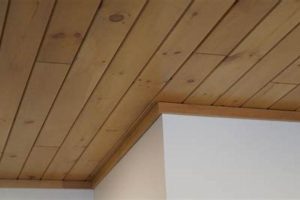
A milled piece of lumber, typically of high quality, used for interior trim and decorative applications defines a key element in interior design. This material contributes significantly to the aesthetic appeal and functional refinement of a space, such as baseboards, door casings, window trim, and crown molding. Consider the visual impact of meticulously crafted trim around a doorway, immediately elevating the perceived quality of the room.
The strategic employment of this material offers numerous advantages. It enhances the visual continuity throughout a building, protects wall surfaces from damage, and conceals construction gaps. Historically, the selection and installation of this lumber were considered hallmarks of skilled craftsmanship, reflecting the attention to detail invested in creating a refined environment. Its presence denotes a higher standard of construction and contributes to property value.
Understanding the characteristics and proper application of this fundamental element is crucial when planning interior design projects. The selection criteria, installation techniques, and available material types influence the overall outcome. Therefore, further discussion will focus on specifying the correct type of material, achieving a professional installation, and exploring the diverse range of available options for maximizing its impact.
Finish Board Application Tips
The following guidance aims to assist in selecting, handling, and installing interior trim to achieve a high-quality, lasting result. Adherence to these principles will contribute to an aesthetically pleasing and structurally sound outcome.
Tip 1: Acclimatize the Material: Prior to installation, store the material within the environment it will occupy for a period of several days. This allows the lumber to adjust to the ambient temperature and humidity, minimizing expansion and contraction after installation and mitigating potential joint gaps.
Tip 2: Proper Material Selection: Choose a suitable lumber species based on the intended application, desired aesthetic, and susceptibility to moisture. For painted trim, a less expensive, paint-grade option may suffice. For stained or clear-coated trim, select a higher-grade lumber with attractive grain patterns.
Tip 3: Miter Saw Accuracy: Ensure that the miter saw blade is properly calibrated and sharpened to create clean, precise cuts. Accurate miters are crucial for seamless joints, particularly in corner applications and complex trim profiles.
Tip 4: Secure Fastening: Utilize appropriate fasteners for the lumber species and the substrate to which it is being attached. Consider the use of trim head screws or finish nails, and pre-drilling pilot holes to prevent splitting the wood, especially when working near the edge of the board.
Tip 5: Employ Wood Filler Judiciously: Fill nail holes and minor imperfections with a color-matched wood filler or putty. Allow the filler to dry completely before sanding smooth to achieve a consistent surface for finishing.
Tip 6: Sanding and Preparation: Sand the material smooth with progressively finer grits of sandpaper to remove imperfections and create a receptive surface for paint or stain. Thoroughly remove sanding dust before applying any finish.
Tip 7: Consistent Finish Application: Apply paint or stain evenly, following the manufacturer’s instructions for application techniques and drying times. Multiple thin coats are generally preferable to a single thick coat, minimizing runs and drips.
Employing these techniques ensures a professional-grade result, enhancing the visual appeal and longevity of interior trim installations. Careful attention to detail throughout the process contributes to a durable and aesthetically pleasing outcome.
The following sections will address troubleshooting common issues encountered during installation and explore advanced techniques for achieving custom trim profiles.
1. Material Selection

Material selection constitutes a foundational element in determining the final quality and longevity of interior trim applications. The inherent properties of the chosen lumber directly influence the aesthetic outcome, dimensional stability, and resistance to wear and tear. Careful consideration of these factors is paramount for achieving a successful installation.
- Species Characteristics
Different wood species possess varying degrees of hardness, grain patterns, and natural resistance to decay. Softwoods like pine and fir are often chosen for painted trim due to their affordability and ease of machining. Hardwoods, such as oak and maple, are favored for stained or clear-coated applications where the natural grain is desired. Selecting a species appropriate for the intended environment, considering factors like humidity and potential for impact, is critical.
- Grade and Quality
Lumber grades indicate the presence and frequency of knots, blemishes, and other imperfections. Higher grades, such as “select” or “clear,” exhibit fewer defects and are suitable for applications where a pristine appearance is required. Lower grades, while more economical, may necessitate additional preparation and patching. The trade-off between cost and visual quality must be carefully evaluated based on the specific project requirements.
- Dimensional Stability
Wood is a hygroscopic material, meaning it absorbs and releases moisture from the surrounding environment. This can lead to expansion and contraction, potentially causing gaps or warping in installed trim. Choosing a species known for its dimensional stability, such as mahogany or cedar, and properly acclimatizing the lumber to the jobsite conditions can mitigate these issues.
- Cost and Availability
The cost of different lumber species and grades can vary significantly based on regional availability and market demand. Considering the project budget and sourcing options is essential when making material selections. Exploring alternative materials, such as engineered wood products or composite trim, may be necessary to balance cost considerations with performance requirements.
The intertwined relationship between these facets highlights the significance of informed material selection in interior trim projects. The judicious choice of species, grade, and consideration of dimensional stability and cost contribute directly to the overall quality, longevity, and aesthetic appeal of the installation. Ignoring these factors can lead to premature failure, increased maintenance requirements, and a diminished visual impact.
2. Profile Design
Profile design, as it relates to interior trim, directly dictates the aesthetic character and functional integration of this element within a space. The chosen profile encompassing the shape, dimensions, and ornamentation of the trim exerts a considerable influence on the perceived style, from traditional to contemporary. A complex, deeply molded profile evokes a sense of formality and historical precedent, while a simple, streamlined design aligns with modern minimalist aesthetics. The profile selection determines the visual weight and presence of the trim, impacting how it interacts with adjacent surfaces like walls, ceilings, and flooring. Incorrect profile selection can result in visual disharmony, detracting from the overall design intent. Consider the stark contrast between installing ornate crown molding in a modern loft apartment versus using simple, flat trim; the former would appear incongruous, while the latter would reinforce the design’s clean lines.
Further, profile design influences the functional aspects of interior trim. Baseboards, for instance, protect the wall from impact and conceal flooring edges, but their profile determines their effectiveness in both roles. A taller, more robust baseboard offers greater protection and visual grounding, while a smaller profile provides a more subtle transition. Door and window casings perform similar functions, framing openings and sealing gaps. Intricate profiles can accumulate dust and require more frequent cleaning, highlighting the need to balance aesthetic appeal with practical maintenance considerations. The availability of pre-manufactured profiles offers a cost-effective solution for many projects, but custom-designed profiles allow for precise control over the aesthetic and functional characteristics of the trim. A custom profile might be necessary to match existing historical trim details or to achieve a specific design vision.
In summary, profile design is not merely an aesthetic choice but a critical determinant of both the visual impact and functional performance of interior trim. Selecting an appropriate profile requires a comprehensive understanding of architectural styles, material properties, and installation techniques. The selection process involves carefully balancing aesthetic preferences with practical considerations such as cost, maintenance, and compatibility with the surrounding environment. A well-considered profile enhances the overall design cohesiveness, while a poorly chosen profile can undermine the aesthetic integrity of the space.
3. Installation Technique

The method of installation directly determines the longevity, aesthetic quality, and structural integrity of interior trim. Proper technique mitigates potential issues such as warping, cracking, and joint separation, ensuring the lasting performance of this critical element. Adherence to established best practices is paramount.
- Substrate Preparation
The condition of the substrate to which the material is attached directly impacts the success of the installation. Uneven or improperly prepared surfaces can lead to uneven trim lines and potential structural weaknesses. Walls must be plumb and level, and existing imperfections should be addressed prior to installation. For example, applying shims behind the material can compensate for minor wall irregularities, ensuring a flush and stable fit. Failure to prepare the substrate adequately compromises the finished appearance and long-term stability.
- Fastening Methods
The selection and application of appropriate fasteners are crucial for securing trim. Nail guns, trim screws, and adhesives each offer distinct advantages and disadvantages depending on the material, substrate, and installation requirements. Over-driving nails can damage the surface, while insufficient fastening can lead to movement and eventual separation. Consider the use of trim head screws for increased holding power in areas subject to stress. The correct fastener and technique are essential for preventing unsightly gaps and maintaining structural integrity.
- Miter Joint Execution
Precise miter joints are essential for creating seamless transitions at corners and angles. Accurate cuts, achieved through proper use of a miter saw, are paramount. Gaps in miter joints detract from the visual appeal and indicate substandard workmanship. Employing techniques such as back-cutting can ensure a tighter fit, and the use of wood glue reinforces the joint and prevents future separation. The execution of clean, tight miter joints is a hallmark of skilled trim carpentry.
- Coping Techniques
Coping is an alternative to mitering for inside corners, particularly in situations where walls are not perfectly square. This technique involves shaping the end of one piece of trim to match the profile of the adjacent piece, creating a tight, interlocking fit. Coping accommodates slight variations in wall angles, resulting in a more visually appealing and structurally sound connection. Mastering coping techniques is crucial for achieving professional-quality results in challenging installations.
The successful application of interior trim relies heavily on meticulous installation practices. Addressing substrate irregularities, employing appropriate fastening methods, executing precise miter joints, and utilizing coping techniques are all essential components of a high-quality installation. The integration of these techniques ensures both the aesthetic appeal and structural integrity of the finished product, enhancing the overall value and longevity of the space.
4. Surface Preparation

Surface preparation constitutes a critical phase in the application of interior trim, directly influencing the adhesion, uniformity, and longevity of any subsequently applied finish. The condition of the lumber’s surface acts as a primary determinant of the final aesthetic outcome. A poorly prepared surface, characterized by imperfections, mill marks, or contaminants, will invariably compromise the finish quality, regardless of the skill employed in its application. For instance, residual mill glaze on the lumber can inhibit the penetration of stain, resulting in blotchy and uneven color absorption. Similarly, sanding marks left from coarse-grit sandpaper will be magnified by the finish, creating a textured appearance rather than a smooth, polished surface. Therefore, meticulous surface preparation is not merely a preliminary step but an integral component of the overall finishing process.
Practical applications of appropriate surface preparation techniques yield tangible benefits. Sanding with progressively finer grits of sandpaper, typically culminating in 220-grit or finer, removes imperfections and creates a receptive surface for both paint and stain. Thorough dusting, achieved with tack cloths or compressed air, eliminates particulate matter that would otherwise become embedded in the finish. Priming, particularly when using paint, seals the lumber and provides a uniform base for the topcoat, enhancing adhesion and color consistency. In the absence of proper surface preparation, issues such as peeling paint, cracking varnish, and uneven stain absorption are likely to occur, necessitating costly repairs or complete refinishing. Real-world examples abound where improperly prepared surfaces have led to premature finish failure, underscoring the economic and practical significance of this step.
In summary, the relationship between surface preparation and the final quality of interior trim is one of direct cause and effect. The investment of time and effort in meticulous surface preparation translates directly into a superior finish, characterized by enhanced adhesion, uniformity, and durability. While challenges such as time constraints and the perceived lack of importance may exist, prioritizing surface preparation is essential for achieving professional-quality results and maximizing the longevity of the interior trim installation. This understanding aligns with the broader theme of meticulous craftsmanship in interior design, where attention to detail at every stage contributes to a cohesive and aesthetically pleasing outcome.
5. Finishing Application
The finishing application represents the culminating stage in the utilization of milled lumber for interior trim, directly impacting its aesthetic appeal, protective qualities, and overall longevity. This process entails the application of coatings such as paint, stain, varnish, or lacquer, designed to enhance the materials appearance, provide a protective barrier against environmental factors, and impart specific functional characteristics. The selection of an appropriate finishing application is intrinsically linked to the inherent properties of the underlying wood, its intended use, and the desired aesthetic outcome. For instance, staining and sealing clear, select-grade lumber emphasizes its natural grain patterns, while priming and painting paint-grade lumber provides a uniform, opaque surface, concealing imperfections and protecting against moisture intrusion. A failure to properly execute this stage can negate the benefits of careful material selection and installation, resulting in premature degradation and a compromised aesthetic.
Practical examples demonstrate the critical relationship between the finishing application and the performance of interior trim. Consider exterior-facing trim subjected to UV radiation and moisture exposure. A clear varnish, lacking UV inhibitors, will quickly degrade, leading to cracking, peeling, and discoloration, ultimately compromising the woods integrity. Conversely, an exterior-grade paint, specifically formulated to withstand environmental stressors, will provide superior protection and maintain its aesthetic appearance for a prolonged period. Similarly, interior trim in high-traffic areas, such as baseboards, benefits from a durable, scratch-resistant finish, such as polyurethane, which protects the wood from abrasion and impact damage. The choice of finish directly influences the material’s resistance to wear and tear, thereby extending its lifespan and reducing the need for frequent maintenance or replacement.
In summary, the finishing application is not merely a cosmetic addition but an essential protective measure that directly influences the durability and aesthetic longevity of interior trim. Understanding the properties of different finishes, their suitability for specific applications, and the proper application techniques are crucial for achieving a professional-quality result. While challenges such as selecting the appropriate finish and applying it evenly may arise, prioritizing this final stage is essential for maximizing the investment in both the lumber and its installation, contributing to a cohesive and long-lasting interior design.
Frequently Asked Questions About Interior Trim
The following questions address common inquiries and misconceptions regarding the selection, installation, and maintenance of interior trim. The responses provide concise and informative guidance based on industry best practices.
Question 1: What constitutes “finish board” and how does it differ from construction lumber?
Finish board refers to lumber specifically milled and graded for interior decorative applications. It typically exhibits fewer imperfections, possesses a smoother surface, and is available in more refined profiles compared to construction lumber, which prioritizes structural performance over aesthetics.
Question 2: Is acclimation of “finish board” truly necessary before installation?
Yes, acclimation is crucial. Storing the material in the installation environment for several days allows it to adjust to local temperature and humidity levels, minimizing expansion and contraction after installation, thereby preventing unsightly gaps or warping.
Question 3: What is the recommended method for attaching “finish board” to drywall?
A combination of construction adhesive and finish nails or trim screws is generally recommended. The adhesive provides a strong initial bond, while the fasteners secure the board and allow the adhesive to cure properly. Pre-drilling pilot holes can prevent splitting, especially near the edges.
Question 4: How should one address nail holes and minor imperfections in “finish board” prior to finishing?
A color-matched wood filler or putty should be used to fill nail holes and imperfections. The filler must be allowed to dry completely before sanding smooth. Overfilling is preferable, as the excess can be easily sanded flush with the surrounding surface.
Question 5: What are the common causes of uneven stain absorption on “finish board”?
Uneven stain absorption can result from variations in wood density, residual mill glaze, or inadequate surface preparation. Proper sanding and the application of a wood conditioner can mitigate these issues, promoting uniform stain penetration.
Question 6: Is it necessary to prime “finish board” before painting?
Priming is highly recommended. It seals the wood, provides a uniform base for the paint, enhances adhesion, and improves the color consistency of the topcoat. This is particularly important when painting knotty woods or using light-colored paints.
These answers provide a foundational understanding of key considerations related to interior trim. Adhering to these guidelines will contribute to a professional and lasting installation.
The following section will explore advanced techniques for achieving custom trim profiles and addressing complex installation challenges.
Conclusion Regarding Finish Board
This exploration has illuminated the multifaceted nature of finish board, extending beyond a simple building material. The discussion encompassed material selection, profile design, installation techniques, surface preparation, and finishing applications. Each facet was presented as a critical determinant of the material’s aesthetic contribution, durability, and long-term performance within an interior environment.
The effective utilization of finish board requires a comprehensive understanding of its properties, proper application methodologies, and an appreciation for its role in enhancing architectural spaces. By prioritizing careful planning and execution, designers and builders can maximize the value and impact of this fundamental element, contributing to enduring and aesthetically pleasing results. Further research and adherence to industry best practices remain essential for continued innovation and improvement in this field.