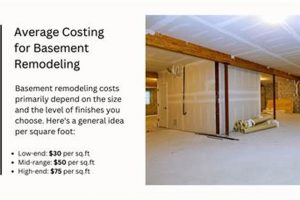
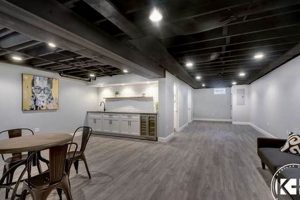
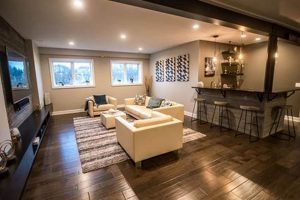
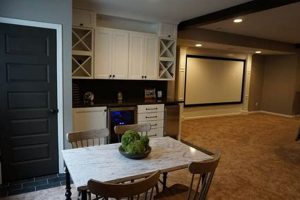
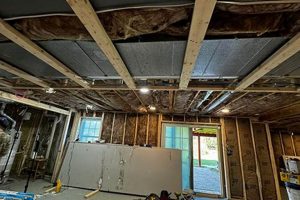
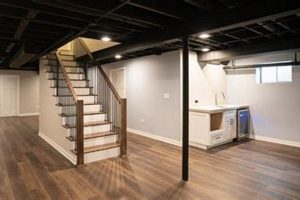
The concept involves transforming an otherwise unused lower level into a dedicated entertainment and social space, typically equipped with counter seating, beverage storage, and preparation areas. Such spaces often include features like sinks, refrigerators, and specialized cabinetry for storing glassware and liquor. The construction necessitates adherence to building codes and may involve electrical, plumbing, and structural modifications to the existing basement.
Developing such a space can significantly enhance a property’s market value and provide homeowners with a unique venue for hosting gatherings. Historically, home bars have been associated with leisure and entertainment, evolving from simple drink cabinets to elaborate, fully functional areas within a residence. A dedicated space fosters social interaction and offers a customized environment tailored to individual preferences for dcor, lighting, and entertainment systems.
The subsequent discussion will address key considerations for designing and constructing such a space, including spatial planning, material selection, cost estimation, and regulatory compliance. Emphasis will be placed on maximizing functionality and aesthetic appeal while adhering to sound construction practices.
Design and Construction Considerations
The following recommendations aim to assist in the effective design and construction of a functional and aesthetically pleasing entertainment area within a home’s lower level. These insights address critical planning and execution aspects to ensure a successful transformation.
Tip 1: Spatial Optimization: Evaluate the existing floor plan to maximize usable area. Strategic placement of the wet bar, seating, and recreational zones prevents overcrowding and ensures comfortable circulation. Consider the integration of existing structural elements like support columns into the overall design.
Tip 2: Plumbing and Electrical Integration: Precise planning for plumbing and electrical systems is paramount. Ensure adequate water supply and drainage for sinks and dishwashers. Sufficient electrical outlets and dedicated circuits for appliances, lighting, and entertainment systems are essential for safe and reliable operation.
Tip 3: Moisture Management: Basements are prone to moisture issues. Implement a robust waterproofing system, including vapor barriers and proper ventilation, to prevent mold growth and damage to building materials. Consider a dehumidification system to maintain optimal humidity levels.
Tip 4: Soundproofing Considerations: Minimize noise transmission to upper levels of the house. Incorporate soundproofing materials in walls, ceilings, and flooring. Consider acoustic panels to improve the sound quality within the entertainment space.
Tip 5: Code Compliance: Adherence to local building codes is mandatory. Obtain necessary permits and ensure that all construction meets safety and structural requirements. Pay particular attention to egress windows, fire safety, and electrical code compliance.
Tip 6: Material Selection: Choose durable and moisture-resistant materials suitable for basement environments. Opt for flooring, cabinetry, and countertops that can withstand potential water exposure. Select finishes that are easy to clean and maintain.
Tip 7: Lighting Design: A well-designed lighting scheme enhances the ambiance and functionality of the space. Incorporate a combination of ambient, task, and accent lighting to create a welcoming and versatile environment. Consider dimming controls to adjust lighting levels for different activities.
By prioritizing these elements, a homeowner can effectively create a space that not only adds value to the property but also provides a functional and enjoyable environment for social gatherings and entertainment.
The subsequent section will elaborate on the potential return on investment associated with this type of home improvement, exploring both the tangible and intangible benefits.
1. Planning

Comprehensive planning is foundational to the successful creation of a dedicated entertainment area within a home’s lower level. This preliminary stage dictates the functionality, aesthetics, and long-term viability of the finished space. Inadequate preparation frequently results in cost overruns, design flaws, and code violations.
- Spatial Layout and Functionality
Careful consideration must be given to the intended use of the space and the flow of traffic. Determining the placement of the wet bar, seating arrangements, and recreational areas directly impacts usability. For instance, a poorly planned layout may result in insufficient counter space or inadequate room for guests to move comfortably. Examples include creating zones for different activities a social area near the bar, a quieter area for conversation, and a game area separate from both. Proper layout enhances the enjoyment of the area.
- Budget Allocation and Cost Estimation
Establishing a realistic budget is critical to preventing financial strain and project abandonment. Detailed cost estimates encompassing materials, labor, permits, and contingency funds must be developed. Overlooking hidden expenses such as electrical upgrades or plumbing modifications can lead to budget overruns. Historical data from similar projects, along with contractor quotes, provides a solid foundation for cost estimation.
- Regulatory Compliance and Permitting
Adherence to local building codes and permit requirements is non-negotiable. Ignorance of regulations pertaining to egress windows, fire safety, and electrical systems can result in costly rework and legal penalties. Proactive engagement with local building officials ensures that the project meets all necessary standards. Failure to obtain required permits can also affect insurance coverage.
- Design Aesthetics and Material Selection
The selection of materials and the overall design aesthetic should align with the homeowner’s preferences and the existing architectural style of the house. Factors such as durability, maintenance requirements, and resistance to moisture are paramount in a basement environment. A cohesive design enhances the visual appeal and perceived value of the finished area.
These elements underscore the central role of upfront planning. The subsequent phases of construction rely heavily on decisions made during this stage. Diligent planning reduces risks, minimizes unforeseen challenges, and ultimately contributes to the successful execution of a functional and aesthetically pleasing entertainment space.
2. Plumbing

Plumbing represents a critical infrastructure component for a functional entertainment area in a converted lower level. Its presence directly enables essential features such as a wet bar sink, dishwasher, and potentially a small bathroom. The absence of adequate plumbing limits design options and functionality, transforming the area into a less versatile space. Direct integration involves extending existing water supply and drainage lines, often necessitating modifications to the home’s main plumbing system. Proper planning is crucial to avoid low water pressure or inadequate drainage, impacting usability. An incorrectly installed system can cause water damage and mold growth.
Practical applications of plumbing in this context extend beyond basic functionality. For example, a well-designed plumbing system incorporates features like backflow preventers to safeguard the potable water supply and properly vented drain lines to prevent sewer gas from entering the living space. Another consideration is the material selection for the pipes; using materials compatible with existing plumbing minimizes the risk of corrosion or leaks. The location of the plumbing fixtures should be optimized for ease of use and maintenance, with accessible shut-off valves for repairs. Installation needs to be entrusted to qualified plumbing professionals, given that it involves handling complex systems.
In summary, a robust plumbing setup ensures hygiene, convenience, and long-term value. Challenges arise from the complexity of integrating new plumbing into existing residential structures, but the benefits justify the effort. Correctly installed plumbing supports the intended function of the entertainment area, enhancing usability and adding to property value, directly linking the design and function.
3. Electrics
Electrical systems are integral to the functionality and safety of any finished basement space, particularly when designed as an entertainment zone. Reliable and well-planned electrical infrastructure enables lighting, appliance operation, and entertainment system support, influencing both utility and ambiance.
- Adequate Power Supply
The capacity of the electrical panel is crucial. A finished area often requires additional circuits to support appliances such as refrigerators, blenders, and entertainment equipment. Overloading existing circuits can lead to breaker trips or, more seriously, electrical fires. Evaluating the current electrical load and upgrading the panel if necessary is paramount. Dedicated circuits for high-draw appliances are standard practice.
- Lighting Design and Implementation
Illumination contributes significantly to the ambiance and utility of the area. A layered lighting scheme encompassing ambient, task, and accent lighting is typically employed. Recessed lighting provides general illumination, while task lighting illuminates workspaces like the bar counter. Accent lighting highlights architectural features or decorative elements. Dimmer switches offer adjustable lighting levels, enhancing versatility. All lighting installations must conform to electrical code requirements.
- Outlet Placement and Convenience
Strategically positioned electrical outlets facilitate the use of appliances, electronics, and charging devices. Outlets should be placed at convenient locations near seating areas, countertops, and entertainment centers. Ground fault circuit interrupter (GFCI) outlets are mandatory in wet locations such as near sinks to prevent electrical shock. The quantity and location of outlets should align with the intended use of the space to avoid reliance on extension cords.
- Safety and Code Compliance
Compliance with electrical codes is non-negotiable. All electrical work should be performed by licensed electricians who adhere to the National Electrical Code (NEC) and local regulations. Proper grounding, wiring methods, and circuit protection are essential to prevent electrical hazards. Regular inspections ensure the ongoing safety and compliance of the electrical system.
These electrical facets, from power capacity to code compliance, are intertwined, impacting the usability, safety, and long-term value of the finished basement. Strategic electrical planning and professional installation are key to realizing a functional and aesthetically pleasing entertainment space.
4. Materials

Material selection is paramount in the construction of a basement entertainment area, directly affecting its longevity, functionality, and aesthetic appeal. The inherent characteristics of below-grade environments, particularly the potential for moisture exposure, necessitate careful consideration of material properties. Inadequate material choices can lead to structural damage, mold growth, and a diminished lifespan of the finished space. For example, using standard drywall in direct contact with a concrete foundation wall can result in moisture absorption, fostering mold and subsequent deterioration. Conversely, employing moisture-resistant drywall or cement board mitigates this risk, ensuring greater durability and a healthier indoor environment. The selection process is thus a critical determinant of the space’s performance.
Furthermore, the aesthetic requirements of the area necessitate balancing durability with visual appeal. Flooring choices, such as engineered wood or ceramic tile, offer both water resistance and stylistic versatility, unlike solid hardwood which is prone to warping and damage in damp conditions. Cabinetry and countertops should be constructed from materials like marine-grade plywood or solid-surface composites that resist moisture and provide a durable work surface. The integration of these materials must also consider the overall design coherence. For instance, opting for lighter colored, reflective surfaces can enhance the perceived brightness of the space, compensating for the limited natural light typically found in basements. Therefore, careful planning in material choice ensures that it is not only functional but also pleasing to the eye.
In summary, selecting suitable materials for a basement entertainment area involves a complex interplay of performance criteria and aesthetic considerations. Prioritizing moisture resistance, durability, and design compatibility is crucial for creating a space that withstands the unique challenges of the below-grade environment. Sound material selection provides a longer-lasting and more enjoyable living space. This careful approach contributes significantly to the overall value and functionality of the finished space.
5. Lighting

Lighting is an indispensable element in a finished basement bar, directly influencing ambiance, functionality, and perceived spatial volume. Its absence or inadequacy leads to a visually unappealing and functionally limited environment. Illumination strategies must consider the lack of natural light characteristic of below-grade spaces, necessitating a reliance on artificial light sources to mimic or enhance the effects of daylight. For example, a poorly lit space may appear smaller and more claustrophobic, while a well-lit area can feel more expansive and inviting. Furthermore, insufficient lighting compromises the ability to perform tasks such as preparing drinks or cleaning, thus impeding functionality.
Effective lighting design for such an environment involves a layered approach incorporating ambient, task, and accent lighting. Ambient lighting provides overall illumination, establishing a base level of brightness. Recessed lighting or strategically placed ceiling fixtures are typical sources. Task lighting focuses on specific work areas, such as the bar counter or a gaming table, enhancing visibility and safety. Under-cabinet lighting or adjustable spotlights exemplify this type. Accent lighting highlights architectural features or decorative elements, adding visual interest and depth. The use of dimmers offers flexibility in controlling light intensity, enabling adjustment according to the activity or mood. LED lighting solutions are frequently employed due to their energy efficiency, long lifespan, and versatility in color temperature and intensity.
In conclusion, lighting in a finished basement bar extends beyond mere illumination, performing a critical role in shaping the space’s usability and aesthetic qualities. A carefully considered lighting plan addresses the challenges posed by the below-grade environment and maximizes the potential of the area. Consequently, prioritizing lighting during the design phase translates into a more functional, inviting, and visually appealing space, contributing significantly to the overall success of the project. This critical detail can transform it to an aesthetically pleasing destination.
6. Ventilation

Ventilation plays a pivotal role in maintaining air quality and structural integrity within a finished basement bar. Its significance stems from the inherent characteristics of below-grade environments, where limited natural airflow and potential moisture accumulation can compromise indoor air quality and promote microbial growth. Proper ventilation mitigates these risks, ensuring a habitable and healthy entertainment space.
- Moisture Control and Mold Prevention
Basements are susceptible to moisture intrusion from groundwater, condensation, and leaks. Effective ventilation removes excess humidity, inhibiting mold and mildew growth. Exhaust fans in adjacent bathrooms or cooking areas, ducted to the exterior, help to eliminate moisture generated by these activities. Dehumidifiers, integrated into the ventilation system, further contribute to humidity control, safeguarding the structural integrity of building materials and preventing allergenic contamination.
- Air Quality Management
Basement bars often generate odors from food preparation, beverages, and human occupancy. Mechanical ventilation systems, equipped with air filters, remove pollutants, allergens, and volatile organic compounds (VOCs) from the air. Continuous or intermittent operation of these systems ensures that the air within the space remains fresh and free from contaminants. Regular filter replacement is crucial for maintaining system efficiency and effectiveness.
- Carbon Monoxide Mitigation
If fuel-burning appliances, such as fireplaces or furnaces, are present in or near the basement, adequate ventilation is essential for preventing carbon monoxide accumulation. Carbon monoxide detectors, coupled with proper exhaust systems, provide an added layer of safety. Ensuring that combustion appliances are properly vented to the exterior reduces the risk of carbon monoxide poisoning. Regular maintenance and inspection of these systems are critical for safe operation.
- Building Code Compliance
Local building codes often mandate specific ventilation requirements for finished basements to ensure occupant health and safety. Compliance may involve installing exhaust fans, providing adequate natural ventilation through operable windows, or implementing a whole-house ventilation system. Adherence to these codes is not only legally required but also essential for creating a safe and habitable living space. Failure to comply can result in costly rework and potential health hazards.
These facets highlight the crucial role of ventilation in maintaining a healthy and structurally sound finished basement bar. Proper ventilation extends beyond simple air exchange, encompassing moisture control, air quality management, and carbon monoxide mitigation. Integrating effective ventilation strategies into the design and construction process is essential for creating a comfortable and safe entertainment space. By addressing these considerations, it contributes significantly to a positive usage for the inhabitants.
7. Regulations

Compliance with local building codes and zoning regulations is paramount when constructing a finished basement bar. These regulations govern aspects such as structural integrity, fire safety, egress, electrical and plumbing systems, and permissible uses of the space. Failure to adhere to these regulations can result in construction delays, costly modifications, legal penalties, and potential safety hazards. For example, many municipalities require that finished basements have at least one egress window or door providing a direct escape route to the outside in case of fire. The absence of such an egress can lead to the rejection of building permits and potential liability in the event of an emergency.
Specific regulations vary depending on geographic location and local ordinances. Zoning regulations may restrict the types of activities that can be conducted in a basement, particularly if the space is intended for commercial purposes or the sale of alcoholic beverages. Building codes dictate minimum standards for electrical wiring, plumbing connections, and structural modifications to ensure the safety of occupants. For instance, electrical codes often mandate the use of ground fault circuit interrupter (GFCI) outlets in wet locations, such as near a bar sink, to prevent electrical shock. Plumbing codes may require backflow preventers to protect the potable water supply from contamination. Understanding and complying with these regulations is essential for a safe, legal, and functional finished basement bar.
In summary, adherence to building codes and zoning regulations is not merely a formality but a fundamental requirement for constructing a finished basement bar. These regulations safeguard the safety and well-being of occupants, protect property values, and ensure compliance with local laws. A proactive approach to understanding and complying with these regulations, including obtaining necessary permits and inspections, is crucial for a successful and legally sound project. Failure to consider these aspects at the planning stage can result in significant legal and financial issues down the line.
Frequently Asked Questions
The following addresses common inquiries regarding the design, construction, and regulatory aspects of creating a dedicated entertainment space in a home’s lower level.
Question 1: Is obtaining a building permit mandatory for constructing such a space?
Yes. Local building codes typically require permits for any structural, electrical, or plumbing modifications. Failure to obtain permits may result in fines, legal action, and potential safety hazards.
Question 2: What are the primary considerations regarding moisture control in a basement environment?
Basements are prone to moisture intrusion. Waterproofing the foundation, installing vapor barriers, and ensuring adequate ventilation are essential for preventing mold growth and structural damage.
Question 3: How does plumbing integration impact the design of such a space?
Plumbing requirements dictate the location of sinks, dishwashers, and other water-dependent fixtures. Careful planning is necessary to ensure proper drainage and water supply, impacting the layout and functionality of the area.
Question 4: What electrical considerations are crucial for a basement entertainment area?
Adequate electrical capacity is essential to support lighting, appliances, and entertainment systems. Dedicated circuits, GFCI outlets in wet locations, and compliance with electrical codes are paramount for safety.
Question 5: What materials are suitable for flooring in a basement environment?
Moisture-resistant materials such as ceramic tile, engineered wood, or epoxy coatings are recommended. Solid hardwood flooring is generally not suitable due to its susceptibility to moisture damage.
Question 6: How does ventilation impact the air quality within a finished basement?
Proper ventilation removes excess humidity, odors, and pollutants from the air. Exhaust fans, dehumidifiers, and air filtration systems are essential for maintaining a healthy indoor environment.
These answers represent key aspects to consider when embarking on this type of home improvement project. Careful planning and adherence to building codes are essential for success.
The subsequent segment will explore the potential financial and lifestyle benefits associated with such home improvements.
Conclusion
The preceding exploration of a “finished basement bar” has detailed the multifaceted considerations inherent in its design, construction, and regulatory compliance. Key aspects, from spatial optimization and plumbing integration to electrical safety and material selection, underscore the complexity of transforming an unfinished lower level into a functional and aesthetically pleasing entertainment space. Adherence to building codes and sound construction practices are not optional considerations but rather fundamental requirements for a successful project.
The creation of a “finished basement bar” represents a significant investment that can enhance property value and improve lifestyle. Potential implementers are encouraged to prioritize meticulous planning, engage qualified professionals, and remain vigilant in complying with all applicable regulations. Only through diligent attention to these factors can the realization of a durable, safe, and enjoyable entertainment area be assured.