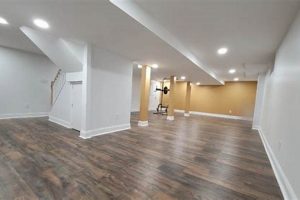
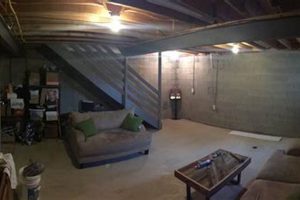
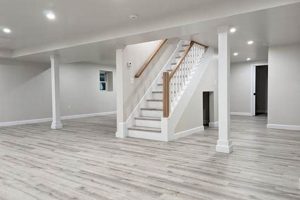
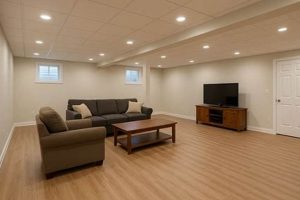
An increasingly popular design choice for lower-level renovations involves leaving the structural elements exposed. This aesthetic typically reveals ductwork, pipes, and joists, creating an industrial or modern look. The practice often involves painting these exposed elements a uniform color, such as black or white, to create a cohesive and visually appealing effect. Lighting fixtures are strategically placed to complement the exposed infrastructure, further enhancing the overall ambiance.
This design approach offers several advantages. It can maximize headroom, which is often a constraint in basements. It also allows for easier access to utilities for maintenance and repairs. Furthermore, it can be a cost-effective alternative to traditional suspended ceilings, reducing material and labor expenses. Historically, this method has been utilized in commercial and industrial spaces, but its adaptation into residential settings reflects a shift towards more utilitarian and visually interesting interior designs. The style provides an opportunity to create a unique aesthetic in a space often relegated to purely functional use.
The following sections will delve into specific considerations for implementing this design choice, including surface preparation, sound mitigation strategies, lighting options, and methods for concealing or accentuating specific utilities. Careful planning and execution are essential to achieving a polished and functional result when adopting this approach to basement finishing.
Tips for a Successful Installation
Implementing an unfinished ceiling design requires meticulous planning and execution to achieve the desired aesthetic and functionality. These tips offer guidance on key considerations during the design and construction process.
Tip 1: Plan for Utility Access: Prioritize accessibility to plumbing, electrical wiring, and HVAC systems. Design the layout to allow for future maintenance and repairs without significant disruption. Consider incorporating access panels or strategically placed pathways.
Tip 2: Sound Dampening Strategies: Address potential noise transmission issues. Consider applying sound-dampening insulation between floor joists or using acoustic panels to minimize sound reverberation within the space. Explore specialized paints designed to reduce sound reflection.
Tip 3: Lighting Design is Critical: Carefully plan the lighting scheme. Integrate a combination of ambient, task, and accent lighting to create visual interest and functionality. Consider track lighting, pendant lights, and recessed lighting to highlight architectural features and illuminate specific areas.
Tip 4: Conceal or Emphasize Strategically: Determine which utilities to conceal and which to highlight. Wrap unsightly pipes with decorative materials or paint them to blend with the overall aesthetic. Conversely, feature attractive ductwork by painting it a contrasting color or adding metallic accents.
Tip 5: Surface Preparation is Essential: Thoroughly clean and prepare all exposed surfaces. Remove dust, debris, and any existing coatings. Apply a primer to ensure proper adhesion of the chosen paint or finish. Consider sandblasting or wire brushing to achieve a consistent texture.
Tip 6: Consider Ceiling Height Limitations: Evaluate the existing ceiling height before committing to this design. In low-ceiling basements, carefully consider the impact of exposed ductwork and pipes. Explore options for rerouting or minimizing these elements to maximize headroom.
Tip 7: Fire Safety Considerations: Ensure that all exposed materials meet local fire codes. Consider applying a fire-retardant coating to wood joists or using fire-resistant drywall to enclose critical areas. Consult with a qualified building inspector to ensure compliance.
By implementing these tips, a functional and aesthetically pleasing result can be achieved, effectively transforming a lower level into a modern and inviting living space.
The following sections will further explore specific design options and material selections to enhance the aesthetic appeal of a renovated basement.
1. Accessibility

In the context of a renovated lower level, accessibility directly influences the long-term maintainability and adaptability of the space. An unfinished ceiling design necessitates careful consideration of the accessibility of essential building systems, including plumbing, electrical wiring, and HVAC ductwork. Unlike traditional suspended ceilings, an exposed design provides immediate visual access to these systems, which facilitates quicker identification and resolution of maintenance issues. Poor planning can result in difficulties accessing these vital components, leading to costly and disruptive repairs down the line. For example, inadequate pathways or obstructions created by furniture placement can impede a plumber’s ability to address a leak in overhead pipes. A well-executed design will incorporate strategically placed access points and clear pathways to ensure future access.
Practical implementation involves designing the space with readily removable panels or sections in areas where frequent access to utilities is anticipated. Furthermore, documenting the precise location of concealed junctions and shut-off valves is crucial for future reference. Employing standardized connection methods and labeling all wiring and piping can significantly reduce the time required for troubleshooting and repairs. A real-world example would be integrating removable soffits to conceal ductwork while allowing for convenient access to dampers and connections. Another strategy includes creating a service corridor along a wall where utilities are concentrated, ensuring unimpeded access for maintenance personnel.
Ultimately, prioritizing accessibility in a lower-level with an exposed ceiling design requires a proactive approach during the planning phase. By incorporating strategies to facilitate inspection, maintenance, and future modifications to building systems, homeowners and building managers can mitigate potential complications and ensure the long-term functionality and value of the renovated space. Neglecting this aspect can lead to increased maintenance costs, disruption of living areas, and potentially compromise the integrity of the structural and mechanical systems.
2. Sound Mitigation

The absence of a traditional suspended ceiling introduces significant acoustic challenges. The exposed joists, ductwork, and concrete foundation walls create an environment conducive to sound reflection and transmission. Impact noise, such as footsteps from the floor above, and airborne noise, including voices and television sounds, can readily propagate throughout the structure. Therefore, effective sound mitigation is a critical component of any well-designed lower-level with an unfinished ceiling. The selection of appropriate sound-absorbing materials and strategic implementation techniques are paramount to creating a comfortable and functional living space. Without proper attention to acoustic control, the renovated area may suffer from excessive reverberation, diminished speech intelligibility, and intrusive noise levels, negatively impacting its usability and overall value.
Practical sound mitigation strategies include installing resilient channels on the ceiling joists to decouple the drywall from the structure, thereby reducing impact noise transmission. Applying sound-dampening insulation, such as mineral wool or fiberglass, between the joists further absorbs airborne sound. Wrapping ductwork with acoustic lagging can minimize noise generated by HVAC systems. In some cases, spray-applied cellulose insulation can effectively dampen sound transmission while also providing thermal insulation. Another approach involves strategically placing acoustic panels or baffles on walls and ceilings to absorb sound waves and reduce reverberation. Furthermore, using dense, soundproof underlayment beneath flooring on the level above can significantly diminish impact noise. A well-designed strategy might integrate several of these methods to achieve optimal acoustic performance.
Sound mitigation is not merely an aesthetic consideration; it directly impacts the comfort, functionality, and market value of the renovated space. Failure to address the acoustic challenges associated with the design can result in a space that is uncomfortable to occupy and less desirable to potential buyers. Successful implementation requires a comprehensive assessment of the existing acoustic conditions, careful selection of appropriate sound-absorbing materials, and meticulous installation techniques. This proactive approach ensures that the lower-level becomes a quiet, comfortable, and functional extension of the home, rather than a source of noise pollution.
3. Lighting Strategy

In the context of exposed overhead structures, a strategic approach to illumination is not merely decorative; it is fundamental to the space’s usability and aesthetic success. The absence of a traditional ceiling necessitates a carefully considered lighting plan to compensate for the lack of a reflective surface. Without strategic illumination, the space risks appearing dark, cavernous, and visually unappealing. The exposed infrastructure, while potentially aesthetically interesting, can cast shadows and create uneven light distribution. Consequently, thoughtful planning is essential to ensure adequate overall brightness, highlight architectural features, and create a comfortable and functional environment. Poorly executed lighting can negate the design’s benefits, resulting in a space that feels unfinished and unwelcoming. For example, relying solely on a single overhead fixture will create harsh shadows and fail to adequately illuminate the perimeter of the space, making it feel smaller and more confining.
Effective strategies involve a layered approach, integrating ambient, task, and accent lighting to achieve balanced and versatile illumination. Ambient lighting provides general illumination, often achieved through recessed fixtures, track lighting, or strategically placed floor lamps. Task lighting focuses on specific areas, such as workstations or reading nooks, using pendant lights, under-cabinet lighting, or adjustable desk lamps. Accent lighting highlights architectural details, exposed ductwork, or artwork, employing spotlights, wall washers, or strategically positioned LED strips. The selection of appropriate fixtures and color temperatures is crucial. Warmer color temperatures create a cozy and inviting atmosphere, while cooler temperatures are more suitable for task-oriented areas. Dimmers provide flexibility, allowing occupants to adjust the lighting levels to suit different activities and moods. Proper spacing and aiming of fixtures are essential to minimize glare and create even illumination.
A well-executed lighting strategy in a lower level with an unfinished overhead structure transforms the space from a potentially dark and uninviting area into a bright, functional, and aesthetically pleasing environment. By carefully considering the interplay between light and shadow, highlighting architectural features, and providing versatile illumination, a strategic approach to lighting becomes a critical element in the overall success of the design. Neglecting this aspect can undermine the potential benefits of the design, resulting in a space that feels incomplete and less usable. Therefore, careful planning, fixture selection, and installation techniques are paramount to achieving a visually appealing and functionally optimized design.
4. Utility Management

Effective utility management is paramount when executing a design featuring exposed overhead structure. The visual impact of exposed mechanical, electrical, and plumbing (MEP) systems significantly affects the overall aesthetic. Poorly managed utilities can detract from the intended design, resulting in a cluttered and visually unappealing space. The selection of materials, routing of conduits and pipes, and the organization of these elements are critical factors. For example, haphazardly arranged ductwork or exposed wiring can undermine the intended industrial or modern aesthetic. Conversely, carefully planned and executed utility installations can enhance the design, contributing to a visually cohesive and functional space. A homeowner might opt to group all electrical conduits along a specific path, painting them the same color as the ceiling joists to create a streamlined appearance.
Beyond aesthetics, utility management directly impacts the functionality and accessibility of MEP systems. Strategic placement of shut-off valves, access panels, and junction boxes facilitates future maintenance and repairs. Concealing less visually appealing components while highlighting more aesthetically pleasing elements requires careful consideration. Utilizing cable trays to neatly organize wiring, wrapping pipes with decorative coverings, or strategically painting ductwork to blend with the surroundings are practical applications. In a residential setting, managing utility placement can allow for increased headroom, especially important in basements where ceiling height is often a limiting factor. For instance, relocating ductwork closer to the subfloor above can maximize vertical space, improving the usability of the lower level. Furthermore, adhering to building codes and safety regulations during utility installations is essential for ensuring the long-term safety and compliance of the renovated space.
In summary, utility management in this context demands a balance between aesthetic considerations, functional requirements, and safety regulations. By thoughtfully planning and executing the installation of MEP systems, homeowners and contractors can achieve a finished space that is both visually appealing and highly functional. Neglecting this aspect can lead to a space that is cluttered, difficult to maintain, and potentially unsafe. A well-managed utility layout enhances the intended design, contributes to the overall value of the property, and ensures the long-term usability of the finished lower level.
5. Surface Preparation

Surface preparation is critically important in achieving a successful outcome. As structural elements and utilities are exposed, the condition of these surfaces directly impacts the aesthetic and longevity of the finished space. Proper preparation ensures optimal adhesion of coatings, enhances visual appeal, and contributes to the overall durability of the design. Neglecting this step can result in premature coating failure, visual imperfections, and increased maintenance requirements.
- Cleaning and Degreasing
The removal of dust, dirt, grease, and other contaminants is fundamental. Existing grime can prevent coatings from properly adhering, leading to peeling or blistering. For example, oil residue on ductwork can repel paint, resulting in an uneven finish. Thorough cleaning with appropriate degreasers ensures a clean substrate for subsequent treatments.
- Rust and Corrosion Removal
Exposed metal elements, such as pipes and ductwork, are susceptible to rust and corrosion. These imperfections not only detract from the visual appeal but also compromise the structural integrity of the components. Methods such as wire brushing, sanding, or chemical treatments are employed to remove rust and prevent its recurrence, providing a stable base for protective coatings.
- Repairing Imperfections
Concrete ceilings often exhibit cracks, spalls, or uneven surfaces. Addressing these imperfections prior to coating is essential for achieving a smooth and uniform finish. Filling cracks with patching compounds and grinding down high spots ensures a consistent surface profile, improving both the aesthetic and the longevity of the coating system.
- Priming
Priming is a crucial step in surface preparation, particularly when dealing with porous materials or varied substrates. Primers create a uniform surface, improving adhesion of the topcoat and providing enhanced corrosion resistance. The selection of an appropriate primer, such as an epoxy primer for metal surfaces, is essential for optimal performance and durability.
The connection between meticulous surface preparation and a successful implementation of an exposed overhead structure is undeniable. While the design emphasizes the raw aesthetics of the building’s infrastructure, it simultaneously demands a high level of attention to detail. Proper surface preparation not only enhances the visual appeal of the finished basement but also contributes to its long-term durability and reduces maintenance requirements.
6. Height Optimization
In the context of lower-level renovations, height optimization is intrinsically linked to the feasibility and success of an exposed overhead structure. The design inherently forgoes the use of a traditional suspended ceiling, a decision primarily driven by the desire to maximize vertical space. Many basements suffer from limited ceiling height, which can make the space feel cramped and uninviting. Employing a strategy to eliminate a dropped ceiling can reclaim several inches, creating a more comfortable and usable environment. Without careful consideration of height, a design may inadvertently exacerbate feelings of confinement, rendering the renovated space less desirable. For example, a basement with a pre-renovation ceiling height of 7 feet might feel significantly more spacious with an exposed design that adds an additional 6 inches of headroom.
Effective height optimization often requires creative problem-solving. Rerouting ductwork or plumbing lines closer to the subfloor above, using low-profile lighting fixtures, and strategically painting exposed structures to create an illusion of greater height are common techniques. The selection of materials and the placement of furnishings should also complement the goal of maximizing vertical space. For instance, choosing lighter paint colors for the ceiling and walls can reflect more light, making the room feel taller. Similarly, selecting low-profile furniture can prevent the space from feeling cluttered and confined. In some instances, structural modifications, such as underpinning the foundation to lower the basement floor, may be necessary to achieve the desired ceiling height, although such measures are typically more costly and complex.
Ultimately, the success of this design is inextricably linked to the effective management of available vertical space. Careful planning and execution are essential to transforming a potentially cramped and uninviting area into a more spacious and functional living environment. Prioritizing height optimization not only enhances the aesthetic appeal of the renovated basement but also significantly improves its usability and market value. Failure to address this critical aspect can negate the benefits of the exposed design, resulting in a space that feels claustrophobic and less desirable.
Frequently Asked Questions
The following addresses common inquiries related to lower-level renovations employing an exposed overhead structure.
Question 1: What are the primary benefits?
The principal advantages include increased headroom, easier access to utilities, and a potentially cost-effective alternative to traditional suspended ceilings. The design also offers unique aesthetic possibilities.
Question 2: Does this design choice limit future renovation options?
Not necessarily. While altering utility locations may be more complex, the open framework provides flexibility in lighting design and decorative elements. Future modifications should consider the existing infrastructure.
Question 3: What are the main acoustic considerations?
Exposed structures lack the sound-dampening properties of traditional ceilings. Sound mitigation strategies, such as insulation and acoustic panels, are essential for minimizing noise transmission and reverberation.
Question 4: What types of lighting are best suited for this style?
A layered approach incorporating ambient, task, and accent lighting is generally recommended. Track lighting, pendant lights, and recessed fixtures are commonly used to create balanced and functional illumination.
Question 5: How is the design maintained and cleaned?
Regular dusting of exposed surfaces is necessary to prevent the accumulation of debris. Sealing or painting exposed elements can simplify cleaning and protect against moisture damage. Access to utilities must be preserved.
Question 6: Is the design suitable for all types of basements?
Suitability depends on several factors, including ceiling height, existing utilities, and budget. Basements with very low ceilings may not benefit significantly, while those with extensive utility systems may require more complex planning.
The key takeaways emphasize the importance of careful planning, attention to detail, and a balanced approach to aesthetics and functionality. Consultation with qualified professionals is recommended.
The following will explore design considerations in greater detail, including specific material selections and installation techniques.
Finished Basement Open Ceiling
The exploration of a finished basement open ceiling design has revealed a multifaceted approach to renovation, demanding a careful equilibrium between aesthetic appeal and pragmatic functionality. Surface preparation, utility management, and height optimization are critical considerations, impacting the space’s usability and long-term value. This design choice necessitates a comprehensive understanding of acoustic principles and the strategic implementation of sound mitigation techniques to ensure occupant comfort. Furthermore, an effective lighting scheme is crucial for maximizing illumination and highlighting architectural features, transforming a potentially dark area into a well-lit, inviting living space.
The decision to implement a finished basement open ceiling should not be taken lightly. It represents a significant investment of time, resources, and careful planning. The ultimate success of this design hinges on a commitment to detail, a thorough understanding of building systems, and a willingness to address the unique challenges inherent in exposed structures. When executed thoughtfully, this design offers a pathway to a more spacious, visually appealing, and functional lower level. The exploration presented serves as a framework for informed decision-making, empowering homeowners and contractors to create spaces that are both aesthetically pleasing and functionally sound.