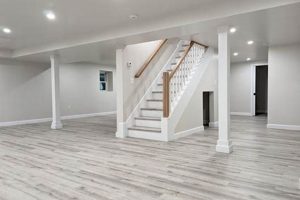
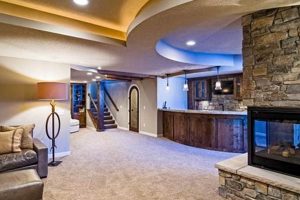
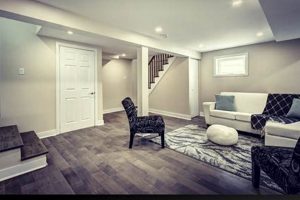
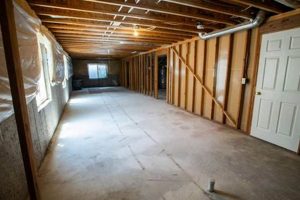
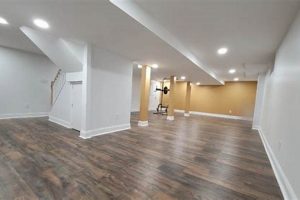
The state of a lower-level spacewhether improved or left in its original conditiongreatly impacts its usability and value. One configuration involves completing the space with flooring, walls, and often a ceiling, transforming it into a more habitable area. In contrast, the other configuration leaves the concrete foundation exposed, often with visible utilities and a rough, unfinished appearance.
The selection between these two options significantly affects property value, living space functionality, and overall homeowner satisfaction. The investment in improving the space can yield increased resale value and expanded living possibilities, such as creating recreation rooms, home offices, or additional bedrooms. Conversely, maintaining the initial, unrefined state often leads to lower costs upfront but limits the functionality and potential return on investment. Historically, this choice has reflected varying homeowner needs, budgets, and priorities regarding long-term property enhancements.
Subsequent sections will delve into the specific advantages and disadvantages of each approach, exploring costs, required permits, potential uses, and long-term maintenance considerations. This will enable informed decision-making about how to optimize the basement space for individual circumstances and property goals.
Careful evaluation is crucial when deciding between an improved or unimproved lower-level space. The following guidelines offer essential insights to inform that decision.
Tip 1: Assess Moisture Levels. Before proceeding with any improvements, conduct thorough moisture testing. High humidity or leaks can compromise materials and promote mold growth, negating any investment in creating a livable space.
Tip 2: Verify Local Building Codes. Local regulations dictate construction requirements for habitable spaces. Ensure compliance with egress window regulations, ceiling height minimums, and fire safety protocols to avoid costly rework.
Tip 3: Evaluate Utility Accessibility. The presence of exposed pipes, wiring, and HVAC systems in an unrefined lower-level space requires careful planning. Consider boxing or concealing these utilities while maintaining easy access for repairs and maintenance.
Tip 4: Determine Intended Use. Align the scope of any improvements with the intended function. A home theater requires soundproofing and dedicated electrical circuits, while a storage area necessitates durable, moisture-resistant materials.
Tip 5: Budget Realistically. Obtaining accurate cost estimates for materials and labor is essential. Account for potential unforeseen expenses, such as structural repairs or plumbing modifications, to avoid budget overruns.
Tip 6: Consider Future Resale Value. While personalization is important, consider how improvements might impact future property value. Neutral color schemes and adaptable layouts appeal to a wider range of potential buyers.
Tip 7: Prioritize Insulation. Proper insulation enhances energy efficiency and reduces heating and cooling costs. Invest in appropriate insulation materials for walls, ceilings, and floors to create a comfortable and energy-efficient environment.
Tip 8: Secure Necessary Permits. Obtain all required building permits before commencing work. Failure to do so can result in fines, construction delays, and potential legal issues during property resale.
Adhering to these guidelines will promote informed decision-making, facilitating the development of a functional and valuable lower-level space tailored to specific needs and budget constraints.
Subsequent discussions will explore specific cost considerations and potential return on investment associated with various lower-level space improvement strategies.
1. Cost Implications

The financial investment required for a lower-level space transformation varies significantly based on the desired level of completion. The decision to leave it in its initial condition, or to improve it greatly impacts immediate expenses and long-term financial considerations.
- Initial Construction Expenses
An unimproved lower-level space typically involves minimal upfront costs, limited to basic structural elements like the foundation and essential utilities. Conversely, improving it necessitates expenses for framing, insulation, drywall, flooring, electrical work, plumbing, and finishing materials. These costs can quickly accumulate, representing a substantial financial commitment.
- Permitting and Inspection Fees
Improvements often require permits and inspections to ensure code compliance. Permit fees vary by municipality and project scope. Unpermitted work can result in fines and necessitate costly corrections during a future property sale. The unimproved lower-level space, if used solely for storage, might avoid permit requirements, although this is location-dependent.
- Maintenance and Repair Costs
An improved lower-level space introduces new maintenance responsibilities. Flooring, drywall, and plumbing systems require periodic repairs. Additionally, the risk of water damage necessitates proactive measures like sump pump maintenance. An unimproved space, while potentially more resilient to minor flooding, may still require foundation maintenance to prevent structural issues.
- Long-Term Value and Return on Investment
Improvements can increase property value and attract potential buyers. A well-designed and functional lower-level space expands the usable living area. However, the return on investment depends on factors such as the quality of workmanship, material choices, and local real estate market conditions. An unimproved space may limit resale appeal, potentially lowering the overall property value.
These cost implications underscore the importance of careful planning and budgeting. While improvements can enhance property value and living space, they also introduce significant expenses. Conversely, maintaining the space’s original condition minimizes immediate costs but might limit long-term financial gains and usability. Determining the optimal approach requires a comprehensive assessment of financial resources, project goals, and local market dynamics.
2. Usability

Usability, referring to the ease and effectiveness with which a space can be utilized, represents a core differentiator between an improved and unimproved lower-level space. An unimproved area, characterized by exposed concrete, visible utilities, and often uneven surfaces, typically lends itself to limited purposes, primarily storage or mechanical functions. The rough environment makes it unsuitable for activities requiring comfort, cleanliness, or aesthetic appeal. For example, attempts to use such a space for recreation or as a home office are often hindered by temperature fluctuations, dust, and noise.
Conversely, improvement transforms the area into a more versatile environment. With the addition of flooring, finished walls, and ceilings, the space becomes suitable for a variety of uses, including living areas, bedrooms, home theaters, or playrooms. This increased adaptability stems from the creation of a controlled environment with improved temperature regulation, sound insulation, and aesthetic qualities. The impact on usability is substantial; what was once relegated to storage can become a fully integrated part of the living space, expanding the functional square footage of the home. For instance, an improved area can accommodate a growing family’s needs for additional living space, or provide a dedicated workspace for remote employment.
The consideration of usability is paramount when deciding how to address a lower-level area. The level of finish directly impacts the potential applications and overall value of the space. Prioritizing improvements to enhance usability can significantly increase the functionality and appeal of a home, whereas neglecting this aspect restricts the space’s potential and limits its integration into daily living patterns.
3. Property Value

The impact on property value is a primary consideration when evaluating lower-level space options. Improvement decisions can significantly influence a home’s market appeal and potential resale price. The extent to which a lower-level area is finished directly correlates with its contribution to the overall assessable square footage and perceived value of the property.
- Assessable Square Footage
Real estate appraisers often consider the portion of a lower-level space that is improved as part of the home’s total living area. To qualify, the improved space must meet specific criteria, including minimum ceiling height and egress requirements. An area left in its initial condition typically does not contribute to the assessable square footage, limiting its impact on property valuation. For example, a 1,000-square-foot improved area that meets all requirements would add significantly more value than an equivalent area used only for storage.
- Market Appeal and Buyer Perception
A well-designed and properly finished lower-level space enhances a property’s marketability, appealing to a broader range of potential buyers. Features such as additional bedrooms, recreation rooms, or home offices can be strong selling points, particularly in competitive real estate markets. Conversely, an area left in its initial state may be viewed as unfinished potential or even a detractor, potentially limiting the number of interested buyers and potentially impacting the offered price. A family seeking additional living space may prioritize homes with this completed feature.
- Return on Investment
The return on investment (ROI) for improvements varies depending on factors such as the quality of workmanship, material choices, and local market conditions. While improvements generally increase property value, the extent of the increase may not always fully recoup the investment. Careful planning and budgeting are essential to maximize ROI. For example, focusing on functional improvements that add tangible value, such as an additional bathroom or bedroom, may offer a higher ROI than purely aesthetic upgrades.
- Comparable Sales Analysis
Real estate professionals rely on comparable sales analysis to determine the fair market value of a property. This involves comparing the property to similar homes that have recently sold in the same area. Homes with improved areas command higher prices than comparable properties without this feature. Adjustments are made to account for differences in size, features, and overall condition. This comparative analysis highlights the tangible impact that a fully transformed space can have on market value.
These facets highlight the significant connection between the state of a lower-level area and overall property valuation. Strategic improvements can enhance market appeal, increase assessable square footage, and ultimately lead to a higher sale price. Conversely, neglecting this area may limit a property’s potential and diminish its perceived value in the eyes of potential buyers. A well-considered approach to improvement is crucial for maximizing the financial benefits associated with lower-level spaces.
4. Moisture Control
Effective moisture management is paramount when considering lower-level space options. The inherent susceptibility of below-grade spaces to moisture intrusion necessitates proactive strategies to protect both the structural integrity of the building and the health of its occupants. The selection between improvement and leaving it in its initial condition directly impacts the complexity and cost associated with maintaining a dry and healthy environment.
- Vapor Barrier Installation
In improvement projects, vapor barriers are crucial for preventing moisture migration through walls and floors. These barriers, typically polyethylene sheeting or specialized coatings, reduce the risk of condensation and subsequent mold growth within wall cavities. In unimproved spaces, vapor barriers are often absent, leaving concrete walls vulnerable to moisture absorption from the surrounding soil. For instance, inadequate vapor barrier installation can lead to drywall damage and require costly remediation.
- Sump Pump Systems
Sump pumps are essential for removing groundwater that accumulates around the foundation. These systems actively pump water away from the building, preventing hydrostatic pressure from forcing moisture through foundation walls and floors. Both improved and unimproved spaces benefit from sump pump systems, especially in areas with high water tables or poor drainage. The absence of a functioning sump pump can result in significant water damage, necessitating extensive repairs.
- Dehumidification Strategies
Dehumidifiers play a vital role in maintaining optimal humidity levels, reducing the likelihood of mold growth and improving indoor air quality. In improved spaces, dehumidifiers are often necessary to counteract moisture generated by daily activities such as showering or cooking. Unimproved spaces, with their increased ventilation and porous concrete surfaces, may also require dehumidification, particularly during humid seasons. Consistent use of a dehumidifier can prevent musty odors and protect stored items from moisture damage.
- Grading and Drainage
Proper grading around the foundation is critical for directing surface water away from the building. Positive grading ensures that rainwater flows away from the foundation walls, reducing the risk of water infiltration. Additionally, well-maintained gutters and downspouts prevent water from pooling near the foundation. Both improved and unimproved spaces benefit from effective grading and drainage systems. Neglecting these aspects can lead to water damage and compromise the structural integrity of the foundation.
These considerations highlight the interconnectedness of moisture control strategies and lower-level space decisions. While improvement projects offer opportunities to implement comprehensive moisture management systems, unimproved spaces require proactive measures to mitigate inherent risks. Effective moisture control is essential for preserving the value, usability, and health of any below-grade environment, regardless of its level of finish.
5. Code Compliance

Adherence to building codes is paramount in any construction project, and the decision to improve a lower-level space introduces a unique set of regulatory considerations. Building codes are designed to ensure the safety and well-being of occupants, and the specific requirements vary depending on the nature and extent of the work being performed. Understanding and complying with these codes is not optional; it is a legal obligation with potentially significant consequences for non-compliance.
- Egress Requirements
Egress, or the ability to safely exit a building in an emergency, is a critical aspect of building codes. Improved spaces intended for habitation must have at least one emergency escape and rescue opening, such as an egress window or door, that meets specific size and accessibility requirements. This requirement is designed to ensure that occupants can quickly and safely evacuate the space in the event of a fire or other emergency. Unimproved areas, if not intended for occupancy, may not be subject to the same egress requirements, but any future improvements will necessitate compliance. Failure to meet egress requirements can result in significant fines and necessitate costly remediation to bring the space into compliance.
- Ceiling Height Regulations
Building codes typically establish minimum ceiling height requirements for habitable spaces. These regulations are designed to ensure adequate headroom and comfortable living conditions. In many jurisdictions, a ceiling height of at least seven feet is required for a space to be considered habitable. If the existing ceiling height in the lower-level space does not meet this requirement, lowering the floor may be necessary, which can be a costly and complex undertaking. An unimproved area, not intended for habitation, is not subject to these requirements unless it is later converted into a living space.
- Fire Safety Standards
Fire safety is a fundamental concern addressed by building codes. Improved areas must meet specific fire-resistance standards, including the use of fire-rated drywall and the installation of smoke detectors. These measures are designed to contain fires and provide occupants with adequate warning to evacuate the building. Unimproved areas may have less stringent fire safety requirements, but any future improvements will necessitate compliance with current fire codes.
- Electrical and Plumbing Codes
Electrical and plumbing systems must comply with stringent safety codes to prevent fire hazards and water contamination. Improved areas require proper wiring, grounding, and GFCI protection for electrical outlets, as well as properly installed plumbing fixtures and drainage systems. All work must be performed by licensed professionals and inspected to ensure compliance with applicable codes. Unimproved spaces may have existing electrical and plumbing systems that do not meet current code requirements, necessitating upgrades during any improvement project.
These code compliance considerations underscore the importance of engaging qualified professionals when planning any lower-level space improvement project. Failure to comply with building codes can result in significant financial penalties, construction delays, and even legal action. While unimproved areas may not be subject to the same stringent requirements, any future improvements will necessitate full compliance with current codes. The decision to improve a lower-level space requires a thorough understanding of applicable regulations and a commitment to adhering to them throughout the construction process.
Frequently Asked Questions
This section addresses common inquiries concerning the advantages and disadvantages associated with lower-level space conditions, offering clarifications to aid informed decision-making.
Question 1: Does a finished basement automatically increase property taxes?
An area transformed into a habitable space generally results in increased property taxes. The enhanced square footage and improved features contribute to the overall assessed value of the property, which serves as the basis for tax calculations. However, specific assessment practices vary by jurisdiction, necessitating consultation with local tax authorities.
Question 2: What are the potential health hazards associated with an unfinished basement?
An area left in its initial condition can harbor various health hazards. Moisture intrusion promotes mold growth, potentially triggering allergic reactions and respiratory problems. Radon gas, a naturally occurring radioactive element, can seep into the space through cracks in the foundation. Additionally, the presence of dust, pests, and inadequate ventilation can contribute to poor indoor air quality.
Question 3: Is it possible to finish a basement myself, or is professional help always required?
While certain aspects of space transformation, such as painting or installing flooring, can be undertaken as do-it-yourself projects, tasks involving electrical, plumbing, or structural modifications typically require professional expertise. Compliance with building codes is essential, and improper work can result in safety hazards and costly corrections. Engaging licensed contractors ensures adherence to regulations and minimizes the risk of future problems.
Question 4: How does finishing a basement affect homeowners insurance?
The addition of habitable space often necessitates adjustments to homeowners insurance coverage. The increased value of the property and the potential for damage to finished walls, flooring, and personal belongings require higher coverage limits. Failure to update the policy can result in inadequate compensation in the event of a loss. Consult with an insurance provider to determine the appropriate coverage levels.
Question 5: Are permits always required to finish a basement?
Most jurisdictions mandate building permits for space transformation projects. Permit requirements vary depending on the scope of the work and local regulations. Failure to obtain necessary permits can result in fines, construction delays, and potential legal complications during a property sale. Contact the local building department to determine the specific permit requirements for the project.
Question 6: What are the most cost-effective ways to finish a basement?
Strategic planning and material selection can significantly impact the cost of transformation. Prioritizing essential improvements, such as moisture control and insulation, maximizes long-term benefits. Utilizing cost-effective materials and considering phased construction can help manage expenses. Obtaining multiple bids from contractors and carefully evaluating quotes ensures competitive pricing.
These responses address prevalent concerns, providing a foundation for informed decisions regarding lower-level space considerations. Understanding the implications of improvement is crucial for optimizing property value and ensuring occupant well-being.
The subsequent section will discuss practical steps for planning and executing improvement projects, offering guidance on budgeting, design, and contractor selection.
Finished Basement vs Unfinished Basement
This exploration has illuminated the critical distinctions between improved and unimproved lower-level spaces. Key considerations include cost implications, usability, property value enhancement, moisture control necessities, and adherence to code compliance. The determination of whether to improve or maintain the initial state of a lower-level area necessitates a careful assessment of individual circumstances, budgetary constraints, and long-term property objectives. These factors collectively define the potential benefits and liabilities associated with each approach.
Ultimately, the decision regarding lower-level spaces carries long-term implications for property value, functionality, and occupant well-being. Prioritizing informed decision-making, grounded in a comprehensive understanding of the factors discussed, is essential for optimizing the utilization and value of this often-overlooked area of a property. Prudent planning and execution are critical for achieving desired outcomes and mitigating potential risks associated with these lower-level environments.