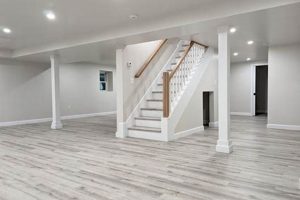
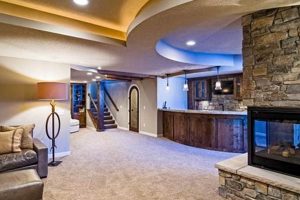
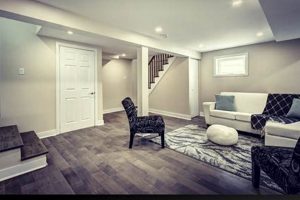
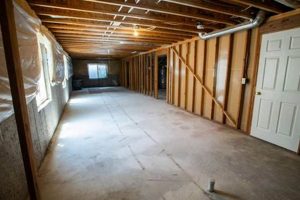
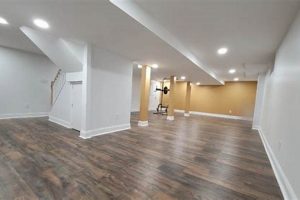
Creating a livable space in an existing lower level, while carefully managing expenses, represents a significant opportunity for homeowners. This approach involves strategic planning, resourcefulness in material selection, and a focus on cost-effective design choices to maximize the value of the renovation. Thoughtful consideration of these elements leads to a functional and aesthetically pleasing result without exceeding established financial constraints. For example, opting for drywall over paneling and strategically sourcing discounted materials can significantly impact the final cost.
Expanding usable living space within the existing footprint of a home offers numerous advantages. It increases property value, provides additional room for family activities or hobbies, and enhances overall quality of life. Historically, finishing this area was often a costly and complex undertaking, but modern materials and construction techniques have made it more accessible and affordable. This renovation provides tangible benefits, improves the home’s appeal, and offers a cost-effective alternative to relocation or constructing an addition.
Subsequent sections will detail specific strategies for efficient planning, design optimization, material sourcing, and DIY considerations. By exploring these areas, homeowners can effectively transform an unused area into a valuable asset. This includes considerations for insulation, moisture control, flooring options, lighting solutions, and code compliance, all while maintaining budgetary awareness.
Cost-Effective Basement Finishing Strategies
Transforming a basement into a finished living space requires careful planning and strategic execution to remain within budget. These guidelines provide actionable advice for achieving significant savings throughout the project.
Tip 1: Design with Efficiency in Mind: Optimize the layout to minimize material waste. Simple, open floor plans are generally more economical than complex designs with numerous walls and custom features. Careful consideration of existing plumbing and electrical infrastructure can also reduce relocation costs.
Tip 2: Prioritize Essential Upgrades: Focus on fundamental improvements such as insulation, moisture control, and proper ventilation. Addressing these aspects initially prevents costly problems later and contributes significantly to the comfort and longevity of the finished space.
Tip 3: Source Materials Wisely: Explore multiple vendors and compare prices for lumber, drywall, flooring, and other essential supplies. Consider purchasing materials in bulk or during seasonal sales to take advantage of discounts. Salvaged or repurposed materials can also offer substantial cost savings, particularly for decorative elements.
Tip 4: Embrace Strategic DIY: Identify tasks that can be completed independently, such as painting, drywall installation, or basic carpentry. This minimizes labor costs and allows for greater control over the project timeline and budget. Be realistic about skill levels and seek professional assistance for tasks that require specialized expertise, such as electrical or plumbing work.
Tip 5: Opt for Cost-Effective Finishes: Select flooring, lighting, and fixtures that balance affordability with durability and aesthetic appeal. Laminate flooring, recessed lighting, and energy-efficient appliances provide practical solutions without compromising on style. Avoid excessively expensive or trendy finishes that may quickly become outdated.
Tip 6: Plan for Future Expansion: While adhering to a strict budget, consider incorporating features that allow for future upgrades or modifications. Running extra wiring or plumbing can facilitate the addition of a bathroom or kitchen later on without requiring extensive demolition and reconstruction.
Adhering to these strategies enables a significant reduction in the overall expenditure. This approach provides an avenue for enhancing the functionality and value of a home without incurring excessive debt.
The subsequent concluding section will reinforce these strategies and offer additional insight into the long-term benefits of a carefully executed plan.
1. Efficient Space Planning

Efficient space planning serves as a cornerstone of cost-effective basement finishing. Thoughtful consideration of layout and utilization of available square footage directly impacts material requirements, labor hours, and overall project expenses. A well-designed plan minimizes waste and avoids unnecessary structural modifications. For instance, maximizing the use of open areas rather than creating numerous smaller rooms reduces the quantity of framing lumber, drywall, and associated finishing materials needed. Such deliberate planning translates directly into tangible cost savings.
The absence of efficient space planning often leads to increased costs and project complexities. Poorly conceived layouts may necessitate relocation of existing plumbing or electrical systems, further escalating expenses. A practical example involves adapting the finished space around existing support columns and load-bearing walls, rather than attempting to relocate them. Strategic furniture placement and multi-functional design elements also contribute to space optimization. A living area can seamlessly transition into a home office with the addition of a fold-down desk and strategic lighting, eliminating the need for a dedicated room and associated construction costs.
In summary, efficient space planning is not merely an aesthetic consideration; it is a crucial cost-saving measure. By carefully evaluating existing structural elements, maximizing open space, and incorporating multi-functional design, homeowners can significantly reduce the financial burden of finishing a basement. This understanding is vital for those seeking to create a valuable and livable space on a restricted budget.
2. DIY Labor Investment

Direct involvement in the construction process, commonly termed ‘DIY labor investment,’ represents a primary mechanism for cost reduction in basement finishing projects. The substitution of professional labor with self-performed work directly lowers the overall expenditure, as labor costs often constitute a substantial portion of the total budget. This principle operates on the cause-and-effect relationship that eliminating or reducing these professional fees results in a corresponding decrease in project expenses. The extent of savings is directly proportional to the amount and complexity of work undertaken independently.
The effectiveness of DIY labor investment hinges on the homeowner’s skills, available time, and willingness to learn. Tasks such as demolition, insulation installation, drywall hanging, painting, and basic carpentry are frequently suitable for DIY completion. However, specialized areas like electrical wiring, plumbing, and structural modifications typically necessitate professional expertise to ensure safety and code compliance. A prudent approach involves identifying tasks within one’s capabilities and outsourcing those that demand specific certifications or skills. For example, a homeowner might manage the painting and flooring installation while contracting an electrician to handle the wiring. This strategic approach balances cost savings with quality and safety considerations.
In conclusion, DIY labor investment is a significant determinant in achieving a finished basement on a budget. Successful implementation requires a realistic assessment of one’s abilities, a commitment to learning, and a willingness to seek professional assistance when necessary. The judicious application of DIY labor can substantially lower project costs, transforming an otherwise unaffordable renovation into a viable and value-enhancing investment. The long term success of such is project necessitates meticulous adherence to construction standards and safety protocols.
3. Smart Material Choices

Strategic selection of materials constitutes a fundamental aspect of achieving a finished basement within budgetary constraints. The deliberate balancing of cost, durability, aesthetic appeal, and ease of installation directly influences the overall expense and long-term value of the renovation.
- Flooring Selection
The choice of flooring significantly impacts both cost and functionality. Concrete staining, laminate, and engineered wood offer cost-effective alternatives to solid hardwood or tile. Each option presents a unique balance of durability, maintenance requirements, and aesthetic considerations. Laminate, for example, provides a durable and water-resistant surface suitable for basement environments at a significantly lower price point than ceramic tile.
- Insulation Considerations
Effective insulation is critical for temperature regulation and moisture control, directly impacting energy costs and structural integrity. Fiberglass batts, spray foam, and rigid foam boards each offer varying levels of insulation value and installation complexity. The selection should be based on climate zone, basement wall construction, and budgetary limitations. Closed-cell spray foam provides superior moisture resistance but comes at a higher cost compared to fiberglass batts.
- Drywall Alternatives
While drywall remains a common choice, alternatives such as cement board or moisture-resistant drywall (often referred to as “green board”) are particularly relevant in basement environments prone to humidity. These options provide enhanced protection against mold and mildew growth, preventing costly remediation efforts in the long term. Although they may represent a slightly higher initial investment, the long-term benefits often outweigh the additional expense.
- Lighting Solutions
Lighting fixtures contribute significantly to both the ambiance and functionality of a finished basement. Recessed lighting, LED strip lighting, and energy-efficient bulbs offer cost-effective illumination options compared to more elaborate fixtures. LED lighting, in particular, provides significant energy savings over time, reducing long-term operational costs. The selection should consider both upfront expenses and ongoing energy consumption.
Careful consideration of material attributes allows for a strategic balancing of cost and quality. By selecting materials appropriate for the specific environmental conditions of a basement and prioritizing long-term durability and energy efficiency, it is possible to create a functional and aesthetically pleasing living space without exceeding budgetary limitations. Informed decision-making in material selection is thus a critical component of successful and affordable basement finishing.
4. Prioritized Essential Upgrades
The concept of “prioritized essential upgrades” is paramount when undertaking basement finishing on a limited budget. These upgrades form the foundational elements ensuring the space is habitable, safe, and structurally sound, and their strategic implementation is critical for responsible resource allocation.
- Moisture Control and Waterproofing
Basements are inherently prone to moisture issues, necessitating thorough waterproofing measures as a primary concern. Addressing potential water intrusion through interior or exterior sealing, sump pump installation, and proper drainage systems mitigates the risk of mold growth, structural damage, and subsequent costly remediation. Ignoring these initial steps can lead to significant expenses and health hazards in the long term, negating any short-term savings.
- Structural Integrity and Foundation Repair
Prior to any cosmetic enhancements, a comprehensive assessment of the foundation’s structural integrity is indispensable. Addressing cracks, leaks, or other structural deficiencies ensures the long-term stability of the basement and prevents further deterioration. Remedial measures, while potentially costly upfront, safeguard the investment and avert more extensive repairs later on. For instance, reinforcing bowing walls or repairing foundation cracks is essential before proceeding with finishing the space.
- Adequate Insulation and Ventilation
Proper insulation is crucial for thermal regulation, energy efficiency, and prevention of condensation. Insulating the basement walls and ceiling minimizes heat loss, reduces energy consumption, and improves the overall comfort of the finished space. Coupled with effective ventilation, this mitigates the risk of mold and mildew growth. Selecting appropriate insulation materials and ensuring proper installation is a fundamental aspect of a cost-effective and comfortable basement renovation.
- Egress and Safety Compliance
Ensuring code compliance with local building regulations is not merely a legal obligation but a matter of safety. Egress windows or doors provide a means of escape in the event of an emergency, and smoke detectors and carbon monoxide detectors are essential safety features. While these upgrades may represent an additional expense, they are non-negotiable components of a habitable and safe finished basement, prioritizing the well-being of occupants.
The judicious allocation of resources towards these prioritized essential upgrades is a hallmark of a successful and responsible basement finishing project. By focusing on structural integrity, moisture control, safety compliance, and energy efficiency, homeowners can create a valuable and long-lasting living space while remaining within budgetary constraints. Neglecting these fundamental aspects, however, can result in significant long-term costs and compromise the overall value of the investment.
5. Moisture Control Focus
The success of any project involving a finished basement, particularly those constrained by a budget, is inextricably linked to the implementation of comprehensive moisture control strategies. The inherent susceptibility of subterranean environments to water intrusion and humidity necessitates a proactive approach to mitigate potential damage. Failure to adequately address moisture issues can lead to a cascade of adverse consequences, undermining the investment in finishing the space. The relationship is causal: inadequate moisture control results in problems, while effective control minimizes future expenses. The importance of moisture control stems from its role as a preventive measure, shielding the finished basement from the detrimental effects of water damage, mold growth, and structural decay. A properly executed moisture control system is not merely an optional add-on but an indispensable component of a durable and cost-effective finished basement.
Real-life examples abound, illustrating the practical significance of this understanding. A homeowner who invests in a robust exterior waterproofing system, including proper grading and drainage, effectively diverts water away from the foundation, preventing hydrostatic pressure and potential leaks. Conversely, a homeowner who neglects these preventative measures may encounter recurring water damage, necessitating costly repairs, mold remediation, and compromised structural integrity. Another example involves the selection of moisture-resistant building materials, such as closed-cell spray foam insulation or cement board, which resist water absorption and inhibit mold growth. These proactive choices, although potentially representing a slightly higher initial investment, yield significant long-term savings by minimizing the risk of water-related problems.
In summary, a “moisture control focus” is not merely a component of “finished basements on a budget,” but rather an investment in the long-term viability and value of the project. Challenges associated with basement moisture are best addressed through proactive measures, including thorough waterproofing, proper ventilation, and the selection of moisture-resistant materials. These strategies, while requiring careful planning and execution, are essential for preventing costly damage and ensuring the longevity of the finished space. By prioritizing moisture control, homeowners can create a functional and aesthetically pleasing basement that remains a valuable asset rather than a financial burden.
Frequently Asked Questions
The following addresses common inquiries related to cost-effective basement finishing. These questions explore key considerations for homeowners seeking to maximize value while adhering to budgetary limitations.
Question 1: What constitutes the most significant cost factor in basement finishing?
Labor expenses often represent the most substantial portion of the total cost. Hiring contractors for all phases of the project significantly increases the overall expenditure. However, DIY efforts must be balanced with skill and expertise.
Question 2: How can moisture issues be addressed affordably?
Effective moisture control requires a multi-faceted approach. Identifying and addressing sources of water intrusion is paramount. Strategic use of sealants, dehumidifiers, and appropriate insulation can help prevent mold growth and structural damage. Prioritization of proper grading away from the foundation is also critical.
Question 3: What are the most cost-effective flooring options for a basement?
Laminate flooring and engineered wood offer durable and relatively inexpensive alternatives to hardwood or tile. These materials are typically easier to install, further reducing labor costs. Concrete staining is an even lower cost option but may require additional sealing to prevent moisture penetration.
Question 4: Are permits necessary for basement finishing?
Compliance with local building codes is mandatory. Permits are typically required for basement finishing projects, ensuring that electrical, plumbing, and structural modifications meet safety standards. Failure to obtain necessary permits can result in fines and require costly rework to achieve compliance.
Question 5: What role does insulation play in cost savings?
Adequate insulation is essential for minimizing energy consumption and reducing heating and cooling costs. Effective insulation also helps prevent condensation and mold growth, contributing to the long-term health and durability of the finished space. Prioritizing insulation is a sound long-term investment.
Question 6: What tasks are best left to professionals?
Electrical wiring, plumbing, and structural modifications typically require specialized expertise and should be entrusted to licensed professionals. Improper execution of these tasks can pose significant safety risks and compromise the structural integrity of the home. It is crucial to ensure compliance with building codes when completing these tasks.
Careful planning, strategic material selection, and responsible execution are key to successfully finishing a basement while adhering to a budget. Prioritizing essential upgrades and addressing moisture control are paramount for long-term value and safety.
The subsequent summary encapsulates the main concepts explored, offering actionable insights.
Finished Basements on a Budget
The preceding discussion has illuminated strategies for transforming an underutilized basement into valuable living space while maintaining strict budgetary control. Key themes have centered on the importance of meticulous planning, strategic material selection, DIY labor contributions, and the prioritization of essential structural and safety upgrades, especially those pertaining to moisture control. The information provided underscores the necessity for a comprehensive and informed approach.
Ultimately, the successful realization of a finished basement hinges on a homeowner’s commitment to balancing cost-effectiveness with quality and long-term value. Prudent application of the outlined principles empowers individuals to enhance their living environment responsibly. Further exploration of local building codes, material options, and contractor qualifications is strongly encouraged before commencing any renovation project. With careful planning and execution, the creation of a functional and aesthetically pleasing finished basement is achievable within reasonable financial parameters.