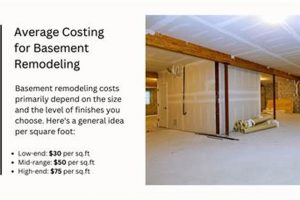
A basement space in a residence is considered incomplete when it has some, but not all, of the elements typically associated with a fully functional living area. This often involves unfinished walls, exposed ceilings showing pipes and ductwork, and possibly a concrete floor. For example, a basement might have one section with drywall and flooring, while the rest remains bare concrete.
Opting for this approach can offer advantages such as reduced initial construction costs and the flexibility to customize the area later. It also provides a dedicated space for utilities and storage, separate from the primary living areas. Historically, unfinished basements were commonplace, with homeowners gradually improving them over time as budget and needs evolved, allowing for incremental investment and customization.
Understanding the characteristics of this kind of space is essential before exploring topics like insulation options, moisture control methods, and potential upgrade strategies for future completion. The existing state dictates the approach to further development and influences the types of materials and techniques suitable for the project.
Tips for Dealing with a Partially Finished Basement
Addressing a basement that is only partially complete requires careful planning and execution to maximize its potential. Prioritizing safety, addressing existing issues, and planning for future use are essential considerations.
Tip 1: Conduct a Thorough Inspection. Examine the area for moisture, mold, or structural issues before proceeding with any improvements. Addressing these problems early can prevent costly repairs later.
Tip 2: Prioritize Moisture Control. Install a vapor barrier, consider a dehumidifier, and ensure proper drainage around the foundation. Water intrusion can damage materials and create unhealthy living conditions.
Tip 3: Plan the Layout Carefully. Determine the intended use of the finished area and create a floor plan that optimizes functionality and flow. Consider factors such as lighting, ventilation, and accessibility.
Tip 4: Insulate Effectively. Proper insulation can improve energy efficiency and create a more comfortable living space. Consider the R-value appropriate for the climate and the type of insulation that best suits the structure.
Tip 5: Address Egress Requirements. Ensure that there is a safe and code-compliant exit in case of emergency. This may involve installing an egress window or a secondary door.
Tip 6: Consider Future Needs. Even if the entire space is not being finished immediately, plan for future expansion. Run wiring and plumbing for potential bathrooms or kitchenettes to avoid costly renovations later.
Tip 7: Maintain Adequate Headroom. Check local building codes regarding minimum ceiling height requirements. If headroom is limited, explore options such as lowering the floor or modifying ductwork.
Implementing these tips can help transform a limited space into a functional and valuable addition to the home. Thoughtful planning and diligent execution are key to achieving a successful outcome.
These initial steps provide a solid foundation for a more detailed exploration of specific renovation strategies and design considerations.
1. Incomplete wall coverings
Incomplete wall coverings are a primary characteristic of this kind of basement space. The absence of finished walls, such as drywall or paneling, exposes the structural components of the foundation. This condition directly indicates that the transformation of the subterranean space into a fully functional living area remains incomplete. For example, a basement with exposed concrete block walls and visible insulation would be categorized as having incomplete wall coverings, signaling its designation as being unfinished. This lack of finish impacts factors such as insulation, soundproofing, and aesthetics.
The presence of unfinished walls affects the thermal efficiency of the space. Exposed concrete is a poor insulator, contributing to heat loss in colder months and heat gain during warmer periods. Moreover, the exposed structure can make the area feel less inviting and more utilitarian. From a practical standpoint, addressing incomplete wall coverings is often a necessary step in enhancing the habitability and comfort of this kind of space, requiring careful selection of appropriate insulation materials and wall finishing techniques to improve energy efficiency and visual appeal.
In summary, incomplete wall coverings represent a defining feature, signifying that the transformation into a habitable living space is still in progress. Addressing this element is crucial to mitigating thermal inefficiencies, enhancing the overall aesthetic appeal, and ensuring the basements functionality aligns with the homeowners intended purpose. The material choices and installation methods will directly affect the comfort and energy efficiency of the space.
2. Exposed utility systems

The presence of exposed utility systems is a defining characteristic often observed. This facet signifies an incomplete transformation of the subterranean area into a fully functional, finished living space. The configuration of utilities, visible and accessible, directly influences both the immediate functionality and the future development potential.
- Accessibility for Maintenance
Exposed plumbing, electrical wiring, and HVAC ductwork offer unparalleled access for inspection, repairs, and upgrades. This accessibility simplifies troubleshooting and routine maintenance, reducing the time and cost associated with these activities. For example, a homeowner can easily identify and address a minor plumbing leak without the need to dismantle finished walls. However, this accessibility also presents potential hazards, such as accidental contact with electrical components.
- Visual Impact and Aesthetic Considerations
The visual presence of pipes, wires, and ducts detracts from the aesthetic appeal of the basement. Exposed systems often convey a sense of incompleteness and can make the space feel more like a utility area than a habitable living environment. This aesthetic impact necessitates strategic planning for concealment or integration during the finishing process. For instance, box beams can encase ductwork, or wire runs can be bundled and secured to create a neater appearance.
- Spatial Planning and Headroom Constraints
Exposed utility systems can impose limitations on spatial planning and headroom. Ductwork, in particular, often runs along the ceiling, reducing the usable height of the space. Strategic rerouting or concealment of these systems may be necessary to maximize headroom and create a comfortable environment. Careful planning and consideration of building codes are essential to ensure compliance and optimize the layout. For example, low-hanging ducts may require adjustments to the floor or ceiling to meet minimum height requirements.
- Impact on Insulation and Energy Efficiency
The presence of exposed utility systems can complicate insulation efforts. Covering pipes and ducts with insulation materials is crucial for preventing energy loss and condensation. However, accessing and properly insulating these systems can be challenging, especially in areas with limited space. The effectiveness of the insulation directly impacts the overall energy efficiency of the basement and the comfort of the living space. For instance, uninsulated ductwork can result in significant heat loss during the winter months, increasing energy consumption and utility costs.
The nature of exposed utility systems serves as a tangible indicator of its status. Addressing these systems thoughtfully, whether through strategic concealment or functional integration, is essential for realizing the spaces full potential. The process requires a balanced approach that addresses accessibility, aesthetics, spatial limitations, and energy efficiency. Decisions made regarding these systems will significantly affect the value and habitability of the subterranean space.
3. Limited floor finishing
Limited floor finishing is a characteristic trait found within the overall context of a partially completed basement. The absence of complete flooring, often manifesting as bare concrete or rudimentary coverings, signals a stage in the transformation process toward a fully habitable living space. This attribute has direct implications on comfort, usability, and the potential for moisture-related issues. For instance, a basement with only a thin layer of paint on the concrete floor, lacking insulation or a moisture barrier, is categorized as having limited floor finishing.
The presence of incomplete flooring surfaces can affect several practical aspects. Untreated concrete floors are cold and uncomfortable, especially during colder months, impacting the usability of the space. Furthermore, concrete is porous and can wick moisture from the ground, leading to dampness and potential mold growth. Therefore, addressing limited floor finishing is often a crucial step to improve thermal comfort, prevent moisture problems, and lay the groundwork for further upgrades. This might involve applying a moisture barrier, installing insulation, and adding a suitable flooring material like engineered wood, vinyl, or tile.
In conclusion, limited floor finishing serves as a visual indicator and a functional challenge. Recognizing and addressing this aspect is integral to successfully converting the basement into a comfortable, usable, and healthy living environment. The selection of appropriate flooring materials and installation techniques is essential for mitigating moisture issues and improving overall thermal efficiency. This decision has a significant impact on the long-term viability and utility of the subterranean space.
4. Potential moisture vulnerability

A key characteristic, inherent in the composition, is a heightened susceptibility to moisture-related issues. This increased risk arises from the often-unfinished state of the structure and the subterranean location, creating an environment conducive to water intrusion and condensation. Addressing this vulnerability is essential in ensuring the long-term integrity and habitability of the dwelling.
- Inadequate Waterproofing
The exterior foundation walls may lack proper waterproofing or damp-proofing, allowing moisture to permeate the concrete. This is often compounded by poor drainage around the foundation, leading to hydrostatic pressure against the walls. For example, homes built without a proper exterior membrane may experience water seepage through cracks in the foundation, manifesting as damp walls and water stains. Neglecting this aspect can result in structural damage and the growth of mold and mildew.
- Insufficient Ventilation
Often lacks adequate ventilation systems, contributing to elevated humidity levels. The combination of poor airflow and cool temperatures creates an ideal environment for condensation to form on surfaces, particularly on concrete walls and floors. A lack of ventilation exacerbates the effects of any existing water intrusion, prolonging drying times and increasing the risk of mold growth. Effective ventilation strategies are necessary to mitigate this issue.
- Unsealed Concrete
Porous nature of concrete allows it to absorb moisture from the surrounding soil. Without proper sealing, groundwater can wick through the concrete, leading to dampness and efflorescence (salt deposits) on the surface. This can cause damage to flooring materials and promote the growth of mold. Applying a suitable sealant to the concrete can significantly reduce the absorption of moisture and improve the overall moisture resistance.
- Compromised Vapor Barrier
Even if a vapor barrier is present, it may be damaged, improperly installed, or altogether absent. A damaged vapor barrier allows moisture to penetrate the interior wall and floor assemblies, creating a breeding ground for mold and compromising insulation effectiveness. Repairing or installing a new, properly sealed vapor barrier is crucial for preventing moisture migration and protecting the building materials.
These facets highlight the inherent moisture vulnerabilities in this space, stemming from construction techniques and environmental factors. Understanding and addressing these vulnerabilities through appropriate waterproofing, ventilation, sealing, and vapor barrier solutions is paramount to ensuring a dry, healthy, and usable area. The long-term value and functionality of the residence depend on diligent moisture management.
5. Adaptable space potential

The presence of adaptable space potential is intrinsically linked to the characteristics of this type of area. Its unfinished or semi-finished nature inherently provides a blank canvas for homeowners. This latent adaptability is a defining advantage, allowing for the creation of customized living spaces tailored to evolving needs and preferences. The absence of pre-defined structures and finishes permits greater flexibility in design and utilization compared to fully finished areas. For example, a family anticipating growth might initially use it primarily for storage and recreational activities, with plans to convert it into bedrooms and a living area as their needs expand. This inherent flexibility to accommodate diverse purposes is crucial.
The practical significance of adaptable space is evident in its capacity to increase a home’s value and functionality. A offers opportunities for creating home offices, entertainment areas, gyms, workshops, or in-law suites. These customized spaces cater to specific lifestyle requirements, enhancing the home’s appeal to current occupants and potential buyers. The ability to adapt and repurpose the area over time represents a tangible asset. Homeowners might initially utilize it as a storage area or hobby space, later transforming it into a home theater or a functional office during periods of remote work, demonstrating its dynamic value.
In summary, adaptable space potential is not merely a consequence of its unfinished state; it is a core characteristic. This adaptability allows homeowners to personalize and repurpose the space, increasing both the home’s value and its functionality to meet shifting needs. Overcoming challenges such as moisture management and structural considerations unlocks the true potential, transforming it from an underutilized area into a valuable asset.
Frequently Asked Questions about Basements in a State of Partial Completion
The following section addresses common inquiries regarding spaces that have some, but not all, of the features associated with a fully finished lower level.
Question 1: What defines the difference between a partially finished basement and an unfinished one?
A space is considered partially complete when some elements of a finished area are present, such as completed walls in certain sections, while other areas remain unfinished with exposed concrete or utilities. An unfinished space lacks nearly all the features typically associated with a habitable living area.
Question 2: Is a partially finished basement considered livable space for appraisal purposes?
Whether this type of space counts as livable area varies depending on local building codes and appraisal standards. Generally, to be considered livable, the area must meet minimum ceiling height requirements, have adequate egress, and be properly insulated and heated. A partially complete space might only be counted as finished square footage if these criteria are met in the finished sections.
Question 3: What are common challenges encountered when dealing with a basement in a state of partial completion?
Common challenges include managing moisture, addressing insulation gaps, working around exposed utilities, and ensuring compliance with building codes as further development proceeds.
Question 4: How can moisture problems be effectively addressed?
Effective moisture management involves addressing the source of the moisture. Steps can include improving exterior drainage, sealing foundation cracks, installing a vapor barrier, and using a dehumidifier to control indoor humidity levels.
Question 5: Does completing this space always increase property value?
Completing it typically increases property value, provided that the work is done properly and in compliance with local building codes. A poorly executed renovation can detract from a home’s value, so it’s important to prioritize quality and code compliance.
Question 6: What are the primary considerations before beginning a finishing project?
Before starting any work, inspect the structure for moisture and structural issues. Develop a detailed plan that includes intended use, budget, and compliance with local building codes. Secure any necessary permits before proceeding.
In summary, navigating the specifics of this space requires a clear understanding of its defining characteristics, potential challenges, and the steps necessary to maximize its value and usability.
The following section will explore renovation strategies applicable to partially complete areas.
Conclusion
The investigation into what constitutes a partially finished basement reveals a space in transition, possessing a unique blend of limitations and opportunities. Its defining characteristicsincomplete wall coverings, exposed utility systems, limited floor finishing, potential moisture vulnerability, and adaptable space potentialdictate the approach to further development. Understanding these factors is crucial for homeowners seeking to maximize the value and utility of this area.
Recognizing the inherent challenges and implementing appropriate solutions are essential for transforming the space into a valuable asset. Prudent planning, attention to detail, and adherence to building codes are necessary to ensure a successful transformation. The effort invested in properly completing the space yields long-term benefits, enhancing both the functionality and market value of the property.
![Find [City/Area] Houses for Rent with Finished Basement Today! | Best Final Touch: Elevate Your Projects with Professional Finishing](https://bestfinaltouch.com/wp-content/uploads/2026/05/th-361-300x200.jpg "Find [City/Area] Houses for Rent with Finished Basement Today! Best Final Touch: Elevate Your Projects with Professional Finishing")